A corroded or loose battery terminal is one of those small parts that can leave you stranded on a cold morning. Whether you’re chasing down a positive post that finally cracked, replacing side-terminal bolts stripped from years of service, or upgrading heavy-gauge cables for a dual-battery build, the right post-connector makes the difference between a reliable start and a no-start Sunday.
Below is a roundup of eight battery cable post-connectors covering factory-fit OEM replacements, universal brass hardware, marine-grade copper, and value packs that include heat shrink. Each entry is matched to the type of job it’s built for, so you can match the connector to the battery in front of you.
How The Shortlist Stacks Up
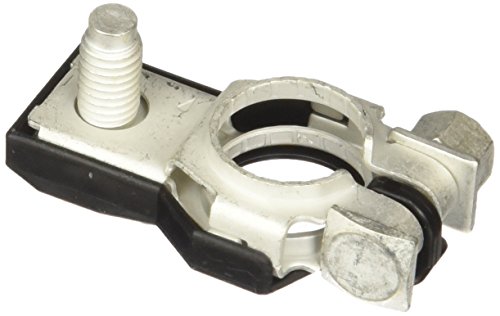
Nissan OEM Positive Battery Connector Terminal End

Ampper 3/8″-16 Brass Side Post Battery Stud (Pack of 2)

Suspenix Side Terminal Battery Bolts, Universal Fit (2-Pack)
Relaxweex 8-Piece Top Post Battery Terminal Connectors

EDS 90982-05054 Positive Battery Terminal (2-Pack)

waltyotur Battery Cable End Terminal Positive Replacement

Ampper Brass Top Post Battery Terminal Connectors (2 Pair)

WindyNation 2 Gauge Pure Copper Top Post Terminal Connectors
More Details On Our Top Picks
Factory-style battery terminals often get overlooked until the original plastic housing cracks or the copper core starts to green. The Nissan OEM Positive Battery Connector Terminal End is a direct-fit replacement engineered to match the positive battery cable assembly on a wide range of late-90s through early-2010s Nissan vehicles, including the Altima, Frontier, Maxima, Murano, Pathfinder, Titan, and others in that generation.
For someone restoring a daily driver back to factory form, the OEM-style fit removes the trial-and-error that comes with universal aftermarket ends. The molded body and lead orientation match how the cable routes from the battery tray, so reinstallation is closer to a swap than a rewire job. Where universal clamps like the Ampper set later in this list shine for custom work, this part is built to disappear into the original wiring layout.
Everyday Wins
- Matches the factory positive battery cable footprint on covered Nissan models, so routing stays clean under the hood.
- Eliminates the need to bend, cut, or re-crimp universal clamps when the stock part fails.
- Lead-frame design supports the stock fuse-link section found on many Nissan positive cables, preserving the factory protection path.
Things To Consider
- Coverage is limited to specific Nissan vehicles from roughly 1998 through 2013; non-listed makes or later models won’t accept this terminal.
- Single-piece format means you’ll need a separate negative terminal if both sides are due for replacement.
Made For
Nissan owners running a stock or lightly modified setup who want a factory-style positive terminal without re-engineering the cable harness.
Look Elsewhere When
You drive a GM side-post truck or a marine application, in which case the Ampper brass stud or Ampper marine top-post clamps are closer to what you need.
Side-post batteries, the kind common on many GM trucks, SUVs, and some Cadillac models, use threaded studs instead of the familiar top clamps. Over time those studs corrode, round out, or snap, and the Ampper 3/8″-16 brass stud set is built to step in as a direct thread-in replacement. The 3/8″-16 thread matches the GM side-post spec, and the longer shank gives you room to stack accessories or run extra ring terminals.
Where the Nissan OEM piece above is about restoring a factory look, this set is about giving you more usable real estate on the battery post. Brass construction holds up better against the white, powdery corrosion that eats standard steel bolts, and the stud shape lets you hook up accessories, amplifiers, or auxiliary lighting without fighting the stock bolt.
Strengths Worth Knowing
- Brass body resists the sulfate corrosion that typically builds up on GM side-post batteries.
- Extended stud length provides clearance for stacked ring terminals when adding accessories like amps or chargers.
- Pack of two covers both positive and negative posts in a single order, simplifying a full refresh.
Trade Offs
- Designed specifically for GM side-post batteries, so it won’t work on top-post setups like the WindyNation copper ends later in this list.
- Brass is softer than steel, so over-torquing during install can round the hex flats; a careful hand matters here.
Right Fit For
GM truck, SUV, or van owners with side-post batteries who need replacement studs that go beyond a basic steel bolt.
Consider Something Else When
You’re running a marine or RV setup with top-post batteries, where the Ampper brass top-post clamps are a more appropriate fit.
Sometimes the bolt itself is the problem, not the cable end. Suspenix ships a two-pack of universal side-terminal bolts designed as direct-fit replacements for worn, stripped, or corroded 3/8-16 threaded studs. The 3/8-16 thread is the same spec used across many domestic side-post batteries, so this set covers a wider range of vehicles than a brand-specific piece.
Compared with the Ampper brass set reviewed just above, these lean more toward a no-frills utility replacement. They let you recover a battery that has been written off because the original studs rounded out, which can happen after years of cross-threading or impact damage. For a quick bench-rebuild on a used battery, having two fresh bolts on hand is genuinely useful.
Bright Spots
- Standard 3/8-16 thread fits most domestic side-post batteries, including many GM applications.
- Two-pack format is convenient when both studs need replacement, or for keeping a spare in the toolbox.
- Useful for bench-charging batteries that aren’t currently installed in a vehicle, since the bolts extend the connection point.
Worth Noting
- Material spec isn’t highlighted, so corrosion resistance may not match brass alternatives like the Ampper set.
- Doesn’t include the extended stud length needed for stacking multiple ring terminals on accessory loads.
Best Suited To
DIYers working on side-post batteries who want a straightforward, universal bolt replacement for routine maintenance.
Skip It When
You’re adding stacked accessories that demand longer studs, in which case the Ampper brass side-post set gives more clearance.
Top-post batteries are the most common format, and a multi-pack makes sense if you keep more than one vehicle running. Relaxweex ships two positive terminals, two negative terminals, and dual-wall adhesive heat shrink tubing in red and black, giving a complete refresh in one box. The terminals focus on corrosion resistance and conductivity, and the included heat shrink lets you seal the cable-to-terminal joint without sourcing extra supplies.
Where the OEM Nissan and Toyota-family terminals are tailored to one specific vehicle, this set is built for someone who handles multiple cars, a small fleet, or just wants spares in the drawer. It’s also a sensible choice for a first-time DIYer who needs guidance on what a finished connection should look like, since the included heat shrink teaches the right finishing step.
Positive Takeaways
- Eight-piece bundle covers two full battery installs plus a backup pair, useful for multi-vehicle households.
- Included dual-wall adhesive heat shrink seals the cable end and reduces the chance of corrosion creeping under the terminal.
- Color-coded red and black pieces simplify getting positive and negative polarity right during install.
Some Limits To Know
- Top-post format only, so it won’t help on GM side-post batteries covered by the Ampper or Suspenix picks.
- Quality of the clamp tension varies in user reports; re-checking tightness after the first few heat cycles is sensible.
Who Will Love This
Home mechanics maintaining several vehicles, hobbyists with project cars in rotation, or anyone building a small parts stockpile.
A Better Fit Elsewhere
Owners running heavy 2-gauge cable on a high-current system should reach for the WindyNation copper set instead.
Toyota-family vehicles use a fairly specific positive battery terminal design, and the EDS 90982-05054 replacement is built to match the 18mm positive post with M8 nut spec found across many Camry, Corolla, Tacoma, Tundra, and Lexus models from the early 2000s through the late 2010s. It ships as a two-pack, which is useful if you’re refreshing both vehicles in a household or want a spare in the glove box.
Unlike the universal Relaxweex top-post clamps, this is a replacement-style terminal aimed at Toyota/Lexus/Scion owners who want the cable to land back where the factory routed it. The molded body keeps the stock orientation of the fuse-link section, which is critical for protecting the rest of the harness during a short event.
Everyday Perks
- Direct-fit replacement for the OE positive terminal on a long list of Toyota, Lexus, and Scion models.
- Two-pack format covers a full refresh or keeps a spare ready for the next battery swap.
- M8 nut hardware matches factory spec, so a basic socket set is all that’s needed for install.
Honest Caveats
- Positive terminal only; the matching negative side is sold separately if it also needs replacement.
- Fitment is specific to the listed Toyota/Lexus/Scion range, so it isn’t a universal option for non-Toyota vehicles.
Key Specs
Built With In Mind
Toyota, Lexus, and Scion owners running stock-positive battery cables who want a clean, factory-style replacement.
Swap It Out When
You need a single-piece Toyota-family replacement for a budget install, where the waltyotur positive terminal below is the lighter option.
The waltyotur positive battery cable end is an aftermarket replacement built to match OE part numbers 90982-05035 and 24340-7F000, which show up across roughly 80 Toyota/Lexus/Scion applications spanning Camry, Corolla, Prius, Sienna, Tacoma, Tundra, Sequoia, and various Lexus sedans and SUVs. It ships as a single terminal with self-tapping hardware intended to keep the connection snug.
Compared with the EDS two-pack reviewed just above, this is more of a one-piece, one-job item. It suits someone who only needs the positive side replaced on a single vehicle and isn’t looking to stock spares. The self-tapping nuts add a small layer of insurance against the cable loosening from vibration over time.
Standout Benefits
- Cross-references to OE part numbers 90982-05035 and 24340-7F000, simplifying fitment checks for Toyota-family owners.
- Self-tapping hardware helps the nut stay put under engine vibration, which is useful on trucks and SUVs.
- Single-piece packaging keeps the order focused on one vehicle, avoiding the cost of a two-pack if a backup isn’t needed.
Potential Drawbacks
- Install instructions and tools aren’t included, so you’ll need a basic socket set and reference material on hand.
- Single terminal only; a separate negative terminal would be required for a full battery-side refresh.
Whose Shelf It Belongs On
Single-vehicle Toyota-family owners doing a one-off positive terminal replacement without the need for a second spare.
Another Choice May Suit
If you want a backup or are refreshing two vehicles, the EDS two-pack offers better value per terminal.
Marine and RV environments are tough on battery terminals thanks to humidity, salt spray, and long periods of partial charge. Ampper’s brass top-post connectors are built for exactly that. The set includes two pairs of identical terminals, so you can run matching positive and negative clamps for a tidier install, and the brass body holds up well against the oxidation that eats standard plated steel.
Where the Relaxweex multi-pack earlier is more of a parts-bin play, this is closer to a dedicated upgrade. The 6 to 1 gauge wire range covers the heavier cable typically found in marine and RV battery banks, so you can pair it with thicker wiring for a more robust system. Compared with the WindyNation copper set reviewed next, brass trades a little conductivity for noticeably easier machining and clamping.
Key Advantages
- Brass construction tolerates humid and salt-exposed environments better than standard plated-steel clamps.
- Two pairs of identical terminals support matched positive and negative setups for a uniform look.
- Accepts 6 to 1 gauge wire, covering common marine and RV battery-cable thicknesses.
Where It May Fall Short
- Brass isn’t as conductive as pure copper, so high-amperage performance is slightly behind the WindyNation copper option.
- Top-post format only, so it doesn’t cover the GM side-post trucks served by Ampper’s brass stud set.
Right Fit For
Boat, RV, and trailer owners who need durable top-post clamps that handle moisture and partial-state charging without rapid corrosion.
Reach For A Different Pick When
You’re running very heavy 2-gauge cable for a high-output audio or dual-battery setup, where the WindyNation copper set is the better match.
For high-current systems, conductor material matters as much as clamp shape. The WindyNation copper top-post connectors use pure copper terminals with a tin coating for corrosion resistance, sized for 2-gauge cable and shipped as a matched positive-and-negative pair. Dual-wall adhesive heat shrink tubing is included, so the cable-to-terminal joint can be sealed against moisture and acid creep.
Against the Ampper brass marine clamps above, the difference comes down to current capacity. Copper carries more current per cross-section, and 2-gauge cable is the kind of wiring you’d see behind an upgraded audio system, a dual-battery setup, or a high-output inverter. If your build draws real current, this is the spec-aligned choice; if your truck just needs OEM-level clamps, the Relaxweex kit is plenty.
Why It Works Well
- Pure copper body with tin plating boosts conductivity while protecting the copper from oxidation.
- 2-gauge sizing suits high-current builds, including dual-battery banks and inverter-fed RV systems.
- Included dual-wall heat shrink seals the cable end and reduces corrosion creep into the copper strands.
What To Weigh
- Top-post format only, so it’s not a fit for the GM side-post trucks served by Ampper’s brass stud kit.
- Copper is softer than brass and more prone to over-tightening deformation if you lean on a long wrench.
Perfect Match For
DIYers running heavy 2-gauge cable for high-output audio, dual-battery systems, or RV inverter installs who want top-post clamps rated for the load.
Where A Sibling Pick Shines
For lighter daily-driver battery cable that doesn’t need 2-gauge capacity, the Relaxweex multi-pack is more than enough.
Choosing The Right Battery Terminal Connector For Your Setup
Start by identifying your battery post style. Top-post batteries use clamp-style terminals, while many GM vehicles use side-post batteries with threaded studs, and the two categories don’t interchange. The Nissan OEM and Toyota-family terminals cover factory-style replacements, the Ampper and Suspenix sets handle side-post hardware, and the Ampper brass clamps plus WindyNation copper ends cover universal top-post builds.
Next, match the connector to your cable gauge. A 6-gauge marine cable and a 2-gauge inverter cable need different clamp bodies, and forcing the wrong size creates a loose, high-resistance joint. The Ampper brass set covers 6 to 1 gauge, while the WindyNation set is purpose-built for 2-gauge work, and the Relaxweex clamps accept common automotive gauges.
Material matters more than it looks at first glance. Brass resists corrosion but is softer, copper carries more current but corrodes faster without plating, and standard plated steel is fine for stock replacement but tends to green up in humid climates. Think about where the vehicle lives: a garage-kept commuter, a coastal boat, and a project truck in a humid shop all stress the metal differently.
Finally, consider whether you need a single replacement, a matched pair, or a multi-vehicle bundle. The waltyotur single terminal suits a one-off positive repair, the EDS two-pack supports a full Toyota-family refresh, and the Relaxweex eight-piece bundle works for a small fleet or a stocked garage shelf.
Picking Wisely Without Common Slip Ups
Pitfalls Shoppers Hit
The most common mistake is buying a top-post clamp for a side-post battery or vice versa. The two post styles look nothing alike once you’re under the hood, and the wrong terminal simply won’t seat. Before ordering, confirm whether your battery has cylindrical posts on top or threaded studs on the side, usually a quick visual check from above.
Cable gauge is the next easy miss. A clamp rated for 4 to 6 gauge wire will not properly seat 2-gauge cable, and the joint will work loose under vibration. If you’re running heavier cable for an inverter or amplifier, step up to a connector specifically rated for that gauge, such as the WindyNation 2-gauge copper set, instead of forcing a smaller clamp to fit.
Where The Extra Money Goes
Paying more in this category usually buys better conductor material, heavier plating, or a multi-pack that includes heat shrink and hardware. The WindyNation copper set costs more than a basic plated clamp because pure copper carries more current per square inch, which translates into less voltage drop across long cable runs. The Ampper brass marine clamps carry a premium for marine-grade corrosion resistance that pays off in humid or salt-exposed environments.
The upgrade is worth it when your system actually draws the current or lives in the conditions that justify the better material. For a stock commuter battery swap in a dry climate, a value pack like the Relaxweex set is more than enough.
Frequently Asked Questions
What is the difference between top-post and side-post battery terminals?
Top-post batteries have cylindrical posts sticking up from the top, and clamps bolt down over them. Side-post batteries have threaded studs on the side, and ring-terminal cables thread onto those studs. The two styles use different hardware and don’t interchange.
How do I know which battery terminal connector fits my vehicle?
Start by checking your battery post style and then look up the OE part number, often printed on the existing terminal or listed in the vehicle’s service manual. Cross-reference that part number with the replacement’s listed fitment. OEM-style replacements like the Nissan and Toyota-family terminals rely on this kind of part-number match.
Can I replace just the positive battery terminal and leave the negative alone?
Yes, if the negative terminal is still in good shape with no corrosion or cracks, there’s no need to replace it at the same time. Many drivers replace only the side that’s failed, though it’s often smart to inspect the other side during the same service window.
Why does battery terminal material matter?
The terminal material affects both conductivity and corrosion resistance. Copper carries more current but corrodes faster without plating, brass resists corrosion but conducts slightly less, and plated steel is the typical OEM balance. Match the material to the environment and the cable gauge you’re running.
Do I need heat shrink on a battery terminal connection?
Dual-wall adhesive heat shrink adds a moisture-resistant seal over the cable-to-terminal joint, which slows corrosion creep into the copper strands. It’s not strictly required, but it’s helpful on marine, RV, and off-road vehicles that see water and dust regularly.
Final Verdict
The right battery cable post-connector comes down to your battery style, cable gauge, and where the vehicle lives. Stock replacements like the Nissan OEM and Toyota-family terminals restore factory routing, the Ampper and Suspenix sets cover side-post hardware, and the Ampper brass and WindyNation copper options handle heavier or marine-grade work. Match the connector to the job in front of you, and a five-minute install buys years of reliable starts.