Battery cable selection isn’t glamorous, but it’s the kind of upgrade you feel every time you turn the key. A solid run of copper under the hood, between solar panels, or out to a remote generator means fewer voltage drops on cold mornings and cleaner connections during long, slow draws. The right cable also stays flexible after years in the engine bay and resists the corrosion that ruins budget wire.
Whether you’re wiring a dual-battery setup, extending a charger to the garage, or building out a portable power kit, this list covers ten battery cable wires built for different jobs. You’ll find bulk SOOW for generators, tinned marine duplex for boats, heavy lugs and heat shrink for clean terminations, RC connectors for hobby packs, and flexible welding cable for high-amperage runs. Each pick balances conductor quality, jacket durability, and the kind of practical details that decide whether a project feels solid or fragile.
The Lineup, Simplified

50ft 8/4 8 AWG Portable Power Cable SOOW

CONEPY 6 Gauge Marine Wire Duplex Cable 50FT

XHF 10PCS 6 AWG Battery Lugs with Heat Shrink

BatteryMINDer DCE25 DC Extension Cable 25FT

XT90 Connector with Solder Cover Cap (12pair)

Hobbypark Deans T to Banana Bullet Adapter

MOOKEERF 4 Gauge Battery Cable Red and Black

ELFCULB XT60i to O Ring Terminal Cable 10AWG
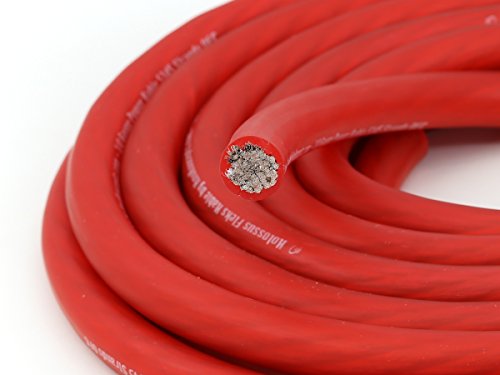
KnuKonceptz Kolossus Flex Kable OFC 0 Gauge

EWCS 4/0 Gauge Welding Cable 25FT Red
More On The Choices That Made The List
Fifty feet of 8 AWG four-conductor SOOW cable is the kind of bulk wire that disappears into a job and handles whatever you throw at it. SOOW stands for Service, Oil, and Water resistant jacketing, a thermoset rubber compound rated for industrial abuse and outdoor runs. The 600V rating and four-conductor layout make it useful from generator hookups to RV bays, and the stranded copper keeps it manageable when routing through tight conduit.
You’ll appreciate the flexibility more than the spec sheet suggests. Where lighter-duty cords stiffen up in a cold shop, SOOW stays pliable. For an EV charger pigtail or a portable light string on a job site, this length gives real slack. The trade-off shows up at the scale: 50 feet of 8/4 is heavy, so plan mounting clips and a tidy reel before uncoiling.
Reasons It Performs
- SOOW jacket shrugs off oil, water, and chemical splashes in shop environments.
- Eight-gauge copper keeps voltage drop reasonable across long generator runs.
- 600V rating leaves headroom for chargers and inverter tie-ins.
- Four conductors handle hot, neutral, ground, and a control leg in one jacket.
- Stays flexible in cold weather, which matters in unheated shops and outdoor builds.
Things To Consider
- 50 feet of 8/4 weighs more than casual users expect, so storage and reel choice matter.
- You’ll need appropriate cord ends or strain reliefs for permanent terminations.
Who Will Love This
Shop owners and RV owners running portable power distribution on a generator or backup panel.
Look Elsewhere When
The MOOKEERF 4 Gauge Battery Cable suits shorter automotive runs where flexibility and pre-cut color-coded lengths save install time.
Marine wire lives a harder life than almost any other cable on a boat, and CONEPY’s 6 AWG duplex is built for that reality. Tinned copper strands resist the salt corrosion that eats bare copper inside engine rooms. The thick PVC jacket handles UV, abrasion, and the fuel vapors common around outboards, while IP68 sealing keeps moisture out of the conductors.
Each conductor pulls 13.26 mm² across 188 strands of 0.3 mm tinned copper, which keeps the cable flexible enough to route through chases without kinking. The UL 1426 and ABYC compliance signals genuine marine intent. In salt spray and engine heat, that pedigree matters. Compared to the bulk SOOW cord above, this duplex trades multi-conductor versatility for true marine-grade environmental sealing.
A Few Strong Suits
- Tinned copper resists corrosion in bilge and saltwater splash zones.
- Thick PVC jacket takes abuse from UV rays and abrasion on deck runs.
- 188-strand construction keeps bends tight and routing clean.
- UL 1426 and ABYC compliance for boats with insurance requirements.
Worth Noting
- Duplex design means only positive and negative, so accessory circuits need separate runs.
- IP68 sealing depends on proper terminations, which you’ll need to source separately.
Key Product Details
Best Suited To
Boat owners and marine electricians wiring bilge pumps, house banks, and trolling motor feeds.
Swap It Out When
The XHF 6 AWG Battery Lugs with Heat Shrink suit workshop cable builds where you need terminations and strain relief, not bulk wire.
Cable ends matter as much as the cable itself, and a bad crimp turns a premium wire into a voltage-drop nightmare. XHF’s ten-pack of 6 AWG ring terminals pairs annealed copper lugs with color-matched 3:1 heat shrink tubing, so you get the conductor and the seal in one bundle. The 5/16″ stud size fits most automotive battery posts and common ground points.
The lugs bend to follow chassis angles without cracking, which helps under hoods and behind seats where straight runs aren’t realistic. The red and black heat shrink lets you code positive and negative at a glance, useful in dual-battery setups where wire tracing gets old fast. For most home mechanics, ten pieces cover a full car install with spares for the inevitable do-over.
Bright Spots
- Annealed copper bends without splitting, easing tight engine bay routing.
- Color-matched 3:1 shrink tubing seals out moisture and corrosion.
- Ten-piece count covers a full automotive battery install with leftovers.
- 5/16″ stud fits most battery posts and common chassis grounds.
Honest Caveats
- Crimping requires a proper hex or hammer crimper for a gas-tight joint.
- 6 AWG only, so mismatched wire gauges need a different lug pack.
Right Fit For
DIY mechanics building custom battery cables for cars, trucks, and off-grid inverter banks.
A Better Fit Elsewhere
The CONEPY 6 Gauge Marine Wire is the better starting point for boat owners who need bulk cable, not terminations.
Sometimes the cable you actually need is short on reach. BatteryMINDer’s 25-foot DC extension solves the common trickle-charger problem where the wall outlet sits far from the parked battery. SAE bullet connectors on both ends lock into standard maintainer leads, and 16-gauge zip cord handles the low-current draw without voltage sag.
Unlike the heavy SOOW and marine cable earlier in this list, this is a maintainer accessory, not a power run. It lives behind the workbench, draped over a battery bracket, or routed through a garage door to a stored classic. The SAE standard means you can swap between BatteryMINDer models and other chargers without rewiring. Where bulk wire handles amps, this handles accessibility.
Notable Gains
- SAE bullet connectors match the BatteryMINDer maintainer ecosystem.
- 25-foot reach handles garage-to-driveway charger placements.
- 16-gauge wire is light enough to drape without cable strain on the connector.
- Zip cord design stays flat against walls and baseboards.
Trade-Offs
- Not rated for engine cranking loads, so it can’t double as a jumper lead.
- SAE connectors are polarity-specific, so orientation matters during install.
Perfect Match For
Garage tinkerers and classic-car owners who keep a battery maintainer on a stored vehicle.
Reach For A Different Pick When
The KnuKonceptz Kolossus Flex Kable is the better answer for high-current amplifier installs where gauge matters more than reach.
XT90 connectors run hotter and handle more current than XT60, but the larger solder cups also mean uglier joints if you’re not careful. MakerDoIt’s twelve-pair kit addresses that with included solder point cover caps that slip over the joint, replacing heat shrink with a cleaner factory-looking finish. For drone and high-current RC packs, that finish isn’t cosmetic: exposed solder wicks and weakens under vibration.
Compared to the Hobbypark Deans adapter further down, these are the workhorse high-current connector for serious RC builds. The 12-pair count covers a battery rotation with spares, and the cover caps make rework easier when you swap pack configurations. In our view, the cover cap is the genuine value add, since shrink tubing over XT90 joints rarely looks tidy.
Why It Works Well
- Cover caps replace messy heat shrink for a cleaner solder joint.
- Twelve pairs cover a battery rotation with backup connectors on hand.
- High-current rating handles demanding RC and drone power systems.
- Polarized housing prevents reverse wiring during field repairs.
Room For Improvement
- Cover caps add diameter, so tight battery bays may need extra clearance planning.
- Soldering required, so beginners need a practice run before committing.
Whose Shelf It Belongs On
RC hobbyists and drone builders running high-current LiPo packs who want reliable solder joints.
Consider Something Else When
The Hobbypark Deans T to Banana Bullet Adapter fits pilots who need quick charger swaps rather than permanent solder joints.
Hobbypark’s adapter solves a specific problem: bridging Deans T-plug batteries to banana-jack chargers. The 14-gauge silicone wire and tin-plated copper conductor keep resistance low during fast charge cycles, and the two-pack means you can leave one adapter on a charger and another on a balance board. Battery straps come in the box, which is a nice touch for bench organization.
Unlike the bulk cables and lug kits earlier, this is pure convenience hardware for RC charging bays. It doesn’t add a permanent connection, it just translates between two common connector standards. For pilots running mixed fleets of Deans-equipped packs and banana-jack chargers, that translation saves real time at the bench.
The Helpful Details
- 14-gauge silicone wire stays flexible on the workbench.
- Tin-plated copper lowers resistance across charge cycles.
- Two-pack covers multiple chargers or bench stations.
- Included battery straps help secure packs during charging.
Some Limits To Know
- Adapter adds a connection point, so polarity checks matter before each charge.
- Limited to low-voltage RC use, not a general battery cable solution.
Made For
RC hobbyists bridging Deans T-plug batteries to banana-jack chargers without rewiring each time.
Where Another Pick Suits Better
The MakerDoIt XT90 Connector kit fits high-current RC builds where a permanent soldered connector is the goal, not a quick adapter.
Short, color-coded battery cables earn their keep in tight engine bays, and MOOKEERF’s six-foot kit (three red, three black) covers the most common automotive needs without waste. The 469 strands of 0.24 mm oxygen-free copper keep the cable pliable even at 4 AWG, and the -40°F to 221°F rating handles anything a road car sees in four-season driving.
Where the KnuKonceptz and EWCS cables lower in this list focus on raw length and gauge, this kit gives you ready-to-cut pairs for stereo installs, second battery tie-ins, or a clean ground strap replacement. You’ll still need the XHF lugs to terminate ends, so plan that bundle together.
Well-Handled Touches
- Oxygen-free copper conductor for cleaner current flow under load.
- Color-coded red and black pairs prevent polarity mix-ups during install.
- Six-foot total length suits most compact engine bay and trunk runs.
- Wide temperature rating tolerates harsh under-hood environments.
Soft Spots
- Bare cable ends require separate lugs and heat shrink for clean terminations.
- Three feet per leg is short for rear-mounted battery setups.
Who Should Grab It
Home mechanics wiring a second battery, inverter, or audio amp on a daily-driven car or truck.
Not Your Match When
The EWCS 4/0 Gauge Welding Cable fits high-amperage welding rigs and inverter banks where 25 feet of beefy cable is the goal.
Portable power stations use XT60i connectors, but most accessories and battery banks still terminate in ring lugs. ELFCULB’s two-foot adapter bridges that gap with 10 AWG tinned copper wire and PVC nylon insulation. The XT60i connector also adds a polarity safety feature, blocking reverse connection, which matters when you’re wiring in low light at a campsite or job site.
Two feet is short on purpose: it keeps resistance low and avoids the slack that tangles in a portable kit bag. Compared to the heavy welding cables and marine wire elsewhere in this list, this is a precision travel accessory. It won’t run your house, but it will let a power station feed a 12V accessory bank cleanly.
Where It Helps
- Polarity-safe XT60i connector prevents reverse wiring damage.
- 10 AWG tinned copper handles typical power station accessory loads.
- Compact two-foot length fits in portable power kits.
Practical Considerations
- Short length limits use to direct power-station-to-load hookups.
- Adapter is single-purpose, not a general battery cable.
Built With In Mind
Overlanders, campers, and field photographers running portable power stations with ring-terminal accessories.
Where Another Pick Shines
The BatteryMINDer DCE25 Extension Cable fits users who need reach from a wall outlet to a stored battery, not a power station adapter.
Car audio installers know strand count matters as much as gauge, and KnuKonceptz packs 5,145 strands of tinned oxygen-free copper into this 1/0 AWG cable. That’s flexibility and surface area that translates to less voltage loss on long amplifier runs. The tin coating keeps bare copper from oxidizing in the trunk and under seat cavities where humidity builds.
Ten feet is enough for a typical trunk-mounted amp to front battery setup, with margin for routing through the firewall. Compared to the bulk SOOW in the opening pick, this is purpose-built for car audio current demands. The trade-off is cost per foot, which makes sense for serious installs but feels heavy for casual use.
The Upside
- 5,145-strand count keeps the cable flexible despite the heavy gauge.
- Tin plating prevents oxidation in enclosed vehicle cavities.
- Meets or exceeds AWG standards for true 1/0 capacity.
- Ten-foot length covers most car audio amp runs.
What To Weigh
- Premium cost per foot may stretch tight budgets.
- Requires appropriately sized ring terminals for proper termination.
Feature Snapshot
Right Fit For
Car audio installers and SPL competitors running high-amperage amplifier systems.
Skip It When
The MOOKEERF 4 Gauge Battery Cable handles lighter automotive accessory installs where 1/0 gauge is overkill.
When the project demands raw copper in bulk, EWCS’s 4/0 gauge welding cable delivers. Twenty-five feet of pure copper with an extra-flexible jacket handles heavy welding leads, inverter banks, and high-amperage winch wiring. The 600V rating and -50°C to 105°C operating window cover industrial and off-grid realities, from frozen job sites to overheated engine rooms.
The 0.720-inch outer diameter is a real-world spec worth knowing: this cable is thick, and routing it through tight spaces needs planning. Compared to the KnuKonceptz audio cable above, EWCS trades strand-count finesse for raw copper volume. The honest read is that this cable is overkill for most hobbyists but right-sized for serious welding and inverter work.
Advantages To Know
- Industrial-grade 4/0 gauge handles extreme welding and inverter loads.
- Extra-flexible jacket simplifies routing through tight compartments.
- Wide temperature rating suits outdoor and unheated shop environments.
- 25-foot length covers most heavy equipment grounding runs.
Points To Keep In Mind
- 0.720-inch diameter limits routing through standard conduit.
- Weight makes solo handling difficult on long pulls.
- Specialty tooling needed for clean 4/0 terminations.
Perfect Match For
Welders, off-grid installers, and heavy-equipment operators running high-amperage DC systems.
Consider Something Else When
The Bghdas 50ft SOOW cable fits lighter portable power and generator setups where flexibility and multi-conductor layouts matter more than raw gauge.
What Matters Most Before Choosing Battery Cable Wires
Gauge, Length, And Real Voltage Drop
Wire gauge (AWG, or American Wire Gauge) is the diameter of the conductor, and lower numbers mean thicker wire. Length matters because longer runs create more resistance, and that resistance shows up as voltage drop at the load. For a 12V automotive system, keeping drop under 3% means picking a heavier gauge than you’d expect for the same current at 120V. Run a 10-foot 4 AWG cable to a trunk-mounted amp and the math changes again.
Conductor Material And Strand Count
Pure copper (OFC, or oxygen-free copper) carries current more efficiently than aluminum-clad substitutes. Strand count affects flexibility: more strands in the same gauge means the cable bends easier and survives vibration. Tinned copper adds a thin tin coating that blocks oxidation, which is critical in marine and humid environments where bare copper turns green over time.
Jacket, Insulation, And The Environment
PVC jackets handle most indoor and under-hood conditions. SOOW rubber jackets resist oil, water, and abrasion for shop and outdoor work. Marine-rated jackets add UV and saltwater protection. Temperature ratings tell you the operating window; for unheated garages or engine bays, look for cables rated below freezing and above 200°F to cover both ends of the spectrum.
Connector Type And Termination Quality
The cable is only as good as the ends. Ring terminals, SAE bullets, XT connectors, and lugs each suit different gear. A proper crimp with matched gauge and a heat-shrink seal beats a solder-only joint in vibration-prone installs. For high-current RC and drone work, polarity-protected connectors like XT60i prevent reverse-wiring damage during field repairs.
Common Slip Ups When Buying Battery Cable Wires
Pitfalls Shoppers Hit
Buying by gauge alone ignores length: a 4 AWG cable that works fine at five feet can starve a load at twenty. Another common miss is mixing aluminum and copper terminations, which causes galvanic corrosion at the joint. Skipping the heat shrink is tempting, but exposed copper at the lug oxidizes fast, especially in humid garages and marine environments.
Where The Extra Money Goes
Premium cables justify their cost through higher strand counts, tinned coatings, and jackets rated for harsher conditions. Tinned copper resists corrosion that eats bare copper over years. Higher strand counts keep cables flexible after repeated bending. Industrial jackets survive oil and chemical exposure that cracks cheaper PVC. When your install lives in an engine bay, boat hull, or off-grid cabinet, that durability prevents the slow voltage drop that ruins batteries and connections alike.
Frequently Asked Questions
What gauge battery cable do I need for a car battery?
For most automotive battery replacements, 4 to 6 AWG handles the starter load. High-compression engines and dual-battery setups benefit from 1/0 or 2/0 gauge. Always match the cable to the length of the run and the current draw of the starter.
Can I use welding cable for battery cables?
Yes, welding cable is essentially flexible battery cable with thicker insulation. The stranded copper and flexible jacket work well for automotive and inverter installs. The main difference is the jacket rating, which is built for welding heat rather than marine or chemical exposure.
How do I prevent corrosion on battery cable ends?
Tinned copper lugs, heat shrink tubing, and dielectric grease at the post all block moisture and oxidation. Marine installations benefit from adhesive-lined heat shrink that seals the joint completely. Periodic inspection catches corrosion before it becomes a voltage-drop problem.
What is the difference between SAE and ring terminal connectors?
SAE connectors are quick-disconnect two-pin plugs common on battery maintainers and tender leads. Ring terminals are permanent lugs bolted to a stud, common on automotive and marine battery posts. SAE works for temporary charger access, while ring terminals suit permanent high-current connections.
Is tinned copper worth the extra cost?
In marine, off-grid, and humid environments, yes. Tinned copper resists the oxidation that degrades bare copper connections over years. In dry, climate-controlled installations, the difference is less dramatic, but tinned cable still tends to outlast bare copper in long-term service.
The Takeaway
The right battery cable wire comes down to matching gauge, length, jacket, and connector to your specific install. Marine and humid environments benefit from tinned copper and sealed jackets. High-amperage automotive and audio work demands heavier gauges and high strand counts. Portable and RC projects lean on the right connector type more than raw cable thickness. Pick the cable that fits the environment and the load, and you’ll feel the difference every time you turn the key or flip the switch.