A corroded or loose battery terminal can turn a routine start into a frustrating hour of cleaning, scraping, and guessing. The right hardware, whether an OEM bolt kit for a GM bay, a marine-grade copper lug, or a full relocation setup for a custom engine swap, fixes that weak link in your electrical system. This roundup looks at ten solid options spanning factory replacements, copper ring terminals, pre-terminated inverter cables, and remote jump-post kits, so you can match the part to the vehicle and the wiring job at hand.
An Overview Of The Picks
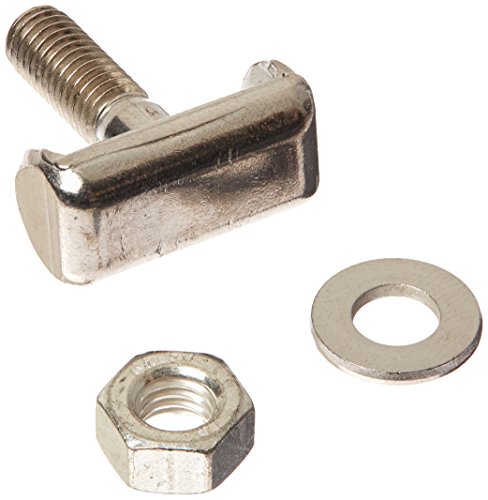
Genuine GM 19116852 Battery Cable Tensioner Bolt Kit

RED WOLF 1/0 Gauge Copper Wire Ring Terminals with Heat Shrink
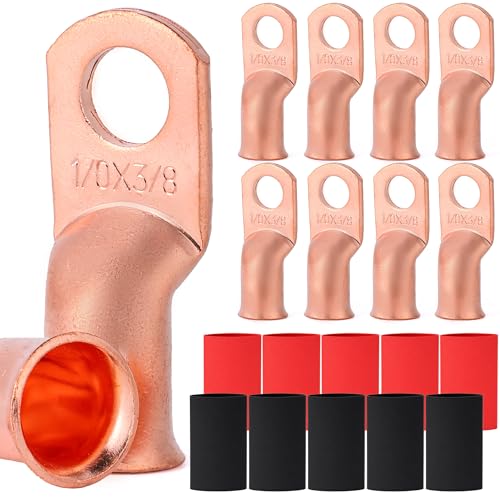
TKDMR 10 PCS 1/0 AWG – 3/8″ Battery Cable Lugs
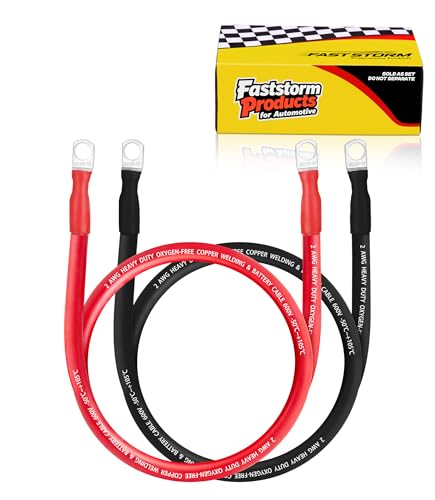
FASTSTORM 2 AWG Battery Cable 2FT with 3/8″ Terminals
FASTSTORM 2 AWG Battery Cable 3FT with 3/8″ Terminals
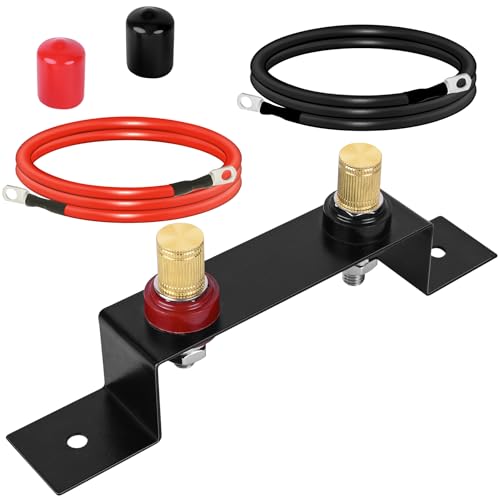
Kikerike Battery Jump Post Kit with Bracket and Cable

Quick Cable Lead Military Style Battery Terminal Pair

Kikerike 2 PCS Battery Jump Post Kit with Brackets

Kikerike 250A Remote Battery Terminals with 4AWG Cable

FASTSTORM 2 AWG 20FT Cable with Mixed Tinned Lugs
More Details On Our Top Picks
This is a genuine GM part, not a third-party reproduction. The tensioner bolt secures the positive battery cable to the under-hood fuse block on many late-model GM trucks, SUVs, and sedans, where it has to hold against constant vibration and thermal cycling.
Owners chasing an exact factory replacement, especially after a roadside repair that left the wrong bolt in place, will appreciate that this kit drops in without modification. It is a small but specific job, the kind of piece you only need when the original has stretched, corroded, or snapped during a battery swap. For most backyard wrenchers the rest of the picks below cover heavier custom wiring, but for GM owners this is the right bolt, nothing else will do.
Strengths Worth Knowing
- Factory-spec threading and length for the GM cable bracket
- Stamped or hardened steel construction matches original torque ratings
- Saves a trip to the dealer for a tiny but essential fastener
- Preserves warranty-sensitive repairs on newer GM vehicles
Worth Noting
- Only fits the specific GM applications that use part number 19116852
- A bare bolt kit, no terminals, lugs, or cable included
Feature Snapshot
Best Suited To
GM owners restoring a factory battery cable connection on a truck, SUV, or car that calls for part 19116852.
Swap It Out When
You are running a custom copper cable setup that calls for the RED WOLF 1/0 Gauge Copper Wire Ring Terminals instead.
Where the GM bolt above handles one specific factory fastener, these RED WOLF lugs handle the messy end of custom cable work. The kit pairs bare annealed copper terminals in 1/0 gauge (AWG is the American Wire Gauge standard, where lower numbers mean thicker wire) with dual-wall adhesive heat shrink tubing in red and black. You get 12 ring terminals total, six sized for 3/8″ studs and six for 5/16″, plus matching heat shrink for a clean, sealed crimp.
Marine, boat, and EV owners who already own a proper hex crimper will find this kit well matched to heavy cabling jobs. The copper is annealed, meaning softened through controlled heating so it compresses cleanly without cracking under crimp pressure. The dual-wall heat shrink (a tube with adhesive inside that melts and seals when heated) adds strain relief and corrosion protection at the crimp joint, which matters more than people realize in a damp bilge or engine bay.
Useful Touches
- Two stud sizes included in one kit, so you are not stuck ordering twice
- Annealed copper bends and crimps without splitting
- 3:1 shrink ratio tubing grips tightly over both the lug barrel and cable jacket
- Color-coded red and black tubing keeps polarity obvious after install
Things To Consider
- Requires a calibrated hex crimper, pliers alone will not seat the lug correctly
- Surface treatment helps with corrosion, but owners in saltwater environments still report re-checking terminations seasonally
Made For
Boat, marine, and EV installers wiring 1/0 gauge battery or inverter cables who already own a real crimping tool.
A Better Fit Elsewhere
If you want pre-terminated cable instead of loose lugs, the FASTSTORM 2 AWG Battery Cable 2FT pair is a simpler grab-and-go option.
TKDMR packs ten 1/0 gauge copper ring terminals, all sized for 3/8″ studs, along with ten pieces of dual-wall heat shrink. There is no mixing of stud sizes here, every lug is the same. That makes this kit ideal when you already know your hardware calls for a 3/8″ terminal and you need more than one or two.
Shoppers running dual-battery setups, off-road lighting, or audio amplifiers will appreciate the extra units, since mistakes and re-dos are part of the hobby. The closed-end (closed barrel) design means the cable end butts against the inside of the lug, giving a consistent crimp depth. Compare that to the RED WOLF kit above, which splits its count between two stud sizes, and you see the real difference: this is a volume bundle aimed at repeat work, not a sample pack.
Notable Gains
- Ten matching lugs handle full multi-cable projects without reordering
- Heat shrink supplied in equal quantity, no mismatch between parts and accessories
- Annealed copper construction simplifies clean crimps
- Closed-barrel design offers consistent wire insertion depth
Trade Offs
- Only 3/8″ stud size, no 5/16″ option in this bundle
- Quality control is reported as inconsistent by some shoppers, so inspect each lug before crimping
Who It Suits Best
DIYers building out a full wiring harness with one standard stud size across multiple connection points.
Reach For A Different Pick When
You need a mix of stud sizes on the same project, in which case the RED WOLF 1/0 Gauge Copper Wire Ring Terminals splits the count more usefully.
For short battery-to-inverter or battery-to-battery jumps, a pre-made 2 AWG (American Wire Gauge; thicker than household wire, sized for inverter loads) cable pair removes every crimp guess from the job. FASTSTORM supplies two feet each of red and black pure copper cable with 3/8″ tin-plated ring terminals (tin plating adds a corrosion-resistant layer over the copper) already crimped at both ends.
The 3/8″ hole matches common inverter studs and battery posts, and the two-foot length is the right call for compact installs under a seat, inside a console, or across a battery tray. Tin plating on copper terminals is a quiet upgrade you only appreciate after a few winters, when bare copper would have started to oxidize. Where the TKDMR set above asks you to bring a crimper to the party, this one shows up ready to bolt down.
Where It Excels
- Pure copper cable keeps resistance low across the run
- Tin-plated terminals resist corrosion in humid or marine environments
- Two-foot length fits tight spaces where longer cables would coil awkwardly
- Matched red and black pair removes polarity confusion during install
Honest Caveats
- Two feet may fall short on larger engine bays or rear-mounted battery setups
- Only one terminal size, 3/8″, so confirm your hardware matches before ordering
Key Specs
The Right Fit
Solar and small inverter owners who want pre-terminated cable without owning a hydraulic crimper.
Where Another Pick Suits Better
For longer truck or RV battery runs, step up to the FASTSTORM 2 AWG Battery Cable 3FT pair instead.
Three feet of 2 AWG per side gives you a little more reach than the two-foot pair above, enough to span between batteries mounted in different corners of an engine bay or reach a chassis-mounted inverter. The cable uses oxygen-free copper (a high-purity copper grade with minimal oxygen content, which improves conductivity) and the same tin-plated 3/8″ terminals as the shorter version, so the electrical performance is identical. The only difference is the spare foot of slack.
For dual-battery trucks, RV house banks, and marine engine setups, that extra length often saves you from splicing two shorter cables together. Splices add resistance and another failure point, so a single continuous run is almost always the cleaner answer. You still get the same red and black color-coding, and the cable jacket stays flexible enough to route around brackets without kinking.
What Works In Its Favor
- Three-foot length covers most cross-bay and battery-to-cab runs
- Pure copper conductor supports sustained high current
- Tin-plated ring terminals match common hardware out of the box
- Flexible jacket simplifies routing around obstacles
Worth Bearing In Mind
- Still a fixed length, custom routing in a tight build may require trimming and re-terminating
- Two cables only, no extra hardware or lug assortment included
Whose Shelf It Belongs On
Truck, RV, and marine owners running dual batteries or a chassis-mounted inverter within reach of three feet per side.
Consider Something Else When
For longer custom runs with mixed stud sizes, the FASTSTORM 2 AWG 20FT Cable with Mixed Tinned Lugs bundle gives you raw cable and a lug assortment to cut to length.
Remote jump posts solve a simple problem: the battery sits in one place, but you want the charger or jumper clamps to connect somewhere more accessible. Kikerike’s single-post kit ships with one heavy-duty charging post, a mounting bracket, and the cabling needed to extend the connection away from the battery itself.
Common in UTVs, ATVs, and small engine bays where space is tight, a remote post also reduces strain on the original battery terminals. You clamp onto the post instead of crowding around the battery tray. Compared to the dual-post kit further down this list, this version is the right call when you only need to relocate one side, or you are adding a charging point to an existing setup.
What Pays Off
- Bracket-mounted design keeps the post secure against vibration
- Useful for clearing engine bay clutter on compact vehicles
- Single-post scope matches single-circuit additions
- Simplifies jump-starting when the battery is hidden or hard to reach
Points To Note
- Only one post included, so a full positive and negative relocation requires two kits or a step up
- Bracket and cable length may not fit every chassis without modification
Made For
UTV and ATV owners who want one accessible charging post without relocating both battery cables.
Skip It When
You need a matched positive and negative relocation, in which case the Kikerike 2 PCS Battery Jump Post Kit covers both sides at once.
This is a different kind of battery terminal altogether, a cast lead military-style terminal with zinc-plated steel fasteners, sold as a positive and negative pair. Lead is softer than copper, which means the terminal clamps onto the battery post with a forgiving grip that holds even as the post surface ages. The zinc-plated hardware fights rust at the bolt threads.
The pair exceeds military specification A52425-1 (positive) and A52425-2 (negative), which matters for restorers and specialty vehicle builders who need documentation-grade components. The 3/8″ stud on top gives you a second accessory connection point, useful for running auxiliary loads or a secondary ground. Made in the USA, this is the kind of hardware you reach for when you want old-school durability rather than a modern copper lug.
The Value In It
- Cast lead construction clamps reliably on aging battery posts
- Zinc-plated steel fasteners resist corrosion at the hardware
- Exceeds published military specification for both terminal polarities
- Long bolts allow additional accessory ring terminals to stack cleanly
Some Limits To Know
- Lead weighs more than copper or brass alternatives
- Profile sits taller than some low-clearance battery trays, so measure first
Spec Overview
Perfect Match For
Restoration shops and military-vehicle owners who need spec-grade hardware with documentation.
Not Your Match When
You are running high-amperage audio or inverter loads that benefit from the lower-resistance copper lugs like the RED WOLF 1/0 Gauge Copper Wire Ring Terminals.
The dual-post version of the Kikerike kit gives you a matched positive and negative remote terminal pair, complete with brackets and the cables to route them away from the battery. Where the single-post kit above suits half a relocation, this pair handles the full job in one order.
That matters for anyone moving a battery to a trunk, toolbox, or rear cargo area, since you cannot relocate just one cable without leaving an ugly length of factory cable in place. The matching brackets keep both posts at the same height and orientation, which reads as a cleaner install. Compared to the heavier-duty Kikerike 250A kit below, this version is the everyday answer for typical vehicle electrical systems rather than high-amperage off-grid demands.
Practical Pluses
- Matched pair covers a full positive and negative relocation at once
- Bracket-mounted design secures posts against engine vibration
- Frees up engine bay space by moving battery hardware out of the way
- Common fitment across UTV, ATV, truck, RV, and marine applications
A Few Limitations
- Cable length may be short for full trunk-mounted battery moves
- Hardware quality is generally fine, but periodic re-torque of the post bolts is a sensible habit
Who Will Love This
Garage builders relocating a battery out of the engine bay in a UTV, ATV, truck, or boat and needing both posts in one kit.
Look Elsewhere When
Your setup draws serious continuous current, like a 250-amp audio or welding rig, where the Kikerike 250A Remote Battery Terminals kit is built for the load.
Kikerike’s 250-amp kit steps up from the standard relocation pair with thicker 4 AWG cabling (American Wire Gauge; smaller gauge number means thicker wire capable of carrying higher current) and a heavy-duty mounting bracket. The posts carry 3/8″ studs for ring terminal connections, and the kit ships with insulated boots, heat shrink, and the small hardware you would otherwise have to source separately.
High-load setups, off-grid solar banks, winch wiring, and commercial equipment moves are where this kit earns its keep. The 250A rating signals that the cabling and posts can take sustained current that would overheat thinner jumper posts. Compared to the lighter 2 PCS Kikerike kit above, the difference is the cabling and the accessories, not the post design. For most passenger vehicles that is overkill; for mowers, tractors, and serious off-grid work, it is the right tool.
Positive Points
- 4 AWG cable handles sustained high-current loads
- Insulated terminal boots add a layer of accidental-contact protection
- Heat shrink included for clean, sealed terminations
- Heavy-duty bracket stays planted under vibration and rough terrain
Where It May Fall Short
- 4 AWG cable and bracket hardware are heavier than standard relocation kits
- Over-spec for typical commuter vehicles, so the extra cost only pays off under real load
Who Should Grab It
Off-grid solar owners, winch users, and operators of mowers, tractors, or heavy equipment who need a remote post rated for serious current.
A Better Fit Elsewhere
For a simpler relocation without the heavy-current cabling, the Kikerike 2 PCS Battery Jump Post Kit with Brackets is easier on the budget.
The final pick is the most flexible bundle in the FASTSTORM lineup: ten feet of red 2 AWG cable, ten feet of black, plus five 5/16″ and five 3/8″ tinned copper ring terminals, with heat shrink included. This is the kit to reach for when no pre-made length is right and you want to cut to fit.
Custom solar arrays, boat battery banks, and audio installations all benefit from continuous cable runs without splices, which this bundle supports once you bring your own crimper. The mixed stud sizes also remove one of the most common excuses for delay, having to run back for the right lug. For the shopper who already owns a hex crimper and wants maximum layout freedom, this is the closest thing to a one-stop option in this list.
Strong Points
- Twenty feet of cable covers longer chassis or boat runs without splicing
- Two stud sizes included for mixed hardware
- Tinned copper lugs resist corrosion in marine and outdoor environments
- Heat shrink supplied for sealed, strain-relieved terminations
Where It Is Less Suited
- Requires a calibrated hex crimper and the willingness to measure twice
- More cable than needed for short bench or single-battery jobs
Feature Card
Built With In Mind
Marine, solar, and audio installers who need custom cable lengths and want lug variety in one bundle.
Another Choice May Suit
For a bolt-on, no-crimp install, the FASTSTORM 2 AWG Battery Cable 3FT pair comes pre-terminated and saves the tool work.
What To Weigh Before Choosing Battery Cable Terminals
A battery cable terminal is only as good as the match between it, your cable, and the post or stud it lands on. Get those three lined up and the rest of the job is straightforward.
Gauge, stud size, and post fit
Start with the cable gauge, which describes the wire thickness using the AWG (American Wire Gauge) system. Thicker cables need larger lug barrels and ring terminals matched to the stud size on your battery, inverter, or chassis ground. Mixing a 2 AWG cable with a 6 AWG lug is a poor mechanical and electrical fit, and a 3/8″ stud with a 5/16″ ring simply will not seat. The Quick Cable Lead Military Style Battery Terminal Pair illustrates the other side of the equation, where the post itself takes standard 3/8″ hardware so your lug choice becomes the variable.
Material and corrosion resistance
Copper offers the best conductivity for high-current applications, with tin plating adding a corrosion-resistant skin that holds up in marine or outdoor use. Lead terminals, like the Quick Cable military pair above, grip worn posts more forgivingly but add weight. For coastal, marine, or off-road use, tin-plated copper or stainless hardware tends to outlast bare copper over multiple seasons.
Relocation versus direct-mount
If the battery stays put, a direct terminal kit, lugs, or pre-terminated cable is enough. If you are moving the battery or want a more accessible charging point, a remote post kit like the Kikerike single, dual, or 250A version moves the connection outside the battery tray. Higher-amperage systems and off-grid setups benefit from heavier 4 AWG cabling, while standard automotive work usually does fine on 2 AWG.
Smart Tradeoffs Across These Picks
Mistakes Worth Dodging
Choosing a lug or terminal by appearance alone is the most common slip-up in this category. A shiny copper lug that does not match your cable gauge or stud size will fail under load, sometimes immediately, sometimes after a few thermal cycles. Measure the stud, confirm the cable gauge, and confirm the ring inner diameter before ordering. Skipping heat shrink at the crimp joint is a quieter mistake: the joint may pass a continuity test on day one and corrode into a high-resistance failure a year later. The Kikerike kits that include boots and heat shrink exist because that finishing step matters.
When Paying More Pays Off
Higher-tier options in this list buy you specific things, not vague quality. The Kikerike 250A kit costs more because it ships with 4 AWG cabling, insulated boots, and a heavier bracket, components you would otherwise source separately. Pre-terminated FASTSTORM cables cost more than bare lugs because the crimp is factory-done to a known standard, saving tool wear and rework. For a one-off repair on a daily driver, the value pick makes sense; for an off-grid solar bank or marine install you will live with for years, the upgraded kit tends to pay for itself in fewer service intervals.