A portable power station or AC unit feels like a quiet luxury, until the lights flicker, the summer heat builds, or the campsite needs a real charge. Runoff camping setups, blackout-prone neighborhoods, and small apartments without central air all lean on the same toolkit: battery-backed gear that you can roll into a room, set on a porch, or toss in the trunk. This shortlist gathers the most capable options in that space, from expandable home backup stations to room-cooling portables that run cleanly on a single outlet.
The Choices Worth Comparing

EF ECOFLOW Delta 3 Portable Power Station, 1024Wh 1800W
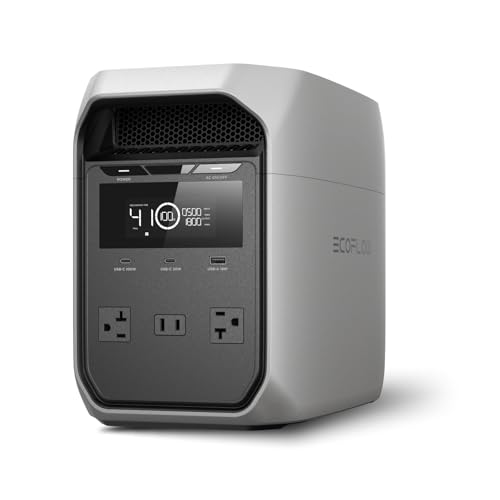
EF ECOFLOW Portable Power Station Delta 3 Classic, 1024Wh 1800W AC

EF ECOFLOW DELTA Pro 3 Portable Power Station, 4096Wh, 4000W AC Output

EF ECOFLOW Portable Power Station RIVER 2 Pro, 768Wh 800W

EF ECOFLOW Portable Power Station 3600Wh DELTA Pro, 120V 3600W AC Output

EF ECOFLOW Portable Power Station DELTA 2 Max 2048Wh, 2400W LiFePO4 Battery
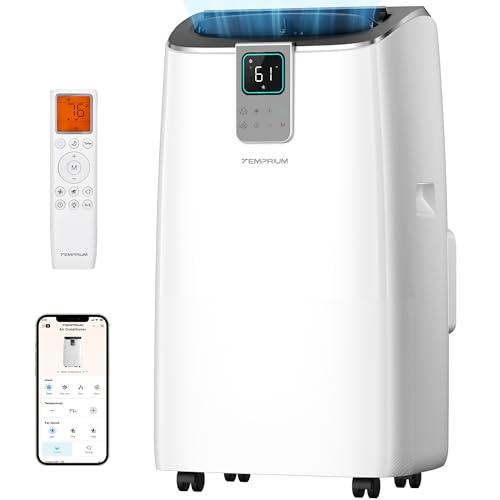
14,000 BTU Portable Air Conditioner, 4-in-1 Smart AC with WiFi
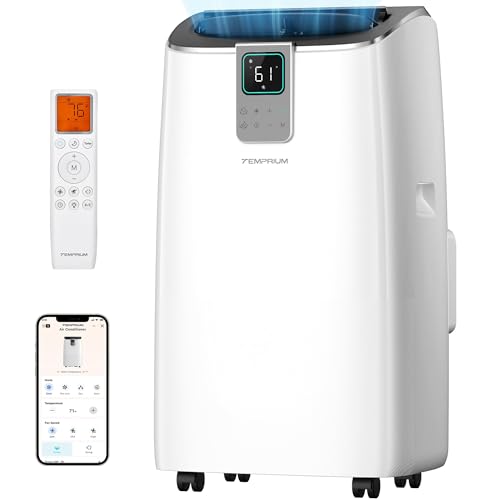
16,000 BTU Inverter Dual Hose Portable Air Conditioner for Rooms

EF ECOFLOW River 3 Plus Portable Power Station Extra Battery EB600
More Details On Our Top Picks
The Delta 3 sits in the sweet spot where most shoppers land, with 1024Wh of capacity (watt-hours, the running total of energy stored in the battery) and a 1800W AC output (alternating current, the same wave your wall outlets push out) that handles common household gear without flinching. Compared with the smaller RIVER 2 Pro later in this list, you get noticeably more headroom for a fridge or a microwave during a short outage.
For renters prepping for storm season, or RV owners who run a small espresso maker and laptop setup off-grid, this is a confident daily-driver option. Owners commonly find the carrying handle comfortable enough for short carries from car to porch, though you will want a second pair of hands for the longer trek.
The Helpful Details
- 1024Wh capacity covers multi-day light loads or a single demanding appliance for several hours.
- 1800W AC output (with X-Boost, a temporary surge feature that pushes past the rated limit for short bursts) handles refrigerators, microwaves, and most power tools.
- Expandable up to roughly 5kWh when paired with extra batteries, useful if you grow into larger backup needs.
- Fast AC charging means quick top-ups between uses, helpful for last-minute trip prep.
Things To Consider
- Heavier than the RIVER 2 Pro, so lifting to a high shelf in a closet takes effort.
- Full output claims assume short bursts, and sustained high draws shorten runtime noticeably.
- Fan noise tends to ramp up under heavy load, which matters in quiet offices.
Key Product Details
Right Fit For
Homeowners wanting a station that handles short blackouts and powers camping setups without committing to a whole-home unit.
Look Elsewhere When
The RIVER 2 Pro is a smarter match if you mostly power laptops, phones, and a small fan on weekend trips.
The Delta 3 Classic shares its 1024Wh core and 1800W output with the standard Delta 3, leaning toward the same middle-of-the-road use case. The trade-off shows up in charging speed: 0 to 80 percent lands in roughly 45 minutes with X-Stream AC, which is the brand’s fast wall-charging protocol, so last-minute top-ups before a cookout stay painless.
If you mostly keep the unit parked at home with occasional trips to a cabin, this version’s quicker AC turnaround wins out over deeper expandability. The honest read is that most shoppers won’t notice the difference between this and the standard Delta 3 until they push toward the upper end of the wattage range.
Everyday Advantages
- 0 to 80 percent in 45 minutes cuts downtime between uses.
- 1800W steady output with X-Boost up to 2600W for heavier short bursts.
- Same 1024Wh core capacity as the standard Delta 3.
- Compatible with the wider EcoFlow ecosystem if you later add panels or extra batteries.
- Compact enough for a closet corner when not in use.
Worth Noting
- Expansion ceiling is lower than the standard Delta 3, so scaling up costs more later.
- Same weight class as its sibling, which means two hands for any meaningful carry.
- Solar charging depends on the panel setup and conditions, not a set-and-forget experience.
Who Should Grab It
Frequent travelers who recharge between trips and value quick AC turnaround over deep expansion options.
Reach For A Different Pick When
The DELTA Pro 3 is a smarter call if you need long-duration backup for a full household circuit.
The DELTA Pro 3 moves the conversation from weekend backup to whole-home territory. A 4096Wh LFP battery (lithium iron phosphate, a long-life chemistry rated for thousands of cycles) and 4000W AC output support 120V and 240V appliances, so a central air unit, water pump, or electric dryer stops being wishful thinking.
Where the Delta 3 and Delta 3 Classic serve mid-size needs, this station targets homeowners with serious backup requirements or off-grid workshops running heavy tools. The build feels closer to a small appliance than a typical battery box, and the touchscreen panel makes monitoring straightforward during an outage.
Where It Delivers
- 4000W output with X-Boost up to 6000W handles central AC and 1 HP water pumps without a fuss.
- Expandable to roughly 48kWh with extra batteries and smart generators for multi-day backup.
- LFP chemistry supports long cycle life, useful for daily cycling in solar setups.
- 120V/240V output covers both standard appliances and heavier 240V loads.
Honest Caveats
- Substantial weight means you will rarely move it once installed in a garage or utility room.
- Higher upfront cost puts it out of reach for shoppers wanting light backup only.
Feature Snapshot
Built With In Mind
Homeowners with frequent outages, off-grid workshops, or anyone wanting true whole-home capability.
Skip It When
The DELTA Pro original is a better value fit if you want a big station without 240V support.
The RIVER 2 Pro drops weight and size without giving up the essentials: 768Wh of capacity, 800W AC output, and LFP chemistry that holds up to daily cycling. Full AC recharge lands in roughly 70 minutes, so you can top up during a lunch stop on a road trip.
Compared with the Delta 3 above, this is the unit you actually carry with one hand to a picnic table or a tailgate. It runs laptops, camera chargers, a small projector, and a portable cooler without complaint, but you will tap out if you try to push a microwave for long.
What Works In Its Favor
- Compact form factor fits a car trunk or backpack-side carry with room to spare.
- LFP battery chemistry supports long cycle life for frequent travelers.
- Multiple outlets cover USB-C, AC, and DC needs in one box.
- Full recharge in about 70 minutes keeps road-trip downtime low.
Points To Note
- 800W output caps the appliance list; kettles and hairdryers may push it.
- 768Wh capacity limits runtime for high-draw gear to a few hours.
- Solar input tops out below the Delta models, so panel charging takes patience.
Made For
Campers, van-lifers, and tailgaters who need lightweight, fast-recharging power for small electronics and occasional cooking.
Not Your Match When
The Delta 3 makes more sense for shoppers running a full-size fridge or microwave regularly.
The original DELTA Pro remains the heavyweight of the lineup below the Pro 3, with 3600Wh of LFP capacity and 3600W AC output that scales to 4500W with the right setup. Expansion climbs all the way to 25kWh when you stack extra batteries and smart generators, which covers most home backup scenarios short of full off-grid living.
This station suits homeowners who want serious backup without stepping up to the Pro 3’s price. In practice, it powers a fridge, lights, internet, and a microwave for a full day or more depending on cycling, which is the kind of resilience that matters when storms knock out the grid for a weekend.
Where It Excels
- 3600W AC output handles most home appliances in standard 120V setups.
- Expansion up to 25kWh covers extended outages and growing solar arrays.
- LFP battery chemistry delivers long cycle life for daily cycling households.
- Compatible with smart generators for hybrid backup in prolonged outages.
Trade Offs
- Weight and footprint place it firmly in a permanent installation role.
- Only 120V output, so 240V appliances like electric dryers stay off the table.
Best Suited To
Homeowners wanting deep backup capacity without the premium of the Pro 3’s 240V support.
Consider Something Else When
The DELTA Pro 3 earns its keep if you need to run 240V gear like central air during outages.
The DELTA 2 Max slots between the Delta 3 and the original DELTA Pro, with 2048Wh of LFP capacity and 2400W AC output. Charging speed stands out: hitting 80 percent takes about 43 minutes with high-input AC plus solar, which makes it a favorite for households bouncing between grid and solar.
It is the right station if the Delta 3 feels a touch small and the full DELTA Pro feels oversized. Owners commonly use it for evening camping trips, garage workshops, or as a kitchen-counter backup during short outages.
Notable Upsides
- 2048Wh capacity doubles the Delta 3 while staying portable enough to roll on its own wheels.
- LFP battery rated for thousands of cycles, lowering long-term replacement concerns.
- 80 percent charge in roughly 43 minutes with combined AC and solar input.
- Multiple output ports cover AC, USB-C, and DC needs at the same time.
Possible Compromises
- Wheels and handle help, but you still need a flat surface for any meaningful reposition.
- 2400W output caps how many large appliances you can run at once.
Core Details
Perfect Match For
Shoppers wanting the middle ground between weekend portability and serious home backup.
A Better Fit Elsewhere
The Delta 3 is a lighter pick for backpack-style trips where 2kWh feels like dead weight.
This Temprium portable AC cools rooms up to roughly 750 square feet with 14,000 BTU of capacity (BTU stands for British Thermal Unit, the standard measure of how much heat an air conditioner removes per hour). WiFi app control sets it apart from basic portables, letting you adjust temperature and modes from your phone before walking through the door.
The 4-in-1 design covers cooling, fan, dehumidify, and heat functions, which adds winter value in mild climates. Apartment dwellers and home-office workers benefit most, since you can roll it between rooms without permanent installation.
Points In Its Favor
- WiFi app control adds scheduling and remote adjustments without leaving the couch.
- 4-in-1 functionality covers cooling, heating, fan, and dehumidifier needs year-round.
- Cools large rooms up to 750 square feet, suitable for open-plan living areas.
Small Caveats
- Window venting kit installation takes 15 to 30 minutes and may not fit every window type.
- Heat function works best in mild shoulder seasons, not deep winter cold snaps.
Who Will Love This
Renters and remote workers wanting app-controlled cooling for large rooms without permanent install.
Swap It Out When
The 16,000 BTU Temprium dual-hose model suits you better for extreme-heat climates or larger spaces.
The dual-hose inverter design pulls in fresh outside air while exhausting hot air out, which speeds cooling noticeably compared with single-hose portables. At 16,000 BTU, this unit steps up for large bedrooms, living rooms, or top-floor spaces that struggle in peak summer.
An inverter compressor (a variable-speed compressor that ramps up and down rather than cycling on and off) adjusts output in real time, which keeps temperatures steadier and tends to run quieter than fixed-speed units. You may find the four-way oscillation a small but appreciated touch, since it pushes air both vertically and horizontally to kill hot spots.
The Value In It
- Dual-hose design cools rooms faster than single-hose portables under extreme heat.
- Inverter compressor runs quieter and maintains more stable temperatures.
- 16,000 BTU capacity covers larger rooms up to 750 square feet.
- Turbo Mode locks in maximum output for the hottest days.
Factors To Consider
- Dual-hose venting is bulkier than single-hose kits and takes more setup effort.
- Higher capacity means more power draw, so running it on a small inverter generator takes planning.
Quick Facts
Whose Shelf It Belongs On
Shoppers in hot climates who need serious cooling capacity without permanent window-unit installation.
Where Another Pick Suits Better
The 14,000 BTU Temprium smart model fits better if WiFi control matters more than raw cooling power.
The EB600 is an add-on battery for the River 3 Plus, adding 572Wh to the base unit for a combined 858Wh. The pogo-pin connection (a no-cable magnetic-style port that snaps the two pieces together) means stacking takes seconds, which matters when you are setting up camp in fading daylight.
You can also use the EB600 on its own, sliding it into a backpack for a hike-in camp without the main station. This is a niche pick, but a useful one for anyone already invested in the River 3 Plus ecosystem.
Useful Highlights
- 572Wh extra capacity lifts the River 3 Plus from base to 858Wh total.
- Pogo-pin stacking needs no extra cables or tools, ideal for quick setup.
- Works independently as a small standalone battery for short outings.
Worth Bearing In Mind
- Only compatible with the River 3 Plus, so it has limited cross-system value.
- Modest added capacity means it won’t substitute for a full Delta 3.
The Right Fit
Existing River 3 Plus owners who want more runtime without buying a whole new station.
Not Your Match When
The DELTA 2 Max is the smarter upgrade if you need substantial added capacity across a broader use range.
What Matters Most When Choosing Battery Ac Portables
Capacity And Wattage, Matched To Your Loads
Capacity, measured in watt-hours, tells you how long a station runs before needing a recharge. Output, measured in watts, tells you what appliances it can handle at once. Matching these to your realistic load matters more than chasing the largest numbers on the spec sheet, since a 4096Wh station with 4000W output is overkill for a weekend of phone charging.
Battery Chemistry And Cycle Life
LFP (lithium iron phosphate) batteries trade a slightly larger footprint for thousands of charge cycles, which suits daily or near-daily use. Traditional NMC cells stay lighter but age faster under heavy cycling. For shoppers planning weekly trips or regular solar cycling, LFP pays off over years.
Port Selection And Charging Speed
Look at the outlets you actually need: AC for household gear, USB-C for laptops and phones, DC for car-style appliances. Fast AC charging, like the EcoFlow X-Stream protocol, matters most for users who recharge between trips rather than leaving the station plugged in.
Form Factor And Real-World Use
Weight and handle design shape daily life with the unit more than people expect. A 27 kg station with wheels lives in a garage; a 7 kg unit shows up at picnics. Match the form factor to the use case, not the other way around.
Key Considerations Across These Picks
Common Shopping Slip Ups
Underestimating surge wattage trips up first-time shoppers more than any other spec. Motors in fridges, microwaves, and power tools pull two to three times their running wattage at startup, so a station rated for 1800W may stumble on a 1500W microwave that surges higher. Read the fine print, and assume your heaviest appliance demands more headroom than the box suggests.
Where The Extra Money Goes
Higher-tier models buy you three things: longer cycle life from LFP chemistry, faster AC recharging, and expansion room that grows with you. If you only need a station for two camping trips a year, those upgrades do not earn their keep. Daily users, solar households, and outage-prone regions feel the value of premium specs within the first year of ownership.
Frequently Asked Questions
How long can a portable power station run a refrigerator?
A modern full-size fridge uses roughly 100 to 200 watts while running, so a 1024Wh station covers about 5 to 10 hours of compressor cycling, longer in mild weather.
Can a portable AC unit really cool a whole apartment?
A 14,000 to 16,000 BTU portable unit cools one large room up to 750 square feet effectively, but whole-apartment cooling requires multiple units or central air.
Is LFP battery chemistry worth the higher cost?
For daily cycling or solar setups, yes. LFP cells typically rate for thousands of cycles, which means years of regular use before noticeable capacity loss.
What is the difference between single-hose and dual-hose portable ACs?
Single-hose units pull air from the room to exhaust heat, which creates negative pressure that pulls warm air in through gaps. Dual-hose designs pull in fresh outside air for the condenser, cooling rooms faster and more efficiently.
Can portable power stations be left plugged in all the time?
Most modern stations include battery management that stops charging at full capacity, so leaving them plugged in does not damage the cells. For long-term storage, manufacturers typically recommend keeping the charge around 60 to 80 percent.
Wrap Up
The right pick depends on how often you need power and how much you need to move it. Campers and weekend travelers get the most from the RIVER 2 Pro or River 3 Plus with the EB600 add-on. Homeowners wanting serious backup should weigh the DELTA 2 Max against the DELTA Pro and Pro 3. For room cooling without permanent install, the two Temprium units cover most apartment and home-office scenarios. Match the spec sheet to your real-world loads, and the rest falls into place.