Off-grid camping, van builds, workshops without ductwork, and power-outage summers have all pushed portable cooling into the spotlight. Battery-powered and battery-friendly AC options now range from palm-sized evaporative coolers to wall-mounted ductless mini splits that sip DC power efficiently. This roundup covers the picks that make sense for real-world scenarios where wall outlets, window access, or central air simply aren’t part of the plan.
The Lineup, Simplified

Disaenvir Tent Air Conditioner 3300BTU 110V

Tiptop Home Portable Air Conditioner with 2000mAh Battery
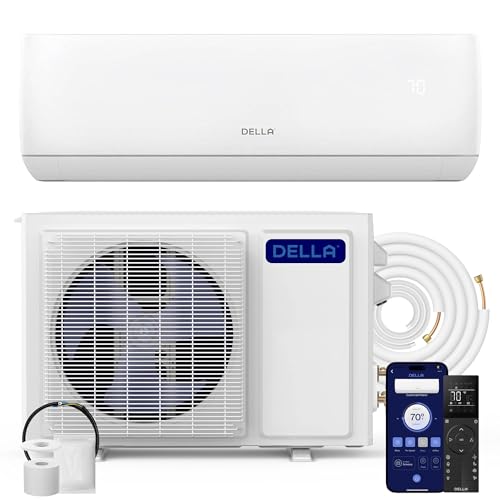
DELLA Motto Series 9100 BTU Mini Split AC 115V

DELLA Vita Series 24000 BTU Mini Split AC 230V
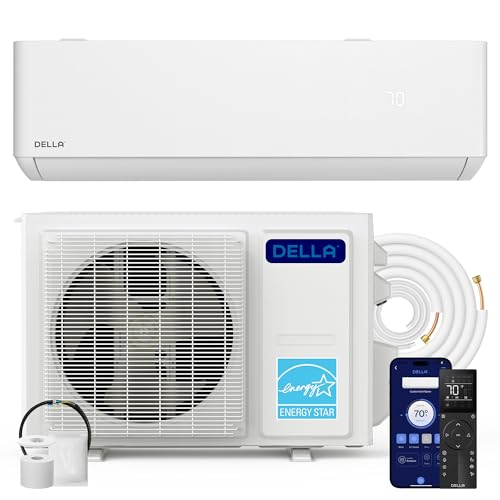
DELLA 23000 BTU Mini Split AC with Hyper Heat

DELLA Vario Series 12000 BTU Mini Split AC 115V
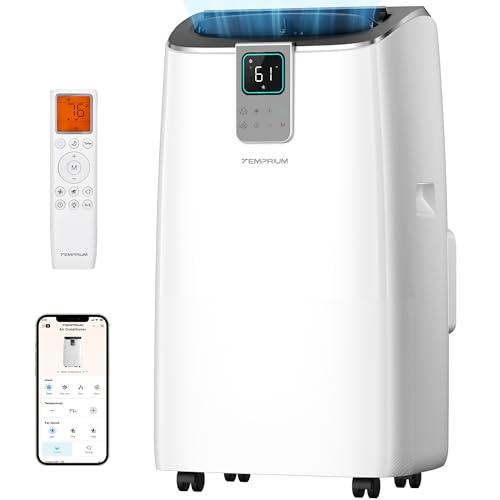
Temprium 14,000 BTU 4-in-1 Smart Portable AC
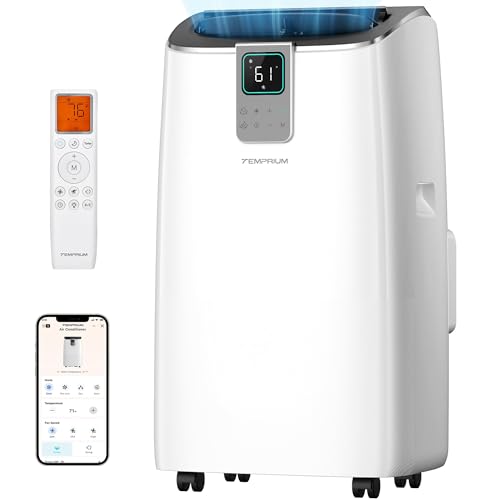
Temprium 16,000 BTU Inverter Dual Hose Portable AC
DELLA Vario Series 12000 BTU 23 SEER2 Mini Split AC
More On The Choices That Made The List
Geared for tent and pop-up shelter use, this Disaenvir unit keeps a small footprint at roughly 14 by 12 by 14.5 inches, so it slips behind a cot or in a corner without crowding the floor plan. The 3300 BTU output isn’t going to chill a cabin, but for a four-person tent on a 90°F afternoon it pushes enough cold to make napping bearable. It runs on standard 110V shore power, which means you’ll need a portable power station or generator for true off-grid use, even though the listing notes “no battery” included.
Built-in handles and a lightweight 30-pound frame make it easy to carry from the truck to the campsite. It pairs naturally with a 1000Wh power station if you want a battery AC setup without hardwiring. Compared with the Tiptop Home personal unit below, this one trades portability for actual refrigeration power, so think tent-not-nightstand.
Useful Strengths
- 3300 BTU output delivers real compressor cooling rather than evaporative mist
- Compact 30-pound shell with integrated handles fits behind a camp cot
- Standard 110V input plays nicely with most mid-size portable power stations
- White finish stays cooler in direct sun than dark housings
Things To Consider
- No internal battery, so runtime depends entirely on your external power source
- 3300 BTU is modest in larger tents or when outside temperatures climb past 95°F
- Condensate management needs attention in humid overnight conditions
Who It Suits Best
Car campers and overlanders pairing this with a 1000Wh+ power station for shaded tent trips in moderate heat.
Consider Something Else When
The Tiptop Home Portable Air Conditioner with 2000mAh Battery suits solo travelers who want a battery AC unit that runs from a built-in pack rather than an external station.
The Tiptop Home unit reads more like a personal evaporative cooler than a true compressor AC, and that distinction matters. The 2000mAh internal battery means you can carry it to a desk, a stroller-side table, or a tent corner without tethering to a wall outlet, then top up the pack later. App control lets you nudge fan speeds and timers from across the room, which beats fumbling with buttons when it’s perched on a high shelf.
Power draw stays roughly comparable to a household LED bulb, so overnight bedside runs on the built-in battery are realistic without keeping a charger handy. The catch is cooling depth: in dry climates the evaporative effect feels refreshing, but in muggy coastal humidity it just pushes warm, damp air. Unlike the Disaenvir tent unit above, this isn’t trying to refrigerate a space.
Reasons It Performs
- 2000mAh internal battery removes the wall-outlet tether for short sessions
- App control gives you remote fan and timer adjustments
- Low draw comparable to an LED bulb keeps overnight costs down
- Freon-free design sidesteps refrigerant concerns for indoor use
Worth Noting
- Evaporative cooling struggles in humid climates where moisture dominates
- 2000mAh limits runtime to a few hours at higher fan speeds
- Personal-scale airflow won’t cool anything beyond a small bubble around you
Made For
Hot-desk workers, dorm dwellers, and tent sleepers in dry climates who want a battery-powered personal breeze without compressor noise.
Look Elsewhere When
The Disaenvir Tent Air Conditioner 3300BTU 110V fits campers who need real refrigeration in humid woods, not just moving air.
DELLA’s Motto series earns a place on a battery AC list because it runs on 115V, the same voltage a portable power bank delivers. That opens the door to running a real ductless inverter off a sufficiently large home battery system or solar array rather than relying on hardwired mains. The 9100 BTU capacity covers up to 400 square feet, so a studio apartment, garage conversion, or ADU stays comfortable without oversizing the unit.
A 20.5 SEER2 rating means the inverter compressor ramps up and down to match demand rather than slamming on and off, trimming energy draw by roughly that margin compared with older single-speed units. The included 16-foot line kit and pre-charged refrigerant cut the installer’s billable hours, though wall mounting and a dedicated disconnect still call for a pro if you’re not comfortable with electrical work. Built-in WiFi and Alexa support tie it into a smart home without needing a separate hub.
Key Advantages
- 115V operation pairs with whole-home battery backup systems for off-grid cooling
- 9100 BTU handles up to 400 square feet, plenty for a studio or ADU
- 20.5 SEER2 inverter efficiency keeps draw low enough for solar pairing
- Pre-charged lines and 16-foot kit shorten installation time
Points To Note
- Professional installation strongly recommended for line set routing and electrical
- 9100 BTU underdelivers in lofts with high ceilings or strong afternoon sun load
- Heat pump performance drops sharply below freezing
Feature Snapshot
Best Suited To
Studio apartment dwellers and ADU owners with a battery backup system who want ductless cooling without a 230V electrical upgrade.
Skip It When
The DELLA Vario Series 12000 BTU Mini Split AC 115V makes more sense for larger bedrooms and open layouts that need more muscle on the same voltage.
The Vita series steps into whole-home territory with 24000 BTU of cooling capacity and a 2-ton heat pump rated for spaces up to 1500 square feet. On a properly sized off-grid solar and battery setup with 230V service, this unit can run a small house during a grid outage without skipping a beat. The 20 SEER2 rating keeps energy consumption reasonable for inverter-driven operation.
DC inverter technology trims draw by adjusting compressor speed in real time, which matters enormously when you’re feeding it from a finite battery bank rather than unlimited grid power. The pre-charged refrigerant and 16-foot kit reduce install labor, but a 230V mini split still demands a dedicated breaker and proper line-set vacuuming. Compared with the 9100 BTU Motto above, the Vita trades compact simplicity for genuine whole-home coverage.
The Helpful Details
- 24000 BTU covers up to 1500 sq ft for whole-home or large workshop use
- 20 SEER2 inverter reduces cycling losses critical for battery-powered operation
- 2-ton heat pump adds winter functionality for year-round off-grid living
- Pre-charged lines and 16-foot kit minimize field modifications
Trade Offs
- 230V requirement rules out standard 115V outlets and lighter battery inverters
- Professional line-set installation is effectively mandatory for warranty coverage
- Oversized for small rooms where a 9000 or 12000 BTU unit would suffice
Perfect Match For
Off-grid homesteaders with 230V battery banks who need ductless cooling and heating for a full small home or large workshop.
Reach For A Different Pick When
The DELLA 23000 BTU Mini Split AC with Hyper Heat suits four-season rural properties that need stronger low-temperature heating performance than this Vita offers.
This DELLA sits at the top of the efficiency ladder at 23 SEER2 and adds genuine cold-weather heating via Hyper Heat, which keeps the heat pump producing warmth down to -13°F. For mountain cabins and northern off-grid homes running on battery AC systems, that low-temp rating prevents the dreaded strip-heat fallback that drains a battery bank in hours. The 23000 BTU output covers up to 1500 square feet, matching the Vita series above but with better efficiency and stronger heating.
Soft Airflow technology directs air along ceilings and walls rather than blasting straight at occupants, which matters in bedrooms where you sleep directly under the head unit. Smart WiFi and Alexa support simplify scheduling and remote adjustments, and a 16.4-foot line kit gives installers more reach for tricky wall runs. The Energy Star rating confirms it clears federal efficiency thresholds, which can matter if a rebate program applies.
Why It Works Well
- Hyper Heat maintains output down to -13°F, ideal for battery-powered winter heating
- 23 SEER2 efficiency keeps draw low enough for solar and battery pairing
- Soft Airflow pattern avoids direct blasts during sleep or work
- Energy Star certification supports potential regional rebate eligibility
Honest Caveats
- 230V requirement demands a properly sized battery inverter and breaker panel
- Premium efficiency commands a higher price than the 20 SEER2 Vita
- 1.92-ton capacity may overshoot smaller single-room applications
Spec Overview
Who Will Love This
Northern off-grid homeowners with 230V battery banks who want one ductless unit to handle both summer cooling and deep-winter heating.
Swap It Out When
The DELLA Vita Series 24000 BTU Mini Split AC 230V fits warmer climates where deep-winter heating performance is a non-issue.
The Vario 12000 BTU sits in the sweet spot for first-time mini split owners running on 115V. Unlike the 23000 BTU Vita above, this one plugs into a standard household outlet on a 20A circuit, removing the electrician visit for many installs. Cooling capacity covers up to 550 square feet, which handles a master bedroom, large living room, or finished basement comfortably.
The 20.5 SEER2 inverter compressor modulates output rather than slamming on and off, which keeps noise low and efficiency high. Pre-charged refrigerant lines and a 16.4-foot install kit remove the most intimidating steps for DIY-comfortable homeowners, though vacuuming and pressure testing still demand attention. WiFi and Alexa integration slot the unit into most smart home setups without extra hubs.
What Makes Sense
- 115V operation eliminates the 230V electrical upgrade for many installations
- 12000 BTU covers up to 550 sq ft, ideal for primary bedrooms and living areas
- 20.5 SEER2 inverter reduces draw for solar and battery pairing
- Pre-charged lines and 16.4-foot kit support faster install timelines
Room For Improvement
- Heat pump performance degrades noticeably below 20°F outdoor temps
- Still requires line-set routing and proper vacuuming for warranty validity
- Underdelivers in open-concept spaces exceeding 550 sq ft
Right Fit For
First-time mini split owners cooling a single primary room or small home addition with a 115V battery backup system.
Another Choice May Suit
The Temprium 14,000 BTU 4-in-1 Smart Portable AC fits renters who can’t drill through walls and need a no-install cooling option.
Temprium’s 4-in-1 portable AC earns its spot here because renters and dorm dwellers can’t drill a refrigerant line through a wall, and many don’t have a battery AC system with enough inverter capacity to run a ductless unit anyway. The 14000 BTU cooling capacity paired with a 400 CFM airflow moves serious air for rooms up to 750 square feet. A 7.8 CEER rating keeps efficiency reasonable even at this output level.
The 4-in-1 function typically bundles cooling, fan, dehumidifier, and heater modes, which broadens year-round usefulness beyond summer-only operation. WiFi control adds app-based scheduling and remote adjustments. Compared with the DELLA Vario above, this portable unit trades real refrigeration efficiency for zero-install portability, and you’ll vent hot air through a window kit rather than a refrigerant line.
Standout Benefits
- 14000 BTU handles up to 750 sq ft, more than most single-room portable units
- 4-in-1 design adds dehumidification and heating beyond straight cooling
- WiFi control supports scheduling without needing physical access to the unit
- Portable form factor suits renters who can’t modify walls or windows permanently
Practical Considerations
- Window vent kit loses some efficiency versus sealed ductless installs
- Internal water tank needs draining in high-humidity operation
- Higher draw than a mini split reduces runtime on small battery systems
Feature Card
Built With In Mind
Apartment renters and dorm residents who need serious cooling without drilling, plus homeowners wanting a flexible unit for rooms that can’t host a mini split.
A Better Fit Elsewhere
The Temprium 16,000 BTU Inverter Dual Hose Portable AC suits larger living rooms where dual-hose design reduces negative pressure issues during long cooling sessions.
The dual-hose setup on this Temprium makes a real difference compared with the single-hose 14000 BTU model above. One hose pulls in fresh outside air while the second exhausts hot air, eliminating the negative pressure problem that pulls warm air in through door cracks in single-hose portables. The inverter compressor modulates output to match demand rather than cycling on and off, which trims energy draw and keeps noise more consistent.
At 16000 BTU this unit targets living rooms and master bedrooms up to 750 square feet, with four-way oscillation spreading airflow vertically and horizontally so you aren’t sitting in a single cold stream. Turbo Mode locks output at 61°F for extreme heat days when standard cooling feels inadequate. Unlike the DELLA mini splits above, this portable still needs a window for the hose vent, so true off-grid windowless operation isn’t possible.
Bright Spots
- Dual-hose design eliminates negative pressure losses common in single-hose portables
- Inverter compressor reduces cycling and steady-state energy use
- 16000 BTU handles larger bedrooms and living rooms with margin
- Turbo Mode delivers maximum output during extreme heat events
Soft Spots
- Two hoses require a sturdier window seal kit than single-hose units
- Larger chassis takes up more floor space than compact portables
- Higher BTU draw strains smaller battery inverters more than the 14000 model
Whose Shelf It Belongs On
Homeowners cooling a large living room or master bedroom on a room-by-room basis without committing to a permanent mini split install.
Where A Sibling Pick Shines
The Temprium 14,000 BTU 4-in-1 Smart Portable AC fits smaller bedrooms and dorms where dual-hose bulk is overkill.
This DELLA Vario runs at 23 SEER2 while staying in the manageable 12000 BTU, 1-ton class, which is the efficiency sweet spot for residential battery AC operation. Higher SEER2 means the compressor does less work for the same cooling output, which translates directly to longer runtime on a fixed battery bank. The 208-230V requirement places it firmly in the hardwired category rather than plug-in territory.
Coverage up to 550 square feet handles most bedrooms and home offices, and a pre-charged 16.4-foot installation kit removes the most intimidating part of the install. Auto defrost and self-diagnosis routines handle routine maintenance without a service call, which matters in remote or off-grid settings where HVAC techs don’t make house calls. Compared with the 115V Vario earlier in the list, this unit trades plug compatibility for top-tier efficiency.
A Few Highlights
- 23 SEER2 efficiency reduces compressor cycling for longer battery runtime
- 12000 BTU covers up to 550 sq ft for bedrooms and home offices
- Pre-charged 16.4-foot kit shortens professional install times
- Auto defrost and self-diagnosis reduce routine service needs
Possible Compromises
- 208-230V power rules out standard 115V wall outlets and lighter inverters
- Heat pump output tapers as outdoor temps drop below freezing
- Professional install effectively mandatory for warranty coverage
Quick Technical Notes
Who Should Grab It
Efficiency-first homeowners with 230V battery banks cooling a primary bedroom or home office where long runtime and low draw matter more than plug-in convenience.
Where Another Pick Suits Better
The DELLA Vario Series 12000 BTU Mini Split AC 115V fits properties without 230V service or those running lighter-duty battery inverters.
What To Weigh Before Picking A Battery AC Setup
Match The Cooling Class To Your Power Source
The phrase “battery AC” covers a wide spectrum, from a 2000mAh personal cooler to a 230V ductless mini split drawing from a 10kWh home battery. Run time depends on the battery’s usable capacity (in watt-hours) divided by the unit’s average draw (in watts). A 12000 BTU mini split at 1000W average burns about 250Wh per hour, so a 5kWh battery bank delivers roughly 20 hours of cooling before recharge, assuming no solar input during the day.
Understand BTU Versus Square Footage
BTU (British Thermal Unit) measures how much heat a unit removes per hour, and rough sizing lands near 20 BTU per square foot for standard ceilings. A 12000 BTU mini split therefore covers about 550-600 sq ft in a typical residential room with 8-foot ceilings. High ceilings, strong sun exposure, and poor insulation push that requirement upward, so an oversized room can call for stepping up to a 18000 or 24000 BTU model.
Choose The Right Voltage For Your Electrical Panel
Mini splits run on either 115V (standard household) or 230V (dedicated appliance circuits). On a battery AC setup, the inverter must match the unit’s voltage and supply enough continuous wattage to handle compressor startup surges. The 115V DELLA Motto and Vario models above drop into standard outlet territory, while the Vita and Hyper Heat lines demand a 230V inverter. Getting this wrong leads to tripped breakers or compressor damage.
Decide Between Portable And Ductless Form Factors
Portable AC units sacrifice efficiency for install flexibility, since they vent through a window kit rather than a sealed refrigerant line. Ductless mini splits cost more and require drilling, but they cool more effectively per watt and avoid the negative-pressure losses common in single-hose portables. Renters and short-term dwellers tend toward portables, while long-term homeowners benefit most from ductless installs.
Key Considerations Across These Picks
Common Shopping Slip Ups
Underestimating battery capacity ranks as the top mistake when shopping for a battery AC system. A mini split that hums along on grid power can drain a modest battery bank in just a few hours, so matching the unit’s draw to your inverter and storage matters more than picking the biggest BTU number on the shelf. Another trap is ignoring voltage compatibility, since 230V mini splits silently refuse to run on 115V inverters and can damage control boards if miswired.
Why Top Tier Costs More
Premium mini splits justify their higher price through inverter efficiency ratings, low-temperature heat pump performance, and longer line kits that reduce install labor. The DELLA Hyper Heat above, for instance, maintains heating output down to -13°F, which preserves battery capacity by avoiding strip-heat fallback. Higher SEER2 ratings compound over years of operation, since the compressor cycles less and draws less per cooling hour, which matters most on solar and battery pairings.
Frequently Asked Questions
How long can a battery AC unit run on a portable power station?
Run time depends on the station’s watt-hour capacity and the AC’s average draw. A 1000Wh station running a 60W personal cooler lasts around 16 hours, while the same station running a 1000W mini split drains in roughly one hour. For multi-hour cooling, a 2-5kWh expandable station or a fixed home battery bank makes far more sense.
Can a mini split really run on solar panels and batteries alone?
Yes, when the system is sized correctly. An inverter with continuous output above the mini split’s startup surge and a battery bank sized for the expected daily draw are both required. Most off-grid homes pair a 5-10kWh battery bank with 4000-8000W of solar to run a 12000 BTU mini split through summer afternoons and evenings.
What’s the difference between BTU and SEER ratings?
BTU measures cooling power, meaning how much heat the unit removes per hour. SEER2 measures efficiency, meaning how many BTUs the unit delivers per watt-hour of electricity consumed. A higher SEER2 mini split provides the same cooling for less energy, which directly extends battery runtime on off-grid setups.
Do portable AC units work as well as mini splits?
Portable units cool less efficiently because window vent kits leak conditioned air and single-hose designs create negative pressure that pulls warm air in through gaps. Dual-hose portables like the Temprium 16000 BTU above close that gap partially, but a ductless mini split still outperforms them per watt on a battery AC system.
Is professional installation required for ductless mini splits?
Technically skilled homeowners can handle the wall mounting and electrical work, but most manufacturers require professional installation for warranty coverage. Proper line-set vacuuming, pressure testing, and refrigerant handling are not optional steps, and skipping them risks compressor damage that voids the warranty entirely.
The Takeaway
Battery-powered cooling now spans personal evaporative units, smart portables, and full ductless mini splits that pair with home battery banks. Your ideal pick depends on the runtime you need, the voltage your inverter supplies, and whether you can commit to a permanent install. Start by sizing your battery capacity to the unit’s draw, then choose the form factor that fits your space and your tolerance for installation effort.