A flat battery is the kind of problem that always shows up at the wrong time. Cold morning, full schedule, nothing happens when you turn the key. Having the right refill gear on hand, whether a sealed AGM replacement, a smart charger, or a simple hydrometer to test what you’ve got, turns a tow-truck moment into a coffee-break fix. The list below covers batteries you actually fill yourself plus the tools and gear that surround that work, so home mechanics, motorcycle owners, and off-grid tinkerers can keep every cell topped up and healthy.
The Picks In Brief

HQST 12V 60Ah AGM Car Battery Group 47 H5
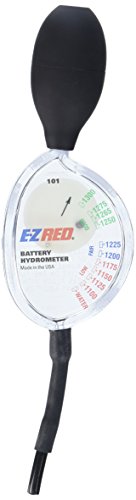
EZRED SP101 Battery Hydrometer

MOTOPOWER MP00205C 12V 800mA Battery Charger Maintainer

WirthCo 20410 Battery Fluid Filler With Flex Bulb

Yuasa YTX7L-BS Maintenance Free AGM Battery with Acid Pack

Casil CA1270 12V 7Ah SLA/AGM Sealed Lead Acid Battery

ECO-WORTHY 12V 280Ah LiFePO4 Lithium Battery with Bluetooth
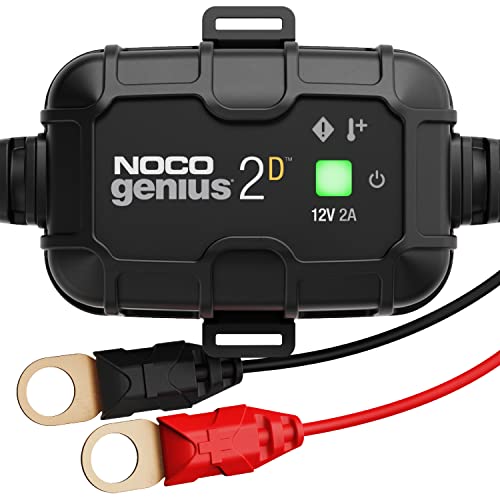
NOCO GENIUS2D 2A 12V Onboard Battery Charger and Maintainer

PowerSource Harley FLSTC Heritage Softail Replacement Battery
The Details Behind The Selections
If your daily driver is a sedan or compact SUV with a start-stop system (meaning the engine cuts off at traffic lights and restarts on the brake release), this HQST Group 47 H5 AGM (Absorbent Glass Mat, a sealed battery design where electrolyte is held in fiberglass mats) battery slots into the standard tray without fuss. The 680 CCA (Cold Cranking Amps, a measure of starting power at 0°F) rating covers brutal cold mornings, and the operating range spans -40°F to 140°F, so garage queens in Minnesota and driveway sitters in Arizona both fit the same envelope. At 9.5 x 6.9 x 7.6 inches, you should confirm your tray dimensions before ordering, since Group 47 fits a specific family of vehicles rather than being universal.
For owners who hate topping off cells, the maintenance-free AGM design skips that chore entirely, and the upgraded charge acceptance suits vehicles that stop and start dozens of times in a single commute. Compared to a flooded lead-acid battery in the same group size, AGM holds voltage better through repeated shallow discharges and resists vibration damage on rough roads.
Notable Gains
- 680 CCA delivers confident cold-weather starts, which matters most for commuters in northern climates
- Sealed AGM construction removes the need to check or refill electrolyte over the battery’s life
- Higher charge acceptance helps vehicles with start-stop systems recover faster between restarts
- Wide operating range covers everything from deep-winter freezes to hot summer engine bays
Worth Noting
- Group 47 H5 fits specific vehicles; you should measure your tray and check terminal position before ordering
- AGM batteries cost more up front than equivalent flooded batteries, so the upgrade only pays off when you actually use the cycling advantage
Key Specs
Who It Suits Best
Owners of late-model sedans, crossovers, and light trucks with start-stop systems who want a maintenance-free replacement that handles cold winters without drama.
Consider Something Else When
For smaller motorcycle and powersports applications, the Yuasa YTX7L-BS Maintenance Free AGM Battery with Acid Pack is a better-fit size.
Before you top up a flooded battery or write one off, a hydrometer tells you the real story. The EZRED SP101 draws acid into a clear chamber where colored floats register each cell’s specific gravity (the density of the electrolyte compared to water, which correlates to charge level). Service shops have leaned on this tool for years because the housing takes rough handling, and both the technician and the watching customer can read the floats at a glance.
Unlike the sealed batteries higher on this list, flooded cells need periodic attention, and a hydrometer is the only honest way to know whether a weak cell is sulfated, discharged, or simply low on acid. There are no replacement parts, no batteries, no calibration routine, just squeeze the rubber bulb and read the floats.
Where It Delivers
- Universal fit means the same tool works across cars, trucks, motorcycles, and garden tractors with flooded cells
- Clear chamber and visible floats let owners diagnose each cell without guesswork
- Rugged construction survives the kind of drops and rough handling common in home garages and pro shops alike
Trade Offs
- Only works on batteries with removable vent caps, so sealed AGM units like the HQST or Casil entries are off-limits
- Reading floats requires good light and steady hands, which can be tricky on dim shop floors
Right Fit For
Home mechanics and small-shop technicians maintaining older vehicles with flooded lead-acid batteries who want a reliable acid-strength reading before deciding whether to refill or replace.
Swap It Out When
For AGM-only households that never touch flooded cells, the MOTOPOWER MP00205C charger maintainer covers battery health differently by managing voltage instead.
Sulfation (the buildup of lead-sulfate crystals on battery plates that slowly strangles capacity) kills more batteries than any other single cause. The MOTOPOWER MP00205C doubles as a charger, maintainer, trickle charger, and desulfator, covering flooded, AGM, and gel cell 12-volt lead-acid batteries in one all-weather package. The 800mA output is gentle enough to leave connected for weeks, and the unit’s automatic detection steps in when sulfation starts to build.
For anyone storing a classic car over winter, running a motorcycle seasonally, or keeping a backup battery topped off, the four-function design replaces a shelf full of single-purpose chargers. The ETL safety listing covers the basics on electrical and fire protection, and the compact housing fits in a trunk or garage shelf without hogging space.
Useful Highlights
- Works across flooded, AGM, and gel cell chemistries, which means one tool handles almost every 12V battery on the property
- Automatic desulfation extends the useful life of batteries that sit idle for long stretches
- All-weather construction lets you leave it connected in an unheated garage or a hot shed
- Gentle 800mA output is safe for long-term float maintenance without overcooking smaller batteries
Points To Note
- 800mA charges slowly, so recovering a deeply discharged battery takes patience
- The unit lacks some of the advanced repair modes found on larger professional chargers
Made For
Owners of mixed battery fleets who want a single charger-maintainer that adapts between flooded car batteries, AGM motorcycles, and gel cell deep-cycle units without swapping gear.
A Better Fit Elsewhere
For vehicles that need a permanent under-hood solution, the NOCO GENIUS2D 2A 12V Onboard Battery Charger and Maintainer mounts directly to the battery.
The WirthCo 20410 is the kind of simple tool that makes a messy job clean. The flex bulb draws battery fluid or distilled water into the chamber, and a long spout threads past the battery cover to deliver the liquid right where it needs to land, no funnel, no spill, no acid on the paint. For owners servicing flooded golf cart, marine, or classic car batteries, this is the missing piece between “I should check the cells” and actually finishing the job.
The squeeze-bulb design takes a little practice to control the flow rate, and once you’ve used it on a few batteries the technique becomes second nature. It weighs almost nothing and stores flat in a toolbox drawer, which is the kind of low-fuss design that pays off when you only top off batteries twice a year.
Advantages To Know
- Flex bulb design reaches into awkward battery compartments where rigid funnels won’t fit
- Draws and dispenses in one motion, cutting the steps needed to top off each cell
- Lightweight, compact body fits in a glove box or toolbox for roadside top-ups
- Reusable construction outlasts disposable plastic syringes commonly sold for the same job
Small Caveats
- Only works on flooded batteries with removable cell caps, so sealed AGM models are out of reach
- Battery acid is corrosive, so owners should rinse the filler thoroughly after each use to extend its life
Best Suited To
Anyone maintaining a flooded marine, golf cart, or classic car battery who wants a clean, controlled way to top off cells without splashing acid on surrounding metal.
Look Elsewhere When
For sealed AGM batteries where topping off isn’t possible, the Casil CA1270 12V 7Ah SLA/AGM Sealed Lead Acid Battery is a sealed replacement instead.
Yuasa ships the YTX7L-BS as a dry AGM battery plus a separate electrolyte bottle, and you fill it yourself right before installation. That “Bottle Supplied” format keeps the battery fresh on the shelf for years, so a garage-stored spare stays good until your old battery actually quits. Once filled and sealed, the absorbed glass mat construction makes the unit spill-proof, and the lead-calcium chemistry keeps specific gravity stable far longer than older lead-antimony designs.
This is the classic powersports size: small dirt bikes, ATVs, scooters, and entry-level motorcycles. At 6.1 pounds with acid and roughly 5.5 x 2.8 x 6.2 inches, it tucks into tight battery boxes where bulkier automotive units won’t fit. The 100 CCA rating covers most small-engine cranking needs, though larger V-twin motorcycles may need a higher-output replacement.
Practical Advantages
- Dry-shipped format means the battery stays fresh on the shelf until you activate it, so a stored spare doesn’t slowly lose capacity
- Sealed AGM design eliminates water loss and the need for topping off once installed
- Lead-calcium chemistry holds specific gravity roughly three times longer than conventional batteries
- Compact size fits tight powersports battery compartments
A Few Limitations
- Requires the owner to fill the battery with the included acid pack before first use, which adds setup time
- Lower 100 CCA output may struggle in very cold climates or on larger displacement engines
Quick Facts
Who Will Love This
Riders with small-displacement motorcycles, ATVs, or scooters who want a long-shelf-life dry-shipped battery they can activate when the old one finally dies.
Where Another Pick Suits Better
For larger Harley touring models, the PowerSource Harley FLSTC Heritage Softail Replacement Battery is a higher-output direct fit.
The Casil CA1270 is the kind of battery you forget about until a power outage reminds you why it matters. Sealed lead-acid construction with AGM internals means the unit sits in a UPS (Uninterruptible Power Supply), home alarm panel, or backup lighting system without ever needing water or attention. F1 tab terminals (0.187-inch spade connectors, common on small SLA batteries) make the swap quick, and the 12V 7Ah rating matches the spec sheet on most household backup gear.
Compared to a flooded battery in the same role, this SLA (sealed lead-acid) version can be mounted on its side without leaking, which helps when the only available space is inside a closet or under a desk. Owners commonly replace these every three to five years when the UPS starts beeping, so keeping a spare on the shelf avoids the next-day scramble.
Good Reasons To Consider
- Sealed AGM design can be mounted in various orientations without leaking, which solves tight-cabinet installations
- F1 terminals slide on without tools, which simplifies emergency swaps
- Maintenance-free operation means no distilled water top-ups over the battery’s life
Honest Caveats
- 7Ah capacity suits low-drain backup applications but won’t run high-power inverters for long stretches
- SLA batteries lose capacity permanently if stored fully discharged, so used units purchased cheaply may already be near the end of their service life
Perfect Match For
Homeowners running alarm systems, emergency lighting, or small UPS units who want a leak-proof, set-and-forget battery that swaps in without tools.
Not Your Match When
For off-grid solar or RV house banks that need far more capacity, the ECO-WORTHY 12V 280Ah LiFePO4 Lithium Battery with Bluetooth is the right step up.
The ECO-WORTHY 280Ah sits in a different category than the rest of this list. LiFePO4 (lithium iron phosphate, a chemistry known for long cycle life and thermal stability) replaces lead-acid entirely, and 280Ah in a single 12V block covers serious energy storage. The metal case adds fire resistance over typical plastic housings, the built-in 200A BMS (Battery Management System, the onboard circuitry that prevents overcharge, over-discharge, and short circuits) keeps the cells safe, and Bluetooth lets you monitor state of charge from your phone.
For off-grid cabins, RV house banks, trolling motors, and solar storage, this kind of capacity stretches between charges for days of normal use. Low-temperature protection prevents charging damage when the battery sits in an unheated garage in winter, which is a common weak spot for lithium chemistries. Just note that LiFePO4 wants a lithium-compatible charger, so the MOTOPOWER unit’s profile should be checked against the manual before pairing.
Benefits That Matter
- 280Ah capacity covers multi-day off-grid loads in a single 12V block
- Built-in BMS protects against overcharge, over-discharge, and short circuits
- Bluetooth monitoring removes the guesswork on remaining runtime
- Metal case improves heat dissipation and fire resistance compared to plastic enclosures
Factors To Consider
- Requires a lithium-compatible charger, so older lead-acid chargers may need to be replaced
- Higher up-front cost than equivalent lead-acid capacity, though cycle life evens out the math over time
- Exterior label style ships at random, which matters only if the look of your battery bay matters to you
Feature Snapshot
Right Fit For
Off-grid cabin owners, RV travelers, and serious solar users who want deep cycling capacity with phone-based monitoring and don’t mind the lithium price tag.
Skip It When
For everyday car starting needs, the HQST 12V 60Ah AGM Car Battery Group 47 H5 is far more appropriate for the job.
The GENIUS2D is built for vehicles that sit more than they drive. The onboard design mounts directly to the battery or nearby metal, with a 2A output that handles AGM, gel, SLA, VRLA (Valve Regulated Lead Acid, a sealed category that includes AGM and gel), flooded, and deep-cycle batteries up to 40 amp-hours. Under the hood, in the trunk, on a trailer, the install disappears once wired in, and the charger handles itself without supervision.
For classic car owners, seasonal riders, and anyone whose daily driver occasionally naps for a month, an onboard maintainer is the difference between turning the key confidently and calling for help. The compact size fits in tight engine bays, and the desulfation mode helps revive batteries that have already started to sulfate from sitting.
Standout Benefits
- Direct-mount design eliminates the setup and takedown of a portable charger every time
- Compatible with AGM, gel, flooded, and deep-cycle batteries up to 40Ah, covering most powersports and small-vehicle applications
- Built-in desulfation helps recover batteries that have lost capacity from extended storage
Possible Compromises
- 2A output charges slowly and is best suited for maintenance rather than recovery from a deeply discharged battery
- Requires permanent mounting and a nearby power outlet, which limits portability between vehicles
Feature Card
Whose Shelf It Belongs On
Collectors, weekend riders, and second-vehicle owners who want a permanently installed maintainer so the battery is always ready when they are.
Reach For A Different Pick When
For a portable charger that moves between vehicles and battery types, the MOTOPOWER MP00205C charger maintainer is the more flexible option.
PowerSource built this WPX20L-LS replacement specifically for Harley-Davidson FLSTC Heritage Softail Classic models from 1991 through 2014, covering the 1340, 1450, 1584, and 1690cc engine variants. At 500 CCA, it offers roughly 30% more cranking power than the stock unit, which matters when an older big-twin needs a stronger push on cold mornings. The sealed AGM format means no acid spills even if the bike goes down in a corner.
For riders restoring a Softail that sat for years, the upgrade cranking power is the main draw, and the direct-fit design eliminates terminal or mounting modifications. Compared to a generic motorcycle battery, this one matches the OEM (Original Equipment Manufacturer) replacement numbers and is tuned for the amp draw of a big V-twin charging system.
Useful Touches
- 500 CCA delivers noticeably stronger cranking than stock on big-twin Harley engines
- Sealed AGM construction resists spills on lean angles and rough roads
- Direct-fit design matches OEM part numbers for clean installation
- Covers an unusually wide model-year range, which helps parts sourcing on vintage Softails
Where It Is Less Suited
- Model-specific fit means it only suits the listed Harley applications, unlike a universal powersports battery
- Higher output comes with a higher price tag than stock replacement options
Who Should Grab It
Harley-Davidson FLSTC Heritage Softail owners from the early 1990s through 2014 who want stronger cranking and a sealed battery that fits without modification.
Where A Sibling Pick Shines
For smaller displacement motorcycles, scooters, or ATVs, the Yuasa YTX7L-BS Maintenance Free AGM Battery with Acid Pack fits a much wider range of bikes.
What To Weigh Before Buying Battery Acid Refills
The first thing to settle is which battery chemistry actually lives in your vehicle or device. Flooded lead-acid cells are the only type that accepts refill water or electrolyte, and they show up in older cars, golf carts, marine applications, and some industrial gear. AGM and gel variants are sealed, so the question shifts from refilling to replacement or maintenance charging. Picking the wrong category leads to buying a fluid filler for a battery you can never open.
Match the physical group size and terminal layout before anything else. Group 47, Group 24, and the various powersports codes each describe a specific footprint, and CCA ratings should at least meet the manufacturer’s minimum for your engine. Cold cranking amps matter most in northern climates, while reserve capacity (how long the battery can run accessories if the alternator quits) matters more for vehicles with heavy accessory loads.
Decide whether you need refill gear, replacement batteries, or charging equipment. A hydrometer and a fluid filler are the right answer for owners of flooded batteries who want to extend service life. Replacement batteries make sense when the old unit is past recovery. A smart charger or onboard maintainer pays off when batteries sit unused for weeks at a time, since sulfation is the slow killer of stored batteries. Most households end up wanting tools from more than one category, which is why this list covers all three.
Choosing Wisely Across The Picks
Where Shoppers Go Wrong
The most common slip is assuming all batteries can be topped off with acid. Sealed AGM and gel batteries cannot, and forcing the caps off damages the case. Another trap is buying a higher-CCA battery than the vehicle actually needs, since the alternator only puts back what the system draws. Owners should also confirm group size and terminal orientation, since a battery that’s rotated 180 degrees may not reach the cables even when it physically fits the tray.
The Case For Spending Up
Premium picks earn their place through longer cycle life, stronger cranking, or monitoring features that basic units skip. A higher-CCA Harley replacement turns a borderline-start situation into a confident crank, and a Bluetooth lithium battery lets you watch capacity drain in real time instead of guessing. For vehicles that sit, an onboard maintainer pays back its cost by replacing one battery every few years. The upgrade makes sense when the use case actually stresses the battery, not as a default for every vehicle on the property.
Frequently Asked Questions
What Is Battery Acid Refill?
Battery acid refill is the process of restoring electrolyte levels in a flooded lead-acid battery using distilled water or manufacturer-approved battery fluid. It applies only to batteries with removable vent caps, since sealed AGM and gel cells cannot be refilled.
How Often Should I Refill A Flooded Battery?
Most flooded batteries need a fluid check every two to three months in regular use, with more frequent checks in hot climates where water evaporates faster. A hydrometer reading tells you when a cell needs attention rather than guessing based on the calendar.
Can I Refill A Sealed AGM Battery?
No. AGM and gel batteries are factory-sealed, and the absorbed electrolyte cannot be replaced without damaging the cells. When a sealed battery loses capacity, the right answer is replacement or a desulfating charger, not refill.
What Tools Do I Need To Refill Battery Acid Safely?
A hydrometer for testing, a fluid filler with a flex bulb for clean top-ups, gloves and eye protection, and a supply of distilled water cover most flooded-cell maintenance. Work in a ventilated space, since charging batteries release hydrogen gas.
Is Battery Acid Dangerous?
Yes. Sulfuric acid is corrosive and can burn skin, eyes, and clothing on contact. Neutralize spills with baking soda and water, and rinse any exposed skin immediately. Reasonable precautions keep routine battery work safe, but the chemistry deserves respect.
Final Take
The right battery gear depends on whether you need to refill, replace, or maintain. Flooded-cell owners benefit most from a hydrometer and fluid filler, while AGM households should lean toward smart chargers and onboard maintainers. For specialty applications, lithium upgrades and model-specific replacements cover the gaps that universal picks can’t. Match the chemistry and form factor to your actual battery, and the rest of the decision tends to take care of itself.