Whether you are chasing down a stubborn no-start on a Sunday morning or just tired of guessing whether the AA in your remote still has life, a dedicated tester turns guesswork into a clear reading. Most people either replace batteries too early or trust a dead one for too long, and both habits cost money over a year. The ten options below split into two camps: heavy-duty diagnostic units built for 12V and 24V vehicles, and compact household checkers that sort through a junk-drawer pile in seconds.
Your Options, Compared

ANCEL BST600 12V/24V Lead-Acid Battery Tester with Printer
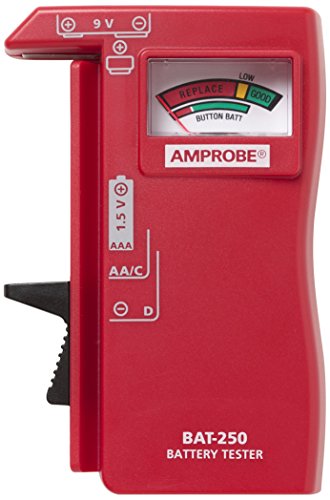
Amprobe BAT-250 Battery Tester

Dlyfull LCD Universal Battery Checker

FOXWELL BC521 2-in-1 Charger and Tester

ANCEL BA101PRO 12V/24V Battery Tester
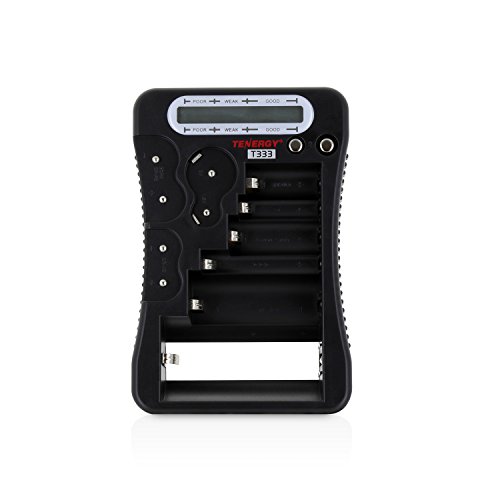
Tenergy T-333 Universal Battery Tester
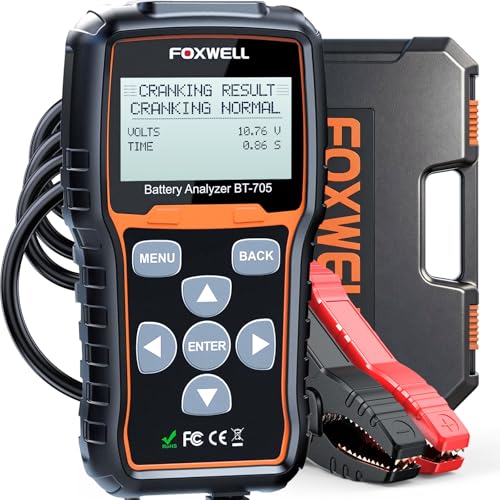
FOXWELL BT705 12V/24V Load Tester
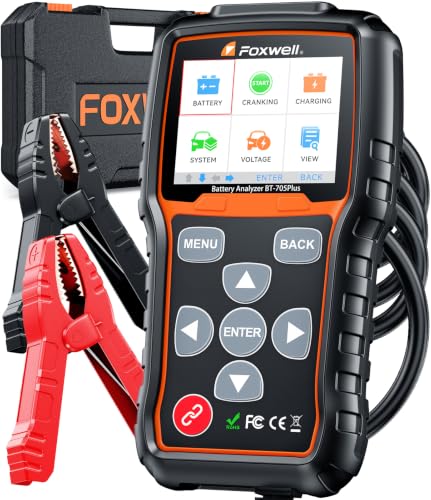
FOXWELL BT705Plus Car Battery Tester

ANCEL BA101 12V Battery Tester
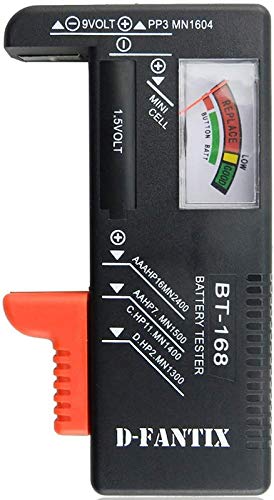
D-FantiX BT-168 Battery Tester (Pack of 2)
Taking A Closer Look At The Options
The BST600 sits at the heavy end of the spectrum, pairing a 100-2000 CCA range with a built-in thermal printer that spits out a paper receipt after each test. SOH (State of Health) and SOC (State of Charge) readings sit alongside cranking and charging diagnostics, so a technician can hand a customer a printed snapshot before any work order is opened.
Compared with the household checkers further down this list, this is genuinely shop-tier gear: it covers 12V and 24V systems in cars, trucks, RVs, and boats, and feeds back internal resistance values that casual owners will never need. Small repair shops running a steady stream of vehicles are the obvious match.
The Practical Payoff
- Onboard printer creates a physical record for each customer job, cutting down on “what did the last test say” calls.
- Wide 100-2000 CCA envelope handles everything from a small motorcycle battery to a heavy-duty truck bank.
- Combined cranking, charging, and resistance reads shorten a typical diagnosis into one workflow.
- 24V support extends its usefulness to commercial trucks and equipment that the smaller ANCEL units cannot reach.
Honest Caveats
- Bulkier than the household testers below, so it really needs a dedicated bay or workbench spot rather than a kitchen drawer.
- Printer rolls eventually run out and are an ongoing consumable cost owners commonly note.
- More data on screen means a steeper learning curve for someone who has never used a CCA tester before.
Whose Shelf It Belongs On
Repair shops, mobile mechanics, and fleet managers who need a paper trail alongside every battery verdict.
Look Elsewhere When
Home owners only checking the family SUV should look at the ANCEL BA101 instead, which is simpler and easier to stow.
The BAT-250 is built for the opposite job from the BST600. Drop in a household cell and the device lights up green, yellow, or red to flag the charge level, with no menus and no settings to learn. It accepts the most common household sizes plus 1.5V button cells, and it runs without its own battery.
For someone sorting through a drawer of mixed AAs, 9V blocks, and a few button cells, this is the kind of tool you pick up once and never put down. Compared with the Dlyfull further down, the Amprobe trades a numeric LCD for a faster color verdict.
Strengths Worth Knowing
- Three-color readout removes any need to interpret numbers, which is great for kids or first-time users.
- Covers 9V, AA, AAA, C, D, and 1.5V button cells in a single small unit.
- No internal battery required, so it always works when you finally dig it out of the drawer.
Some Limits To Know
- No display means you cannot see partial voltage, only a broad good/low/replace verdict.
- Cannot read specialized lithium photo cells that the Dlyfull and Tenergy models handle.
Best Suited To
Families and casual users who want a quick yes-or-no answer for common household cells.
Swap It Out When
Anyone sorting lots of coin and button cells will be happier with the Dlyfull, which names each chemistry on screen.
Dlyfull’s checker is the most chemistry-tolerant household unit in the roundup. Its LCD reads voltage directly and tags the cell as poor, weak, or good, which is more useful than a colored bar when you are deciding whether to top up a rechargeable before a trip. Coverage stretches well past AA and AAA into CR123A, CR2, CRV3, 2CR5, and CRP2 cells, which most household testers skip.
The trade-off is the LCD being a bit dim at certain angles, but for a kitchen-drawer tool, the breadth of supported chemistries is hard to beat.
A Few Strong Suits
- Reads uncommon lithium photo cells that the Amprobe and D-FantiX units cannot.
- Numeric voltage readout gives a clearer picture of how much life is left than color bars do.
- Single AAA battery ships in the box, so the unit is ready to use right away.
Points To Keep In Mind
- The display is small, and some users report it can be tricky to read at sharp angles in low light.
- Contact orientation matters; a reversed cell can give a confusing zero reading the first time you try.
The Right Fit
Hobbyists and households with a drawer full of mismatched lithium photo cells and coin batteries.
Consider Something Else When
Someone who only needs a simple yes/no answer will find the Amprobe BAT-250 faster to read.
The BC521 folds two tools into one chassis: a 5A automatic charger for 12V lead-acid batteries and a tester that runs cranking and alternator checks before charging starts. An 8-stage charging cycle, pulse repair, and maintenance mode round out the package, so a tired battery gets diagnosed and revived without being unbolted from the car.
Chemistry support covers AGM (absorbent glass mat, the sealed batteries found in most modern cars), GEL, EFB (enhanced flooded battery, common in start-stop vehicles), and standard flooded cells, which covers nearly every garage vehicle. Compared with the ANCEL BA101 down the list, you trade pure diagnostic depth for the ability to actually put energy back into a weak battery.
What Helps Most
- Tests before charging prevents wasted cycles on batteries that genuinely need replacement.
- Pulse repair mode can recover lightly sulfated batteries that a basic charger would give up on.
- Maintenance mode supports long-term connection for vehicles that sit for weeks at a time.
Trade Offs
- Heavier and more expensive than a tester-only unit, so it is overkill for someone who only diagnoses.
- 12V only, which makes it less useful for commercial trucks where the BST600 or BT705Plus fit better.
Built With In Mind
Garage owners with multiple vehicles who want one device to test, charge, and maintain.
Reach For A Different Pick When
Commercial fleet owners running 24V equipment will get more from the FOXWELL BT705Plus for pure diagnostic depth.
The BA101PRO pushes a 2.8-inch color display into a tester that already covers 12V and 24V lead-acid systems, with CCA ratings spanning 100 to 2000 across flooded, AGM flat plate, AGM spiral, GEL, and EFB cells. Compared with its sibling, the BA101, this model adds 24V coverage and a sharper screen that makes scrolling through SOH and SOC values easier in a dim garage.
For someone running a mix of cars, trucks, and an RV, having one tester that handles the whole driveway is the main selling point.
Notable Upsides
- Color display makes the metric blocks easier to read at a glance than the original BA101’s smaller screen.
- AGM spiral and EFB support covers start-stop vehicles that older testers misread.
- 100-2000 CCA range spans everything from a compact car to a heavy-duty diesel.
Points To Note
- More data on screen adds a real learning curve for first-time owners.
- Costs more than the BA101, so a single-vehicle household may not need the extras.
Who Should Grab It
Multi-vehicle owners and serious home mechanics who want one tester for cars, trucks, and RVs.
Not Your Match When
Owners running a single 12V sedan are better served by the simpler ANCEL BA101 further down the list.
The T-333 has been a kitchen-drawer fixture for years, and the reason it keeps showing up is coverage. AAA through D, plus 9V, CR123A, CR2, CRV3, 2CR5, CR-P2, and assorted button cells all fit on its LCD-equipped cradle. The display shows a numeric voltage reading plus a clear condition bar.
Versus the Dlyfull from earlier, the T-333 trades a slightly less polished interface for a track record that many households already trust.
Practical Advantages
- Broad chemistry support covers nearly every cell you will find in a household drawer.
- Adjustable contacts make seating odd-sized cells like CR-P2 less fiddly than on flat-plate units.
- Numeric voltage plus condition bar gives both a number and a verdict at the same glance.
Things To Consider
- Requires a fresh AAA to operate, which is easy to forget until the device reads zero.
- Plastic cradle feels lighter than the Amprobe or Dlyfull housings, so handle it gently.
Right Fit For
Family homes with a mixed bin of rechargeable and single-use cells in many sizes.
A Better Fit Elsewhere
Someone wanting the widest lithium photo cell coverage should look at the Dlyfull instead.
The BT705 covers the diagnostic essentials without piling on extra features: CCA, voltage, internal resistance, and SOH, with cold-weather testing at 32°F (0°C) built in. Northern garages where batteries weaken every February will appreciate that last point, since a battery that passes a warm-weather test can still fail a cold start in real life.
Compared with the newer BT705Plus further down, this is the slower but steadier option. Many people consider it the proven baseline of the FOXWELL automotive line.
The Upside
- Cold-rated reads help catch weak batteries before the first deep-freeze morning.
- 12V and 24V support extends the same unit from a daily driver to a light commercial truck.
- Alternator and load tests share one workflow, so no extra tools are needed for charging checks.
Worth Bearing In Mind
- Slower processor than the BT705Plus, so back-to-back tests on multiple vehicles feel less snappy.
- Menu system takes some practice before readings become second nature.
Made For
Cold-climate drivers and small garages needing a reliable cold-rated baseline tester.
Where A Sibling Pick Shines
Shops running high test volumes will appreciate the faster processor in the FOXWELL BT705Plus.
The BT705Plus is the refresh of the BT705, with a more capable processor and tighter algorithms that yield readings faster, even on batteries hovering near the bottom of their useful range. The 24V support carries over, so the same handheld handles a passenger car and a heavy truck in the same workflow.
For shops running ten or fifteen cars through a morning, the time saved per test adds up. For the casual user, the BT705 a few entries above is plenty fast.
Useful Highlights
- Quicker reads on nearly dead batteries, which is exactly when accuracy matters most.
- Refined algorithms cut down on ambiguous borderline results compared with the older BT705.
- Same 12V/24V envelope as the original, so no feature trade-off for the speed bump.
Points To Weigh
- Premium over the BT705 may not pencil out for someone who tests a battery once or twice a year.
- Updated firmware is a moving target, so check for the latest version when you unbox it.
Perfect Match For
Active home mechanics and small shops running multiple diagnostics per session.
Skip It When
Single-vehicle owners testing once a season will find the BT705 a better value.
The BA101 is the long-running entry point of the ANCEL automotive line. It reads SOH, SOC, voltage, current, and CCA from 100 to 2000 on 12V lead-acid systems, with cranking and charging tests baked in. The interface is simpler than the BA101PRO, which makes it the friendlier choice for someone who has never used a CCA tester before.
Compared with the FOXWELL BT705 further up, the BA101 is 12V-only, but for a single household vehicle that detail rarely matters.
A Few Highlights
- Lower learning curve than the BA101PRO, so first-time owners can read it accurately on day one.
- Cranking and charging diagnostics share a single clamp workflow.
- Wide 100-2000 CCA range covers everything from a compact commuter to a larger SUV.
Soft Spots
- 12V only, so it cannot service a 24V commercial truck or coach system.
- Smaller, monochrome display is harder to read in bright sun than the BA101PRO’s color screen.
Who It Suits Best
Weekend home mechanics working on a single 12V vehicle who want a friendly interface.
Another Choice May Suit
Drivers in cold climates should look at the FOXWELL BT705 for its built-in cold-rated testing.
The BT-168 goes old-school with a calibrated analog needle and a color-coded scale: red means replace, yellow means low, green means good. The unit ships as a pack of two, which is honestly useful since one tends to live in the kitchen and one in the garage. AA, AAA, C, D, 9V, and 1.5V button cells all fit, and the device needs no battery to operate.
Versus the LCD-based Dlyfull and Tenergy, the BT-168 trades precise numbers for a quick, glanceable verdict. The two-pack price makes it easy to scatter around a house.
The Good Stuff
- Two units in a pack make it easy to keep one upstairs and one in a workshop drawer.
- No battery required, so it works the day you unpack it.
- Color-coded scale reads in a glance, which is faster than parsing an LCD voltage number.
A Few Limitations
- Analog needle is harder to read precisely than a numeric display when checking borderline cells.
- Does not cover the lithium photo cells that the Dlyfull and Tenergy testers do.
Who Will Love This
Budget-focused households and classroom settings where a simple needle readout is enough.
Consider Something Else When
Anyone regularly testing button cells or specialty lithium photo batteries will want the Dlyfull.
What To Weigh Before Buying Alkaline Battery Testers
Match The Tester To The Battery Family
Start by separating two very different jobs: 12V/24V lead-acid testing for vehicles, and AA through 9V plus button cells for the house. The ANCEL and FOXWELL units in the first half of the list serve the vehicle side, while the Amprobe, Dlyfull, Tenergy, and D-FantiX handle household cells. Trying to use a household checker on a car battery, or a CCA tester on an AA, will end in frustration or worse.
Chemistry Support Matters More Than Spec Sheets
A tester that lists “all household batteries” but skips CR123A, CR2, or coin cells will leave you guessing on camera gear and key fobs. Look at the explicit cell list rather than a generic claim. For vehicles, AGM spiral and EFB coverage is now essential because most modern cars with start-stop systems use those chemistries.
Decide Between Tester-Only And Charger Combos
Pure diagnostic units like the BT705 family are smaller, cheaper, and faster for a single job. Combos like the FOXWELL BC521 add charging and maintenance, but cost more and weigh more. Owners with one car parked for long stretches lean toward combos; multi-vehicle households and shops tend to prefer dedicated diagnostic tools.
Quick Considerations Across These Picks
Pitfalls Shoppers Hit
The most common mistake is buying a household checker to diagnose a sluggish car battery. Those units top out at 1.5V or 9V, far below the 12V a vehicle needs, and they will not measure cranking amps at all. The opposite error is buying a heavy CCA tester for a junk drawer where a simple Amprobe or D-FantiX would do the job in seconds.
When Paying More Pays Off
Premium pricing in this roundup tends to buy three things: built-in printers for record-keeping, 24V support for commercial trucks, and faster processors for high-volume shops. For a single-family driveway with one or two cars, none of those are necessary. For a bay-side shop or a fleet manager, the upgrade pays back in time saved and paper trails kept.
Frequently Asked Questions
Do Battery Testers Work On Rechargeable Cells?
Yes, the household testers in this list read both alkaline and rechargeable NiMH or lithium cells, since voltage behavior is what they measure. The Dlyfull and Tenergy models are particularly good at distinguishing between a healthy rechargeable and one that has lost capacity.
Can A Tester Revive A Dead Battery?
No tester can revive a battery on its own. Chargers like the FOXWELL BC521 add a charging and pulse-repair function that can recover a lightly sulfated cell, but a tester only reports the condition.
How Often Should A Car Battery Be Tested?
Twice a year is a common rhythm, with one test before winter and one before summer, since temperature extremes expose weak cells. Cold-climate owners sometimes test every few months during the heating season.
Will These Testers Drain The Battery Being Checked?
Household testers draw a tiny load for a few seconds and the cells recover instantly. Vehicle testers draw a brief, larger load for cranking tests, but the impact on a healthy battery is negligible.
Are Analog Or Digital Testers More Accurate?
Digital testers give precise voltage numbers, which helps with borderline cells. Analog testers give faster readouts and never need batteries themselves, which suits quick sorting tasks. Accuracy depends more on the test method than the display type.
The Takeaway
Pick a tester that matches the batteries you actually own, not the ones you might buy someday. A household checker earns its drawer space in a week, and a vehicle tester pays for itself the first time it saves you an unnecessary tow or replacement. Any of the ten above will do honest work; the right one simply fits the batteries in your life.