A dead battery rarely picks a convenient moment. It strands you before work, kills a weekend ride, or leaves a lawn tractor sitting silent through spring. Analog battery chargers cut through the drama with simple, dial-based charging that any home mechanic can read at a glance, and the ten units below cover garage floors, farm yards, and weekend projects without overcomplicating the process.
A Quick View Of The Lineup

FOXWELL BC521 2-in-1 Battery Charger & Tester 12V 5A

AstroAI 20V MAX Battery Charger for Li-ion Battery
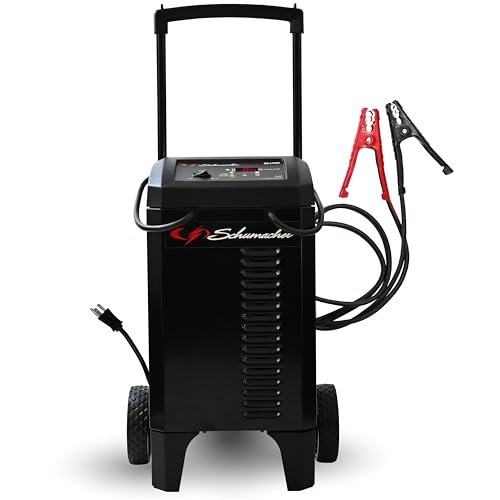
Schumacher Electric Wheeled 6A Charger & Maintainer SC1400

Schumacher Electric 12V/6V Trickle Charger Maintainer SC1280

Schumacher Electric 1.5A Charger & Maintainer SC1355

Associated Equipment US20 6/12V Value Battery Charger

CRAFTSMAN Wheeled 10A Charger & Maintainer CMXCESM233

Banshee 12V Charger with 75A Engine Start

Schumacher Electric Wheeled 6/12V 250A Starter/Charger SC1445

Schumacher Electric Wheeled 10A Charger & Maintainer SC1446
Taking A Closer Look At The Options
The FOXWELL BC521 breaks from the all-dial crowd by pairing a 12V 5A charger with a built-in battery tester. You clamp onto the posts, read cranking health and alternator output on the screen, then move directly into an eight-stage charging cycle without swapping tools. For shoppers who want data before pushing amps into a battery, the test-first approach removes the usual guessing game.
Pulse repair (short bursts of current designed to break down sulfate buildup on idle plates) makes a difference on batteries that sit through winter. Compatibility spans AGM, GEL, EFB, and flooded cells, which covers most cars, SUVs, and motorcycles. In our view, this is the right pick for anyone who wants one tool that diagnoses and recovers.
Key Advantages
- Built-in tester reports cranking voltage and alternator behavior before charging starts
- Eight-stage charging with pulse repair helps recover mildly sulfated batteries
- Works across AGM, GEL, EFB, and flooded 12V lead-acid batteries
- Maintenance mode keeps stored vehicles topped off without overcharging
Honest Caveats
- The display adds bulk, so bench space matters in tight garage corners
- LiFePO4 compatibility is not specified, so lithium owners should look elsewhere
Feature Snapshot
Best Suited To
Owners who want diagnostic feedback and a charger in one unit, especially those maintaining multiple vehicles with mixed battery chemistries.
Consider Something Else When
You only run small AstroAI cordless tools and need a matching 20V charger instead; the AstroAI 20V MAX Battery Charger is the right size for that job.
The AstroAI 20V MAX sits on the opposite end of the spectrum. It is a small brick-style wall charger tuned for the brand’s own 20V li-ion battery packs, handhelds, and multifunction air pumps. Charging happens at 21V with a 1.7A draw, which is sized for the smaller cells in cordless inflators and portable pumps rather than anything automotive.
What you give up in scope, you gain in convenience. The unit weighs next to nothing, fits a kitchen drawer, and tops off a dead pack fast enough for short turnarounds. This is the right pick for shoppers already invested in the AstroAI ecosystem.
Useful Touches
- Tailored fit for AstroAI 20V battery packs and matching inflators
- Lightweight design stores easily in a workbench drawer or trunk
- 1.7A output gets cordless batteries back in service quickly
Worth Bearing In Mind
- Not compatible with the AstroAI C1 model, so double-check your tool line
- Cannot charge 6V or 12V lead-acid automotive batteries
Made For
Shops running AstroAI cordless inflators, air pumps, or handheld tools that need a brand-matched wall charger.
Skip It When
You maintain a vehicle fleet or deep-cycle batteries; the Schumacher SC1355 1.5A Maintainer serves that crowd at the right scale.
Schumacher’s SC1400 trades tabletop compactness for shop-floor reach. The 6A charger lives on a wheeled cart, so you roll it to the truck in the driveway or the tractor in the barn without lugging 25 pounds of transformer. It charges, maintains, and conditions, covering the everyday tasks most home mechanics cycle through.
Compare that to the desktop FOXWELL BC521 above: the SC1400 skips the diagnostic screen in favor of an analog dial that older DIYers tend to trust. Microprocessor control still manages the voltage curve, so the simplicity does not mean unsafe charging. This unit earns its place in any garage that needs a charger you can move.
Features That Help
- Wheeled base reaches vehicles parked in awkward spots
- Microprocessor-controlled multi-stage charging for safer recovery
- Maintainer mode keeps seasonal vehicles topped off through long storage
Trade-Offs To Consider
- Larger footprint than bench-top chargers, so apartment dwellers may struggle
- 6A output is slower than the heavier Schumacher SC1445 for big engine starts
Right Fit For
Home mechanics with multiple vehicles who want a charger they can roll to the work bay rather than carry.
Look Elsewhere When
You need serious engine-start amperage for dead diesel trucks; the Schumacher SC1445 packs the reserve for that workload.
The SC1280 covers both 6V and 12V batteries, which immediately widens the audience. A 3A trickle rate suits motorcycles, golf carts, marine deep-cycle banks, and family sedans. Fully automatic microprocessor control adjusts the current as the battery fills, so you can leave it connected through a long winter.
The unit also restores tired batteries through a desulfation phase, useful for marine cells that sat half-drained all season. For shoppers who split time between a fishing boat and a daily driver, this single box replaces two specialty chargers. AGM, gel, and deep-cycle compatibility keeps the chemistry list broad.
Where It Helps
- Dual-voltage design works on classic 6V cars and modern 12V vehicles
- Desulfation mode recovers batteries that have sat below full charge
- AGM, gel, and deep-cycle support handles most marine and powersports cells
Some Limits To Know
- 3A trickle rate is too gentle for fast turnaround on a deeply discharged car battery
- Not intended as an engine starter, so dead mornings still need a jump
Who Should Grab It
Boat owners and classic-car restorers who need one charger for both 6V and 12V banks across the season.
Reach For A Different Pick When
You run a working farm with tractors that need a heavier 10A roller; the CRAFTSMAN CMXCESM233 fits that profile better.
The SC1355 is the smallest Schumacher on the list, and that is the appeal. At 1.5A it does not charge fast, but it charges patiently through winter without overworking a small battery. Compatibility covers 6V and 12V across cars, motorcycles, ATVs, trucks, SUVs, and boats, so it works on most anything parked for a season.
You can think of it as a set-and-forget guardian for a second car or a snowmobile that only fires up three months a year. The reconditioning cycle helps batteries that drifted low during storage, which is the exact scenario this charger targets.
Notable Upsides
- 1.5A rate is gentle enough for long-term connection on small batteries
- Dual 6V and 12V support across cars, motorcycles, ATVs, and boats
- Reconditioning mode revives batteries weakened by storage
Honest Caveats
- Slow charging rate makes it a poor emergency tool
- Limited output means large deep-cycle banks can take days to fill
Built With In Mind
Owners storing a classic car, motorcycle, or ATV for months at a time who want a low-maintenance battery minder.
A Better Fit Elsewhere
You service multiple vehicles daily and need faster recovery; the Schumacher SC1400 covers that pace without losing wheel-based mobility.
The Associated Equipment US20 looks like it belongs in a service bay, and that is the point. It offers 40A of continuous output at 6V or 12V, 200A of cranking assist, and a 330A manufacturer boost rating for stubborn engines. A 90-minute timer lets you set the workload and walk away without babysitting.
Fan cooling keeps internal temperatures in check during back-to-back jobs. For small shops or serious DIYers, the manual control style (a step up from fully automatic units like the SC1280) feels familiar and trustworthy. This charger pulls its weight on busy weekends.
A Strong Showing
- 40A continuous output handles larger batteries faster than 6A units
- 200A cranking assist helps start vehicles that just clicked
- Fan cooling extends runtime during demanding shop sessions
Practical Considerations
- Manual timer control requires more user attention than automatic units
- Heavy build is harder to relocate than the wheeled Schumacher units
Feature Snapshot
Whose Shelf It Belongs On
Small-shop mechanics and farm operators who run varied batteries and want manual control over charge timing.
Swap It Out When
You prefer hands-off automation over a manual timer; the Schumacher SC1280 handles that workflow with microprocessor control.
CRAFTSMAN’s CMXCESM233 targets users who find that smart chargers refuse to wake up a deeply discharged battery. This manual 10A unit pushes current more directly, and the wheeled chassis handles farm and garage duty without complaint. Dual 6V and 12V compatibility makes it useful across tractors, pickups, and older cars.
The trade-off shows up when you want a charger to think for you. There is no automatic profile switching, so monitoring the dial becomes part of the routine. For shoppers comfortable with that hands-on role, the CRAFTSMAN rewards them with dependable starts.
Everyday Perks
- Manual design recovers batteries that automatic chargers often ignore
- Wheeled chassis handles rough shop floors and barn surfaces
- Dual-voltage support spans cars, tractors, and older equipment
Things To Weigh
- Manual operation requires more attention than microprocessor-controlled units
- 10A output fills mid-size batteries faster than trickle units but slower than the Associated US20
Perfect Match For
Farm owners and rural DIYers who maintain older tractors and equipment that smarter chargers cannot detect.
A Better Fit Elsewhere
You run a working shop with continuous high-amperage needs; the Associated Equipment US20 delivers heavier cranking assist.
The Banshee wraps three charging modes into one cabinet: 2A slow charge, 12A fast charge, and a 75A engine-start assist. That last mode matters on cold mornings when the battery clicks but does not turn. SLI (Starting, Lighting, Ignition) and deep-cycle 12V lead-acid batteries are both supported, and the unit drops into maintenance mode automatically once the cell fills.
Two LED indicators and a six-foot cable keep the daily workflow simple. A built-in handle keeps the unit portable despite the heavier output. This is a tidy middle-ground for drivers who want one charger that does a little of everything.
Strengths Worth Knowing
- Three-mode dial covers slow charging, fast charging, and engine start
- Auto-switching into maintenance mode prevents overcharging
- Six-foot cable reaches batteries in larger engine bays
Points To Note
- 75A engine start is useful but lower than the 200A assist on the Associated US20
- Single 12V focus means no 6V support for classic vehicles
Who Will Love This
Daily drivers and small-shop owners who want one unit that slow-charges, fast-charges, and helps start a dead engine.
Not Your Match When
You keep classic 6V cars in the rotation; the Schumacher SC1280 covers both voltage ranges from a single bench.
The SC1445 is the heavy hitter of the Schumacher lineup. It pairs a 10A manual charger with a 250A engine starter on a wheeled chassis, and the dual 6V/12V support spans everything from a vintage roadster to a modern pickup. This is the kind of gear that turns a frustrating no-start into a 10-minute recovery.
Where the smaller SC1400 rolls to the truck and quietly tops off the battery, the SC1445 shows up ready to push a starter motor. Garage owners who split time between cars, tractors, and older trucks tend to appreciate that dual role. The trade-off is weight and size, but the wheels handle that.
Everyday Advantages
- 250A engine-start reserve revives deeply discharged vehicles
- 10A charger doubles as a normal maintainer between emergencies
- Dual 6V/12V support spans vintage and modern vehicles
Trade-Offs To Consider
- Heavier and bulkier than the SC1400, so storage space matters
- Manual operation requires more user awareness than fully automatic units
Feature Snapshot
Right Fit For
Busy home garage owners who want both a steady maintainer and serious engine-start capacity in one wheeled unit.
Skip It When
You mainly maintain batteries for small seasonal toys; the Schumacher SC1355 1.5A Maintainer is a calmer fit.
The SC1446 closes the list with the same 10A manual output as the CRAFTSMAN, but on a Schumacher chassis that long-time DIYers tend to recognize. Where smart chargers refuse to engage below a minimum voltage, this manual unit pushes current directly, which is exactly what a deeply discharged battery often needs.
Older vehicles, lawn tractors, and farm equipment respond well to that straightforward approach. There is no digital fuss, no programming sequence, just an amp dial and clamp leads. For shoppers who prefer analog control with proven results, the SC1446 earns its spot.
What Makes Sense
- Manual charging recovers batteries that automatic units refuse to detect
- Wheeled design brings the charger to the work, not the other way around
- 10A output is a sensible middle ground for most automotive batteries
Honest Caveats
- No automatic voltage detection means users must check progress manually
- Larger footprint than the SC1355, so storage space matters
Built With In Mind
Mechanics and rural drivers who prefer analog dials and want a charger that handles older, neglected batteries.
Where A Sibling Pick Shines
You need engine-start amperage alongside charging; the Schumacher SC1445 adds that 250A starting capability on the same chassis platform.
What To Weigh Before Picking An Analog Battery Charger
Match The Charger To The Battery Chemistry
Flooded lead-acid, AGM (absorbent glass mat), gel, and EFB (enhanced flooded battery) cells each respond differently to charging profiles. A charger that lists explicit chemistry support tends to deliver cleaner absorption phases and longer battery life than a generic unit. For mixed fleets, dual-mode chargers like the Schumacher SC1280 simplify the day.
Size The Amperage To The Job
A 1.5A maintainer feeds a stored motorcycle battery patiently, while a 10A or 40A unit fills a pickup truck in hours. Engine-start ratings from 75A to 250A matter most when jump-starting a stubborn vehicle. Running oversized amperage on a small battery can shorten its life, so match the rating to the largest cell in the rotation.
Decide Between Manual And Automatic Control
Manual chargers give direct control over charging time and current, which helps with deeply discharged cells that automatic units misread. Automatic chargers handle voltage curves and shutoff for you, which suits set-and-forget maintenance. The choice comes down to how much attention you want to give the charging session.
Plan For Storage, Mobility, And Ventilation
Wheeled chassis move easily across shop floors but take up room. Compact bench units fit a shelf but limit reach. Lead-acid charging can release hydrogen gas, so charging in a ventilated area matters regardless of which model you choose.
Key Considerations Across These Picks
Common Shopping Slip Ups
A frequent misstep is buying a high-amperage charger for a small lawn tractor battery, which shortens cell life over time. Another is choosing a 12V-only unit when a classic 6V vehicle also sits in the garage. Matching voltage range, chemistry support, and amperage to the actual fleet prevents the most common returns.
What Separates Premium From Basic
Higher-tier models add diagnostic readouts, pulse repair cycles, and stronger engine-start reserves that budget units skip. Wheeled chassis, longer cables, and fan cooling show up where the workload grows. Paying more tends to buy convenience and recovery capability rather than basic charging, which lower-tier options already deliver competently.
Frequently Asked Questions
How long does an analog battery charger take to fill a car battery?
Most 6A to 10A analog chargers fill a standard 12V car battery in roughly four to ten hours, depending on how deeply it was discharged. Smaller trickle units take much longer.
Can I leave an analog charger connected for weeks?
Only if it has an automatic maintenance or float mode that tapers current once the battery fills. Manual units without that feature can overcharge and damage cells.
Do analog chargers work on AGM batteries?
Many do, but you should confirm AGM or gel support on the spec sheet before connecting. Setting the wrong profile on an AGM cell can shorten its lifespan.
Is a wheeled charger better than a bench unit?
Wheeled models suit larger garages and farm use where you need to reach the vehicle. Bench units are easier to store and quicker to grab for small jobs.
Do I need engine-start amperage in a charger?
Engine-start capability matters most when jump-starting a deeply discharged vehicle. Owners who only maintain healthy batteries can skip the higher-amperage models.
Bottom Line
The right analog battery charger depends on what sits in your garage: a tiny AstroAI pack for cordless tools, a bench-top maintainer for stored classics, or a wheeled starter/charger for trucks and tractors. Match the voltage range, amperage, and chemistry support to your fleet, and the rest of the decision tends to take care of itself.