A dead battery never warns you first. One morning the truck cranks slow, the remote won’t fire, or the smoke detector starts chirping at 2 a.m., and suddenly you wish you’d checked weeks ago. The right analog battery tester turns that surprise into a ten-second decision, whether you’re chasing a parasitic drain in the driveway or sorting a junk drawer full of partially used AAs. These ten picks cover both worlds: heavy-duty 12V automotive gear for cars, trucks, and boats, plus compact household testers that handle AA through 9V cells and the odd button battery.
The Leading Options At A Glance

ANCEL BST600 12V/24V Battery Tester with Printer

KKEANIC Battery Tester for AA AAA C D 9V
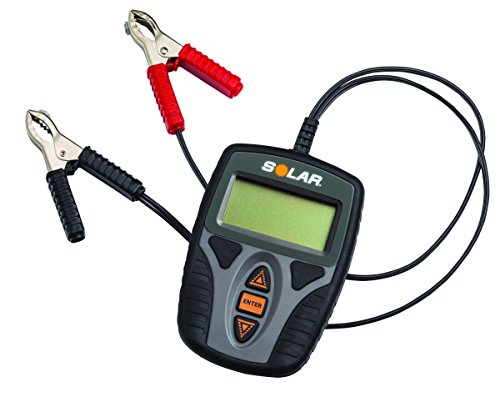
Clore Automotive SOLAR 12V Battery and System Tester
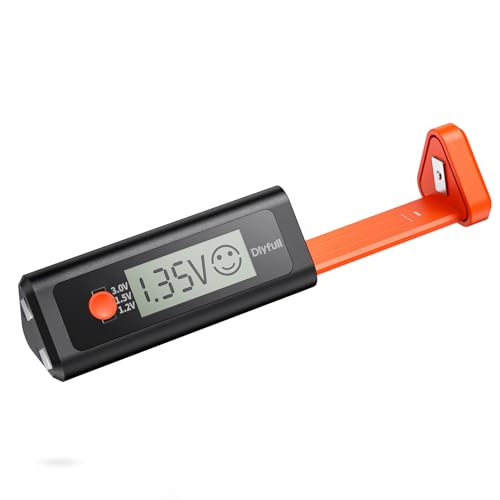
Dlypow Digital Battery Tester with Magnetic End
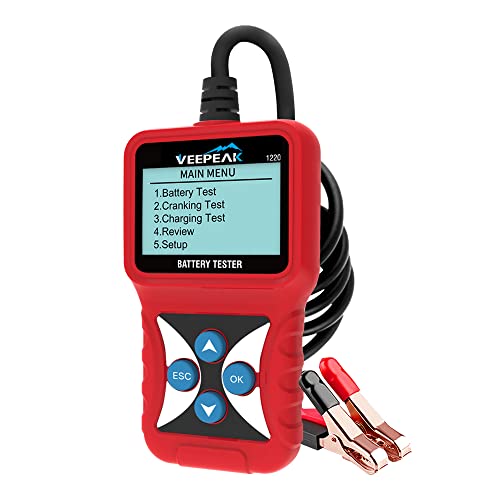
Veepeak 12V Car Battery Tester, 100-2000 CCA

ANCEL BA101PRO 12V/24V Battery Tester, Color Display

ANCEL BA101 12V Battery Tester, 100-2000 CCA

TOPDON BT600 12V/24V Battery Tester with Printer

Dlypow Magnetic Battery Tester for AAA AA C D 9V
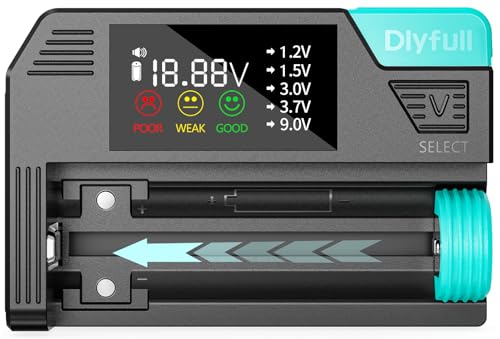
Dlypow Magnetic Battery Tester, Rechargeables and Cells
Meet The Standout Selections
The ANCEL BST600 is the kind of tool you’d expect to see clipped under a workbench at an independent garage, not sitting in a homeowner’s drawer. Built around a 12V/24V lead-acid focus, it walks through cranking and charging tests, then prints the result on thermal paper so a tech can hand the slip directly to the customer. CCA (cold cranking amps) coverage runs from 100 to 2000, which keeps it useful from a small hatchback battery all the way up to a heavy truck pack.
For most home garages, the BST600 is overkill, but for a multi-bay shop or someone running a fleet of work vans, that built-in printer alone justifies the bulk. It evaluates state of health (SOH), state of charge (SOC), voltage, and internal resistance for both voltage classes, which means fewer trips back to the parts shelf when a no-start complaint lands on the lift.
Strengths Worth Knowing
- Built-in thermal printer creates paper records, useful for warranty claims and fleet logs.
- Covers 100 to 2000 CCA across 12V and 24V systems, supporting cars, trucks, boats, and RVs.
- Reports SOH, SOC, internal resistance, and cranking/charging system readings in one workflow.
- Reduces diagnostic guesswork when a no-start complaint could be battery, starter, or alternator.
Things To Consider
- Thermal paper rolls are consumables that need replacing; keep spares on hand.
- Bulkier than simpler 12V-only units, so it lives on a bench more than in a glovebox.
Feature Snapshot
Who It Suits Best
Independent repair shops and small fleet operators who test multiple vehicles a week and want paper documentation without dragging out a laptop.
Consider Something Else When
The ANCEL BA101PRO Battery Tester is a lighter fit for a single-vehicle DIYer who doesn’t need on-the-spot printouts.
Most analog battery testers aimed at household cells lean on a simple needle or color bar, but this KKEANIC unit goes a step further with an LCD readout that gives you actual voltage numbers. For anyone tired of guessing whether a partially used AA is worth tossing into the remote, that extra clarity is genuinely useful. The dedicated slots cover the everyday alphabet soup from AAA up through 9V, plus it ships with a small carrying case to keep everything organized.
Compared with the Clore Automotive SOLAR model, this is firmly the at-home pick: no 12V clamps, no system diagnostics, just clean readings on the cells you actually own. Drop a battery in, watch the display settle, and decide in seconds whether it’s drawer-worthy or recycle-bin ready.
Reasons It Performs
- LCD readout delivers exact voltage readings instead of vague “good/bad” bars.
- Slotted design accepts AA, AAA, C, D, and 9V cells in their native form factors.
- Included case keeps the tester and loose cells contained in a junk drawer.
- Power level indicators help sort partially used batteries for low-drain devices.
Worth Noting
- Doesn’t test coin cells or button batteries, so a separate checker is needed for watches and key fobs.
- LCD requires the tester itself to have working batteries; check it occasionally.
Right Fit For
Households with kids’ toys, remotes, and wall clocks running through AA and AAA cells faster than you’d like.
Skip It When
The Dlypow Digital Battery Tester with Magnetic End is a stronger match if you regularly deal with coin and button cells.
The Clore SOLAR BA9 has been a garage staple for years, and there’s a reason it keeps showing up on mechanic benches. It runs on a 7 to 15V operating window, meaning it draws power from the battery under test rather than needing its own AAs, which is one fewer thing to forget. CCA coverage from 40 to 1200 sweeps in everything from a lawn tractor battery to a full-size truck, and the chemistry list covers flooded, AGM flat plate, AGM spiral, and gel cells.
The LCD is built to stay readable in direct sun, dim bays, and everything between, which sounds like a small detail until you’ve squinted at a dim screen with engine grease on your hands. Where the ANCEL BST600 above leans toward documentation, the SOLAR leans toward speed: clip, test, read, move on.
Everyday Advantages
- Powers itself from the battery under test across a 7 to 15V operating range.
- Reads flooded, AGM, spiral, and gel cell chemistries without separate modes.
- Wide 40 to 1200 CCA range handles small engines and full-size vehicles.
- Sunlight-readable LCD reduces squinting in outdoor and shop environments.
Trade Offs
- No 24V support, so heavy trucks and some commercial equipment are out of range.
- Older interface lacks the color screen of newer competitors.
Best Suited To
Weekend wrenchers maintaining a personal fleet of cars, motorcycles, and small equipment who want quick, chemistry-aware readings.
Look Elsewhere When
The Veepeak 12V Car Battery Tester is a more modern alternative if you want expanded system coverage and broader CCA support.
Small batteries are notoriously fussy to test because loose contact skews the reading. Dlypow solves that with a magnetic tip that actually grabs the cell and holds it in the right spot, which on tiny button batteries is the difference between a confident reading and a useless one. The LCD walks you through voltage in clear digits, and the slot list goes well beyond the usual AA-through-9V crowd, pulling in CR2025, CR2032, LR44, LR41, CR2, and CR123A coin-style cells.
It also accepts 1.2V rechargeable AA and AAA cells, which matters more than you’d think given how many low-self-discharge Ni-MH batteries now live in remote controls and game controllers. For most people, that’s the cell type that’s been quietly disappointing them for months.
Real-World Strengths
- Magnetic hold keeps contact stable for more accurate readings on small cells.
- Covers button cells like CR2025, CR2032, LR44, and CR123A alongside standard sizes.
- Tests 1.2V rechargeable Ni-MH AAs and AAAs, not just alkaline disposables.
- Compact body fits in a kitchen drawer next to the batteries it tests.
Points To Keep In Mind
- Magnetic contact may not grab all button cell types reliably, so polarity orientation matters.
- Requires its own power source; dead tester batteries mean dead readings.
Made For
Anyone with a growing collection of small electronics, watches, car keys, and remote controls running on coin and button cells.
Another Choice May Suit
The KKEANIC Battery Tester for AA AAA C D 9V is a better pick if you primarily deal with cylindrical household cells and rarely touch button batteries.
Veepeak built the 12V tester for households that don’t fit neatly into one category. The CCA range stretches from 100 to 2000, which means it handles a dirt bike in the morning and a diesel pickup in the afternoon. Beyond just the battery itself, the unit runs cranking and charging system tests, measuring ripple and loaded or unloaded voltage while the engine runs, so you can tell whether a weak reading points at the battery or the alternator.
For someone with a small driveway fleet, a motorcycle, an ATV, and a tow-behind boat, that flexibility matters more than printer output or 24V support. The footprint stays pocket-friendly compared with the ANCEL BST600 above, which leans toward shop documentation.
Positive Points
- Broad 100 to 2000 CCA range fits everything from motorcycles to heavy trucks.
- Reads SOC, SOH, voltage, and internal resistance in a single workflow.
- Cranking and charging system tests flag alternator and starter problems early.
- Works on cars, trucks, motorcycles, boats, ATVs, and RVs from one device.
Honest Caveats
- 12V only, so commercial 24V systems are out of reach.
- Display is functional rather than large, which can be tricky in tight engine bays.
Who Should Grab It
Mixed-vehicle owners who keep a rotating cast of powersport toys, tow vehicles, and weekend projects on the property.
Where Another Pick Shines
The ANCEL BA101 Car Battery Tester is a stronger pick if you mainly work on one type of vehicle and prefer an interface designed around that workflow.
The BA101PRO sits a step above the original BA101, trading the older screen for a 2.8-inch color display and adding 24V support that opens the door to heavy-duty trucks, RVs, and work equipment. Chemistry coverage is wide: regular flooded, AGM flat plate, AGM spiral, gel, and EFB batteries all sit within range, and the 100 to 2000 CCA sweep means the same unit works on a compact SUV and a class-A motorhome.
For someone who has outgrown a single 12V tool but doesn’t need a thermal printer like the ANCEL BST600 above, this is a sensible middle ground. The color screen genuinely helps when interpreting results quickly, especially for users who don’t read battery codes every day.
The Helpful Details
- 2.8-inch color display makes readings easier to parse than monochrome screens.
- 12V and 24V support covers both household vehicles and heavy-duty equipment.
- Reads flooded, AGM flat plate, AGM spiral, gel, and EFB chemistries.
- Reports CCA, voltage, internal resistance, SOH, and SOC across supported systems.
Practical Considerations
- No built-in printer, so shop documentation requires manual note-taking.
- Slightly heavier than 12V-only units, more at home on a bench than in a glovebox.
Key Attributes
Who Will Love This
RV enthusiasts and owners of heavy-duty trucks who want a single tool that follows them across both classes of vehicle.
A Better Fit Elsewhere
The Clore Automotive SOLAR 12V Battery and System Tester is a leaner pick if you only ever work on 12V passenger cars.
The ANCEL BA101 has earned its long run on the market by doing one job well: giving a clear, jargon-light reading on a 12V starting battery. It reports SOH, SOC, voltage, current, and CCA, then runs separate cranking and charging system tests to help separate battery failures from alternator failures. For first-time DIY owners, that breakdown saves the cost of throwing parts at a problem that isn’t the battery at all.
Compared with the BA101PRO above, this is the older and simpler sibling: 12V only, smaller screen, no color display. That’s not a flaw; it’s a deliberate trim for someone who doesn’t need 24V coverage and wants a tool they can hand to a family member without a five-minute walkthrough.
Where It Excels
- Long-running design with broad familiarity among home mechanics.
- Reads SOH, SOC, voltage, current, and CCA in plain language outputs.
- Cranking and charging tests flag starter and alternator issues alongside the battery.
- CCA range of 100 to 2000 covers most cars, trucks, marine, and RV applications.
Small Caveats
- Limited to 12V systems; commercial 24V trucks are out of range.
- Smaller monochrome display compared with the newer BA101PRO.
Perfect Match For
First-time DIY vehicle owners who want a forgiving tool with simple readings and enough diagnostic depth to catch early problems.
Reach For A Different Pick When
The Veepeak 12V Car Battery Tester is a slightly more flexible alternative if you also maintain motorcycles, ATVs, or marine craft.
The TOPDON BT600 borrows heavily from professional scan-tool design language, starting with a 3.5-inch screen that’s notably larger than most handheld battery testers. Pair that with a built-in thermal printer and the unit starts to feel less like a hobby tool and more like a shop fixture. It walks through cranking and charging diagnostics alongside the core battery test, then prints a record the customer can take home.
The conductivity-based testing approach is designed to map battery health against rated CCA, helping technicians localize faults to the battery, the starting system, or the charging system. For anyone doing this work for pay, that diagnostic clarity matters more than screen size, but the larger display doesn’t hurt when you’re showing a customer what’s wrong.
Real Benefits
- 3.5-inch screen improves readability over smaller handheld units.
- Built-in printer produces paper records for shop customers.
- Covers both 12V and 24V systems across cars and trucks.
- 100 to 2000 CCA range handles most personal and light commercial vehicles.
Potential Compromises
- Bulkier and heavier than non-printer units, so it lives on a bench.
- Thermal paper is a recurring consumable; keep extra rolls in stock.
Built With In Mind
Working technicians and small shop owners who want a single bench tool that handles 12V and 24V testing with paper documentation.
Swap It Out When
The ANCEL BA101PRO is a smarter pick for a home garage where printing and 24V testing aren’t routine needs.
This is the Dlypow model built around the simplest possible workflow: drop the battery in, let the magnet grab it, and read the analog scale. There are no buttons to learn and no menus to scroll through, which makes it the most forgiving pick in the household-cell lineup. Anyone in the house, from a teenager to a grandparent, can use it without instructions.
Where the Dlypow Digital Battery Tester above leans into LCD precision and coin-cell coverage, this version trades those features for the lowest possible learning curve. For a kitchen drawer or workshop shelf, that’s a fair swap.
A Few Highlights
- One-step operation with no buttons or menus to navigate.
- Magnetic tip holds the cell steady for a reliable analog reading.
- Supports AAA, AA, C, D, 9V, and common button cells in one body.
- Clear analog display reads at a glance, even in dim pantry lighting.
Less Ideal Details
- Analog display gives a rough tier rather than an exact voltage number.
- Requires its own working batteries to operate.
The Right Fit
Households where multiple people of different ages need to test cells and where simplicity beats precision.
Not Your Match When
The Dlypow Magnetic Battery Tester for Rechargeables is a better match if you want rechargeable Ni-MH and Li-ion support.
For tinkerers running a mix of alkaline, Ni-MH, lithium, and Li-ion cells, this Dlypow tester broadens the voltage range to cover 1.2V, 1.5V, 3.0V, 3.7V, and 9.0V chemistries from a single device. The chemistry list runs across AAA, AA, C, SC, D, N, 18650, CR123A, LR44, CR2032, CR2450, CR2, and CRV3, which catches most of what’s hiding in a hobby bench or camera bag.
Operation takes three deliberate steps: press select for the voltage range, drop the cell in with the right polarity, and read the LCD. That extra step versus the button-free analog Dlypow above is a small price for the broader chemistry support.
Why It Works Well
- Covers Ni-MH, alkaline, lithium, Li-ion, and 9V from one device.
- Includes 18650 and CR123A support for flashlights, cameras, and hobby packs.
- Voltage range selector improves accuracy across different chemistries.
- LCD readout shows actual voltage alongside a status indicator.
A Few Limitations
- More button presses than purely analog testers, so slightly less grab-and-go.
- Polarity matters: reversed cells can produce confusing readings.
Whose Shelf It Belongs On
RC hobbyists, photographers, and flashlight collectors juggling a mix of rechargeable and single-use cells across multiple voltages.
A Better Fit Elsewhere
The KKEANIC Battery Tester for AA AAA C D 9V is a leaner pick if your household only deals with standard alkaline cells.
What To Weigh Before Buying a Battery Tester
Battery testers split into two worlds, and the right pick starts with knowing which one you live in. Automotive testers focus on 12V and 24V lead-acid systems, reporting CCA, SOH, SOC, and cranking or charging system health for cars, trucks, boats, and RVs. Household testers handle the cells that quietly power remotes, toys, and clocks: AA, AAA, C, D, 9V, and a growing list of coin and button cells.
CCA range matters most on the automotive side, because cranking amps (the burst of current a battery delivers in cold weather) vary widely between a lawn tractor and a heavy truck. A 100 to 2000 CCA window covers everything most personal users own, while narrower ranges force compromises on either end. Chemistry support matters too, since modern vehicles increasingly ship with AGM or EFB batteries that older flooded-only testers can misread.
On the household side, the practical questions are simpler: which cell sizes do you actually own, and how often do you test? A drawer full of AA and AAA calls for a basic LCD or analog unit, while a household with watches, key fobs, and hearing-aid batteries benefits from button-cell coverage. Magnetic contacts help on tiny cells where loose contact skews results, and LCD readouts give more confidence than color bars when a partial charge is in question.
Finally, consider where the tool will live. A bench-mounted shop unit with a printer makes sense for working technicians, while a glovebox-friendly 12V tester suits occasional DIY use. For household models, drawer-sized bodies with their own case tend to get used more than loose, fragile units.
Key Considerations Across These Picks
Common Shopping Slip Ups
The most frequent mistake is matching the tester to the wrong battery world. A household LCD checker cannot diagnose a no-start truck, and a 12V shop tester will not sort a drawer of mixed AAs. Knowing which ecosystem you live in saves both money and frustration. Another common trap is buying on chemistry coverage alone: a tester that handles AGM, gel, and EFB helps if your vehicle actually runs those chemistries, but it adds cost you won’t use on a basic flooded battery. Finally, ignore the printed CCA range at your peril; an undersized tester will misread large commercial packs, while an oversized one may not give accurate low-end readings on small engines.
Where The Extra Money Goes
Higher-tier analog battery testers typically spend the extra cost on three things: broader chemistry support, more detailed system diagnostics, and shop-ready output. A unit like the ANCEL BST600 or TOPDON BT600 layers in cranking and charging system tests plus a thermal printer, which adds genuine value for working techs and fleet operators. For a single-vehicle household, that upgrade rarely pays back, so a mid-tier 12V tester such as the ANCEL BA101 or Veepeak model handles 90% of real-world diagnostic needs at lower cost.
Frequently Asked Questions
Do analog battery testers actually work as well as digital ones?
Analog testers give a clear go/no-go reading that is plenty for routine checks, while digital units add exact voltage numbers and chemistry-specific data. For most household and casual automotive use, either approach is reliable.
What does CCA mean on an automotive battery tester?
CCA stands for cold cranking amps, the current a battery can deliver at 0 degrees Fahrenheit for 30 seconds while maintaining a minimum voltage. It is the key number for predicting whether your battery can start a cold engine.
Can a household battery tester recharge weak cells?
No, these testers only measure remaining capacity and voltage. To recharge, you need a dedicated charger matched to the cell chemistry, such as a Ni-MH charger for rechargeable AAAs.
Will one tester cover all the button cells in my house?
Not necessarily. Button cells vary in size and voltage from 1.5V to 3V, so check that the unit supports your common types, including CR2032, CR2025, and LR44, before relying on it as a single source.
How long do these testers typically last?
With occasional battery replacement on the household units and reasonable storage, most analog battery testers last many years of regular use without issue.
Final Verdict
The right analog battery tester depends less on specs and more on where it will spend its working life. A garage that sees trucks and RVs earns its keep with a 12V/24V unit like the ANCEL BA101PRO or TOPDON BT600, while a household drawer full of remotes and toys benefits more from the KKEANIC LCD model or the button-cell-friendly Dlypow. Pick the world that matches your batteries, and the rest of the decision lines up on its own.