A 48V battery stack quietly powers more of your day than you probably realize, from the golf cart that hauls your clubs across eighteen holes to the off-grid cabin keeping the lights on during a storm. The trouble is that “48 volt” covers a sprawling category: lead-acid watering kits, drop-in lithium replacements, whole-home energy storage, and the unglamorous cables that tie it all together.
This list focuses on practical ownership fit, not spec-sheet theater. Whether you’re maintaining a fleet of Trojan carts, upgrading to lithium for the first time, or sizing a serious backup system for your house, the picks below cover the bases that actually matter on day one.
The Main Contenders

Water My Battery ICON Golf Cart Watering System 6qty x 8v (48 Volt)

Mosasaur 48V 100Ah LiFePO4 Golf Cart Battery with 200A BMS

ECO-WORTHY Powermega 48V 314Ah LiFePO4 System with Liber 10KP Inverter

10L0L Golf Cart Battery Cables for EZGO TXT 1994-Up, 4 Gauge

ECO-WORTHY Powermega 48V 314Ah LiFePO4 Battery, 16.1kWh
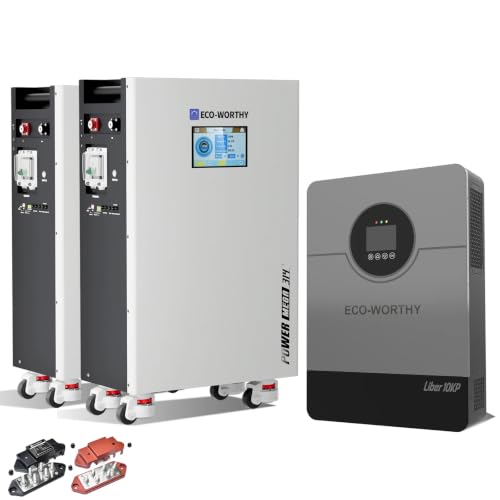
ECO-WORTHY Powermega 48V 314Ah 2-Pack System with Liber 10KP

LOSSIGY 48V Lithium Battery Golf Cart Conversion Kit with Charger

Mehrpow 48V Lithium Battery Golf Cart Batteries Kit

LOSSIGY 48V Lithium Battery 100AH Kit with Charger and Monitor
A Closer Look At Each Pick
If you’re still running six flooded 8-volt lead-acid batteries in your ICON cart, watering them one cell at a time gets old fast. This kit is engineered around that exact 6-by-8V layout, so the tubing routes match the factory battery spacing rather than forcing improvisation.
Each valve has a small indicator eye that confirms the cell is full, but the manufacturer’s own guidance is to water based on usage rather than the indicator alone. The clear tubing makes it easy to spot a stalled flow and troubleshoot on the spot.
Strong Points
- Custom-fit routing for ICON carts with six 8V flooded batteries
- Manual squeeze-bulb pump means no power source is needed at the cart
- Indicator eyes on every valve confirm proper fill behavior
- Transparent tubing shows water movement across all six batteries at once
- Internal spark arrestor and encapsulated float keep components out of the electrolyte
Things To Consider
- Only fits the specific 6x 8V flooded layout shown in the reference image
- Indicator eyes can mislead on their own, so a watering schedule still matters
Who It Suits Best
ICON cart owners with a fleet of Trojan, Powertron, PD+, or Interstate flooded 8V batteries who want a faster watering routine without swapping to lithium.
Look Elsewhere When
If you’re planning to leave lead-acid behind entirely, the Mosasaur 48V 100Ah LiFePO4 is the natural upgrade path instead.
Lithium conversions used to mean custom trays, rewiring headaches, and a steep learning curve. The Mosasaur 48V 100Ah sidesteps most of that by fitting inside a familiar lead-acid case footprint at just 77 lbs, so the swap rarely requires bracket fabrication.
The real day-to-day upgrade is monitoring: a built-in LCD touch screen shows state of charge, voltage, and current at a glance, while a phone app lets you check the same numbers from the clubhouse. A 200A BMS (battery management system, the protective circuitry that prevents overcharge, over-discharge, and thermal runaway) is also built in for thermal and short-circuit protection.
What Pays Off
- Drop-in case design fits standard lead-acid battery trays
- Built-in 200A BMS handles overcharge, over-discharge, and thermal events
- LCD screen plus mobile app give you two ways to monitor state of charge
- 77 lb total weight reduces cart strain versus a full six-battery lead-acid string
- Includes an 18A charger for a true plug-and-play installation
Worth Noting
- Peak output of 10.24 kW is plenty for stock carts, but very hilly terrain may push limits
- Some owners commonly report a brief learning curve pairing the Bluetooth app on first setup
Right Fit For
Cart owners stepping up from flooded lead-acid who want lithium benefits without rewiring the entire electrical system.
A Better Fit Elsewhere
If you need a longer 4000+ cycle life claim with a higher amp-hour rating for daily heavy use, the Mehrpow 48V Lithium Battery Kit is worth comparing.
This is the first pick on the list that steps out of the golf-cart lane entirely. The Powermega bundles a 48V 314Ah LiFePO4 (lithium iron phosphate, a chemistry known for thermal stability and long cycle life) battery with a 10kW hybrid inverter in one box, aimed at home backup, off-grid cabins, and solar storage.
Around 16.1 kWh of usable energy covers a meaningful slice of a household’s daily draw, and the active-balancing BMS helps the cells stay matched over years of daily cycling. Built-in Bluetooth and WiFi give you phone-based visibility into state of charge, and RS485, CAN, and RS232 communication ports broaden inverter compatibility.
The Practical Payoff
- Integrated inverter plus battery removes the guesswork of pairing separate components
- 16.1 kWh usable capacity is a real foundation for partial-home backup
- Active balancing extends pack longevity versus passive-only designs
- Bluetooth and WiFi give convenient phone-based state-of-charge visibility
Trade Offs
- Single-pack capacity won’t cover whole-home loads for multi-day outages
- Hybrid inverter installs typically benefit from a qualified electrician
Made For
Homeowners with solar arrays or off-grid cabins who want a coordinated inverter-and-battery package rather than mixing brands.
Consider Something Else When
For longer-runtime coverage during extended grid outages, the ECO-WORTHY Powermega 48V 314Ah 2-Pack System doubles capacity to roughly 30 kWh.
Cables aren’t glamorous, but they’re the most common failure point on older EZGO TXT carts that have seen years of vibration and corrosion. This 10L0L set is a direct-fit replacement for 1994-up TXT models and covers both 36V and 48V configurations.
The wire is fine-stranded pure copper with a tin plating, which helps resist the oxidation that typically creeps in around battery terminals. Tin-plated copper hex terminals round out the upgrade and improve heat dissipation under load.
A Few Strong Suits
- Fine-stranded pure copper core for solid current carrying
- Tin plating improves corrosion resistance in humid cart-shed environments
- Tin-plated copper hex terminals help dissipate heat at the connection
- Covers both 36V and 48V TXT configurations
Points To Note
- Fitment is specific to EZGO TXT 1994-up, so check your model before ordering
- Red and black color-coding only, so trace your existing wiring first
Best Suited To
EZGO TXT owners replacing worn factory cables during a battery swap or routine service.
Not Your Match When
If you’re maintaining an ICON cart with a six 8V flooded layout, the Water My Battery ICON Watering System is the matching accessory instead.
Where the previous ECO-WORTHY entry bundles a battery and inverter, this unit is the battery alone. That’s a meaningful distinction for shoppers who already own a compatible inverter or want to start small and scale later.
The Powermega V2 platform adds active cell balancing and integrated aerosol fire protection versus the original version, which matters for unattended installations in a garage or utility room. Parallel compatibility with the older V1 units also means existing systems can be extended without replacing what’s already working.
What Helps Most
- Standalone 16.1 kWh module fits existing inverter setups
- Active cell balancing supports longer pack longevity
- Integrated aerosol fire protection adds a layer of safety in indoor installs
- Parallel expansion remains compatible with older V1 units
Honest Caveats
- Requires a separately matched inverter and DC disconnects
- Subject to hazardous-materials shipping restrictions, so delivery scheduling can vary
Perfect Match For
Solar DIYers who already own a hybrid inverter and want to add modular capacity as their array grows.
Skip It When
If you need the inverter included, the ECO-WORTHY Powermega 48V 314Ah System with Liber 10KP bundles both in one purchase.
The two-pack version of the Powermega system targets buyers who want headroom rather than a starter system. Two 48V 314Ah packs plus the 10kW Liber inverter deliver over 30 kWh of usable storage, which is the territory where a backup setup starts to feel like a real substitute for the grid.
Like the single-pack kit, active balancing and Bluetooth/WiFi monitoring come standard. For shoppers ordering after August 3, 2026, a free conduit box is included to tidy up the cable runs, which helps when the install ends up in a visible utility space.
A Favorable Mix
- 30 kWh-plus usable capacity covers multi-day partial-home loads
- Two-pack design shares the same inverter as the single-pack version
- Active balancing BMS extends cycle life across both packs
- Bluetooth and WiFi give app-based visibility without proprietary hardware
Some Limits To Know
- Two-pack footprint and weight require a planned installation space
- Whole-home coverage still depends on which circuits the inverter feeds
Who Should Grab It
Households in outage-prone regions who want capacity that lasts past the first evening of a grid failure.
Reach For A Different Pick When
If your backup needs are lighter and you’d rather start with one battery, the ECO-WORTHY Powermega Single Pack is the easier first step.
LOSSIGY’s conversion kit comes in 100Ah and 150Ah variants, both built around auto-grade LiFePO4 cells. The kit ships with a charger and a monitor, which means a single purchase replaces the battery, the charging hardware, and the state-of-charge gauge.
The built-in BMS guards against the usual failure modes, including high temperature, low temperature, short circuit, and over-current events. For a cart that’s been bouncing along on six tired lead-acid batteries, this is one of the cleaner swap-in paths.
Points In Its Favor
- Bundled charger and monitor eliminate extra purchases
- Auto-grade LiFePO4 cells aim for stable long-term performance
- Built-in BMS handles thermal and current protection
- Available in both 100Ah and 150Ah capacities
Minor Gripes
- Capacity choice has to be made up front since each option is a separate listing
- Installation videos help, but first-timers may still want a weekend to spare
Whose Shelf It Belongs On
Cart owners doing a one-shot retrofit who want a matched battery, charger, and gauge in a single transaction.
Swap It Out When
For a higher amp-hour rating aimed at longer daily drives, the Mehrpow 48V Lithium Battery Kit lists a notably higher cycle rating.
The headline spec here is cycle life: Mehrpow claims more than 10,000 deep cycles at 80% depth of discharge (the percentage of total capacity you actually use before recharging), which puts it well past typical 4000-cycle LiFePO4 claims. That math matters most for daily drivers who treat their cart like a second vehicle.
The kit uses 16 EVE grade-A LiFePO4 cells with balanced voltage and a plug-and-play wiring layout. Hazardous-materials shipping rules apply, so delivery scheduling deserves a check, but the install itself is designed to be a single session.
The Case For It
- 10,000-plus deep cycles target high-use daily drivers
- Plug-and-play wiring avoids complex rewiring
- Grade-A EVE cells with balanced voltage for pack consistency
- Suited to carts that see multi-hour daily run time
Factors To Consider
- Non-returnable under hazardous-materials shipping rules
- Capacity rating favors endurance over absolute peak power
The Right Fit
Golfers and property owners who log heavy weekly hours and want a battery that lasts through years of daily cycles.
Where A Sibling Pick Shines
For a more compact 100Ah kit with broader RV and solar compatibility, the LOSSIGY 48V 100AH Kit is the more flexible alternative.
This LOSSIGY variant targets a wider audience than the cart-only kit earlier in the list. The 100Ah, 5.12 kWh pack is positioned as a deep-cycle option for solar systems, RVs, and marine use in addition to golf carts.
The 200A Bluetooth BMS supports peak currents up to 1000A for short bursts, which helps with motor inrush on hilly terrain. Auto-grade cells and the same protection suite round out the package, and the inclusion of a charger plus monitor keeps the bill of materials short.
What Stands Out
- Multi-application design covers carts, RVs, marine, and solar
- 200A Bluetooth BMS for app-based state-of-charge visibility
- 1000A peak current handles brief motor inrush events
- 5.12 kWh capacity suits smaller solar banks and RV house systems
Less Ideal Details
- 5.12 kWh is modest for whole-home backup ambitions
- Bluetooth BMS adds convenience, but requires initial app pairing
Built With In Mind
RVers, off-grid cabin owners, and cart users who want one battery that travels between vehicles and seasonal setups.
Another Choice May Suit
If stationary home backup is the main goal, the ECO-WORTHY Powermega 2-Pack System is sized for longer-runtime coverage instead.
Picking The Right 48 Volt Battery For Your Setup
Match The Chemistry To Your Use Case
Lead-acid flooded packs are still common on ICON and EZGO TXT carts, and they’re affordable upfront, but they require regular watering and venting. The Water My Battery watering system exists because skipping maintenance is the fastest way to shorten a lead-acid pack’s life. Lithium iron phosphate (LiFePO4) costs more at the start but eliminates watering, delivers a much longer cycle count, and drops a significant amount of weight from the cart. For carts and RV banks that see regular use, the operational savings tend to justify the higher entry price within a few seasons.
Pay Attention To Capacity, Not Just Voltage
Voltage tells you the system class; capacity tells you how far you can actually run. A 100Ah LiFePO4 pack stores roughly 5 kWh of usable energy, while the 48V 314Ah home storage packs deliver around 16 kWh per unit. For a golf cart, 100Ah is comfortable for most weekend rounds. For whole-home backup, you’ll want the math done on actual load, not just a big-looking number on the spec sheet.
Look At The BMS, Connectors, And Communication Ports
The battery management system is the protective brain inside any modern lithium pack. A 200A continuous BMS with Bluetooth or app monitoring is now standard on quality kits like the Mosasaur and LOSSIGY options. For home energy storage, RS485, CAN, or RS232 communication ports (standard protocols that let the battery “talk” to inverters and monitoring systems) matter because they determine whether your inverter and battery can share real-time data, which is essential for efficient solar harvesting and grid-interactive behavior.
Don’t Forget The Unsexy Parts
Battery cables, watering systems, and proper fusing keep the rest of the system reliable. Swapping a $1,500 lithium pack into a cart with corroded 4-gauge cables is asking for voltage-drop headaches. The 10L0L cable set is a sensible upgrade anytime you replace batteries in an EZGO TXT, and it’s a small enough purchase to bundle with the bigger ticket.
Key Considerations Across These Picks
Common Shopping Slip Ups
The biggest mistake is treating “48V” as a single interchangeable spec. A 48V 100Ah LiFePO4 golf cart battery and a 48V 314Ah home storage battery share a voltage class but operate in completely different ecosystems. Fitment matters too: the ICON watering system only matches one battery layout, and EZGO TXT cables won’t fit a Club Car. Finally, underestimating delivery restrictions on hazardous-materials shipments (lithium packs) can delay a project by a week or more, so plan the timeline around the shipping window, not the install day.
What The Higher Tier Buys
The premium tier in this category buys longer cycle life, integrated monitoring, and matched inverter packages. The ECO-WORTHY 2-pack system costs more than a single battery, but it bundles a hybrid inverter, active cell balancing, and the capacity to ride out multi-day outages. For a weekend cart user, that upgrade is overkill. For a homeowner in an outage-prone area, it’s the difference between a partial-day solution and a real backup plan.
Frequently Asked Questions
How long does a 48V lithium battery typically last?
Most LiFePO4 packs in this category are rated for 4,000 cycles or more, with some like the Mehrpow kit claiming over 10,000 deep cycles. In real-world terms, that’s roughly a decade of daily use before meaningful capacity loss.
Can I replace lead-acid batteries with lithium without changing my charger?
Usually no. Lithium batteries need a charger matched to their chemistry, and most kits like the Mosasaur and LOSSIGY ship with a compatible charger. Using a lead-acid charger risks overcharging and damaging the lithium cells.
Are 48V battery systems safe for indoor home backup?
Modern LiFePO4 packs with active cell balancing and integrated aerosol fire protection are designed with indoor installations in mind. That said, any home energy storage system should be installed to local code, and a qualified electrician is strongly recommended.
Do I need a special inverter for a 48V lithium battery?
Yes. A 48V lithium battery needs a compatible inverter, ideally one that supports lithium communication protocols like CAN or RS485. The ECO-WORTHY Powermega kits solve this by bundling a matched inverter.
What’s the difference between usable and nominal capacity?
Nominal capacity is the theoretical total stored energy, while usable capacity accounts for the depth-of-discharge limit. Lead-acid is typically limited to 50% depth of discharge to preserve cycle life, while lithium can safely use 80% or more of its rated capacity.
Closing Thoughts
The right 48 volt battery depends entirely on what you’re trying to power and how often. Golf cart owners leaning toward lithium should focus on drop-in fit, BMS quality, and included accessories like chargers and monitors. Homeowners eyeing backup power should match battery capacity to actual load, confirm inverter compatibility, and plan for the install space and ventilation. Pick the chemistry and capacity that match your real use, and the rest of the decision tends to fall into place.