Cold morning starts drain a weak battery fast, and the wrong fit means another trip back to the parts counter. Choosing the right Group 48 / H6 battery for your car means balancing cold cranking power, terminal layout, and reserve capacity against how you actually drive. This guide walks through ten real options so you can match a battery to your engine, your climate, and your budget without the guesswork.
How The Shortlist Stacks Up

Goodyear 48-H6-AGM BCI Group 48 12V 70Ah 760CCA Platinum AGM Battery
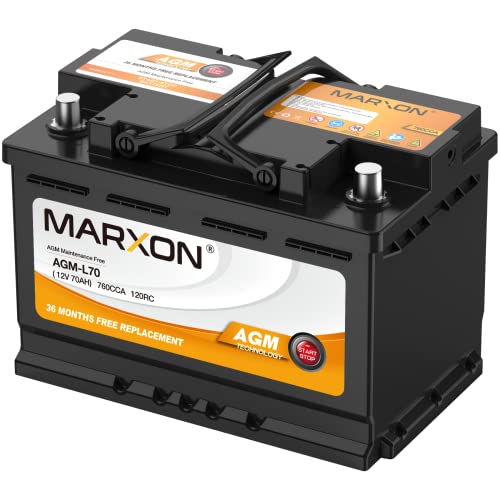
MARXON Group 48 H6 L3 Start and Stop AGM Battery 12V 70Ah 760CCA

MARXON Group 48 H6 L3 AGM Battery 12V 70Ah 760CCA BCI48 Maintenance Free

Weize Platinum AGM Battery BCI Group 94R H7 12V 80Ah 850CCA
Goodyear 47-H5-AGM BCI Group 47 12V 60Ah 680CCA Platinum AGM Battery

Goodyear 49-H8-AGM BCI Group 49 12V 95Ah 900CCA Platinum AGM Battery

Autocessking Group 48 H6 Start and Stop AGM Battery 12V 70Ah 760CCA

Weize Platinum AGM Battery BCI Group 48 H6 12V 70Ah 760CCA 36-Month Warranty
Weize Platinum AGM Battery BCI Group 47 H5 12V 60Ah 680CCA 36-Month Warranty

UPLUS BCI Group 48 AGM-L70-M H6 Start and Stop Battery 12V 70Ah 760CCA
What Each Pick Brings To The Table
The Goodyear 48-H6-AGM lands first because it does the most things well for the most people. Its 760 cold cranking amps is enough grunt for mid-size sedans and crossovers in places where January mornings drop below freezing.
Group 48 / H6 dimensions (BCI refers to Battery Council International sizing, the standard tray fitment) match what most late-model vehicles call for out of the factory, so installation rarely requires bracket swaps. AGM (absorbent glass mat) construction keeps the acid suspended in fiberglass separators, which is what enables spill-proof handling and steadier voltage under heavy accessory loads.
Real-World Strengths
- 760 CCA handles cold-weather starts without hesitation in most climates.
- Maintenance-free sealed design removes the need to top off water.
- Versatile mounting orientation works in tight engine bays.
- 120-minute reserve capacity covers extended accessory use at idle.
- Platinum-series construction targets longer service life than entry-level flooded units.
Things To Consider
- Group 48 dimensions mean it will not fit vehicles designed for a smaller Group 47 tray.
- AGM pricing sits above conventional flooded alternatives.
Key Specs
Who It Suits Best
Year-round commuters driving Group 48-equipped sedans, crossovers, or light trucks who want a sealed, no-fuss replacement.
Where Another Pick Suits Better
Drivers needing a higher-output unit for winches or aftermarket audio should step up to the Goodyear 49-H8-AGM.
The MARXON Group 48 H6 L3 is built for cars with start-stop systems, the kind that shut the engine off at traffic lights and expect a battery that can handle thousands of micro-restarts per year. Compare that to the Goodyear above, which is a strong generalist, and you get a more specialized tool here.
The 70Ah capacity matches the Group 48 spec almost exactly, and the AGM chemistry handles the constant cycling that start-stop vehicles demand. Owners commonly report that the fast-charge behavior makes a noticeable difference on vehicles that rack up short trips.
A Few Strong Suits
- Engineered specifically for start-stop driving cycles.
- Three-year warranty adds long-term reassurance.
- Maintenance-free AGM design means no fluid checks.
- 760 CCA delivers reliable cold starts in most regions.
Worth Noting
- At roughly 46.5 pounds, the unit is heavier than some lighter alternatives, which matters in tight trays.
- Fitment still requires checking your old battery’s dimensions and terminal orientation against the listing.
Made For
Owners of late-model vehicles with auto start-stop who want a purpose-built replacement and the protection of a multi-year warranty.
Skip It When
You drive an older car without start-stop electronics and want a cheaper conventional unit, in which case the Weize Platinum Group 47 may suit you better.
Sharing core dimensions with the MARXON above, this Group 48 H6 L3 unit leans hard into one specific promise: faster recharge behavior. For someone whose commute is a chain of short hops, that translates to a battery that bounces back between stops instead of slowly drifting into a low state of charge.
At 10.95 x 6.89 x 7.48 inches, the footprint matches the standard Group 48 envelope, which keeps the swap straightforward in most factory trays. The three-year warranty is the same level of reassurance, and the AGM construction handles the vibration and heat found under modern hoods.
Where It Helps
- Faster recharge cycle is well-suited to short-trip driving patterns.
- Standard Group 48 dimensions simplify direct replacement.
- Maintenance-free operation removes routine fluid top-ups.
- 760 CCA handles cold morning starts in most climates.
- Sealed AGM build resists spills during installation.
Honest Caveats
- Spec sheet does not list a dedicated reserve capacity rating.
- Charging-system health matters more with fast-recharge batteries, so a weak alternator will mute the advantage.
Feature Snapshot
Right Fit For
City drivers who rack up dozens of short trips per week and want a battery that recovers between errands.
Consider Something Else When
You live in a colder northern climate where maximum cranking amps matter most, in which case the Goodyear 49-H8-AGM offers more headroom.
The Weize Platinum Group 94R is the largest-capacity unit in the lineup, and its dimensions are taller and longer than a standard H6 tray. That extra footprint is precisely why it produces 850 CCA and an 80Ah rating, the kind of muscle a heavy-displacement engine or accessory-loaded rig appreciates.
Where the Goodyear 48-H6 above fits a typical mid-size crossover, this unit steps up to vehicles that came from the factory in a Group 94R / H7 configuration. Measure the existing battery before ordering, since H6 and H7 trays are not interchangeable.
A Favorable Mix
- 850 CCA delivers confident starts in sub-zero conditions.
- 140-minute reserve capacity keeps accessories running longer at idle.
- 36-month warranty adds long-term coverage.
- AGM chemistry tolerates deep discharge cycles better than flooded units.
Small Caveats
- Larger dimensions rule out Group 48 / H6 trays.
- Heavier overall weight can complicate installation in cramped engine bays.
Who Will Love This
Drivers of H7-equipped trucks and SUVs, especially those running winches, plows, or high-draw lighting.
A Better Fit Elsewhere
If your factory tray is a Group 48 / H6, the Weize Platinum Group 48 fits directly with no modifications required.
The Goodyear 47-H5-AGM exists for a very specific audience: owners of compact and mid-size vehicles whose factory tray accepts Group 47 / H5 sizing. Sliding the bigger Group 48 units from earlier in this list into a Group 47 tray is a common ordering mistake, and this battery avoids it entirely.
It still earns its place by delivering 680 CCA and a 100-minute reserve capacity in a smaller AGM package, which is plenty for everyday commuting in moderate climates.
Everyday Perks
- Group 47 dimensions fit many compact cars directly.
- Sealed AGM design tolerates mounting in tighter spaces.
- 680 CCA is sufficient for most mild winter conditions.
- 100-minute reserve capacity supports typical accessory loads.
Points To Note
- Lower cranking output means it’s less suited to extreme northern winters.
- Smaller 60Ah rating gives less headroom for accessory-heavy builds.
Perfect Match For
Drivers of compact sedans and hatchbacks whose factory battery tray calls for a Group 47 footprint.
Look Elsewhere When
You drive a vehicle that needs more cranking power in deep cold, in which case the Goodyear 48-H6-AGM is the more capable step up.
The Goodyear 49-H8-AGM is the overbuilder of the group. Its 900 CCA and 95Ah capacity are well beyond what a typical commuter needs, and that extra headroom is the entire selling point for anyone whose engine, accessories, or climate asks more from a battery.
Compared to the Group 48 Goodyear earlier in the lineup, the Group 49 / H8 footprint is taller and wider, so it only fits vehicles designed around that envelope. Cold-climate drivers running block heaters, rear defrost on a timer, and heated seats will get noticeable value from the reserve.
Key Advantages
- 900 CCA delivers premium cold-weather starting margin.
- 160-minute reserve capacity is the highest here.
- 95Ah rating supports extended accessory and electronics load.
- Sealed AGM build handles repeated deep cycling.
Trade Offs
- Larger and heavier than Group 48, ruling out smaller trays.
- Premium capacity means a heavier unit to handle during installation.
Feature Card
Who Should Grab It
Drivers of full-feature SUVs and trucks in cold climates who routinely run power-hungry accessories at idle.
Reach For A Different Pick When
Your vehicle tray is a standard Group 48, in which case the UPLUS AGM-L70-M is a better physical fit.
Autocessking’s Group 48 H6 lands as a sensible alternative for someone who likes what the Goodyear 48-H6 offers but wants a different brand behind it. The spec sheet mirrors the same 70Ah, 760 CCA, and 120 RC (reserve capacity) combination that defines a strong Group 48 daily driver.
The leak-proof AGM construction is what gives the unit its safe-handling reputation. Owners commonly report that installation in tight or angled factory trays goes smoothly because the acid stays locked in the glass mat separators.
What Helps Most
- Leak-proof AGM design handles angled or tight tray mounting.
- 760 CCA matches the segment benchmark.
- 120-minute reserve capacity is solid for the price tier.
- Maintenance-free operation fits a set-it-and-forget-it ownership style.
Soft Spots
- Brand is newer in this category, so long-term durability data is still building.
Best Suited To
Daily drivers who want a mainstream Group 48 spec with sealed AGM safety and aren’t locked into a specific brand.
Swap It Out When
You prefer a longer stated warranty window, in which case the Weize Platinum Group 48 offers a 36-month coverage period.
The Weize Platinum Group 48 H6 is the most direct-fit unit on the list for owners who simply want to swap like for like. At 10.94 x 6.89 x 7.48 inches, its dimensions match what the Goodyear 48-H6 delivers, which keeps the install story boring in the best possible way.
The 36-month warranty is the standout differentiator at this spec level, giving budget-conscious shoppers a longer runway than the 30-month norms elsewhere in this category.
The Case For It
- Direct-fit Group 48 / H6 dimensions reduce install surprises.
- 36-month warranty is among the longest at this spec tier.
- 760 CCA covers most climate zones.
- 120 RC supports typical accessory use at idle.
- AGM chemistry handles vibration and heat better than flooded units.
Factors To Consider
- Tapered terminals require matching your existing cable orientation.
- AGM price premium applies compared to conventional flooded batteries.
Right Fit For
Shoppers who want a familiar Group 48 spec backed by an extra-long warranty and minimal fitment drama.
Where A Sibling Pick Shines
If you specifically drive a start-stop vehicle, the MARXON Group 48 is built with that cycling profile in mind.
Group 47 / H5 vehicles typically include smaller sedans and economy hatchbacks, and the Weize Platinum Group 47 H5 delivers what those cars need at the lower end of the AGM price curve. The 680 CCA and 60Ah capacity won’t wow anyone, but they match what a 4-cylinder commuter actually demands.
Compared to the Goodyear 47-H5-AGM earlier in the list, this unit trades a slight brand-name premium for a longer stated warranty, which matters more for shoppers keeping a car past the three-year mark.
The Upside
- 36-month warranty is generous at the lower-capacity tier.
- Group 47 / H5 footprint fits compact car trays directly.
- Sealed AGM construction simplifies installation.
- 100-minute reserve capacity covers most accessory loads.
A Few Limitations
- 680 CCA leaves thin margins in deep-winter climates.
- 60Ah rating limits how much aftermarket electronics it can sustain.
Built With In Mind
Owners of older compact and mid-size sedans seeking a budget-friendly AGM replacement with a long warranty.
Not Your Match When
You live in a region with brutal winters, in which case the Goodyear 48-H6-AGM offers meaningfully more cold-start headroom.
The UPLUS AGM-L70-M closes out the lineup with a refined take on the Group 48 / H6 start-stop formula. Its spec sheet is the familiar 70Ah, 760 CCA, and 120 RC pairing, but the engineering focus is on the start-stop cycling profile, where a battery gets taxed every time the engine shuts off at a light.
Compared to the MARXON Group 48 units earlier, this one targets a similar audience with a slightly more premium construction focus. For owners of modern fuel-saving vehicles, that emphasis shows up as steadier voltage during long idle-restart cycles.
Advantages To Know
- Engineered for start-stop cycling demands.
- Group 48 / H6 / L3 dimensions match factory trays.
- Maintenance-free AGM eliminates fluid top-offs.
- 760 CCA covers most climates comfortably.
Practical Considerations
- Spec sheet does not list a dedicated reserve capacity beyond the standard 120-minute rating.
- Premium positioning commands a higher ask than entry-tier AGM alternatives.
Whose Shelf It Belongs On
Owners of modern start-stop-equipped vehicles who want a battery engineered around that exact cycling profile.
Another Choice May Suit
You don’t drive a start-stop vehicle, in which case the Weize Platinum Group 48 delivers similar core specs at a more approachable tier.
What Matters Most Before Choosing a 48 H6 Battery
Match the Group Size First
Group size refers to the BCI standard dimensions of length, width, and height, along with terminal orientation. A Group 48 / H6 tray will not accept a Group 47 / H5 or Group 94R / H7 battery. Always measure your existing battery, including terminal position, before ordering.
Decide If You Need Start-Stop Engineering
If your vehicle has automatic engine shutoff at traffic lights, the battery takes thousands of extra micro-cycles per year. Start-stop-optimized AGM units like the MARXON or UPLUS handle that load better than general-purpose AGM or flooded alternatives.
Balance Cold Cranking Amps Against Climate
CCA measures how much current a battery can deliver at 0°F for 30 seconds. Drivers in mild climates can run lower CCA ratings confidently, while northern drivers should treat anything under 700 CCA as borderline. Higher CCA also helps if your vehicle sits for weeks between drives.
Check Reserve Capacity for Accessory Loads
Reserve capacity (RC) tells you how long the battery can run accessories if the alternator fails. Higher RC values matter more for vehicles with power-hungry electronics, aftermarket stereos, or work-truck setups like plows or lighting rigs.
Picking Through The Fine Print
Pitfalls Shoppers Hit
The most common mistake is assuming all “H6” listings are identical. Group 48 / H6 is the standard, but H5 (Group 47) and H7 (Group 94R) batteries get cross-listed in search results. A battery that physically won’t fit your tray solves nothing.
Where The Extra Money Goes
Premium-tier AGM batteries typically add longer cycle life, better resistance to deep discharge, and longer warranty windows. If you keep vehicles past five years or run accessory-heavy electrical systems, the upgrade usually pays for itself in fewer replacements and more reliable cold starts.
Frequently Asked Questions
What Does Group 48 / H6 Mean?
Group 48 and H6 refer to the same BCI battery sizing standard. It defines the battery’s physical dimensions and terminal orientation so it fits a factory tray and matches the existing cable reach without modification.
Can I Use a Group 48 Battery in a Group 47 Tray?
No. Group 48 is larger than Group 47 / H5, so it physically won’t seat in a Group 47 tray. Always match the new battery’s group number to what’s printed on your existing unit or listed in the vehicle owner’s manual.
Do AGM Batteries Need a Special Charger?
AGM batteries charge at slightly different voltage profiles than flooded units, but most modern vehicles with smart alternators handle them correctly. For shop or garage charging, a charger with an AGM mode is recommended.
How Long Does a Group 48 AGM Battery Last?
Typical service life ranges from three to six years depending on climate, driving habits, and electrical load. Short-trip driving and extreme heat both shorten lifespan, while steady highway commuting tends to extend it.
Is Higher CCA Always Better?
Not always. Excess cranking amps you don’t need doesn’t extend life or improve daily performance. Match CCA to your climate and engine size, then prioritize reserve capacity and warranty if your electrical demands are modest.
Bottom Line
The right Group 48 / H6 battery comes down to matching your tray, your climate, and your vehicle’s electrical profile. Start with the Goodyear 48-H6 if you want a balanced daily driver, step up to the 49-H8 for cold-climate muscle, or pick a start-stop-engineered unit if your car shuts off at every light. Measure your existing battery, confirm the terminal layout, and the rest of the decision tends to fall into place.