A dependable 48 volt charger quietly keeps your golf cart, neighborhood EV, or off-grid rig moving, and you only notice it when it fails. The trouble is that lead-acid and lithium packs want different charge profiles, and golf carts from different brands use incompatible plug shapes, so the “right” answer shifts with your setup. This roundup walks through ten solid picks across the most common cart platforms and battery chemistries, so you can match a charger to your garage without burning through return shipping.
A Closer Look At The Lineup

FORM 48V Golf Cart Battery Charger for EZGO RXV & TXT

Mehrpow 48V 100AH Lithium Golf Cart Conversion Kit

FORM Charge 48V Smart Charger for ICON Carts
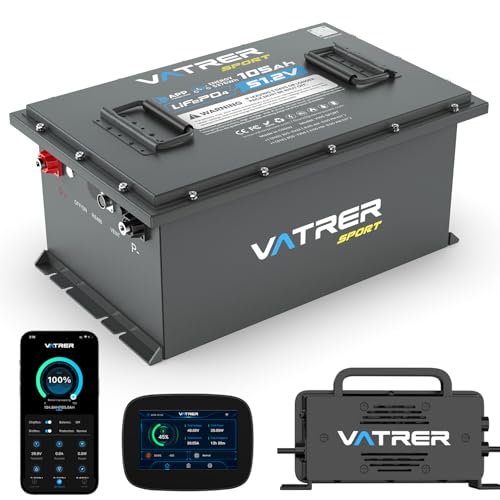
VATRER POWER 48V Lithium Battery with 300A BMS

HTAXSCC 48V 15A Waterproof Charger for Yamaha G19-G22

DC HOUSE 48V 100Ah Lithium Kit with Bluetooth Monitor

YUANRI 17A Waterproof Smart Charger for Yamaha G29

YUANRI 18A Smart Charger for Yamaha G29 with 16ft Cord

FORM 48V Onboard Golf Cart Battery Charger

YUANRI 48V 1250W Charger for Club Car
Meet The Standout Selections
If your EZGO RXV or TXT is still running its original 48-volt pack, this FORM charger is the kind of replacement that just slots in. The unit ships with the familiar EZGO triangle plug pattern, so there’s no wiring guesswork on a Sunday afternoon. FORM also lists it at roughly 80 percent lighter than the OEM charger, which you’ll feel the first time you carry it from the garage to the cart.
For daily cart users who plug in after every round, the 15-amp output covers standard lead-acid packs without fuss. The 14-foot-plus cable gives you reach across a two-car garage. It is specifically a lead-acid chemistry charger, so anyone moving to lithium will want a different pick on this list.
Everyday Perks
- Triangle plug matches EZGO RXV and TXT receptacles out of the box, so no adapter rewiring is needed.
- 15-amp output suits typical weekend and commuter cart use, returning a depleted pack to ready overnight.
- Lightweight housing reduces strain when you hoist it onto the seat or carry it out to a curbside charger spot.
- Extended 14-foot-plus cable reaches from a garage outlet to a cart parked in the driveway.
Things To Consider
- Built only for lead-acid chemistry, so lithium conversions will need a multi-chemistry unit instead.
- Replacement is most useful for owners of compatible EZGO models; other cart brands require a different plug shape.
- Like most garage-stored chargers, expect routine wipe-downs and a sheltered parking spot to keep the case looking clean.
At A Glance
Who It Suits Best
EZGO RXV and TXT owners running stock lead-acid packs who want a near-direct replacement for a worn OEM charger.
Where Another Pick Suits Better
Lithium-converted cart owners should look at the FORM 48V Onboard Charger instead, since it handles multiple chemistries from the same unit.
Where item 1 focuses on refilling a stock pack, this Mehrpow kit is for the person ready to retire six or eight lead-acid batteries and never look back. The 48V 100Ah LiFePO4 (lithium iron phosphate) pack is built around 16 Grade A EVE cells, which are individually UL listed for stability and longevity. The kit is pitched as a one-time install with plug-and-play wiring, so a careful DIYer can do it in an afternoon.
The deep-cycle claim of 10,000-plus cycles at 80 percent depth of discharge is the kind of spec that translates to years of daily use without battery anxiety. You will need a LiFePO4-compatible charger to feed it properly, which is why a few entries later in this roundup are designed to pair with packs like this one.
Practical Advantages
- 10,000-plus deep cycles at 80 percent DOD (depth of discharge, meaning how much of the pack you drain before recharging) outlast typical AGM (absorbent glass mat) lead-acid packs by a wide margin.
- Plug-and-play conversion removes most of the rewiring worry for first-time lithium installers.
- UL-listed Grade A EVE cells give an extra layer of confidence for a pack living under your cart seat.
- Full 48V 100Ah capacity supports long neighborhood loops without mid-route range anxiety.
Points To Keep In Mind
- Lithium packs are subject to hazmat shipping rules and are non-returnable, so verify fitment before ordering.
- You will likely need a LiFePO4-compatible charger if your current unit is lead-acid only, adding to the project budget.
- Battery weight still adds up at full pack size, even with the chemistry savings, so plan a hand-off when lowering it into the bay.
Key Product Details
Made For
Golf cart owners ready to convert from lead-acid to lithium who want a turnkey 48V 100Ah pack with long cycle life.
Skip It When
Anyone happy with a stock lead-acid setup will get more value from a dedicated 48V charger like the FORM EZGO unit above.
ICON carts use a non-standard receptacle that won’t accept a normal three-prong wall plug, which is exactly why FORM built this charger with the matching ICON connector. The result is a true plug-and-play swap for owners who are tired of adapters or splice jobs. It also spans three battery chemistries, so the same unit works whether your cart still runs flooded lead-acid, AGM (sealed lead-acid), or has been upgraded to lithium LiFePO4.
The 15-amp output puts it in the same comfort zone as item 1, but the onboard-style mounting and set-and-forget profile target ICON owners specifically. If you park your cart for a few weeks between rounds, the maintenance mode keeps the pack topped without boiling off electrolyte.
Well-Handled Touches
- Direct-fit ICON receptacle means no adapters or rewiring during install.
- Multi-chemistry support covers lead-acid, AGM, and LiFePO4 from a single unit.
- Maintenance mode holds the pack at a healthy float without overcharging through long storage periods.
- Onboard-friendly form factor suits carts with a dedicated charger bay.
Honest Caveats
- ICON-specific plug means it won’t help owners of EZGO, Club Car, or Yamaha carts.
- At 15 amps, full pack recovery takes a typical overnight window rather than a quick top-up.
Best Suited To
ICON cart owners who want a chemistry-flexible charger that drops into the stock receptacle.
Consider Something Else When
Yamaha G29 owners should skip ahead to the YUANRI 17A charger, which pairs with the 3-pin leaf plug used on those carts.
The BMS (battery management system, the onboard circuitry that watches voltage, current, and temperature) is the silent hero of any lithium golf cart pack, and VATRER POWER leans hard on that story here. The 300A BMS monitors cell temperature, voltage, and current in real time, with adaptive charge and discharge behavior tuned to your driving style and climate. For shoppers who geek out on battery data, the AI-style monitoring is the headline feature.
Compared to the Mehrpow kit above, this pack is more about intelligence than raw cycle count. It targets the owner who wants the cart to manage itself, whether you live in a hot garage in Phoenix or a cold one in Michigan.
What Pays Off
- 300A BMS continuously balances cells under load, which protects pack longevity in demanding terrain.
- Adaptive charge and discharge curves react to temperature and driving habits for steadier performance.
- Real-time state-of-health prediction helps you catch weak cells before they leave you stranded.
- Strong fit for tech-minded owners who want data, not just a green light on a charger.
Trade Offs
- Smart features add to the cost versus a simpler lithium pack.
- Hazardous-materials shipping rules apply and the item is non-returnable, so confirm cart compatibility first.
- Pair it with a LiFePO4-aware charger; the FORM or YUANRI lead-acid units won’t get the most out of this pack.
Right Fit For
Tech-oriented cart owners who want adaptive battery management and detailed cell-level monitoring.
A Better Fit Elsewhere
Budget-focused converters will get more raw capacity per dollar from the Mehrpow 48V 100Ah kit.
Older Yamaha G19 through G22 carts use a two-pin plug and have spent enough years in the wild that their chargers often live on a garage floor, exposed to whatever leaks or weather sneaks in. HTAXSCC tackles that environment head-on with an IP67-rated (fully dust-tight and submersible up to one meter for short periods) aluminum housing designed to shrug off water, dust, and vibration. The 15-amp smart output is calibrated for lead-acid packs, which is what these vintage carts still run.
Compared to the FORM charger in item 1, the trade is fit for environment. You give up the lightweight OEM-style cable design and gain a sealed aluminum chassis that doesn’t mind a wet cart shed.
The Value In It
- IP67 sealing and aluminum casing handle damp storage and accidental splashes without panic.
- Two-pin connector matches Yamaha G19 through G22 carts directly, no splicing needed.
- Smart 15A charging profile protects lead-acid cells during long maintenance cycles.
- Solid construction for carts that live outdoors or in semi-enclosed bays.
Some Limits To Know
- Tuned for older Yamaha carts only, so newer G29 or Drive 2 owners need a different plug style.
- Lead-acid focused, so it will not charge a lithium-converted pack.
Feature Snapshot
Who Should Grab It
Yamaha G19-G22 owners in wet, dusty, or partially outdoor storage who want a sealed lead-acid charger.
Look Elsewhere When
Yamaha G29 Drive owners are better served by the YUANRI 17A charger that follows this entry.
DC HOUSE bundles the pack and a matched 18A charger, which removes one of the biggest headaches of going lithium: matching an aftermarket battery to the right charger profile. The metal-case 48V 100Ah LiFePO4 pack ships with a 200A BMS, a Bluetooth mobile app, and an LCD monitor so you can watch state of charge from the cart seat. Peak current of 670A handles steep climbs and tall-grass torque demands better than older lead-acid setups.
It is the most feature-laden kit in this roundup, and it shows up here between the more straightforward FORM and HTAXSCC chargers for variety. For the curious owner who wants every data point on a phone screen, this is the kit to look at first.
What Works In Its Favor
- Matched 18A charger included, so you don’t have to chase a compatible LiFePO4 charger separately.
- Bluetooth app and LCD monitor give real-time visibility into pack health and charge state.
- 670A peak current handles hilly neighborhoods and rough turf without sagging voltage.
- Metal case adds physical protection compared to soft-pack lithium options.
Points To Note
- The richer feature set usually lands at a higher price than simpler packs in this category.
- Bundled 18A charger is sized for the kit, so swapping in a larger charger later isn’t necessary for most owners.
Quick Facts
Perfect Match For
Data-driven cart owners who want app-based monitoring and a matched charger included in one box.
Reach For A Different Pick When
Owners who already own a quality LiFePO4 charger may prefer the simpler Mehrpow or VATRER POWER packs without paying for the bundled charger.
The Yamaha G29 Drive uses a 3-pin leaf plug that has tripped up more than one DIY installer who grabbed a generic 48V charger off the shelf. YUANRI’s 17-amp smart unit is built around that exact connector, with an IP67 housing that lives comfortably in an open carport. The slightly higher amperage compared to the HTAXSCC model above shortens the time between plug-in and ready-to-drive.
For weekend warriors who want a faster turnaround between rounds, the extra two amps over a typical 15A charger is noticeable. It is still lead-acid focused, which suits the majority of stock G29 carts.
Notable Upsides
- 17-amp output trims charge time versus typical 15A Yamaha chargers.
- 3-pin leaf plug matches G29 Drive carts without rewiring.
- IP67 sealing keeps the unit safe in open sheds and damp garages.
- Smart trickle mode maintains the pack during long storage between rounds.
Worth Bearing In Mind
- Tuned for lead-acid, so it will not work for a lithium-converted G29.
- Higher amp output means slightly more heat under the case during long charges, which is normal but worth knowing.
Built With In Mind
Yamaha G29 Drive owners who want faster top-ups and a sealed housing for outdoor storage.
Not Your Match When
Club Car DS owners should look at the YUANRI Club Car 48V 1250W charger later in this list, which targets that brand’s connector instead.
If your cart lives at the back of a long driveway or in a detached shed, a short OEM cable is a daily annoyance. This YUANRI unit pushes an extended 16-foot cord so you can plug in without dragging the cart to the outlet. The 18-amp output paired with smart charging is aimed at the G29 Drive and Drive 2 crowd, and a 3 to 6 hour full-charge window suits overnight or workday charging.
It is a step up in current from the 17-amp YUANRI just above, and the extra amp combined with the longer cord is the kind of practical combination that solves real garage headaches.
Positive Points
- 16-foot cord reaches across detached garages and long driveways without extensions.
- 18-amp output shaves time off the G29’s typical overnight cycle.
- Smart trickle mode preserves battery health during multi-week storage.
- Works for both G29 Drive and Drive 2 models.
Soft Spots
- Lead-acid only, so lithium conversions need a different charger.
- Long cord is helpful but worth a quick cable management habit to avoid trip hazards across the driveway.
Whose Shelf It Belongs On
Yamaha G29 Drive or Drive 2 owners with detached storage who value reach and faster charge times.
Swap It Out When
Anyone running a lithium-converted G29 should skip this and pair the cart with a multi-chemistry unit like the FORM onboard charger.
The onboard format is a different way of thinking about a golf cart charger, since it mounts to the cart and travels with it. FORM’s 48V 15-amp onboard unit supports lead-acid, AGM, and LiFePO4 chemistries from the same hardware, with ring terminals for a clean bolt-on installation. The lightweight aluminum housing is roughly 80 percent lighter than typical OEM onboard units, which is meaningful when you mount it under the seat or behind the dash.
Compared to the FORM ICON-specific unit earlier in this list, this onboard version trades the proprietary ICON plug for ring terminals, so it fits more cart brands but requires light wiring.
A Favorable Mix
- Multi-chemistry support covers lead-acid, AGM, and LiFePO4 in a single unit.
- Onboard mounting means the charger is always with the cart, ready at any outlet.
- Lightweight aluminum housing is roughly 80 percent lighter than typical OEM onboard chargers.
- Ring terminal connections simplify bolt-on installation in most cart bays.
Where It Is Less Suited
- Requires basic wiring work with ring terminals, unlike the plug-and-play FORM units above.
- At 15 amps, full pack recovery still takes an overnight window for most carts.
Who Will Love This
DIY cart owners who want a permanently mounted, multi-chemistry charger that travels with the cart.
Where A Sibling Pick Shines
Shoppers who would rather avoid wiring work should pick the FORM Charge 48V Smart Charger for ICON Carts for its drop-in fit.
Club Car DS and Precedent owners get the last slot with a high-wattage 1250W lead-acid charger that hits the 3 to 6 hour full-charge mark on a typical pack. The 16-foot cord is the same generous length used on the Yamaha G29 YUANRI earlier, and the smart trickle profile is friendly to carts that sit between weekends. It is built specifically for Club Car’s stock lead-acid battery configuration.
Where the FORM units lead with lightweight OEM-style design, YUANRI leans into higher wattage and reach. For a cart parked in a long bay or a community cart barn, that mix is often the deciding factor.
Good Reasons To Consider
- 1250W output recovers a typical Club Car pack in 3 to 6 hours.
- 16-foot cord reaches across detached storage areas.
- Smart trickle mode keeps packs healthy during long stretches between uses.
- Direct-fit Club Car design avoids adapter wiring.
Details To Watch
- Lead-acid only, so a lithium-converted Club Car will need a different charger.
- Higher wattage means the charger runs warm under load, which is normal but worth noting for tight storage spots.
Right Fit For
Club Car DS and Precedent owners who want a high-wattage lead-acid charger with a long reach.
Another Choice May Suit
Anyone running a lithium-converted Club Car should swap in the FORM onboard multi-chemistry unit instead.
What To Weigh Before Choosing A 48 Volt Battery Charger
Match The Plug, Then The Chemistry
The single biggest mistake is buying a charger before confirming the receptacle shape on the cart. EZGO, Club Car, ICON, and Yamaha each use different connectors, and a 48V charger with the wrong plug is just expensive dead weight. Once the connector matches, decide whether the cart runs flooded lead-acid, AGM, or lithium LiFePO4, because lithium packs need a different charge profile than lead-acid to stay healthy.
Amperage And Cord Reach Matter In Real Garages
Higher amperage means a faster turnaround, but a 17A or 18A charger on a tired battery bank can also push more heat into the cells. For most daily drivers, a 15A smart charger is the sweet spot. Long-cord units, like the two YUANRI picks above, are worth the small premium for detached garages or community cart barns, where a six-foot OEM cord simply does not reach.
Decide Between Portable And Onboard
Portable chargers stay in the garage and travel to the cart, which is fine for short distances and one-cart owners. Onboard chargers bolt to the cart and live there, so you can plug in at any outlet during a stop. The onboard path adds light wiring work but rewards people who move their carts between properties or charge at the course.
Things To Think Through Before You Click
Pitfalls Shoppers Hit
The most common trap is matching voltage but ignoring plug type. A 48V Club Car charger will not seat into an EZGO receptacle, no matter how perfect the amperage looks. Another common slip is pairing a lead-acid-only charger with a lithium-converted pack, which undercharges or, worse, slowly damages cells. Always confirm the chemistry on the listing before ordering, and double-check the connector style against a photo of your cart’s port.
What The Higher Tier Buys
Premium chargers in this category tend to add multi-chemistry flexibility, smart Bluetooth monitoring, longer cords, and sealed aluminum housings. For a single cart in a clean garage, a basic 15A lead-acid charger is plenty. For a lithium conversion, a fleet operation, or a cart that lives outdoors, the upgrade pays back in fewer battery headaches and faster cycle times.
Frequently Asked Questions
Can A 48 Volt Charger Be Used On Both Lead-Acid And Lithium Batteries?
Only if the charger explicitly lists both chemistries. Lead-acid-only units push higher absorption voltages that slowly damage LiFePO4 cells, while lithium-only chargers may not top off flooded packs correctly.
How Long Does A 48 Volt Golf Cart Charger Take To Reach Full?
Most 15A chargers finish an overnight cycle in roughly 6 to 10 hours, while 17A and 18A units trim that to 3 to 6 hours depending on pack size and depth of drain.
Do I Need A Special Charger For IP67-Rated Models?
The IP67 rating is about the housing surviving wet or dusty storage, not about chemistry. A waterproof lead-acid charger still requires lead-acid batteries to work correctly.
Will An Onboard Charger Drain The Cart Battery When Stored?
Quality onboard chargers draw a tiny standby current, but the loss is negligible over a winter. For long storage, a brief monthly top-up is a healthy habit regardless.
Can I Use A 48 Volt Charger With A Standard Wall Outlet?
Most 48V cart chargers run on standard 100 to 240V household current, so a normal garage outlet is all you need. Dedicated 240V outlets are rarely required at these amperage levels.
Closing Remarks
The right 48 volt battery charger comes down to three quick checks: plug shape, battery chemistry, and where the cart actually lives. Match those, and any of the ten picks above will serve you well for years of weekend rounds and neighborhood trips. Take a minute to confirm the connector on your cart, decide if you need onboard or portable, and the rest is just picking the features you actually want.