Anyone who’s parked a classic in storage, run solar to a shed, or wrestled a trickle charger across a garage floor has run into the same problem: the cable that came with the charger just isn’t long enough. Battery cable extensions solve that gap without forcing you to move the vehicle, buy a new charger, or splice wire with a soldering iron. The ten picks below cover the common cases, from a couple of feet of slack for a maintainer, all the way to heavy-gauge copper for welding, solar banks, and RV battery work.
How The Shortlist Stacks Up

RUILAOYXT GC004 X-Connect Extension Cable (2-Pack)

RUILAOYXT GC002 M6 Eyelet Terminal Cable (2-Pack)
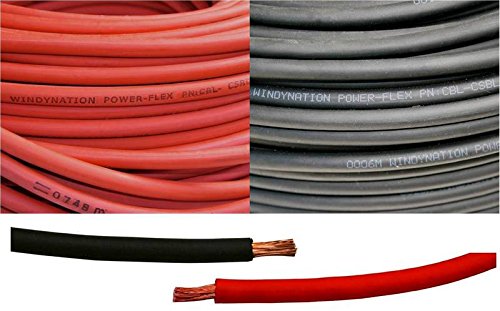
WindyNation 2/0 AWG Welding & Battery Cable

BatteryMINDer DCE25 DC Extension Cable (25 ft)

Oyviny 3.3FT 10AWG SAE to O-Ring Harness

Hobbypark Deans to Banana Bullet Adapter

Oyviny 2-Pack SAE Charger Cable with 10A Fuse

RUILAOYXT GC002 & GC004 X-Connect Combo

Oyviny 5-Pack 12AWG SAE Extension Cables

Oyviny 12AWG SAE Connector Cable (2-Pack)
What Each Pick Brings To The Table
This RUILAOYXT pair is purpose-built for owners of the popular NOCO Genius charger family. Each lead is roughly ten feet long, terminating in NOCO’s X-Connect fittings on both ends, so it slides straight into the existing pigtail without adapters or jury-rigged splices. A waterproof cap on the female end keeps road grime out when the cable is hanging loose, a small detail that pays off during a wet winter.
Wire spec lands at 16 AWG pure copper, which carries the modest current a 1- to 10-amp NOCO maintainer pushes without meaningful voltage loss at this length. The set covers the GENIUS1, GENIUS2, GENIUS5, GENIUS10, and several larger G-series units, though it is explicitly not a match for NOCO Boost jump starters. You may want to confirm your charger’s connector shape before ordering, especially if you own an older or non-Genius model.
A Favorable Mix
- Plug-and-play fit for the most common NOCO chargers, no rewiring
- Two leads per pack, useful for two vehicles or one plus a spare
- Waterproof end cap protects the connector between charging sessions
- Copper conductor keeps voltage drop low across ten feet of run
Worth Noting
- Will not fit NOCO Boost or Boost X lithium jump starters
- Ten feet is generous for a sedan but tight for a long driveway or detached garage
Who It Suits Best
NOCO Genius owners with one or two daily drivers who want a clean, no-splice way to extend the maintainer lead to a wall outlet.
Where Another Pick Suits Better
For longer garage runs, the BatteryMINDer DCE25 DC Extension Cable offers 25 feet of slack on the same general idea.
Where the GC004 stretches an existing pigtail, the GC002 turns the charger into a permanent fixture. Each lead ends in an M6 (quarter-inch) ring terminal that bolts directly to the battery post, then routes through the engine bay to a quick-disconnect plug that meets the NOCO charger side. A 20-amp inline fuse sits on the cable for circuit protection, plus the same waterproof cover design carried over from the GC004 family.
It is a tidy solution for vehicles that sit for months at a time: classic cars in winter storage, a boat on a lift, a motorcycle parked for the off-season. Once the eyelets are torqued down, connecting the maintainer is a one-handed snap. The 16 AWG copper conductor handles typical maintainer current without complaint. The only real commitment is the small amount of drilling and routing work the first time you install it.
Well-Handled Touches
- Eyelet terminals give a clean, semi-permanent install that lives with the vehicle
- Inline 20-amp fuse protects the harness from accidental shorts
- Two-pack covers a second vehicle or a spare for the trailer
- Waterproof cap on the quick-disconnect side keeps corrosion at bay
Trade Offs
- Requires a wrench and a small hole in the bodywork for routing
- Limited to the same NOCO Genius charger compatibility as the GC004
Key Specs
Made For
Garage tinkerers with a stored classic, second vehicle, or motorcycle who want one tidy install rather than a tangle of alligator clips every spring.
Consider Something Else When
You’d rather keep things adapter-free across multiple charger brands; the Oyviny SAE harness in pick 5 uses the more universal SAE quick-disconnect standard.
This is a different beast from the previous two, more raw material than accessory. WindyNation sells industrial-grade 2/0 AWG pure copper welding cable in matched red-and-black pairs, available in 5-, 10-, or 15-foot lengths. The insulation is the soft EPDM-style jacket that welders and off-grid builders expect, so the cable bends around tight battery-box corners without kinking.
Use cases stretch beyond charging: hooking a second battery bank into an RV, wiring an inverter to a fuse panel, or running a serious solar array’s battery-side leads. Because it ships without terminals, you’ll need to add lugs and a crimper, which puts this firmly in the weekend-project category. For most trickle-charging jobs, the gauge is overkill, but for any high-current run, the copper cross-section is the real story.
Useful Touches
- True 2/0 AWG copper handles hundreds of amps without straining
- Flexible jacket routes cleanly through battery compartments and conduits
- Three length options let you match the run without a lot of slack coiled up
- Doubles as welding lead, battery jumper, or inverter feed
Things To Consider
- No terminals or lugs included, plan for a crimper and copper lugs
- Heavier than the typical maintainer lead, so cable management matters
Best Suited To
Off-grid, RV, and shop builders running high-current wiring where ordinary 16 AWG extensions would overheat or drop too much voltage.
Not Your Match When
You’re just trying to reach a wall outlet from a parked sedan; pick 1 or pick 4 is a better size and price for that.
Twenty-five feet of slack is the headline here, and it solves a problem the shorter extensions cannot: a charger that lives at the back of a detached garage, a barn, or a workshop where the nearest outlet is a long walk from the vehicle. Both ends use the SAE “bullet” connector pattern common to many maintainers and BatteryMINDer chargers, so the cable drops into an existing setup with minimal fuss.
The wire is 16 AWG in a black zip-cord jacket, rugged enough to drape across a concrete floor without complaint. For a BatteryMINDer-equipped household with a 1.5-amp charger, the gauge handles the load easily. With a heavier 10- or 15-amp charger, twenty-five feet is long enough that voltage drop becomes worth watching, though for typical maintenance charging it remains a non-issue.
What Pays Off
- Long 25-foot reach covers most detached garage and barn setups
- SAE bullet ends fit the BatteryMINDer family and many other maintainers
- Heavy-duty 16 AWG conductor balances flexibility and current capacity
- Simple plug-and-play, no splicing or terminal work
Honest Caveats
- Extra length can become a tripping hazard if not routed along a wall
- Not a fit for chargers that use proprietary connectors instead of SAE
Perfect Match For
Shop owners and rural households whose vehicles sit well away from the nearest outlet and who already run a BatteryMINDer-style maintainer.
Skip It When
You just need a couple of extra feet to clear a workbench; the Oyviny 2-Pack in pick 7 keeps things short and tidy for that.
Oyviny’s 3.3-foot harness is the heavy-hauler of the SAE-extension world. Ten AWG tinned copper wire is significantly thicker than the 16 AWG typical for a maintainer lead, so voltage drop stays low even when a 20- or 30-amp solar charge controller is pushing current through. One end terminates in an O-ring, the other in the standard SAE quick-disconnect that fits most solar panels, trailers, and battery maintainers on the market.
The shorter length suits installs where the controller sits close to the battery but you still want a service disconnect, like a trolling-motor bay, an RV house-battery compartment, or a small off-grid shed. A set of 10A, 20A, and 30A fuses lets you match protection to the device downstream, which is more thoughtful than the single-fuse approach used by some competitors. If your needs are bigger than a maintainer but smaller than welding cable, this lands in the gap nicely.
Noteworthy Benefits
- Thick 10 AWG tinned copper holds voltage steady at meaningful current
- Multiple fuse ratings in the box let you tune protection to the load
- SAE plug is the most universal quick-disconnect on the market
- Tinned copper resists corrosion in marine and outdoor installs
Small Caveats
- Short length limits usefulness if controller and battery sit far apart
- Heavier gauge is stiffer to route in tight engine bays
Quick Facts
Right Fit For
Solar, trolling-motor, and trailer owners who need a short, high-current bridge between battery and charge source rather than a long maintainer lead.
Look Elsewhere When
You just want slack on a small maintainer; pick 7’s lighter 16 AWG Oyviny set is a better match and easier on the wallet.
This Hobbypark pair lives in a different corner of the category, the radio-control hobby. Each adapter turns a male Deans T-plug on a LiPo battery into a pair of 4mm banana bullets, which is the standard input on most RC balance chargers and hobby power supplies. It’s a small accessory, but it’s the exact piece missing from a lot of workbenches.
The wire is 14 AWG silicone-jacketed, tin-plated copper, and the soldering joints look tidy from the listing photos. Two adapters arrive per pack, plus a pair of battery straps for securing the pack on the bench. For anyone charging a quiver of LiPo packs for RC cars, quads, boats, or planes, this skips the alligator-clip workaround entirely.
Where It Delivers
- Direct adapter between Deans packs and standard RC chargers
- 14 AWG silicone wire is flexible and rated for the current RC packs pull
- Two per pack covers more than one bench setup
- Includes battery straps for securing packs while charging
Where It Is Less Suited
- Limited to the Deans-to-banana conversion; other RC plug standards need a different adapter
- Not intended for automotive or marine battery use
Who Should Grab It
Hobbyists running RC cars, drones, boats, or planes with Deans-equipped LiPo packs who want a clean, no-solder adapter for the charging bench.
Swap It Out When
You’re charging a real car, motorcycle, or solar battery; the Oyviny SAE extension in pick 9 fits that world much better.
This Oyviny two-pack is the gentle cousin of the heavier 10 AWG set in pick 5, sized for trickle charging rather than high-current solar work. Each lead is roughly two feet of 16 AWG pure copper, terminated with an SAE quick-disconnect on one side and an O-ring terminal on the other, with a 10A inline fuse sitting along the run. The compact length suits installs where the charger or solar controller sits right next to the battery bay.
It’s a tidy way to hardwire a maintainer lead onto a motorcycle, a small boat, a generator, or a lawn tractor. The SAE connector is the same standard used by BatteryMINDer, NOCO, and most portable solar panels, so it plays nicely with gear you may already own. Two leads in the box means one install and one spare, or two vehicles covered.
Useful Highlights
- Compact two-foot length keeps engine bays uncluttered
- Inline 10A fuse protects against shorts at the O-ring end
- SAE quick-disconnect fits the widest range of chargers and panels
- Two per pack covers a second vehicle or a backup lead
Points To Note
- 16 AWG is fine for maintainers but light for high-current solar charging
- Two-foot length is too short for battery-to-charger spans across a garage
The Right Fit
Motorcycle, ATV, and small-craft owners who want a permanent, fused maintainer lead bolted to the battery without a lot of extra cable to stow.
Reach For A Different Pick When
You need more reach than a couple of feet; pick 4’s 25-foot BatteryMINDer cable solves the long-distance case.
This bundle rolls picks 1 and 2 into one package: the GC002 eyelet leads for permanent mounting, plus the GC004 extensions that stretch the charger reach. Anyone running a NOCO Genius charger across multiple vehicles can wire all of them in one go, then snake the charger itself from outlet to outlet without moving the cars. It is a tidy way to set up a small fleet, whether that’s a household with two daily drivers plus a stored classic or a hobby shop with a couple of project cars on trickle duty.
Compatibility mirrors the standalone sets: GENIUS1, GENIUS2, GENIUS5, GENIUS10, the G-series, and the 2X2/2X4 multi-bank units. As with the individual SKUs, the connectors are not designed for the Boost or Boost X jump-starter family. For most users, the combo removes the need to remember which box the eyelets came in.
A Few Highlights
- One package covers both permanent-mount and extension needs
- Cuts down on multiple orders for households with several vehicles
- Same NOCO-compatible X-Connect fittings as the standalone leads
- Waterproof covers on each connector end for outdoor storage
Some Limits To Know
- Pays off only when both lead types will actually be used
- Not a fit for NOCO Boost or Boost X jump starters
Built With In Mind
Multi-vehicle NOCO households or small shops that want a one-order solution for both permanent eyelets and charger reach extensions.
Another Choice May Suit When
You only need one type of lead; ordering the GC004 alone or the GC002 alone keeps the parts bin uncluttered.
Where most of the picks above arrive in pairs, this Oyviny set ships five one-foot SAE leads in a single box, which is exactly what solar routing projects usually need. Each cable is 12 AWG with red-positive and black-negative conductors, terminated in standard SAE plugs on both ends. Chaining them together creates a custom run from panel to controller to battery without buying bulk wire and crimping your own.
The short, daisy-chain design is genuinely useful for getting around tight corners inside an RV battery bay, routing through a solar generator’s cable channel, or bridging gaps in a portable panel array. For pure maintenance charging on a single vehicle, five links is more than most owners need, so the value is real for solar tinkers and minimal for single-vehicle households.
Why It Works Well
- Five short links in one box for daisy-chaining custom-length runs
- 12 AWG handles solar panel output without excessive voltage drop
- Standard SAE plug works with the wider charger and panel ecosystem
- Red/black polarity is color-coded across every link
Potential Compromises
- Each connector adds a small resistance point, longer runs benefit from fewer splices
- Single-polarity design means reverse-polarity adapters are needed for some equipment
Whose Shelf It Belongs On
Solar and RV builders who want a flexible, modular way to bridge panel-to-controller-to-battery distances without committing to a single cable length.
Where A Sibling Pick Shines
For a single 12AWG pair in shorter supply, pick 10’s two-pack fits a smaller, one-cable need at lower cost.
This two-pack mirrors the spec of the larger five-link set in pick 9, just trimmed down for owners who don’t need the full bundle. Each lead is a 12 AWG single-ended SAE cable about a foot long, color-coded red and black, with a quick-disconnect plug on each end. Pairing one with a maintainer and another with a portable solar panel keeps two charging sources ready to swap.
The cables work with motorcycles, compact tractors, ATVs, and any vehicle where the battery sits within easy reach of a wall outlet or panel. Because they’re the same polarity across both leads, reverse-polarity adapters are needed for equipment that runs the opposite convention. For most mainstream chargers and panels, though, polarity lines up and these just plug in.
Good Reasons To Consider
- Two short, ready-to-use 12 AWG SAE links at a modest outlay
- Color-coded red/black leads keep polarity straightforward
- Works with the broader SAE charger and solar ecosystem
- Handy as spares once a primary install is already in place
Things To Weigh Up
- Same-polarity design needs adapters for reverse-polarity gear
- One-foot length limits use to very short bridging jobs
Who Will Love This
Tractor, ATV, and small-vehicle owners who already use SAE-compatible chargers and want a couple of clean, short leads on hand.
A Better Fit Elsewhere
For a longer single-cable reach on a car or classic, pick 1’s RUILAOYXT GC004 extension is purpose-built for that case.
What Matters Most Before Choosing Battery Cable Extensions
Wire gauge is the first thing to settle. AWG numbers work in reverse: a 10 AWG conductor is thicker than a 16 AWG one, and thicker wire carries more current with less voltage drop. For a 1- to 5-amp trickle charger, 16 AWG is plenty over a short run. For a 20-amp solar charge controller or an inverter feed, gauge climbs quickly into the 8 to 2/0 territory. The WindyNation cable in pick 3 lives in that heavier world; the Oyviny SAE sets cover the lighter side.
Connector type is the second decision, and it tends to matter more than length. NOCO Genius chargers use the X-Connect fitting, which is why the GC-series leads in picks 1, 2, and 8 only fit that ecosystem. BatteryMINDer, many portable solar panels, and a wide range of maintainers use the SAE “bullet” pattern, which is why several Oyviny cables show up in the roundup. For RC hobbyists, Deans plugs and banana bullets are the standard, and pick 6 is built for that niche. Mixing standards generally means buying adapters, so matching the connector to the existing charger pays off immediately.
Length and routing come next. Measure the actual path the cable will follow, around an engine bay, under a workbench, across a garage floor, before deciding on length. A cable that’s too short is unusable, but a 25-foot lead coiled up behind a workbench can become a tripping hazard and a tangle waiting to happen. For most single-vehicle owners, 2 to 10 feet solves the problem. For detached garages and barns, 25 feet is the practical minimum.
Finally, decide whether the install should be permanent or temporary. Eyelet terminals, like those in pick 2, mean drilling and bolting, but they reward you with a clean, one-handed connect every spring. Alligator clips and quick-disconnects cost nothing extra and live entirely on the workbench. Each approach has its place, and the choice mostly comes down to how often you’ll be plugging and unplugging the charger.
Smart Buying Notes Worth Skimming
Where Shoppers Go Wrong
The most common slip-up is treating a battery cable extension as a generic wire, picking whatever gauge happens to be on the shelf. A 16 AWG lead that handles a 2-amp maintainer will overheat if it’s asked to carry 30 amps from a solar controller, and the failure mode is more dramatic than a weak charge. Match the gauge to the device, not to the price tag.
Reverse-polarity cables trip people up too. SAE leads are not all wired the same way, and the convention on red-positive versus black-positive changes between brands. Plugging a reverse-polarity cable into gear built the other way can blow a fuse or, worse, damage a controller. A quick visual check of red and black on each end prevents most of these incidents.
When Paying More Pays Off
Higher-tier extensions earn their keep in three places: heavier copper for high-current runs, tinned conductors for marine or outdoor corrosion resistance, and better connectors that survive repeated mating cycles. The WindyNation 2/0 cable in pick 3 costs more per foot than any other item on this list, but for a 200-amp inverter feed, the alternative is voltage sag and a cable that runs hot.
For trickle charging on a stored car, the price difference between a budget SAE pair and a slightly nicer one is small. The honest read is that premium picks matter most when the cable does serious electrical work, not when it’s just bridging a maintainer to a battery.
Frequently Asked Questions
What gauge battery cable extension do I need for a trickle charger? For a typical 1- to 5-amp maintainer, 16 AWG copper handles the load easily over short runs. Step up to 14 or 12 AWG if the cable is unusually long, or if the charger pushes more than 10 amps.
Are SAE and NOCO X-Connect connectors the same thing? No. NOCO’s X-Connect is a proprietary plug designed for the Genius charger family, while SAE is a broader two-pin standard used by BatteryMINDer, many solar panels, and other maintainers. Adapters exist, but the cleanest setup matches the connector to the existing charger.
Can I splice two battery cable extensions together for more reach? Yes, in principle, but every splice adds resistance and a potential failure point. A single longer cable, or a chain of SAE quick-disconnects, usually serves better than twisting wires together under a wire nut.
Is tinned copper worth the extra cost? For marine, off-road, and outdoor installs where moisture is part of daily life, tinned copper resists corrosion noticeably better than bare copper. For a climate-controlled garage, plain copper is fine.
Do battery cable extensions work with lithium jump starters? Most do not. NOCO Boost and Boost X units, for example, use different connectors than the Genius chargers, so leads designed for one family won’t fit the other. Always confirm connector type before ordering.
Wrap Up
The right battery cable extension depends less on the brand than on the job in front of you: a maintainer and a wall outlet want a short, properly gauged lead, while a solar array and an RV battery bank need heavier copper and more thoughtful routing. Start with the connector your charger already uses, match the gauge to the current, and pick the shortest length that solves the reach problem. From there, the picks above cover just about every realistic scenario a home garage, a workshop, or a hobby bench throws at you.