Those garden path lights dimming after a season? Nine times out of ten, the original cells finally gave out. Replacement cells sized for solar fixtures are the simplest way to keep a yard glowing through fall and winter without buying new fixtures. This shortlist mixes dedicated NiMH (nickel-metal hydride) rechargeables designed for outdoor solar arrays with mainstream alkaline and rechargeable options that handle the job in a pinch.
How The Shortlist Stacks Up

Energizer AA Alkaline Power Batteries, 32 Count
Duracell Coppertop AA Batteries, 20 Count

EBL 8 Pack AAA NiMH Rechargeable Batteries

EBL Rechargeable AAA Batteries, 16-Count Ready2Charge
Lightalent Rechargeable Solar AA 600mAh Batteries

Lightalent Ni-MH AAA Rechargeable Batteries 600mAh 12-Pack

EBL Solar AA Rechargeable Batteries for Solar Lights, 12 Pack

Lightalent Rechargeable Solar AA 1300mAh Batteries

Lightalent Rechargeable Solar AA 1000mAh Batteries
A 32-pack of standard AA alkaline cells is less a solar light solution and more a household insurance policy. If a fixture dies mid-dinner-party setup, swapping a fresh alkaline buys you a couple of hours of light that night, no charger needed. The honest read is that alkaline is not what most solar fixtures are designed around, but as a temporary bridge it works.
Use these when you need to limp a solar array through until your rechargeables finish a charge cycle, or for any of the dozen other AA-powered gadgets scattered around a home. Compared to the dedicated solar NiMH cells reviewed below, this is the jack-of-all-trades option that earns its place by sheer quantity.
Well-Handled Touches
- 32 cells per pack means you can service every fixture in a typical yard and still have spares for remotes and toys.
- Alkaline chemistry stores well in a closet, so the extras do not slowly self-discharge while waiting.
- No charger required, which helps in a pinch when all your NiMH sets are mid-cycle.
Things To Weigh Up
- Alkaline cells are not rechargeable, so each one becomes waste once the solar light drains it.
- Most solar fixtures perform better with NiMH rechargeables, and you may notice shorter nightly runtimes.
- Running alkaline cells repeatedly in outdoor solar lights can lead to leakage that damages fixture contacts.
Right Fit For
Homeowners who want a deep bench of AAs for remotes, toys, and occasional solar fixture swaps alike.
Swap It Out When
Your yard runs more than a handful of solar lights, in which case the Lightalent Rechargeable Solar AA 600mAh Batteries are a better long-term match.
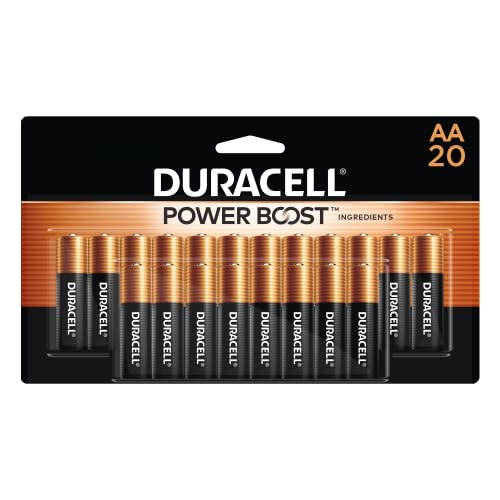
Coppertop is the classic shelf-staple AA, the kind you toss in a drawer and forget about until a smoke detector chirps. In a solar light context, that long shelf life matters: a 20-pack stored indoors stays ready as backup cells even after a couple of years. Treat these the same way as the Energizer option, an emergency bridge rather than a daily driver.
The brand-name recognition is the real story here. For households that prefer one familiar label across every device, mixing Duracell in a few solar fixtures alongside a NiMH fleet feels more consistent than juggling three different brands.
Where It Helps
- A long storage guarantee means backup cells stay usable across multiple seasons in a closet.
- 20-count packaging hits the sweet spot for a medium-sized yard plus household gadgets.
- Universal AA compatibility covers remotes, clocks, and the occasional solar light that accepts alkalines.
Worth Bearing In Mind
- These are not rechargeable, so any cell dropped into a solar fixture is a one-and-done replacement.
- Solar lights are designed around 1.2V NiMH, and the slightly higher voltage of alkaline can shorten LED life in some fixtures.
Key Specs
Whose Shelf It Belongs On
Anyone running a mixed household where one trusted AA brand powers remotes, clocks, and the occasional solar fixture.
A Better Fit Elsewhere
For a yard built around nightly solar charging, the EBL Solar AA Rechargeable Batteries are purpose-built for that job.
Smaller solar fixtures, like stake lights with mini puck LEDs and tiny string-light battery packs, often run on AAA cells, not AA. That is exactly where this EBL set earns its slot. Eight cells cover a modest array of accent lights, and NiMH chemistry (a rechargeable formulation that tolerates repeated charging) keeps them cycling cleanly through the seasons.
Unlike the alkaline options above, these need a charger, so factor that in before you commit. For a yard that already runs a household charger, the only extra step is grouping the AAAs by usage.
Noteworthy Benefits
- 1.2V NiMH output matches the design voltage of most solar light circuits.
- Rechargeable cells cut down on the disposable battery waste a yard full of fixtures creates.
- Compact eight-pack size suits a smaller set of accent or path lights.
Honest Caveats
- Capacity sits at 1100mAh, so nightly runtimes may be shorter than higher-capacity AA equivalents in bigger fixtures.
- A charger is not included, and a basic NiMH charger is a small extra purchase.
Made For
Yards with a handful of decorative AAA-size solar lights that need a steady rotation of rechargeables.
Consider Something Else When
Your fixtures take AA cells, in which case the Lightalent Rechargeable Solar AA 1000mAh Batteries are the closer match.
Stepping up to 16 cells, this EBL set targets the homeowner who treats yard lighting like a system, not an afterthought. The Ready2Charge branding means cells arrive pre-charged, so you can drop them straight into fixtures and let the solar panels top them off without a separate conditioning cycle. For a large property or a yard with multiple solar pathways, that is a real convenience.
The ProCyco technology EBL mentions is essentially a low-self-discharge treatment, which means cells sitting in storage lose charge more slowly than older NiMH formulations. In practice, that translates to lights still glowing after a stretch of cloudy days.
Everyday Wins
- Sixteen cells let you service a sizable AAA solar fleet in a single purchase.
- Pre-charged cells save the conditioning pass many rechargeables need on first use.
- Improved low self-discharge keeps stored cells closer to full when clouds roll in.
Room For Improvement
- 1100mAh capacity is on the modest side for the larger puck-style fixtures that draw more current.
- No charger is included, so you still need an existing NiMH charger or a separate purchase.
At A Glance
Who Should Grab It
Owners with a sprawling AAA solar setup who want pre-charged cells and a generous count to keep two rotations going.
Look Elsewhere When
You only need a small handful of cells for a patio set, where the smaller Lightalent 12-pack may be a tidier fit.
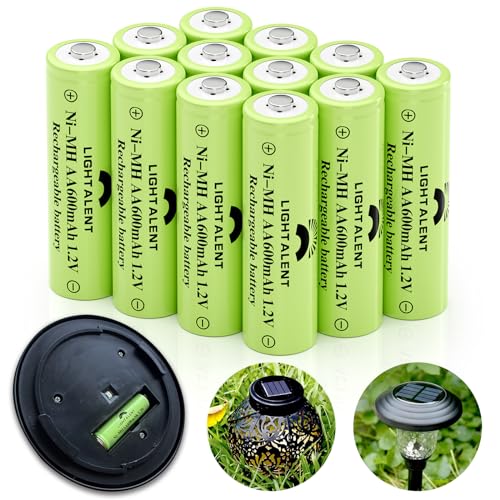
This is where the list starts to feel purpose-built. The Lightalent 600mAh AA set is engineered for solar light fixtures specifically, sized and labeled for the kind of garden stake lights that line a typical walkway. Twelve cells give you room to service a small yard with spares for the rotation cycle that keeps everything bright.
Capacity sits at the lower end of the dedicated solar options, which is the honest trade-off. In full summer sun, that is rarely a problem. In a deeply shaded yard or during short winter days, you may notice lights dimming earlier in the evening.
The Good Stuff
- 1.2V NiMH chemistry is the correct match for solar light circuits.
- Cells can charge via the solar panel itself or a standard NiMH charger, giving flexibility.
- Twelve cells cover a typical pathway or patio arrangement.
Possible Compromises
- 600mAh is the smallest capacity in the dedicated solar line here, so nightly runtime is shorter than higher-capacity options.
- For cloudy climates, consider stepping up to a higher mAh rating for more headroom.
Best Suited To
Sunny yards with standard AA garden stake lights where a moderate capacity cell is plenty for nightly duty.
Another Choice May Suit
For shorter winter days or shaded installations, the Lightalent 1300mAh set offers more reserve per charge.
The AAA cousin to the previous pick, this Lightalent set covers the smaller end of the outdoor solar market: fairy lights, mini lanterns, color-changing globes, and the small accent fixtures that brighten a deck railing. At 600mAh, capacity is modest, but the cells are pre-charged, so you can swap them in and have lights that evening.
Compared to the EBL AAA set earlier, this trades raw capacity for a slightly larger count. For low-draw decorative fixtures, that balance usually works out fine.
Bright Spots
- Pre-charged cells mean immediate use without a conditioning cycle.
- Designed for both solar charging and standard NiMH chargers.
- 12 cells suit a moderate collection of accent or string lights.
Some Limits To Know
- 600mAh is conservative, so high-draw AAA fixtures may dim earlier in the evening.
- Charge cycles are specified at hundreds of recharges, which is plenty for years of use but not infinite.
Who It Suits Best
Anyone running a network of small decorative solar lights, from string lights to tabletop lanterns.
Where A Sibling Pick Shines
For larger AA path lights that pull more current, step up to the EBL Solar AA 12-Pack reviewed below.
This is the EBL flagship for outdoor solar duty, a 12-pack designed from the ground up for garden fixtures. The cells land at 1.2V, the spec that matches nearly every solar light circuit on the market, and EBL recommends pairing them with their own NiMH charger for best results. That last point matters: a mismatched fast charger can shorten cell life over time.
For a homeowner replacing an entire fleet of tired solar cells at once, this is a logical anchor purchase. The 12-count lines up neatly with the average front-and-back pathway setup.
Practical Advantages
- Specifically designed and labeled for outdoor solar fixtures.
- 1.2V output is the proper match for solar light electronics.
- Twelve cells provide a full fleet replacement in one purchase.
Practical Considerations
- Cells ship only partially charged for transit safety, so plan for a full initial charge before installation.
- Best results come from a compatible NiMH charger, which may be an extra purchase.
Feature Snapshot
Perfect Match For
Yards where every path light, accent light, and patio lantern takes AA cells and is ready for a coordinated refresh.
Reach For A Different Pick When
You want longer nightly runtimes from a higher capacity cell, in which case the Lightalent 1300mAh set is the better match.
The capacity leader in this roundup, Lightalent’s 1300mAh AA cells are aimed at the household that needs every minute of evening runtime they can get. Think heavily shaded yards, short winter days, or fixtures that pull a lot of current for brighter LEDs. In those situations, the extra mAh makes a real difference.
The other side of the coin is charge time. More capacity means a longer top-up in winter when sunlight is weaker, so a backup set to rotate is even more useful with this pick.
Benefits That Matter
- 1300mAh is the highest capacity AA solar option in this roundup, giving longer nightly runtimes.
- Specified for more than a thousand recharge cycles, so the cells earn their keep across many seasons.
- Works with both solar cell charging and standard NiMH chargers.
Points To Keep In Mind
- Higher capacity means longer charge times, especially in weak winter sun.
- Up-front cost per cell is higher than the 600mAh or 1000mAh alternatives.
Built With In Mind
Cloudy climates, shaded yards, and homeowners who want maximum runtime per nightly charge cycle.
Skip It When
Your yard gets full summer sun and basic fixtures, where the smaller Lightalent 600mAh pack handles the same job at lower cost.
Sitting between the 600mAh and 1300mAh Lightalent options, the 1000mAh set is the balanced middle of the lineup. You get meaningfully longer runtime than the smaller pack without the longer winter charge times that the higher-capacity cells demand. For most average yards with mixed sun exposure, this is the pragmatic sweet spot.
Twelve cells handle a full pathway, and the NiMH chemistry plays nicely with both solar charging and standard chargers. Compared to the alkaline options earlier in this roundup, this is the choice that actually solves the underlying problem.
Where It Excels
- 1000mAh strikes a useful balance between nightly runtime and charge speed.
- 1.2V NiMH output is the correct voltage for solar light circuits.
- Cells can charge via solar panel or standard NiMH charger.
Things To Consider
- Not the longest runtime available, so heavily shaded yards may want the 1300mAh version instead.
- Cells ship only partially charged for transport safety, requiring an initial full charge.
The Right Fit
Typical suburban yards with mixed sun and shadow where a balanced capacity delivers reliable nightly light without long charge waits.
Where Another Pick Suits Better
For deep-shade installations needing maximum runtime, the Lightalent 1300mAh set is the better tool for the job.
## Picking The Right Cells For Your Solar YardChoosing replacement batteries for solar lights is less about brand loyalty and more about matching three things to your situation: the physical cell size your fixtures accept, the mAh capacity your sun exposure can fill back up each day, and whether you want to recharge or replace.Cell size comes first because nothing else matters if the cell does not physically fit. Walk the yard, pop a few fixtures open, and note whether each one takes AA or AAA cells. Many yards mix both, so plan to keep two sets on hand. Once you know the sizes, look for NiMH rechargeables in the 1.2V class, the chemistry solar light circuits are designed around. Alkaline cells work in a pinch but are not built for daily discharge and recharge cycles, and they can leak as they age in outdoor fixtures.Capacity, measured in mAh (milliamp hours, a rough indicator of how much energy a cell holds), is where most people overthink the choice. A higher mAh cell stores more energy and runs the light longer each night, but it also takes longer to recharge during the day. In full, direct summer sun, even a high-capacity cell tops off easily. In shaded yards or short winter days, a smaller capacity cell may actually perform more consistently because it fills up faster.## Key Considerations Across These Picks### Pitfalls Shoppers HitThe most common mistake is grabbing whatever AA cells are in the kitchen drawer and dropping them into solar fixtures. Standard alkaline cells deliver a slightly higher voltage than NiMH rechargeables, which can shorten LED lifespan in some fixtures and creates a one-and-done waste stream. Another easy trap is chasing the highest mAh number without considering your actual sun exposure: oversized cells that never fully recharge become expensive shelf decorations.### When Paying More Pays OffHigher-capacity cells earn their premium in two scenarios, shaded yards where every bit of stored energy matters, and larger fixtures with brighter LEDs that drain batteries faster. For a sunny yard with standard stake lights, the mid-tier 1000mAh options deliver most of the benefit at a noticeably lower price per cell. Premium 1300mAh cells make sense when you have tried a smaller capacity and the lights still go dark too early in the evening.## Frequently Asked Questions### Can I use regular alkaline batteries in solar lights? You can, but it is not ideal. Alkaline cells work for short-term use but are not rechargeable, so every drained cell becomes trash, and they can leak as they age in outdoor fixtures.### How long do rechargeable solar light batteries typically last? Most NiMH cells used in solar fixtures are rated for hundreds to over a thousand recharge cycles. In a typical yard, that translates to several years of nightly use before noticeable capacity loss.### What is the difference between mAh ratings? mAh measures how much energy a cell stores. Higher mAh means longer nightly runtime but also longer charge times in weak sun, so match capacity to your yard’s actual sun exposure.### Do I need a special charger for these batteries? A standard NiMH charger works for all the rechargeable options in this roundup. Some brands recommend their own charger for best cell longevity, but a basic quality charger handles routine charging.### Why are my solar lights dim even with new batteries? Dim lights usually mean the solar panel is not getting enough direct sunlight, or the fixture contacts are corroded. Cleaning the contacts and repositioning the panel to catch more sun often solves it.## Bottom LineFor most yards, a NiMH AA rechargeable in the 1000mAh range, like the Lightalent 1000mAh set, hits the practical sweet spot between runtime and charge time. AAA fixtures get the same treatment scaled down, while alkaline options stay in the drawer as emergency backups. Match the cells to your actual sun exposure, and the path will keep glowing well past the first frost.