Storing the energy your panels actually produce is the unglamorous half of going solar, and most people feel that pain only after the inverter is already on the wall. Lithium iron phosphate, often shortened to LiFePO4, has quietly become the chemistry of choice because it lasts years longer than lead-acid and tolerates deep daily cycling. The hard part is matching capacity, voltage, and physical size to your gear, your climate, and how often the grid goes dark.
This roundup covers purpose-built deep-cycle batteries for solar banks, RV and marine off-grid rigs, golf carts, and a few compact portable banks for phones and small devices on the road. Each pick below is chosen for a specific kind of user, so the right answer depends less on brand hype and more on what you’re trying to power.
The Leading Options At A Glance

VATRER POWER 24V 300Ah LiFePO4 Lithium Battery (APP Monitoring, 200A BMS)

Mosasaur 48V 100Ah LiFePO4 Golf Cart Battery (10.24kW Peak, 200A BMS)

ECO-WORTHY 12V 314Ah LiFePO4 Lithium Battery (Bluetooth, Low-Temp, 200A BMS)

ECO-WORTHY EnergyRock 12V 280Ah 2-Pack LiFePO4 Lithium Battery (Metal Case)

ECO-WORTHY 12V 280Ah Metal Case LiFePO4 Lithium Battery (Bluetooth, 200A BMS)

power queen 12V 100Ah Group 31 LiFePO4 Battery (100A BMS)

SOARAISE Solar Power Bank 48000mAh Wireless Portable Charger (4 Cables)
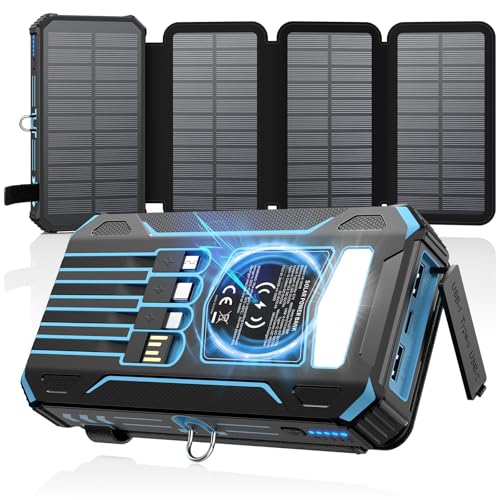
SOARAISE Solar Power Bank 48000mAh Wireless Battery Pack (4 Cables)

SOARAISE Solar Power Bank 48000mAh Portable Charger (Built-in 4 Cables)

EF ECOFLOW River 3 Plus Portable Power Station Extra Battery EB600
The Details Behind The Selections
Running a serious solar bank usually means jumping from a 12V setup to 24V so you can halve the current on long cable runs. The VATRER POWER 24V 300Ah battery fits that role, delivering roughly 7.6 kWh of usable storage in a single brick that you can stack with more of its kind. The built-in 200A BMS (Battery Management System, the small board that prevents overcharge, over-discharge, and short circuits) keeps cell behavior in check, while the mobile app pulls real-time state-of-charge data so you can see what the bank is doing from the kitchen.
For an off-grid cabin or a backup wall behind a hybrid inverter, this is the kind of unit that earns its shelf space. Owners commonly report smooth integration with 24V inverters in the 3 kW to 5 kW range, and the LiFePO4 chemistry shrugs off the kind of deep daily cycling that wrecks lead-acid within a year or two. You may find the 24V form factor limiting, however, if your inverter, charge controller, or existing bank is all 12V, since mixing voltages is a fast way to cook equipment.
Standout Benefits
- The 300Ah rating translates to long runtime for medium-load circuits like lighting, networking gear, and a fridge, without needing parallel banks on day one.
- The 200A BMS offers thermal and short-circuit protection, giving you a margin of safety during heavy inverter draws.
- App monitoring lets you check state-of-charge and cell voltage from your phone, which removes a lot of guesswork during cloudy stretches.
- LiFePO4 cells typically handle thousands of cycles, so the cost-per-kWh over a decade looks far better than the sticker suggests.
Honest Caveats
- The 24V configuration means you cannot simply drop this into a 12V solar array without reworking the wiring and charge controller.
- It is a heavy unit, so mounting location matters; a reinforced shelf or floor pad is worth planning for before delivery arrives.
Key Attributes
Right Fit For
Off-grid homeowners and cabin owners running 24V inverter systems who want a single large battery block instead of a wall of parallel 12V units.
Skip It When
The ECO-WORTHY 12V 314Ah battery is the more natural match for shoppers locked into a 12V architecture or building smaller banks.
Swapping a tired bank of lead-acid batteries in a 48V golf cart used to mean wiring six batteries in series and accepting the weight penalty. Mosasaur collapses all of that into a single 77 lb unit that drops into a standard lead-acid case, which simplifies installation dramatically. The included 48V 18A charger and the LCD touch screen on the front make first-time setup less intimidating, and the 200A BMS pushes up to 10.24 kW of peak power for hill climbs.
Compared to the VATRER POWER 24V pick above, this battery targets a very different crowd: cart owners, RV owners chasing a 48V upgrade, and marine applications where the lighter weight matters. The 4000+ cycle rating means years of regular driving before any noticeable capacity loss, though in very cold garages the low-temperature cutoff will keep you parked until the pack warms up.
What Works In Its Favor
- The drop-in lead-acid case form factor removes rewiring headaches during the swap.
- Built-in LCD plus mobile app gives you two ways to monitor state-of-charge, voltage, and current.
- 77 lb weight versus multi-hundred-pound lead-acid banks means easier handling and less strain on cart frames.
- Plug-and-play design with an included 18A charger simplifies getting back on the course or road quickly.
Worth Noting
- The 48V rating is non-negotiable for cart power, but it makes this a poor fit for standard 12V house banks.
- Low-temperature charging is blocked by the BMS, so winter storage in unheated sheds requires a plan.
Who Will Love This
Golf cart owners and 48V RV or marine upgraders who want a one-piece replacement without rebuilding the battery tray.
Look Elsewhere When
The power queen 12V 100Ah Group 31 is the smarter pick for shoppers building a 12V house bank in a camper van or trailer.
The ECO-WORTHY 12V 314Ah brings the kind of capacity most off-grid arrays only reach after wiring several smaller units in parallel. Rated at roughly 4 kWh of stored energy and advertising up to 15,000 deep cycles, it skews toward homeowners and RV owners who plan to live with the battery for the better part of a decade. Bluetooth monitoring and on-board SOC (State of Charge) LEDs answer the basic question of “how full is this thing” without pulling out a multimeter.
Stacked against the two ECO-WORTHY entries further down the list, this one wins on outright amp-hours and the higher published cycle count. For shop owners looking to be exact, the BMS also blocks charging below freezing, which is the kind of detail that only matters in cold-climate installs but matters a lot there.
Key Advantages
- 314Ah capacity covers fridge, lighting, and comms for an evening without adding parallel banks.
- Up to 15,000 cycle rating stretches replacement intervals well beyond typical LiFePO4 expectations.
- Bluetooth and SOC LEDs remove the need to climb into the battery bay for routine checks.
- 200A BMS handles inverter surges while protecting cells from overcharge and short circuits.
Less Ideal Details
- The high cycle rating assumes partial daily discharges, not constant 100% depth-of-discharge cycles.
- Low-temperature charging cutoff means winter solar cabins need a heated enclosure or a different chemistry.
Feature Snapshot
Made For
Off-grid solar homeowners and RV upgraders building a single high-capacity 12V bank who want long cycle life without parallel wiring.
A Better Fit Elsewhere
The ECO-WORTHY EnergyRock 12V 280Ah 2-Pack is a smarter pick if you’d rather split capacity across two batteries for redundancy or easier handling.
Buying batteries as a matched pair solves two problems at once: capacity roughly doubles to about 7.2 kWh, and you get a built-in redundancy story if one unit ever needs service. The EnergyRock 2-pack ships with metal enclosures, a notable change from earlier plastic versions, which improves heat resistance and structural rigidity. Both units carry their own 200A BMS and Bluetooth monitoring, and they ship with the same low-temperature charging cutoff you’ll find on the single ECO-WORTHY pick above.
The case materials make these a good fit for installations in warm garages, sheds, or RV bays where summer heat can stress plastic housings. You may find two-battery parallel wiring slightly more involved than a single-battery install, though ECO-WORTHY includes basic instructions. The 280Ah-per-unit rating means each battery alone is plenty for weekend trips, so you have flexibility in how you deploy them.
Positive Takeaways
- Metal cases handle thermal stress better than plastic, which matters in non-climate-controlled spaces.
- Two batteries deliver approximately 7,168 Wh of total energy, enough for multi-day off-grid stays.
- Built-in Bluetooth on each unit means you can monitor each battery individually rather than guessing which one is doing the work.
- Parallel redundancy lets you keep partial capacity online if one unit ever needs to be pulled for service.
Possible Compromises
- Two units mean double the wiring, mounting, and balancing work during install.
- The 200A BMS is per battery, so a single high-surge inverter draw can push one unit harder than expected in a parallel setup.
Whose Shelf It Belongs On
DIYers building a medium solar bank who want matched batteries with metal enclosures and don’t mind doing basic parallel wiring.
Consider Something Else When
The single ECO-WORTHY 12V 314Ah battery is simpler to deploy for shoppers who want one large block instead of a pair.
Sometimes you only need one battery, and that’s where the single-unit version of the metal-case 280Ah steps in. This is the same capacity as one of the EnergyRock 2-pack batteries, sold on its own, with the upgraded metal enclosure that helps shed heat and resist the kind of incidental impacts that happen in garage and RV installs. Bluetooth monitoring and the 200A BMS match the larger ECO-WORTHY entries, so you give up very little by going solo.
Compared to the EnergyRock pair above, this single battery wins on simplicity: one wiring run, one shelf, one app connection. The trade-off shows up in total energy, since a single 280Ah unit gives you about 3,584 Wh versus the doubled capacity of the 2-pack. For trolling motors and small camper builds, that single-unit footprint is often the more practical answer.
The Helpful Details
- Metal case delivers better heat dissipation and impact resistance than older plastic enclosures.
- 280Ah capacity hits a sweet spot for weekend RV use, trolling motors, and small off-grid lighting.
- Bluetooth lets you check state-of-charge without opening the battery bay or digging out a multimeter.
- Single-unit form factor keeps wiring straightforward for first-time LiFePO4 installers.
Points To Keep In Mind
- One battery means no parallel redundancy, so any service event takes the whole bank offline.
- Low-temperature charging cutoff applies here as well, requiring heated storage in freezing conditions.
Best Suited To
RV owners, trolling motor users, and small off-grid setups who want a single metal-case battery instead of a parallel pair.
Another Choice May Suit
The power queen 12V 100Ah Group 31 is the lighter, smaller-footprint option for campers who don’t need 280Ah of capacity.
The Group 31 case size is a familiar footprint across RV and marine battery trays, and the power queen 12V 100Ah slots right into that standard. About 1,280 Wh of usable energy lands this in the smaller-capacity category, but it’s also the lightest option in the deep-cycle lineup covered here, which matters for vans, trailers, and boats where every pound counts. The 100A BMS sits below the 200A boards on the larger ECO-WORTHY units, so size your inverter accordingly.
Versus the 280Ah and 314Ah batteries above, this is the right pick when capacity is overkill for your needs. It supports up to 4P4S configurations (four in parallel, four in series) for shoppers who want to scale up later, which buys a lot of flexibility for first-time installers. In many RV bays, owners commonly report a clean drop-in replacement for an aging lead-acid battery, with no tray modifications required.
Useful Touches
- Standard Group 31 footprint installs into many RV and marine trays without modification.
- Up to 15,000 cycle rating stretches replacement intervals well into the next decade for moderate users.
- 4P4S expandability lets you start small and add batteries as your system grows.
- 1,280 Wh of storage covers lighting, phone charging, and small inverter loads on weekend trips.
Trade Offs
- The 100A BMS caps sustained inverter draws lower than the 200A-equipped ECO-WORTHY models.
- Single 100Ah capacity is modest for full-time off-grid living without parallel expansion.
Technical Highlights
Perfect Match For
RV, camper van, and trailer owners who want a standard-footprint drop-in upgrade from lead-acid without rewiring the bay.
Reach For A Different Pick When
The ECO-WORTHY 12V 280Ah Metal Case battery is the better call if you want to skip parallel wiring and run a single larger block.
Shifting gears from home battery banks, the SOARAISE 48000mAh power bank lives in the world of phones, tablets, and small electronics. Four integrated cables remove the “did I pack the right cord” moment at the trailhead, and the wireless top-up surface means you can set a compatible phone on the pack and walk away. The four-panel solar array on the back is the kind of feature that sounds more useful than it usually is, since wall charging remains dramatically faster than panel input.
Compared to the deep-cycle batteries above, this is a completely different category, but it earns its place in a solar storage roundup because it is what many campers actually carry day to day. The lithium-polymer cell inside is rated at 48,000 mAh, which translates to multiple phone charges and a real day or two of small-device power. For emergency kits and weekend overnights, the built-in cable set is the real convenience win.
The Case For It
- Four integrated cables cover common phone and tablet connections without packing extras.
- Wireless charging pad handles compatible phones without consuming one of the cable ports.
- 48,000 mAh capacity means multiple phone charges per fill, useful on multi-day trips.
- Solar input adds a slow trickle-charge option when wall power is unavailable.
Practical Considerations
- Solar panel charging is slow compared to wall input, so don’t plan to refill it fully on a sunny afternoon.
- It is designed for phones and small electronics, not laptops or any of the larger batteries covered earlier in this list.
Who Should Grab It
Campers, hikers, and emergency kit builders who want one pack that handles phones and small devices without extra cables.
Swap It Out When
The EF ECOFLOW River 3 Plus Extra Battery is the right companion for shoppers who already own a portable power station and want to expand its capacity.
Very similar to the previous SOARAISE entry, this 48000mAh pack leans harder into wireless charging as its main selling point. The four integrated cables still cover the standard phone and tablet connections, but the wireless top surface gets the spotlight on this variant. For commuters and travelers who already own a wireless-capable phone, that removes the most common reason to even plug in: a quick boost on the way out the door.
Side by side with the SOARAISE pick above, the difference is mostly cosmetic, but the wireless pad orientation and port layout are tuned differently. You may find this variant easier to use in a backpack pocket where a flat wireless surface works better than fumbling for a cable. The same solar trickle caveat applies: useful for emergencies, slow for routine refills.
What It Does Well
- Wireless charging pad is positioned for quick drops-and-go use with compatible phones.
- Four integrated cables reduce packing list anxiety on shorter trips.
- 48,000 mAh capacity covers several days of phone and small-device use between wall charges.
- Lithium-polymer cell holds a charge well during storage, which helps in emergency kit use cases.
Where It May Fall Short
- Solar input remains a backup option rather than a primary refill path.
- Power output is sized for phones and small electronics, so laptops and higher-draw gear stay out of reach.
The Right Fit
Daily commuters and short-trip travelers who value wireless top-ups and cable convenience over absolute charging speed.
Where Another Pick Suits Better
The third SOARAISE 48000mAh unit ahead is a near-twin, so choose between them based on which cable layout fits your bag.
This third SOARAISE variant rounds out the trio with the same 48,000 mAh cell and built-in cable layout, but the four-panel solar array is the headline feature. The claim is faster panel input than single-panel chargers, which is technically true in good sun, though still nowhere near wall-outlet speeds. For trail use and emergency kits, that incremental solar speed matters because any charge you can claw back during a long day on the move is a real bonus.
Compared to the first two SOARAISE entries, the choice between them mostly comes down to which port and cable layout matches your gear. None of them are designed for laptops or anything beyond phones and small electronics, and all three carry the same solar-as-emergency caveat. You may find the four-panel version the best travel companion if you frequently spend multiple days away from wall outlets.
The Good Stuff
- Four-panel array improves solar input speed over single-panel designs when direct sunlight is available.
- Built-in cables cover common phone and tablet connectors without extras in the bag.
- 48,000 mAh capacity supports several days of phone use between wall charges.
- Lithium-polymer cell stays reasonably stable in storage, useful for emergency kit rotation.
Small Limitations
- Real-world solar refill rates depend heavily on cloud cover and panel angle, so wall charging remains faster.
- Output is sized for small electronics, not laptops or high-draw appliances.
Built With In Mind
Trail users, emergency kit builders, and multi-day campers who want the best solar refill performance in this product family.
Not Your Match When
The EF ECOFLOW River 3 Plus Extra Battery is the right add-on for anyone already running a portable power station and wanting more capacity behind it.
The River 3 Plus is a portable power station ecosystem, and the EB600 is the extra battery that snaps onto it. Adding 572 Wh of storage brings the total to roughly 858 Wh, which is enough to run a car fridge for around 10 hours or a travel kettle for an hour. The pogo-pin connection means no extra cables or screws, so expansion takes seconds rather than an afternoon of wiring.
The EB600 also runs independently as its own power source, which is the underrated selling point: you can grab just the extra battery for a quick day trip and leave the main unit at camp. It only makes sense for shoppers who already own or plan to own the matching River 3 Plus, since it’s not a standalone battery in the same way as the deep-cycle LiFePO4 units earlier in this list.
Why It Works Well
- Pogo-pin connection stacks the extra battery onto the River 3 Plus without extra cables or screws.
- 572 Wh of added capacity meaningfully extends runtime for fridges, lights, and small appliances.
- Independent use mode lets you take just the extra battery on shorter outings.
- Cleaner expansion path than wiring a separate LiFePO4 bank to a portable station.
Things To Weigh
- It only pairs with the River 3 Plus, so the value depends entirely on whether you already own that station.
- Capacity is small compared to the deep-cycle home batteries earlier in this list.
Who It Suits Best
Existing River 3 Plus owners who want a clean way to expand runtime for car fridges, weekend camping, or short power outages.
A Better Fit Elsewhere
The ECO-WORTHY 12V 280Ah Metal Case battery is the better match for shoppers building a permanent 12V solar bank rather than expanding a portable station.
What Matters Most Before Choosing Batteries For Solar Power Storage
Capacity tells you how long your loads will run, but the chemistry, voltage, and physical form factor decide whether the battery fits your system at all. Most modern solar storage choices lean toward LiFePO4 cells because they tolerate deep daily cycling for years without the rapid degradation you see in lead-acid banks. Voltage, however, is the detail most first-time shoppers miss: a 12V battery will not behave correctly on a 24V or 48V bus without proper configuration, and vice versa.
Matching Voltage To Your Inverter And Charge Controller
Your inverter and charge controller set the system voltage, and the battery bank has to match. A 12V bank pairs with most small RV and entry-level off-grid inverters, while 24V and 48V banks cut current on long wire runs for larger systems. Pick the battery that lines up with what you already own or plan to buy, because re-matching after the fact is a costly lesson.
Capacity, Depth Of Discharge, And Real Runtime
A 100Ah battery does not deliver 100Ah of usable energy, because the BMS will cut off well before the cells are fully empty. LiFePO4 chemistry tolerates deeper discharges than lead-acid, but staying around 80% depth of discharge is still the long-life play. For most cabins and weekend setups, two parallel batteries beat one giant battery because you get redundancy and easier handling.
Cold Weather, Heat, And Where The Battery Lives
Cold-climate installs need batteries with low-temperature charging cutoffs, otherwise charging a frozen LiFePO4 cell can permanently damage it. Hot garages and direct sun call for metal enclosures or shaded mounting to keep cell temperatures reasonable. The location you choose for the bank matters as much as the spec sheet.
Key Considerations Across These Picks
Wrong Turns To Avoid
The most common mistake is buying a high-amp-hour battery in the wrong voltage, then trying to mix it with a smaller bank already in place. Another is trusting solar panel trickle charging to refill a large bank from empty, which can take days even with good sun. Measure your daily watt-hour needs honestly before sizing up, and remember that parallel banks need matched batteries for clean long-term performance.
Where The Extra Money Goes
The step from a basic 100Ah unit to a larger 280Ah or 314Ah battery brings more than just energy: it usually adds a stronger BMS, Bluetooth monitoring, and a more durable enclosure. In the deep-cycle category, that extra spending buys longer cycle life and better inverter surge handling, which matters if you plan to push the bank hard. For portable power banks and station extras, premium spending mostly buys faster solar input and cleaner integration with matched ecosystems.