Hand-pumping a backpack sprayer for an hour is the kind of chore that drives people straight to cordless options. Battery-powered backpack sprayers free both hands from the pump handle, deliver steady pressure, and make big yard jobs feel far less like punishment. This list rounds up nine solid picks for 2026, covering homeowners, homesteaders, and anyone tired of wrist fatigue halfway through spraying the back fence.
Your Options, Compared

EARTHCRAFT 4.2 Gal Backpack Sprayer for DeWalt 20V
Funnywhale 4.76 Gallon Battery Powered Backpack Sprayer

FlowZone Typhoon 3 Battery Backpack Sprayer
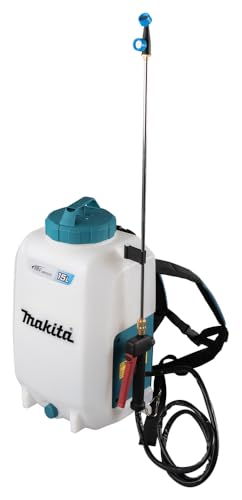
Makita DUS158Z 18V Li-ion LXT Backpack Sprayer

EARTHCRAFT 2.6 Gal Battery Powered Backpack Sprayer

EARTHCRAFT 5.3Gal Battery Powered Backpack Sprayer
Poxsmuly 5.3 Gallon Battery Powered Backpack Sprayer

PetraTools HD4000 Battery Powered Backpack Sprayer

Funnywhale Battery Powered Backpack Sprayer for DeWalt
Inside Each Recommended Option
This EARTHCRAFT unit runs on any DeWalt 20V pack you already own, which is a quiet win for anyone whose garage is already a sea of yellow batteries. The 4.2-gallon tank lands in a comfortable middle ground: large enough to handle a typical suburban lawn in a single fill, light enough to stay comfortable on your back for a full pass.
The standout feature is a one-touch built-in mixing system that keeps wettable powders and heavier solutions in suspension, sparing you the awkward shake-and-pray that plagues cheaper backpack sprayers. Compared to the Funnywhale 4.76-gallon model reviewed next, this one trades a bit of capacity for that agitation convenience. For homeowners running routine weed control or fertilizer mixes, the trade usually pays off.
Notable Gains
- One-touch agitation keeps tank mixes from settling to the bottom mid-job
- Low-voltage cutoff helps preserve battery life on long spray sessions
- 4.2-gallon capacity suits most half-acre lots without constant refills
- DeWalt 20V compatibility removes the need to buy another battery platform
Things To Consider
- Battery and charger sold separately, so total cost climbs if you don’t own DeWalt tools
- Tank sits between compact and large sizes, so very large properties may still demand refills
Made For
Suburban homeowners who already keep DeWalt 20V batteries on hand and want a dependable, mid-capacity sprayer for weekly yard work.
Consider Something Else When
Pick the EARTHCRAFT 5.3-gal model below if you manage more than an acre and would rather refill less often.
The Funnywhale 4.76-gallon option stretches capacity slightly past the EARTHCRAFT 4.2 without pushing into heavy-duty territory, giving you roughly half a gallon more room for fertilizer or pest control mixes. It also ships with seven nozzles and two spray wands, which is unusually generous for a mid-priced backpack rig.
Wide padded breathable shoulder straps help distribute the extra weight across your upper back rather than digging into one spot. You may find this thoughtful on a humid afternoon when the sun has been beating down for two hours. The trade-off versus EARTHCRAFT’s 4.2-gallon model is the absence of a built-in mixing system, so heavier solutions need an occasional manual shake.
Notable Upsides
- 4.76-gallon tank covers slightly larger areas in one fill than the 4.2-gallon class
- Seven nozzles plus two wands offer plenty of spray-pattern flexibility for different plants and surfaces
- Padded breathable straps reduce shoulder fatigue during long sessions
Honest Caveats
- No built-in agitator, so wettable powders or heavy concentrates may settle without manual stirring
- Battery and charger still sold separately, raising entry cost for those without DeWalt tools
Feature Snapshot
Best Suited To
Homeowners with quarter- to half-acre yards who want solid capacity without jumping to a full-size commercial rig.
Look Elsewhere When
The FlowZone Typhoon 3 makes more sense if you need multiple pressure settings and a battery in the box from day one.
The Typhoon 3 is the only sprayer in this roundup that ships with its own 18V lithium-ion battery and charger, which removes the biggest friction point of tool-only models. An 18V pack supplies up to three hours of continuous spray, enough to clear well over 100 gallons before needing a recharge. For anyone buying their first cordless sprayer, that’s a meaningful convenience.
Five pressure settings ranging from roughly 8 PSI up to 115 PSI give you a level of control the DeWalt-compatible models can’t match. At the top end, reach extends past 30 feet, which is genuinely useful for tall trees or spraying the back fence without dragging the hose across the lawn. Sealed internal electronics also help the unit survive an accidental tip-over into a puddle. Compared to the EARTHCRAFT 4.2-gallon pick above, you trade platform flexibility for a more versatile, ready-to-use system.
Practical Pluses
- Comes with battery and charger, so you can start spraying the day it arrives
- Five pressure settings (8 to 115 PSI) handle anything from delicate misting to long-distance spraying
- Up to three hours of runtime covers large yard jobs without a swap
- Sealed internal electronics add a layer of weather-resistance
Points To Keep In Mind
- Uses its own 18V platform rather than integrating with popular tool batteries
- Higher pressure comes with more weight in the chassis, so it’s a step up in bulk
Quick Facts
Who It Suits Best
First-time sprayer shoppers who don’t already own a tool battery platform and want a complete, ready-to-spray package with serious pressure range.
A Better Fit Elsewhere
The PetraTools HD4000 makes more sense for property managers who need extended runtime and don’t mind a heavier unit.
The Makita DUS158Z is the sprayer equivalent of a well-tailored work shirt, compact and light compared to most backpack rigs. It’s designed around Makita’s 18V LXT slide-type batteries, so anyone running a Makita tool fleet already has the power source covered. Maximum pressure tops out around 0.5 MPa, which is more than enough for typical garden applications.
A lock-on function lets you keep the wand spraying without squeezing the trigger, which matters more than it sounds during long passes across a vegetable patch. Compared to the FlowZone Typhoon 3 above, this is a simpler, lighter unit with less pressure range, but it earns its place through build quality and brand ecosystem rather than raw specs.
The Good Stuff
- Compact, lightweight frame reduces fatigue on shorter sessions
- Lock-on trigger switch helps during extended continuous spraying
- Integrates seamlessly with Makita’s massive 18V LXT tool family
Trade Offs
- Battery and charger not included, raising cost for those outside the Makita ecosystem
- Smaller pressure ceiling than the FlowZone Typhoon 3, so very long-distance reach isn’t its strength
Perfect Match For
Tradespeople, landscapers, and serious DIYers who already run Makita 18V LXT tools and want a brand-matched sprayer.
Skip It When
Pick the FlowZone Typhoon 3 if pressure versatility matters more to you than brand alignment.
The 2.6-gallon EARTHCRAFT is the smallest battery-powered backpack sprayer in this roundup, and that smaller footprint is the whole point. It cuts roughly 1.6 gallons of weight off the larger EARTHCRAFT 4.2-gallon model, which adds up fast on a 30-minute weed-control loop around a small urban yard.
A built-in agitation system handles powdered concentrates that would otherwise sink to the bottom, so you don’t lose half the product in the last quarter of the tank. Low-voltage cutoff protects your DeWalt pack from over-discharge. For larger lots, you’ll refill more often, but for tight spaces and quick jobs the smaller profile is hard to beat.
Bright Spots
- Lighter 2.6-gallon tank reduces back strain during short sessions
- Built-in agitation prevents powder concentrates from settling
- Low-voltage cutoff protects your DeWalt battery investment
Some Limits To Know
- Frequent refills expected on anything over a quarter-acre
- Smaller tank means more trips to the hose bibb during bigger jobs
Whose Shelf It Belongs On
City and townhouse gardeners with small lawns, raised beds, or patio-level weed control who value a light rig over capacity.
Not Your Match When
The EARTHCRAFT 4.2 Gal Backpack Sprayer fits better for properties that demand fewer fill-ups per session.
This is the largest tank EARTHCRAFT makes in the DeWalt-compatible line, and it shows up ready for serious yard work. The 5.3-gallon capacity handles bigger lawns and small agricultural plots in a single fill, while the integrated mixing system keeps heavier solutions properly suspended throughout the spray.
Six included nozzles give you fan, cone, and stream patterns without hunting for extras. Low-voltage protection shields your battery pack from sudden discharge. Compared to the Funnywhale 4.76-gallon reviewed earlier, this EARTHCRAFT trades a smaller accessory bundle for the agitation system that Funnywhale lacks. For most backyards, that swap works in EARTHCRAFT’s favor.
Real Benefits
- 5.3-gallon tank covers larger lawns without frequent refills
- Built-in mixing system handles wettable powders and concentrates
- Six spray nozzles included for varied pattern needs
- Low-voltage cutoff protects DeWalt battery lifespan
Worth Bearing In Mind
- Heavier when full, so longer breaks may be needed between tank cycles
- Battery and charger not included in the tool-only package
Core Details
Right Fit For
Homeowners managing half-acre to one-acre properties who already run DeWalt 20V batteries and need fewer refill stops.
Where Another Pick Suits Better
The Poxsmuly 5.3-gallon sprayer makes more sense if you need 100 PSI pressure and a telescopic wand for taller targets.
Poxsmuly steps up the pressure ceiling to 100 PSI, which is well above most consumer-grade backpack sprayers. That extra oomph translates into a stronger stream for hitting tall weeds, fence-line brush, or the lower branches of fruit trees without a ladder. The 5.3-gallon tank is identical in capacity to the larger EARTHCRAFT above, but the pressure story sets them apart.
A telescopic wand extends your reach without dragging the whole unit closer to the target. Seven nozzles cover most pattern needs. The trade-off versus the FlowZone Typhoon 3 is battery inclusion: Poxsmuly assumes you’ll supply your own DeWalt pack. For someone already invested in DeWalt batteries, that’s a non-issue.
What Stands Out
- 100 PSI pressure output handles tall weeds and tree-spraying comfortably
- Telescopic wand extends reach without repositioning the unit
- 5.3-gallon tank balances reach with reasonable refill intervals
- Seven included nozzles for varied application needs
Practical Considerations
- Battery sold separately, so non-DeWalt owners face a higher starting cost
- Higher pressure draws more battery, so runtime per charge may dip on max setting
- Wand seals should be checked periodically, as wider pressure ranges tend to expose leaks sooner
Who Should Grab It
Homeowners battling aggressive weeds, brambles, or low-hanging tree branches who already own DeWalt 20V batteries.
Reach For A Different Pick When
The EARTHCRAFT 5.3Gal Backpack Sprayer fits better if you don’t need the higher PSI and prefer a built-in mixing system.
The HD4000 is built for marathon spraying rather than quick neighborhood touch-ups. Its upgraded 9AH battery delivers 8 to 10 hours of runtime, enough to push past 250 gallons per charge. That kind of endurance comes from a larger pack, which adds weight, but it also means fewer mid-job recharges.
Materials lean toward durability: a premium stainless steel wand resists corrosion from harsh chemicals, and the package includes both a 20-foot extended-reach hose and a standard 4-foot hose. Two PetraJet stainless steel 110-degree fan nozzles come standard, with eight additional nozzles covering most other patterns. Compared to the FlowZone Typhoon 3 reviewed earlier, this PetraTools unit trades battery-ecosystem flexibility for runtime and hose reach.
Everyday Wins
- 8 to 10 hours of runtime supports full-day jobs without recharging
- Stainless steel wand resists corrosion from fertilizer and chemical mixes
- 20-foot extended hose reaches far without dragging the unit across wet grass
- Nine total nozzles handle virtually any spraying pattern you might need
Room For Improvement
- Larger battery pack adds noticeable weight when fully loaded
- Premium build and accessories push it above entry-level pricing
- Wand and hose components need occasional rinsing to prevent residue buildup from sticky concentrates
Feature Rundown
Built With In Mind
Property managers, small-acreage homesteaders, and pros who log long spray sessions and need equipment that holds up to daily use.
Swap It Out When
The EARTHCRAFT 4.2 Gal Backpack Sprayer is a better fit if you want a lighter daily driver and don’t need marathon runtime.
The Funnywhale unit closes out the list with a strong focus on wearability. Wide padded breathable adjustable straps distribute weight across your shoulders and upper back, which matters more than most spec sheets admit on a long afternoon of yard work. Seven nozzles and two spray wands come in the box.
It runs on any DeWalt 20V MAX battery from DCB200 through DCB206, giving you broad compatibility with packs you may already own. Compared to the larger Funnywhale 4.76-gallon model reviewed earlier, this version has the same comfort-forward design but a more compact profile for shorter sessions. The trade-off is straightforward: less tank capacity, more comfort per gallon carried.
The Helpful Details
- Wide padded breathable straps reduce hot spots and shoulder pressure
- Adjustable fit accommodates a wider range of body types
- Works with a broad range of DeWalt 20V MAX batteries (DCB200 through DCB206)
- Seven nozzles plus two wands offer out-of-the-box flexibility
Factors To Consider
- Battery not included, so a separate purchase is necessary for first-time DeWalt users
- Smaller tank means more frequent refills on larger properties
- Strap padding, while comfortable, may need occasional cleaning if used with sticky or oily solutions
Who Will Love This
Comfort-conscious homeowners with small-to-mid yards who already own DeWalt 20V batteries and want a sprayer that feels good on the back.
Where A Sibling Pick Shines
The Funnywhale 4.76 Gallon Battery Powered Backpack Sprayer is a better fit if you want the same strap comfort with more tank capacity.
What Matters Most Before Choosing Backpack Battery Powered Sprayers
Tank Capacity Versus Body Weight
Tank size shapes every other part of the experience. A 2.6-gallon unit weighs roughly 22 pounds full, while a 5.3-gallon model lands closer to 45. Larger tanks mean fewer trips to the hose but also more strain between refill cycles. For most half-acre lots, a 4 to 5-gallon tank is the practical sweet spot: light enough to carry for an hour, big enough to finish in one fill.
Battery Platform and Runtime
Many of these sprayers are sold “tool only,” meaning the battery and charger come separately. If you already run DeWalt 20V or Makita 18V tools, that’s a quiet win: you skip the second battery platform entirely. If you’re starting fresh, the FlowZone Typhoon 3 ships with its own battery and saves you the extra purchase. Runtime per charge varies from roughly three hours on smaller packs to ten hours on heavy-duty units like the PetraTools HD4000.
Pressure and Nozzle Variety
Pressure is measured in PSI (pounds per square inch), and higher PSI means a stronger, more focused stream. Anything from 40 to 60 PSI handles standard weed control and fertilizer. Past 80 PSI, you start reaching tall weeds and low tree branches comfortably. Multiple nozzles matter too: fan nozzles cover wide swaths, cone nozzles suit spot spraying, and stream nozzles reach farther. Seven or more nozzles in the box means you won’t need to buy extras.
Strap and Harness Comfort
A backpack sprayer lives on your shoulders for 30 to 90 minutes at a stretch. Wide padded breathable straps, ideally with chest or waist support, make the difference between finishing the job and calling it early. Heavier tanks benefit from padded hip belts, which transfer weight off the shoulders entirely.
Key Considerations Across These Picks
Pitfalls Shoppers Hit
The most common mistake is buying a “tool only” sprayer without owning the matching battery platform, then facing a hidden cost on top of the unit price. Before clicking through, double-check whether the listing includes a battery and charger. Another trap is underestimating how quickly a smaller tank empties: a 2.6-gallon unit sounds compact until you’re refilling it for the third time on a half-acre lawn.
Where The Extra Money Goes
Premium models like the PetraTools HD4000 earn their price through longer runtime, stainless steel components, and accessory bundles that cheaper sprayers skip. Higher-tier pressure systems (100 PSI and up) also cost more because the pump and seals need to handle the extra load. If your typical job is light weekly spraying, you don’t need that level of build. If you’re running daily sessions or tough chemical mixes, the upgrade pays off fast in fewer breakdowns.
Frequently Asked Questions
How long does a battery-powered backpack sprayer last per charge?
Most consumer-grade models run two to four hours per charge, depending on pressure setting and tank cycling. Heavy-duty units like the PetraTools HD4000 push past eight hours on their larger batteries.
Can you use any DeWalt 20V battery with these sprayers?
Most DeWalt-compatible sprayers work with the 20V MAX line, including packs like DCB200, DCB201, DCB203, DCB204, DCB205, and DCB206. Always check the product page for the exact compatibility list.
Are backpack sprayers safe for vegetable gardens?
Yes, when used with food-safe or garden-rated solutions and rinsed thoroughly between chemical applications. Stainless steel wands resist corrosion from various mixes, which is helpful for gardeners switching between fertilizer and pest control.
How do you clean a battery-powered backpack sprayer?
Empty the tank, refill with clean water, and run the sprayer for a minute or two to flush the pump and wand. Repeat if you’ve used wettable powders or oily concentrates. Wipe down straps and exterior surfaces to prevent residue buildup.
What’s the difference between PSI and GPM in sprayer specs?
PSI measures pressure (how strong the stream is), while GPM measures flow rate (how much liquid moves through per minute). Higher PSI helps reach distant targets, while higher GPM covers ground faster. Both matter for different applications.
The Takeaway
Battery-powered backpack sprayers turn a tedious chore into a faster, more comfortable job, and the right pick depends mostly on your yard size, battery platform, and pressure needs. Start with the platform you already own, match tank capacity to your property, and you’ll end up with a sprayer that pulls its weight for years.