A dead phone in the backcountry stops being an inconvenience fast. It becomes a navigation problem, a photography problem, and at altitude, a safety problem. Backpacking battery banks have evolved from heavy bricks that barely topped a single phone charge into compact power stations capable of running lights, GPS units, and satellite communicators for days. This lineup covers everything from ultralight 10,000mAh slabs for fast hikers to AC-outlet power stations that double as a small basecamp hub, all chosen with thru-hikers, weekend backpackers, and ultralight gear nerds in mind.
The Main Contenders

INIU 10000mAh 45W Fast Charging Portable Charger

JUOVI Power Bank 90W 20000mAh Laptop Charger

NOBIS Portable Charger 20000mAh 45W Power Bank

MARBERO 200W Portable Power Station 148Wh
MARBERO Portable Power Station 88Wh
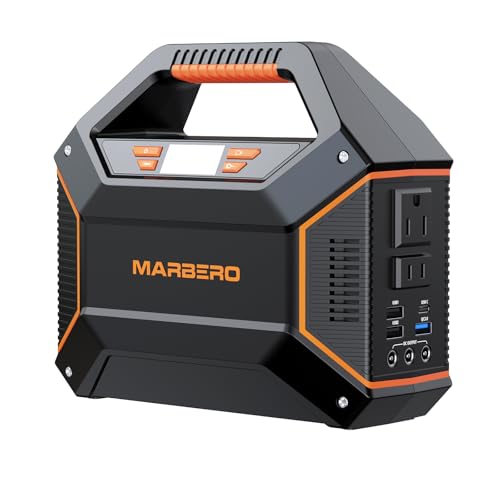
MARBERO Portable Power Station 155Wh

MARBERO 155Wh Solar Generator with 30W Panel
A Deeper Look At The Lineup
For thru-hikers counting every gram, the INIU 10000mAh is the kind of backpacking battery bank you stop noticing in your hip belt pocket. The high-density cell tech lets INIU pack a 10,000mAh capacity into a body noticeably smaller than older 10K bricks, which matters when your pack is already at 25 pounds of base weight. The 45W output is the headline number: it pushes enough wattage to fast-charge modern phones and tablets, and it handles a Nintendo Switch or low-wattage USB-C laptop in a pinch.
Compared to the much larger JUOVI 20000mAh up next in the lineup, the INIU trades raw capacity for portability. You’ll charge a flagship phone two to three times before the INIU is tapped out, which covers most two-to-three-day weekend trips with margin to spare. Setup is zero, just plug in a cable and go.
What Earns Its Place
- Pocketable footprint makes it disappear inside a hip belt pouch
- 45W output fast-charges modern phones in roughly 30 minutes from empty
- 10,000mAh capacity covers a phone, headlamp, and GPS unit over a long weekend
- Lighter and more compact than most 10K bricks from earlier generations
Things To Consider
- 10,000mAh drains quickly if you also top off a camera, watch, and headlamp daily
- No built-in cable, so a forgotten cord means a dead battery and a dead phone
Key Product Details
Who It Suits Best
Ultralight backpackers and fast hikers who want a featherweight 10K brick for two-to-three-day trips.
Look Elsewhere When
You need laptop-class output or multi-day capacity, in which case the JUOVI Power Bank 90W 20000mAh is a stronger fit.
When a 45W phone charger isn’t enough, the JUOVI 90W steps in with the kind of wattage that actually moves a USB-C laptop battery. Two USB-C ports, each capable of 90W on their own, mean a 13-inch MacBook Air can hit a meaningful percentage in half an hour, and the included detachable cable saves you from digging through your pack at the trailhead. For backpackers editing photos on a small laptop or running a satellite messenger and phone simultaneously, the headroom is genuinely useful.
The 20000mAh capacity doubles what the INIU 10000mAh offers, which lets you push a laptop and phone through a long travel day without scrambling for a wall outlet. It weighs more and fills a jacket pocket rather than a hip belt pocket, so it’s the pick for people carrying real gear in their pack.
Where It Excels
- 90W per port handles laptops, tablets, and phones at full speed
- 20000mAh keeps a phone and laptop running across a multi-day stretch
- Detachable cable included, so no extra purchase to get started
- Supports PD and QC fast-charging protocols across both USB-C ports
Worth Noting
- Heavier than the INIU 10000mAh, so it pulls pack weight noticeably
- Higher output generates more heat during sustained laptop charging sessions
Made For
Digital nomads, traveling professionals, and backpackers who refuse to leave the laptop behind on longer trips.
Consider Something Else When
You only need to charge small devices on overnight trips, where the lighter INIU 10000mAh makes more sense.
The NOBIS 20000mAh is the pick for anyone who has ever reached into a pack at a trail junction and realized the USB-C cable is sitting on the kitchen counter. The integrated detachable cable clips into the body for travel and pulls free when you need to charge, eliminating the most common backcountry power failure: a forgotten or frayed cord. The 45W output matches the INIU’s wattage but doubles the capacity, giving you roughly four to six phone recharges per cycle.
For commuters, students, and weekend backpackers, the NOBIS splits the difference between the INIU’s portability and the JUOVI’s raw wattage. The integrated strap is a small but thoughtful touch for clipping it to the outside of a pack on warm days when the battery shouldn’t share body heat with your sleeping bag.
Advantages To Know
- Built-in detachable USB-C cable removes the “I forgot the cord” problem entirely
- 45W output fast-charges modern phones and tablets without slowing down
- 20000mAh capacity supports a full week of phone and headlamp charging
- Clip-on strap lets you attach the bank to the outside of a backpack
Trade Offs
- Lower 45W ceiling means slower laptop charging than the JUOVI 90W
- Integrated cable wears with heavy use and may need replacement sooner than a separate cord
Right Fit For
Backpackers and commuters who lose cables constantly and want one fewer thing to pack.
A Better Fit Elsewhere
You need genuine laptop charging, in which case the JUOVI Power Bank 90W 20000mAh covers that workload better.
The MARBERO 200W marks the line where backpacking battery banks become basecamp power stations. The 148Wh capacity and 200W output mean you can run a CPAP machine, charge a drone battery, or power a small laptop through its actual AC adapter rather than USB-C. For overlanders, van-lifers, and basecamp backpackers, the integrated AC outlet, DC ports, USB QC 3.0 (Quick Charge 3.0, a fast-charging standard for Android devices), and built-in LED flashlights turn one box into a small off-grid hub.
You won’t carry this one in a backpack, but loaded into a car, canoe, or a pack-horse rig, it replaces a wall outlet. Compare that to the MARBERO 88Wh further down, which is lighter but capped at lower output, or the MARBERO 155Wh models, which balance capacity and size more carefully. This is the workhorse.
What Works In Its Favor
- 200W output and AC outlet handle real appliances, not just USB devices
- 148Wh capacity covers CPAP machines and multi-device overnight charging
- Built-in LED flashlights add emergency utility on remote trips
- Multiple output types (AC, DC, USB QC 3.0) accept nearly any cable you own
Points To Keep In Mind
- Too heavy and bulky for actual backpacking; suited for car camping and basecamp
- Recharging from a wall outlet takes several hours compared to fast-charging phone bricks
- 148Wh is below the airline carry-on limit cap, which restricts flight travel
Feature Snapshot
Best Suited To
Overlanders, car campers, and basecamp backpackers who need real AC power away from a wall.
Skip It When
You’re hiking miles from the trailhead, in which case the lighter INIU 10000mAh is the right size.
The MARBERO 88Wh is the smallest power station in this lineup, and that’s the point. It bridges the gap between a phone-sized battery bank and a full basecamp unit, weighing noticeably more than the INIU 10000mAh but offering an actual AC outlet for occasional use. The 120W surge rating (the temporary peak wattage a station can handle when a device first powers on) handles small appliances that spike at startup, like a desk lamp or fan. For first-time power station shoppers, it’s a low-commitment way to see if the category fits your trips.
Compared to the larger MARBERO 148Wh and 155Wh units, the 88Wh trades runtime for portability, which is the right call for shorter basecamp stays. You get a useful entry-level kit without paying for capacity you might not use.
Real-World Strengths
- Compact size makes it easier to pack than full-size power stations
- 120W surge handles startup spikes from small AC appliances
- Pairs with MARBERO’s dedicated solar panel for off-grid recharging
- Recharges from zero to 80% in roughly two hours with the included adapter
Room For Improvement
- 88Wh runs out fast on multi-day trips with multiple devices
- Solar charging depends on direct sunlight and slows considerably in cloud cover
Quick Facts
Who Should Grab It
First-time power station shoppers and weekend car campers who want AC output without the bulk.
Not Your Match When
You run CPAP machines or power-hungry laptops, where the MARBERO 200W Portable Power Station 148Wh is the better step up.
The MARBERO 155Wh sits in the practical middle of this lineup, big enough to keep a small fridge or CPAP running overnight, small enough to toss in a car trunk without rearranging gear. The 100W continuous output handles laptops, camera batteries, and lights without straining, and the 155Wh capacity translates to roughly two hours of runtime on a 65W laptop. Cabin trips, car camping weekends, and emergency home backup all line up with what this unit offers.
It doesn’t have the 200W muscle of the larger MARBERO 200W Portable Power Station 148Wh, but it’s a more honest fit for the way most people actually use portable power. If the 88Wh feels too small and the 148Wh feels too specialized, this is the middle path.
Notable Upsides
- 155Wh capacity supports overnight CPAP or multi-device family charging
- 100W continuous output runs laptops and camera chargers without throttling
- Manageable size fits in a car trunk or large pack without dedicated space
- Real-world runtime formula (155Wh ÷ device wattage) makes trip planning simple
Honest Caveats
- 100W ceiling won’t power induction cooktops or high-wattage heaters
- Heavier than a phone brick and requires real storage planning on the trail
Spec Overview
Perfect Match For
Car campers, cabin-goers, and home-backup shoppers who want balanced capacity without specialty pricing.
Swap It Out When
You need solar recharging included in the kit, in which case the MARBERO 155Wh Solar Generator with 30W Solar Panel Kit bundles that.
The MARBERO 155Wh Solar Generator Kit closes a gap the other MARBERO stations leave open: off-grid recharging. You get the same 155Wh station, a 30W folding solar panel, and a 6.5-foot integrated cable that lets you set the panel in full sun while the station sits in the shade. For multi-day stays where there is no wall outlet at all, this turns the unit from a one-trip battery into a renewable system. The all-in-one package skips the trial-and-error of buying a separate panel that may or may not match the station’s input.
Compared to the bare MARBERO 155Wh covered earlier, this kit costs a bit more but removes the planning step entirely. For dispersed campers, hunters, and overlanders who often set up far from infrastructure, that’s worth the difference.
What Pays Off
- All-in-one kit removes the need to match a third-party panel to the station
- 30W panel recharges the 155Wh station over a long day of sunlight
- 6.5-foot cable lets the panel sit in sun while the station stays shaded
- Same 100W output as the bare 155Wh station, no performance trade-off
Factors To Consider
- Solar panel requires direct sun; cloud cover dramatically slows recharging
- 30W panel is modest; bigger panels recharge faster but aren’t included
Feature Rundown
Built With In Mind
Dispersed campers, hunters, and overlanders who need renewable power without piecing together separate components.
Reach For A Different Pick When
You mostly camp near your vehicle and don’t need solar, in which case the plain MARBERO Portable Power Station 155Wh saves a few dollars.
Matching Capacity, Weight, And Watts To The Trail
Capacity is the number most shoppers chase first, and it’s also the easiest one to misuse. A 20,000mAh rating sounds like double a 10,000mAh bank, but real-world capacity depends on the device’s charging voltage and conversion losses. Phone banks in the 10,000mAh range suit two-to-three-day trips where you’re topping off a phone, headlamp, and small GPS. The 20,000mAh class adds room for a tablet, camera, or two nights of heavier use. Once you cross into 88Wh and above, you’re buying a power station, not a battery bank, and the use case shifts from pocket carry to basecamp.
Output wattage matters as much as capacity for backpackers running modern gear. A 45W bank fast-charges phones and tablets, which covers most trail scenarios. Anything below 18W is technically a “slow” charger by current standards. For laptop users and people running USB-C powered headlamps, satellite messengers, or camera chargers, 60W and up keeps devices charging at full speed instead of trickle-charging overnight.
Weight and form factor decide what you actually carry. A 200g pocket bank vanishes in a running vest. A 2kg power station does not vanish in anyone’s pack and belongs in a vehicle. Solar panel compatibility adds another layer: not every station accepts third-party panels, and matching voltage and connector matters. Built-in cables are a small detail that turns into a big convenience on the trail, especially when you’re packing in the dark before dawn.
Key Considerations Across These Picks
Mistakes Worth Dodging
Buying capacity you won’t carry is the most common error. A 148Wh power station doesn’t help a thru-hiker if it sits at home because it’s too heavy. Match the battery bank to your trip length and your pack weight budget before chasing the biggest number on the shelf. Another trap is underestimating wattage: a 10,000mAh bank with only 10W output will charge a phone overnight rather than before dinner, which fails the “phone is my map” test on the trail.
Where The Extra Money Goes
Higher-tier backpacking battery banks cost more because of cell chemistry, port selection, and built-in features like solar inputs, AC outlets, and integrated cables. Spending up makes sense when you actually use those features, like running a CPAP on a backcountry hunt or recharging from solar across multi-day trips. For phone-and-headlamp-only trips, the extra dollars buy capacity and ports you won’t touch, so the lower-tier picks in this lineup are the smarter call. The honest read is that the upgrade pays off when your trip depends on the extra capability, not when the spec sheet simply looks bigger.