Living off-grid, running a workshop, or keeping a weekend rig topped off all come back to the same question: how do you keep stored energy dependable without babysitting it? AGM and lithium deep cycle batteries each handle that job differently, and the right match depends on how often you cycle, how cold your climate runs, and how much mounting space you actually have. This list rounds up nine solid picks across chargers, lithium drop-ins, and classic lead-acid AGM workhorses, so you can pick the option that fits your setup instead of fighting it.
A Side-By-Side Look

Optimate 7 Select 12V 10A 9-Step Charger & Maintainer (TM-251v3)

Victron Energy Blue Smart IP65 12V 7A Charger

BtrPower 24V 100Ah LiFePO4 with 100A BMS (2560Wh)

Compact 24V 100Ah LiFePO4 with 100A BMS

Renogy 12V 100Ah Deep Cycle AGM Battery

Compact 24V 140Ah LiFePO4 with 100A BMS

BtrPower 24V 140Ah LiFePO4 with 100A BMS (3584Wh)

Renogy 12V 200Ah Deep Cycle AGM Battery
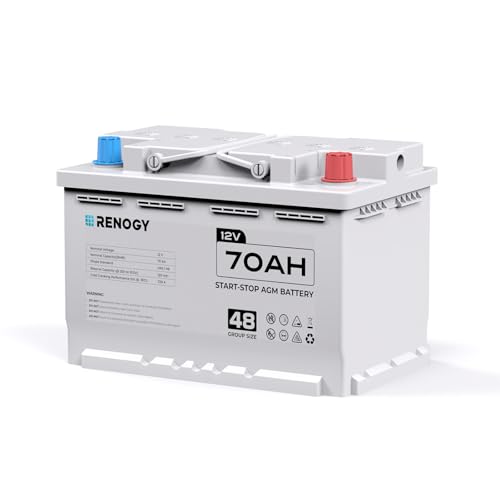
Renogy 12V 70Ah AGM H6 Group 48 Start-Stop Battery (720 CCA)
More On The Choices That Made The List
Garage tinkerers running AGM banks know the pain of a sulfated cell that just will not take a charge. The Optimate 7 Select targets that exact moment with a selectable 14.7V mode aimed at premium AGM batteries and a 10-amp output that is meaningfully stronger than the maintenance-class chargers that usually come bundled with stock vehicles. Compared to the Victron Blue Smart covered next, this unit leans harder into recovery work than wireless monitoring, which suits anyone who stores a battery through long winters or revives seasonal gear.
You also get a power supply mode that holds voltage steady during ECU programming, so a shop doing module flashing does not have to babysit a separate bench supply. The nine-step program walks the battery through desulfation, bulk, absorption, and float without manual switching, which is genuinely useful when you are running through half a dozen cars in a weekend.
A Few Strong Suits
- 10A output cuts charge time on larger AGM banks versus typical 1-2A maintainers.
- Selectable 14.7V profile is dialed in for high-end AGM cells like Optima and Odyssey.
- Power supply mode stabilizes voltage during ECU programming and diagnostic work.
- Desulfation stage can recover batteries that cheaper chargers leave for dead.
- Temperature compensation adjusts voltage up in cold shops and down in summer heat.
Things To Consider
- Bulkier than a simple maintainer, so it takes more bench or floor space in cramped bays.
- Lacks Bluetooth, so any monitoring happens on the unit itself rather than a phone.
- Higher amperage means you should verify your extension cord gauge for very long runs.
Key Specs
Best Suited To
Garage owners, restoration hobbyists, and small shops that cycle through AGM batteries and want recovery plus maintenance in one tool.
Skip It When
You mainly want Bluetooth monitoring on a modern lithium bank, where the Victron Energy Blue Smart IP65 12V 7A Charger fits better.
Smartphone-centric owners who like to peek at their battery’s voltage from the kitchen counter will appreciate what Victron built into this 12V 7A charger. The built-in Bluetooth links to the Victron Connect app, where you can adjust charging profiles, watch real-time current draw, and grab historical data without walking out to the garage. Next to the Optimate 7 Select, this unit trades raw amperage for connectivity and a sealed IP65 housing that shrugs off workshop splashes.
It is a comfortable fit for lithium owners running low-voltage cutoff adjustments, or for anyone who wants to know what their float stage is actually doing across the week. The trade-off shows up on bigger banks: 7A is noticeably slower than the 10A Optimate when refilling a drained 100Ah AGM.
The Value In It
- Bluetooth link lets you tweak profiles and watch voltage from your phone.
- IP65 sealed case tolerates damp garages and outdoor mounting under a cover.
- Multi-stage program covers standard lead-acid, AGM, and lithium-ion profiles.
- Historical data logging helps diagnose parasitic drain without extra meters.
Worth Noting
- 7A output refills large banks slower than higher-amperage garage chargers.
- App dependency is a non-starter if you prefer hardware-only controls.
- Sealed connector ends can be fiddly when wiring into permanent installs.
Who Will Love This
Tinkerers and van-lifers who want phone-based control of their charging profile and a weather-tough housing.
Look Elsewhere When
You need fast recovery charging on a large drained AGM, where the Optimate 7 Select 12V 10A 9-Step Charger & Maintainer (TM-251v3) pulls ahead.
Mid-sized solar arrays running 24V wiring love a single 100Ah lithium drop-in instead of two 12V bricks cabled in series. BtrPower’s 24V 100Ah LiFePO4 packs 2560Wh of usable energy (the practical depth-of-discharge you can actually pull from a lithium cell) into a 13.38 x 7.48 x 9.84-inch frame at roughly 42 pounds, which is about a third the weight of a comparable lead-acid bank. Compared to the Renogy 12V 100Ah AGM coming up, this unit trades proven AGM chemistry for far lighter weight and a much deeper usable capacity.
The 100A BMS (battery management system, the on-board circuit that protects against overcharge, deep discharge, and shorts) is the part that keeps the chemistry honest, and the IP65 housing gives you some peace of mind in marine bilges and outdoor enclosures. RVers replacing two aging 12V AGMs in series will find the footprint a noticeable upgrade.
A Few Highlights
- 2560Wh of energy in a single 24V box, replacing a pair of 12V batteries wired in series.
- About 42 pounds, roughly one-third the weight of a comparable lead-acid bank.
- 100A BMS guards against overcharge, deep discharge, and short-circuit events.
- IP65 sealed case stands up to marine bilges and outdoor enclosures.
Points To Note
- Requires a lithium-profile charger to reach full stated capacity.
- Cold-weather charging below freezing typically needs a heated setup or self-heating model.
- Single 24V brick leaves less redundancy than running two separate 12V batteries.
Feature Snapshot
Right Fit For
Off-grid cabins, mid-sized solar builds, and RV owners who want a clean 24V lithium drop-in without stacking two 12V bricks.
Consider Something Else When
You stay on 12V-only gear and prefer a familiar AGM profile, in which case the Renogy 12V 100Ah Deep Cycle AGM Battery is the more natural swap.
Tight battery bays and weight-sensitive applications, like sailboats and small campers, benefit when a lithium pack arrives in a compact 13.38 x 7.48 x 9.84-inch shell. This 24V 100Ah LiFePO4 lands at roughly 42 pounds and effectively replaces the weight and space of two 12V 100Ah batteries wired in series. Compared to the BtrPower 24V 100Ah LiFePO4 with 100A BMS (2560Wh), the spec sheet reads almost identical, so the choice often comes down to brand trust and current stock.
The 100A BMS handles typical inverter surges, and the chemistry means you can pull closer to the full rated capacity without shortening cycle life, something lead-acid cannot match. Owners commonly report the slimmer form factor clearing cramped under-seat compartments that bigger Group 31 cases would never fit.
What Works In Its Favor
- Compact footprint slides into bay spaces where Group 31 cases simply do not fit.
- About 42 pounds, so a single person can wrestle it into place without help.
- 100A BMS protects against the over-discharge mistakes that kill budget lithium packs.
- Replace two 12V lead-acid batteries in series with a single 24V block.
Honest Caveats
- Charging below freezing generally needs a low-temp cut-off or heated setup.
- Requires a lithium-compatible charger to reach full rated capacity.
- Single-battery design means no redundancy if a cell fails mid-trip.
Whose Shelf It Belongs On
Sailors, kayak campers, and anyone running a tight marine or RV bay that simply cannot swallow a Group 31 footprint.
Swap It Out When
You want more headroom for inverter surges or a brand with a longer track record, in which case the BtrPower 24V 100Ah LiFePO4 with 100A BMS (2560Wh) is the closer sibling.
Renogy’s 12V 100Ah AGM has earned its reputation the slow way, by showing up in countless solar sheds, vans, and weekend cabins without much drama. AGM stands for Absorbent Glass Mat, a lead-acid construction where the electrolyte is held in fiberglass sheets rather than sloshing as liquid, which makes the battery sealed, spill-resistant, and happy in odd mounting positions. Versus the lithium picks earlier, this Renogy trades weight savings and deeper usable capacity for a much friendlier price tag and zero cold-weather charging anxiety.
The valve-regulated design keeps maintenance close to nil, so owners running an off-grid cabin do not have to schedule water top-ups the way they would with a flooded bank. It pairs cleanly with a Renogy solar charge controller and tolerates partial state-of-charge cycles better than older AGM designs, though it still rewards a full top-off every so often.
Why It Works Well
- AGM construction resists vibration and tolerates tilted or odd mounting positions.
- Maintenance-free sealed case, no electrolyte top-ups on the service schedule.
- Plays nicely with common PWM and MPPT charge controllers in 12V solar builds.
- Lower upfront cost than a comparable 100Ah lithium drop-in.
Minor Gripes
- Heavier than a lithium equivalent, so mounting positions need a sturdy shelf.
- Usable capacity is roughly half of the rated 100Ah if you want long cycle life.
- Slower to recharge than lithium, especially when paired with smaller solar arrays.
Quick Facts
Built With In Mind
Cabin owners, weekend RVers, and anyone building a 12V solar bank on a budget who values proven chemistry over lithium’s weight savings.
A Better Fit Elsewhere
You need to shave 60 pounds off the bank or want full usable capacity, in which case the BtrPower 24V 100Ah LiFePO4 with 100A BMS (2560Wh) is the lighter step up.
Long-runtime setups that cycle past a single 100Ah lithium bank run into the wall fast, which is where a 24V 140Ah pack earns its keep. This compact LiFePO4 (lithium iron phosphate, the safest and longest-lived lithium chemistry for deep cycle use) lands in the same 13.38 x 7.48 x 10.4-inch shell as the smaller 100Ah version but pushes 3584Wh of total capacity and roughly 40 pounds of weight. Against the BtrPower 24V 140Ah LiFePO4 with 100A BMS (3584Wh) covered next, the headline numbers look nearly identical.
The 100A BMS keeps high inverter loads from tripping protection, and the compact casing slides into the same battery trays that previously held a pair of 12V 140Ah AGMs. Van builders running induction cooking, an inverter fridge, and roof AC cycling on solar will appreciate the extra headroom per charge.
The Upside
- 3584Wh of capacity in a single 24V brick, replacing two 12V 140Ah batteries in series.
- About 40 pounds, far lighter than the equivalent lead-acid setup.
- 100A BMS handles surge loads from inverters and induction cookers.
- Compact Group-size-friendly case fits existing trays and boxes.
Some Limits To Know
- Cold-weather charging under 32°F generally needs a heated battery box or low-temp cutoff.
- Requires a lithium-profile charger and solar controller to reach full rated output.
- Higher capacity means a longer absorption stage from smaller solar arrays.
Who Should Grab It
Van lifers and small off-grid builds running higher-draw appliances who want 24V simplicity without stacking two packs.
Reach For A Different Pick When
You want a sealed IP65 housing for harsher outdoor sites, in which case the BtrPower 24V 140Ah LiFePO4 with 100A BMS (3584Wh) is the rugged sibling.
Boats, rough job sites, and exposed outdoor enclosures push a battery through more abuse than a tidy garage ever will, and that is the case BtrPower built this 24V 140Ah pack to answer. The IP65 sealed housing (a rating meaning the case blocks dust and resists low-pressure water jets from any direction) keeps spray and dust out, and the UN38.3 transport listing (the UN safety standard covering lithium cells during shipping) helps when you ship the pack to a remote site or move it between vehicles. Against the Compact 24V 140Ah LiFePO4 covered earlier, the capacity and BMS read the same; the difference shows up in the build.
At roughly 40 pounds and 3584Wh, you can lift it solo, mount it sideways, and still walk away with the day’s worth of inverter runtime that the rest of your rig was already sized for. Pairing it with a low-temperature charging cutoff is wise for northern climates, since lithium cells do not appreciate being charged below freezing.
Benefits That Matter
- IP65 sealed case shrugs off spray, dust, and outdoor mounting positions.
- 3584Wh of capacity runs inverter loads through a full workday between charges.
- 100A BMS protects against overcharge, deep discharge, and short-circuit faults.
- UN38.3 transport compliance simplifies shipping to remote sites.
Trade Offs
- Charging below freezing needs a heated enclosure or low-temp cutoff setup.
- Lithium chemistry commands a higher upfront cost than AGM equivalents.
- Single 24V pack leaves no built-in redundancy if a cell fails mid-trip.
Spec Overview
Perfect Match For
Boat owners and outdoor installers who need a sealed, transport-friendly pack that can take splashes and dust without complaint.
Not Your Match When
You are running a strictly indoor solar shed and want to save cost, in which case the Renogy 12V 100Ah Deep Cycle AGM Battery is a simpler pick.
Whole-house backup loads, large inverter banks, and serious off-grid solar builds eventually bump into the ceiling that 100Ah batteries impose. Renogy’s 12V 200Ah AGM doubles the capacity of the 100Ah sibling in roughly the same Group 48 footprint, which is a tidy way to scale a bank without rewiring your box. Compared to the lithium 24V options earlier, this unit weighs substantially more and delivers less usable energy per cycle, but it skips the cold-weather charging caveats entirely.
You still get the valve-regulated, maintenance-free design that AGM owners rely on, and the thicker plate grids handle deep discharge cycles with less voltage sag than budget batteries. Owners commonly report these lasting through multi-year solar service when paired with a properly sized charge controller and routine equalization charges.
What It Does Well
- 200Ah capacity in a Group 48 footprint doubles runtime without doubling the box size.
- Maintenance-free sealed AGM design, no water top-ups on the service schedule.
- Tolerates a wide range of charge rates from modest solar arrays to shore power.
- Plays well with standard 12V inverters and charge controllers.
A Few Limitations
- Heavy at roughly 130 pounds, so the mounting shelf and transport plan matter.
- Usable capacity is closer to half the rating if you want long cycle life.
- Slower recharge acceptance than lithium when fed by smaller solar arrays.
Made For
Whole-house backup systems, large solar banks, and off-grid properties where proven AGM chemistry and a 12V platform are non-negotiable.
Where Another Pick Suits Better
Weight and floor space are your hardest constraints, in which case the BtrPower 24V 140Ah LiFePO4 with 100A BMS (3584Wh) gives similar runtime at a fraction of the mass.
Modern start-stop vehicles cycle the starter battery dozens of times per commute, which is exactly the use case AGM was engineered for. Renogy’s 12V 70Ah H6 (Group 48, a BCI size class covering many European and start-stop applications) delivers 720 CCA (cold cranking amps, the current a battery can deliver for 30 seconds at 0°F without dropping below a usable voltage) and a 120-minute reserve capacity, meaning the battery can power essentials alone for that long if the alternator quits. Against the deep cycle AGMs earlier, this unit focuses on cranking power rather than long inverter runtime.
The sealed AGM construction cuts the risk of acid leaks and corrosion around the hold-down bracket, and the wide operating temperature window keeps things turning over in both deep winter cold and engine-bay summer heat. It is a direct-fit replacement for the stock battery in many cars, SUVs, and trucks that originally shipped with an AGM start-stop battery.
A Favorable Mix
- 720 CCA handles start-stop cycling on modern European and domestic vehicles.
- 120-minute reserve capacity keeps essentials powered if the alternator fails.
- Sealed AGM design minimizes acid leaks and corrosion at the terminals.
- Wide operating temperature range suits both cold winters and hot engine bays.
Practical Considerations
- Not designed for deep cycle inverter duty, so it is a poor fit for solar banks.
- Higher cranking focus means less usable amp-hour capacity than a 100Ah deep cycle.
- Some vehicles require a coding or registration step after a battery swap.
Feature Card
Right Fit For
Daily drivers with factory start-stop systems, plus SUVs and trucks that originally shipped with an AGM battery in the Group 48 form factor.
Where A Sibling Pick Shines
You want long runtime for solar or inverter loads, where the Renogy 12V 200Ah Deep Cycle AGM Battery is the heavier, deeper-cycling option.
What Matters Most Before Choosing Agm Deep Cycle Battery
Match The Chemistry To The Use Cycle
Start-stop drivers replace a battery every few years because cranking AGM handles surface charge but not deep cycling, while deep cycle AGM and lithium both thrive on slower, deeper drawdowns. If your battery spends most of its life feeding an inverter or trolling motor, prioritize deep cycle rated cells over cranking amps.
Capacity Numbers Deserve A Reality Check
A 100Ah label on a lead-acid AGM really delivers around 50Ah of regular use before cycle life suffers, while a lithium equivalent gives you closer to the full 100Ah. For solar and inverter planning, working in usable watt-hours keeps the math honest and avoids running the bank flat on the second night of a trip.
Weight And Footprint Shape The Install
Lithium cuts roughly two-thirds of the mass off a comparable lead-acid bank, which matters in RVs and boats where every kilo affects handling. The compact 24V LiFePO4 units in this list replace two 12V batteries in series, freeing up tray space for a battery monitor or shunt.
Charge Profile And Cold Weather Matter
AGM batteries accept charge across a wider temperature range, including freezing garages, while lithium cells want a low-temperature cutoff or heated enclosure below 32°F. Choosing a charger or solar controller with a matching chemistry profile is what unlocks the rated capacity in real use.
Shopping Traps And Upgrade Tradeoffs In Agm Deep Cycle Battery
Common Buying Mistakes
A common slip is sizing the bank to inverter peak watts without checking the battery’s continuous discharge rating, which leads to tripped BMS or sagging voltage under load. Another trap is buying a lithium pack without verifying that the existing charger and solar controller offer a lithium profile, since lead-acid charge curves will leave capacity on the table. Confirming the BCI group size, terminal layout, and cable reach before ordering saves the headache of returns.
When The Higher Tier Is Worth It
Premium picks like the BtrPower 24V 140Ah LiFePO4 with 100A BMS justify the cost by combining sealed IP65 housing, a 100A BMS, and roughly 3584Wh of usable capacity, which is hard to match at the entry level. You also tend to get a higher continuous discharge rating, which means fewer tripped protections when an induction kettle or inverter AC cycles on. For heavy daily cycling, the upgrade pays back through longer service life and fewer mid-trip failures.
Frequently Asked Questions
How long does an AGM deep cycle battery typically last?
Most AGM deep cycle batteries deliver somewhere between three and six years of service in a solar or RV application, depending on how deeply you discharge them and how often you fully recharge. Keeping discharges shallow and running a periodic equalization charge pushes life toward the longer end.
Can a lithium drop-in replace my existing AGM battery directly?
In many cases yes, as long as your charger and solar controller offer a lithium profile and your cables and fuse ratings match the higher continuous current. Cold-weather charging below freezing is the main scenario where you would need a heated box or low-temperature cutoff before swapping.
Do I need a special charger for an AGM deep cycle battery?
A quality multi-stage charger with an AGM mode is recommended, because a plain constant-voltage charger can undercharge the bank and shorten cycle life. The Optimate 7 Select and Victron Blue Smart covered earlier both offer AGM-specific profiles.
What does a battery management system actually do?
A BMS watches voltage and current at the cell level, then disconnects the pack if it sees overcharge, deep discharge, short circuit, or overheating. It is the difference between a lithium pack that lasts thousands of cycles and one that fails after a handful of bad charge cycles.
Is a higher CCA rating always better for deep cycle use?
Not really. CCA measures short-duration cranking power, while deep cycle use cares more about amp-hour capacity and how the battery handles slow, sustained drawdowns. A start-stop AGM with high CCA is a poor choice for solar duty, and a deep cycle AGM with moderate CCA can still run a house bank just fine.
Wrap Up
The right battery depends less on hype and more on how you actually use it: daily drivers want a direct-fit AGM, off-grid cabins want a scalable 12V AGM bank, and lithium drop-ins reward anyone chasing weight savings and deeper usable capacity. Match the chemistry to the duty cycle, pair it with the right charger, and the rest of the system tends to fall into place.