An AGM battery is only as good as the charger sitting next to it. Pick the wrong unit and you get undercharged cells, sulfation, or a battery that swells under the hood. Pick the right one and your vehicles, boats, and stored equipment stay ready without babysitting. The lineup below covers compact maintainers for motorcycles, smart on-board marine chargers, and accessories that make permanent installs painless.
The Shortlist At A Glance
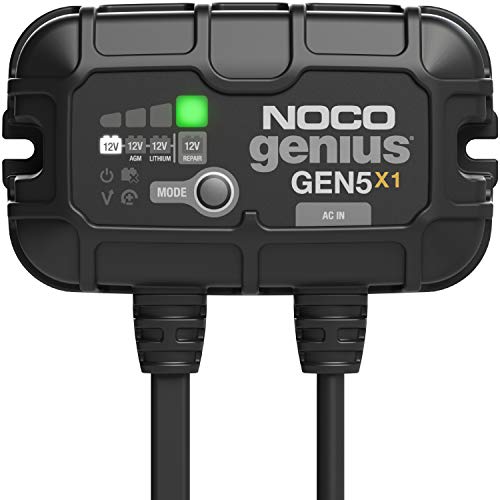
NOCO GEN5X1 12V 5A OnBoard Marine Charger

Battery Tender Junior 12V 750mA Charger

NOCO GC002 X-Connect M6 Eyelet Accessory

Battery Tender Plus 12V 1.25A Charger
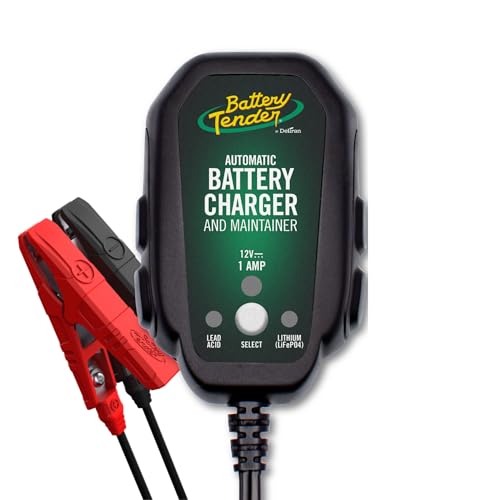
Battery Tender Junior 800mA Switchable Charger
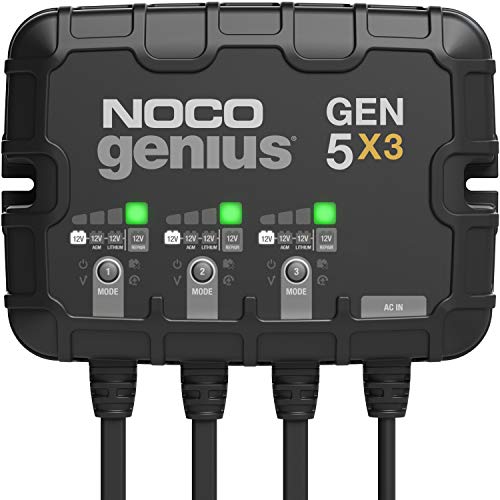
NOCO GEN5X3 12V 15A 3-Bank Marine Charger

Battery Tender 5 AMP 12V Charger

Battery Tender Plus 12V 1.25A Maintainer

NOCO GENPRO10X1 12V 10A OnBoard Charger

NOCO GC004 X-Connect 10-Foot Extension Cable
More Details On Our Top Picks
Small boats with a single house battery need a charger that lives through splash, spray, and a humid engine bay. The NOCO GEN5X1 handles that with a fully sealed, waterproof housing and a dedicated 5-amp bank for one 12-volt battery. It supports flooded, AGM, gel, and LiFePO₄ chemistries, so the same unit stays useful if you swap battery types down the road.
Compared with the Battery Tender Junior reviewed later, this is a permanent install rather than a portable plug-in. You hardwire it near the battery and it quietly tops off in the background. Depending on your boat’s wiring access, mounting may take some planning, but the tradeoff is zero fuss every launch weekend.
A Favorable Mix
- Multi-chemistry support covers flooded, AGM, gel, and lithium batteries in one unit.
- Fully sealed housing tolerates marine moisture and engine-bay heat.
- Compact footprint fits tight compartments where older chargers struggle.
- Single dedicated bank simplifies wiring on a one-battery boat.
Points To Keep In Mind
- Hardwired design requires basic routing and mounting effort.
- Single-bank setup does not suit boats running house and starter banks.
Key Specs
Who It Suits Best
Single-battery boat owners who want a permanent, sealed charger that handles AGM and lithium without swapping gear.
Skip It When
Run a multi-bank marine system and need independent channels; the NOCO GEN5X3 covers that scenario instead.
Storing a motorcycle, ATV, or lawn tractor through winter usually kills the battery by spring. The Battery Tender Junior solves the slow death with a gentle four-step program: initialization, bulk charge, absorption, and a float mode that holds voltage without cooking the cells. You clip it on, walk away, and the unit self-manages.
Unlike the NOCO GEN5X1 above, this is a portable plug-in rather than a hardwired unit. That makes it ideal for garage-stored powersports where you wheel the vehicle to a wall outlet. At 750mA it is conservative, which suits small batteries but means patience on larger ones.
The Helpful Details
- Four-step charging protects batteries during long storage.
- Plug-and-play simplicity suits first-time owners.
- Flooded, AGM, and gel compatibility covers most powersports batteries.
Some Limits To Know
- 750mA output is slow on larger car-sized batteries.
- Lead-acid focus means it does not handle lithium chemistries.
Made For
Garage-stored motorcycles, scooters, and ATVs that sit for weeks at a time.
Reach For A Different Pick When
You ride a vehicle with a lithium battery and want one button that switches profiles; the Battery Tender Junior 800mA Switchable handles that instead.
Tinkering with alligator clips every time you charge gets old fast. The NOCO GC002 eyelets let you mount a permanent quick-disconnect ring on any battery, so the charger just snaps into place. The lie-flat design keeps the install clean against the battery post, which matters when clearance behind a seat or panel is tight.
Compatibility is broad across NOCO’s Genius line, including GENIUS1, GENIUS2, GENIUS5, and GENIUS10 chargers. The M6 hole size fits most powersports and automotive posts. Just confirm your battery terminal hardware matches before you commit, since not every setup uses metric threads.
The Case For It
- Permanent eyelet mount removes clip fumbling for good.
- Lie-flat profile prevents strain on battery terminals.
- Broad compatibility with multiple NOCO Genius models.
Trade-Offs To Consider
- M6 sizing may not match every terminal hardware spec.
- Only useful alongside a compatible NOCO charger.
Best Suited To
Tinkerers and daily commuters who want a tidy, hardwired charging port on a vehicle they service often.
Where Another Pick Suits Better
You mostly charge on the go and need more cable length first; the NOCO GC004 extension cable stretches your reach before you commit to eyelets.
Daily drivers and weekend bikes benefit from a slightly faster charge than a 750mA trickle can offer. The Battery Tender Plus pushes 1.25 amps through the same proven four-stage program used across the brand’s lineup. Owners commonly report that the adaptive logic handles everything from a drained ATV pack to a healthy car battery without overcooking it.
Versus the compact Junior earlier in the list, this Plus model recovers batteries faster while keeping the same plug-and-play approach. It is the right pick for someone charging multiple vehicle types with one toolbox unit. Storage is simple since the form factor fits a shelf or drawer.
What Earns Its Place
- 1.25A output balances recovery speed with battery safety.
- Adaptive charging reads battery condition automatically.
- Wide compatibility across automotive, motorcycle, and AGM batteries.
What To Weigh
- Not designed for lithium chemistries out of the box.
- Plug-in design means no permanent on-board option.
Feature Snapshot
Right Fit For
Daily-driver owners with mixed vehicles who want one charger that handles them all competently.
A Better Fit Elsewhere
Your fleet includes lithium batteries and you want one button to swap profiles; the Battery Tender Junior 800mA Switchable is built for that.
Mixed fleets often include both lead-acid and lithium batteries, which historically demanded two separate chargers. The 800mA Junior with switchable profiles changes that with one push of a button. You toggle between lead-acid (AGM, flooded, gel) and LiFePO₄ modes, and the unit adjusts its charging curve automatically.
This model shares the Junior form factor covered earlier but adds the lithium capability some newer powersports bikes require. Owners commonly find the LED indicator clear enough to confirm profile selection at a glance. For lithium batteries specifically, getting the profile wrong can damage cells, so the dedicated switch is more than a marketing feature.
Strengths Worth Knowing
- Switchable profiles cover lead-acid and lithium batteries.
- Compact Junior footprint fits small storage shelves.
- Clear LED feedback on selected mode.
A Few Limitations
- 800mA output still favors smaller batteries.
- Manual profile selection requires attention before each session.
Who Should Grab It
Riders with a mix of AGM and LiFePO₄ batteries in their garage who want one tool for both.
Not Your Match When
You only run lead-acid batteries and would rather spend less; the original Battery Tender Junior 750mA covers that ground.
Boats with house, starter, and accessory banks all need attention simultaneously, and a single-bank charger cannot keep up. The NOCO GEN5X3 splits 15 amps across three independent 5-amp banks. Each channel reads its own battery and adjusts separately, which prevents one weak cell from dragging the others down.
Like the GEN5X1 earlier, this unit is fully sealed and waterproof, with chemistry support spanning flooded, AGM, gel, and LiFePO₄. Where it pulls ahead is sheer capacity for serious marine systems. Depending on how your boat is wired, installation is best left to someone comfortable running multiple leads to a battery switch.
Useful Strengths
- Three independent banks handle multi-battery marine systems.
- Waterproof sealed housing for harsh bilge environments.
- Multi-chemistry support future-proofs battery upgrades.
Honest Caveats
- Larger footprint than single-bank marine chargers.
- Higher amperage makes installation planning important.
Feature Card
Whose Shelf It Belongs On
Multi-battery boat and offshore anglers running house, starter, and trolling setups.
Where A Sibling Pick Shines
A single-battery boat is all you need; the NOCO GEN5X1 covers that without the extra capacity.
SUVs, trucks, and deep-cycle banks take forever to recover on a 1.25-amp trickle. The Battery Tender 5-amp unit cuts that recovery time dramatically while running the brand’s four-stage high-frequency switch-mode charging program. Once the battery is full, the charger drops to float mode and holds voltage without overcharging.
Versus the smaller Battery Tender Plus, this model is positioned for vehicles with larger battery banks. Owners commonly use it to revive batteries that sat dead through a long winter. The tradeoff is unit size: it is heavier and demands more shelf space than the Junior line.
Everyday Advantages
- 5-amp output recovers larger automotive batteries faster.
- Four-stage program with float maintenance for long storage.
- Works across lead-acid, AGM, and gel chemistries.
Points To Note
- Larger and heavier than 1.25A maintainers.
- Overkill for small powersports batteries.
Quick Facts
Perfect Match For
Owners of larger vehicles and deep-cycle battery banks who need faster recovery times.
Look Elsewhere When
You mostly charge small powersports batteries; the Battery Tender Plus 1.25A is a lighter, smaller tool.
Long-term stored vehicles benefit from a unit that holds voltage without supervision, and the Battery Tender Plus 1.25A maintainer does exactly that. After topping off the battery, it switches to float mode and keeps voltage steady without overcharging the cells. Owners of classic cars, tractors, and seasonal equipment rely on this behavior.
Compared with the larger 5-amp model reviewed above, this unit trades speed for gentler long-term care. It is well suited to AGM and flooded batteries that just need to survive storage. The California-compliant build also matters for shoppers in regulated states.
What Helps Most
- Float mode holds voltage safely across long storage periods.
- Compact 1.25A design suits garage shelf storage.
- Adaptive algorithms protect AGM and flooded batteries.
Less Ideal Details
- Slower recovery than 5-amp automotive units.
- No native lithium profile out of the box.
Built With In Mind
Garage owners with classic cars or seasonal equipment that sits untouched for months at a time.
Swap It Out When
You need faster recovery for a larger battery bank; the Battery Tender 5 AMP model fills that gap.
Larger AGM banks, house loads on overnight trips, and bigger trolling setups need more charging headroom than a 5-amp unit can deliver. The NOCO GENPRO10X1 brings 10 amps to a single bank, cutting recovery time in half compared with the GEN5X1. It still runs the same multi-chemistry profile set and sealed waterproof housing.
Where the GENPRO pulls ahead is sustained output for high-capacity banks. Owners commonly mount it on offshore boats or RVs with demanding electrical systems. The compact redesign keeps it smaller than older 10-amp marine chargers, which helps when bay space is at a premium.
The Practical Payoff
- 10-amp output recharges larger AGM banks faster.
- Sealed waterproof housing tolerates marine environments.
- Multi-chemistry profile covers flooded, AGM, gel, and LiFePO₄.
A Few Limitations
- Single bank only suits one-battery installs.
- Higher output demands careful fusing on smaller wire runs.
Spec Overview
Who Will Love This
Boat and RV owners with large single-house AGM banks who want faster turnaround between trips.
Consider Something Else When
You run multiple battery banks and need independent channels; the NOCO GEN5X3 handles that scenario.
Stock charger cables rarely reach the awkward battery locations you meet in modern engine bays, especially on vehicles with battery trays buried behind panels. The NOCO GC004 adds 10 feet of X-Connect reach so your charger can sit on a workbench or garage floor while reaching the battery. It plugs into the same X-Connect ecosystem covered earlier with the GC002 eyelets.
This is an accessory, not a charger, so it pairs with the Genius line rather than replacing any of the units reviewed here. Owners commonly keep one in the trunk or toolbox for roadside charging situations. The trade-off is bulk: a 10-foot cable adds storage weight versus the compact stock lead.
Key Advantages
- 10-foot reach solves tight engine-bay battery access.
- X-Connect compatibility across the Genius charger family.
- Useful for both shop setups and mobile roadside charging.
Trade-Offs To Consider
- Requires a compatible NOCO charger to function.
- Bulkier than the stock charger cable.
The Right Fit
Vehicle owners with batteries tucked behind panels who already use or plan to use a NOCO Genius charger.
Not Your Match When
You want a permanent install; the NOCO GC002 eyelet accessory suits that purpose better.
Factors To Consider When Choosing Agm Charger Battery
Match Amperage To Battery Size
A charger’s amp rating (the speed at which it pushes current into the battery) needs to suit the battery’s capacity. Small powersports batteries recover fine on 750mA to 1.25A units. Larger automotive or marine AGM banks benefit from 5A to 10A models, which cut recovery time substantially. Picking a unit that is too small leaves you waiting days; picking one that is too large risks overheating smaller cells.
Decide Between Portable And Onboard
Portable plug-in chargers work for garage-stored vehicles where you can wheel or roll the unit close to the battery. Onboard marine chargers hardwire permanently into the boat’s electrical system, so they stay ready without setup. Your storage situation, vehicle type, and wiring tolerance should drive the choice more than raw specs.
Check Chemistry Compatibility
AGM (absorbent glass mat) batteries use a specific charging curve that differs from flooded, gel, or lithium chemistries. A quality charger explicitly lists supported types in its profile. If you mix battery technologies across your fleet, consider a switchable unit that toggles profiles with one button, which avoids accidental damage from the wrong charging curve.
Plan For Long-Term Storage
Stored vehicles face slow parasitic drain from clocks, alarms, and computer memory. Float maintenance mode holds voltage steady without overcharging, which is critical for batteries that sit for months. Confirm any candidate charger includes float mode before committing, since basic trickle chargers can damage cells over extended connection periods.
Key Considerations Across These Picks
Common Shopping Slip Ups
The most frequent mistake is matching a tiny trickle charger to a large automotive battery and expecting fast recovery. The second is grabbing a lead-acid-only unit for a lithium battery, which delivers the wrong voltage curve. Check chemistry support and output rating against your actual battery before you commit.
What The Higher Tier Buys
Higher-tier marine chargers like the GEN5X3 and GENPRO10X1 add independent banks, sealed waterproof housings, and higher amperage for demanding systems. That extra output pays off when you have multi-battery setups or larger AGM banks. For a single small powersports battery, the premium does not earn its keep.
Frequently Asked Questions
Do AGM batteries require a special charger?
AGM batteries need a charger with an AGM-specific voltage profile. Most modern smart chargers in this lineup list AGM among supported chemistries, but older trickle units may not.
Can I leave an AGM charger connected all winter?
Float-mode maintainers are designed for long-term connection and hold voltage without overcharging. Standard chargers without float mode should not stay connected indefinitely.
What is the difference between a charger and a maintainer?
A charger actively pushes current to recover a battery, while a maintainer holds voltage steady once full. Many units in this lineup do both in sequence.
Are onboard marine chargers worth the install effort?
For boat owners with shore power access, an onboard charger keeps batteries topped off between trips without manual hookups. The tradeoff is the upfront wiring work.
How do I know what amperage my battery needs?
Battery capacity is measured in amp-hours, and a general rule is to match charger amps to roughly 10% of that rating. A 50Ah battery recovers well on a 5A charger; smaller batteries need less.
Wrap Up
The right AGM charger depends less on spec sheets and more on your vehicle, your storage habits, and your battery’s chemistry. Compact maintainers suit garage-stored powersports; sealed marine chargers serve boats with shore power; and accessories like eyelets and extension cables make permanent installs cleaner. Pick the unit that matches your real use case, and your batteries will be ready when you turn the key.