Living off-grid, running a trolling motor, or keeping a camper van’s accessories alive through long stretches away from shore power changes what you want from a battery. Capacity alone stops mattering once you live with the gear. You start caring about how it handles deep discharge, how heavy it is to wrestle into a battery box, and whether a smart charger can coax life back into it after a rough stretch. This roundup pairs AGM lead-acid workhorses with the LiFePO4 (lithium iron phosphate) options now crowding the category, plus a couple of chargers worth knowing about if you already own a deep cycle setup.
The Shortlist At A Glance

Optimate 7 Select 12V 10A 9-Step Charger

Victron Blue Smart IP65 12V 7A Charger

BtrPower 24V 50Ah LiFePO4 Trolling Battery

BtrPower 24V 140Ah 3584Wh LiFePO4 Battery

Renogy 12V 100Ah Deep Cycle AGM Battery

BtrPower 24V 100Ah Deep Cycle LiFePO4

Renogy 12V 200Ah Deep Cycle AGM Battery
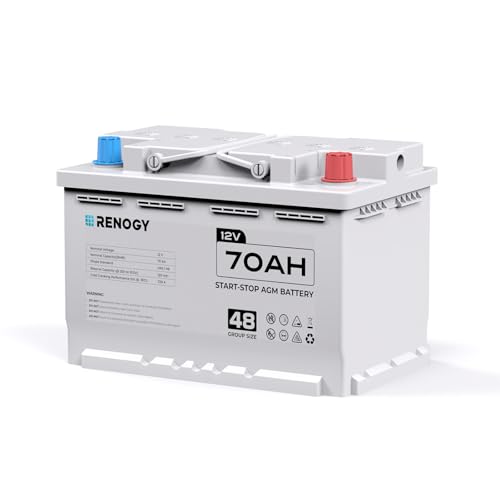
Renogy 12V 70Ah AGM H6 Start-Stop Battery
A Deeper Look At The Lineup
The Optimate 7 Select earns the first slot because it sits in the small group of chargers built specifically for premium AGM (absorbent glass mat, a sealed lead-acid design that resists spills and handles deep discharge better than flooded cells) batteries like Odyssey and Optima. Owners of those high-end cells know the regular charger in the garage rarely pushes the right voltage profile, which shortens service life over time.
What sets the TM-251v3 apart is its selectable 14.7V program aimed squarely at premium AGM chemistries. The 10A current is heavier than most consumer chargers, so it recovers depleted packs faster. For the workshop regulars or classic-car owners with a dedicated AGM battery, that profile matters.
Real-World Strengths
- Dedicated 14.7V AGM profile for premium cells like Optima and Odyssey
- 10A current cuts recovery time on deeply discharged packs
- 9-step program covers desulfation (a controlled high-voltage pulse that breaks down lead sulfate crystals building up on the plates), bulk charging, and long-term maintenance
- Stable power supply mode for ECU (engine control unit) programming sessions
- Temperature compensation adjusts voltage for hot and cold shops
Things To Consider
- Priced noticeably above standard consumer chargers
- Bulkier form factor than the compact wall-plug models
Made For
Premium AGM owners with Odyssey or Optima batteries who want a charger that actually matches what the manufacturer recommends.
Look Elsewhere When
The Victron Energy Blue Smart IP65 suits you better when Bluetooth monitoring and a smaller wall-plug form factor matter more than the dedicated premium-AGM profile.
The Victron Blue Smart leans on what most consumer chargers don’t offer: built-in Bluetooth and a sealed IP65 weatherproof body. For the kind of shopper who wants to check battery voltage from the couch without dragging the charger to a meter, that combination is hard to beat.
Pair the charger with the Victron Connect app (free on Android and iOS) and you get real-time voltage, current, and historical charge data. The IP65 rating means light rain or garage dust won’t bother it, which expands placement options compared to a wall-plug unit. For AGM deep cycle setups stored in sheds or outdoor cabinets, that resilience earns its keep.
A Few Highlights
- Bluetooth integration with the Victron Connect app for live monitoring
- IP65 weatherproof rating tolerates garage dust and splashes
- Adaptive 7-stage charge algorithm suited to AGM and lithium chemistries
- Recovery mode for deeply discharged batteries that other chargers abandon
- Compact shell easier to wall-mount than bulkier shop units
Worth Noting
- 7A output is slower than the Optimate 7 Select on big banks
- App-dependent features add a learning curve for non-tech-oriented users
Who It Suits Best
Garage tinkerers and marine owners who want charging data on their phone without a separate monitor.
Consider Something Else When
The Optimate 7 Select is a stronger fit when you specifically need the 14.7V premium-AGM profile and faster 10A recovery current.
The 24V 50Ah LiFePO4 from BtrPower drops into the slot most anglers care about: a direct replacement for the two 12V lead-acid or AGM batteries wired in series to run 70 to 100-pound thrust trolling motors. Cut your battery weight roughly in half and reclaim a chunk of transom space at the same time.
The chemistry itself is the bigger story. LiFePO4 cells tolerate thousands of deep cycles without the capacity loss that plagues AGM after two or three seasons. For kayak anglers and small-boat regulars who fish through the discharge curve all day, that cycle life pays back the upfront premium eventually. A built-in BMS (battery management system, an internal circuit board that protects against overcharge, over-discharge, and short circuits) handles the protective side automatically.
Everyday Wins
- Direct 24V drop-in replacement for paired 12V AGM or lead-acid setups
- Substantially lighter than two comparable AGM batteries in series
- LiFePO4 chemistry rated for thousands of deep discharge cycles
- Built-in BMS guards against common charging and discharging faults
Honest Caveats
- Higher upfront cost per amp-hour than AGM equivalents
- Requires a lithium-compatible charger for full charging speed and longevity
- 50Ah capacity may run short for anglers fishing multi-day stretches without recharging
Right Fit For
Boat and kayak anglers running 70 to 100-pound thrust trolling motors who want a lighter, longer-lasting replacement for paired AGM batteries.
A Better Fit Elsewhere
The BtrPower 24V 140Ah LiFePO4 suits you better when extended runtime matters more than portability and weight savings.
The 24V 140Ah BtrPower is the heavyweight answer for off-grid solar banks, larger trolling motor setups, and RV house banks where runtime outweighs portability. At 3584Wh of stored energy, it covers multi-day off-grid stretches without recharging.
The internal 100A BMS handles overcharge, over-discharge, and high-temperature cutoffs, which removes a layer of worry when the battery sits unattended in a battery box for days. Compared to the 50Ah sibling above, the bigger capacity costs more in absolute dollars but lands at a friendlier cost per watt-hour. Where it falls short is weight and footprint; this is a unit you install once and leave.
The Helpful Details
- 3584Wh of stored energy for multi-day off-grid use
- Grade A LiFePO4 cells rated for over 3000 deep discharge cycles
- 100A BMS with high-temperature cutoff protection
- Lower cost per watt-hour than smaller lithium alternatives
Points To Keep In Mind
- Heavy and bulky compared to the 50Ah BtrPower option
- Charging demands a lithium-profile charger to reach full capacity safely
- Single-battery footprint may not fit smaller boat or kayak battery compartments
Best Suited To
Off-grid solar system builders and RV owners who need extended runtime in a single 24V unit rather than a bank of smaller batteries.
Reach For A Different Pick When
The Renogy 12V 200Ah Deep Cycle AGM fits the bill when you want lower upfront cost and a chemistry that tolerates existing lead-acid charging equipment.
The Renogy 12V 100Ah AGM is the workhorse the category built its reputation on. For cabin solar arrays, RV house banks, and off-grid sheds, this format has been the default for years, and Renogy’s build quality has kept it near the top of most shortlists.
The 100Ah capacity covers a weekend of moderate draw in a typical van or cabin setup, and the AGM construction handles vibration and odd mounting angles better than flooded lead-acid. Series and parallel expansion up to four parallel strings lets a system grow with the load. For the first battery in a new solar build, this Renogy is a safe starting point.
Advantages To Know
- 100Ah capacity fits typical weekend RV and cabin loads
- Sealed AGM design tolerates vibration and angled mounting
- Supports series and parallel expansion for growing systems
- Lower upfront cost than lithium equivalents in the same capacity range
Trade Offs
- Weavier than lithium at roughly 60+ pounds per unit
- Shorter cycle life than LiFePO4, typically a few hundred deep cycles
- Slower recovery from deep discharge compared to lithium chemistry
Quick Facts
Who Will Love This
First-time solar builders and RV owners who want a proven, lower-cost AGM battery before committing to lithium chemistry.
Swap It Out When
The Renogy 12V 200Ah Deep Cycle AGM is the smarter pick when you need double the runtime without stepping up to lithium pricing.
The 24V 100Ah BtrPower lands in the middle ground between the 50Ah trolling motor pick and the 140Ah off-grid giant. Capacity doubles the smaller sibling while keeping the footprint manageable in a marine battery box or small RV compartment.
Compared to a 24V AGM bank, this single lithium unit removes the wiring complexity of running two 12V batteries in series, which is where many DIY installers first hit trouble. The internal 100A BMS does the protective work in the background. For mid-sized trolling setups that need more than a half-day of runtime, this 100Ah model is a sensible middle step.
Well-Handled Touches
- Single 24V unit replaces two AGM batteries wired in series
- 3000+ deep discharge cycles from Grade A LiFePO4 cells
- Maintains roughly 80% capacity after thousands of cycles
- Built-in 100A BMS for overcharge and over-discharge protection
Room For Improvement
- Heavier than the 50Ah BtrPower option at this capacity
- Needs a lithium-profile charger to reach full charge safely and quickly
Perfect Match For
Mid-sized trolling motor setups and modest RV house banks that need a balance between runtime, weight, and price.
Not Your Match When
The BtrPower 24V 50Ah LiFePO4 is a smarter fit when weight and kayak transom space dominate your decision.
The Renogy 12V 200Ah AGM doubles the capacity of its 100Ah sibling without doubling the footprint. For larger residential solar banks, off-grid cabins, and serious RV house systems, that 200Ah rating translates to longer stretches between generator runs.
Where this battery earns its place is in setups where lithium still costs too much but flooded lead-acid feels too maintenance-heavy. Thick AGM plates and valve-regulated construction cut down on acid leakage worries and keep the battery safe in enclosed battery boxes. Expect roughly 130 pounds per unit, so plan the install location before delivery.
Where It Delivers
- 200Ah capacity extends runtime for off-grid and RV systems
- Sealed AGM construction with valve-regulated safety
- Pairable in series and parallel for 24V or larger banks
- Lower upfront cost than a comparable LiFePO4 bank
Some Limits To Know
- Heavier than lithium at the same capacity
- Shorter cycle life than LiFePO4 chemistry over years of daily cycling
- Bulky footprint may not fit smaller battery compartments
At A Glance
Built With In Mind
Off-grid solar households and serious RV owners who need bigger AGM capacity without jumping to lithium pricing.
Where Another Pick Suits Better
The BtrPower 24V 140Ah LiFePO4 suits you better when long cycle life and lighter weight outweigh AGM’s lower entry price.
The Renogy H6 sits at the opposite end of the deep cycle category from the lithium trolling motor batteries above: it’s a starting battery, designed to crank engines in modern start-stop vehicles. The 720 CCA (cold cranking amps, a measure of how much current the battery can deliver at 0°F for 30 seconds while staying above a minimum voltage) and 120-minute RC (reserve capacity, the minutes the battery can run accessories if the alternator fails) ratings handle the constant restart cycle that wears out ordinary batteries.
The Group 48 H6 case matches the OEM (original equipment manufacturer) fitment in many recent cars, SUVs, and trucks, which simplifies the swap. For commuters and daily drivers whose stock start-stop battery finally gave up, this Renogy fills the slot with comparable specs. The wide operating temperature range keeps it functional in cold winters and hot summer engine bays alike.
Where It Excels
- 720 CCA for reliable cold-weather cranking
- 120-minute reserve capacity supports accessory loads with the engine off
- Group 48 H6 case matches many OEM start-stop battery trays
- Sealed AGM design minimizes acid leak risk in tight engine bays
Practical Considerations
- Not designed for deep cycle use, so it’s the wrong pick for solar or trolling setups
- Heavier than a comparably sized lithium starter battery where available
- Group 48 H6 fitment should be verified against your specific vehicle before ordering
Feature Snapshot
Whose Shelf It Belongs On
Daily drivers and SUV owners replacing a worn OEM start-stop battery with a like-for-like Group 48 AGM swap.
Skip It When
The Renogy 12V 100Ah Deep Cycle AGM is the right shelf when you need house-bank capacity for camping or solar rather than engine cranking power.
What To Match Before Buying Agm Deep Cycle Batteries
Start With The Chemistry And Format
AGM and LiFePO4 serve overlapping jobs but with different tradeoffs. AGM costs less up front and works with most existing chargers, but it weighs more and fades faster under daily deep cycling. LiFePO4 runs lighter, cycles thousands of times, and needs a lithium-compatible charger to reach full capacity safely. Match the chemistry to the charger you already own or plan to buy.
Voltage And Capacity Decisions
12V batteries suit RV and cabin solar banks where you can pair units in series or parallel. 24V batteries replace paired 12V AGM setups in trolling motors and larger off-grid banks. Capacity (Ah) determines runtime at a given load; a 100Ah battery running a 10A constant draw delivers roughly 10 hours before reaching the safe discharge floor, depending on the chemistry’s recommended depth of discharge (the percentage of capacity you can safely use before recharging).
Physical Fit And Weight
A 200Ah AGM battery weighs around 130 pounds. Measure the battery box and the floor loading before ordering. Lithium cuts that weight dramatically, which matters on boats and RVs where every pound affects handling and payload.
Charging Compatibility
Pair the battery with a charger that matches its chemistry. AGM responds well to multi-stage smart chargers with a dedicated AGM profile. LiFePO4 needs a charger with a lithium mode to push the right voltage ceiling. Using a lead-acid charger on a lithium battery typically leaves capacity unused and may shorten lifespan.
Smart Considerations Across These Picks
Common Shopping Slip Ups
The most frequent mistake is buying a battery based on capacity alone. Chemistry, case size, terminal layout, and charger compatibility all matter as much. Another common slip is underestimating weight, especially with 200Ah AGM units that can exceed 130 pounds and require two people to position safely in a battery box.
Where The Extra Money Goes
Higher-tier lithium batteries cost more because of the cells themselves, the BMS hardware, and the cycle life they deliver. A premium LiFePO4 bank may outlast three or four AGM replacements over a decade of daily cycling, which is where the math starts to favor lithium despite the upfront gap. The BtrPower lithium options in this list sit in that premium tier, while the Renogy AGM picks anchor the budget end of the lineup.
Frequently Asked Questions
How long does an AGM deep cycle battery usually last?
An AGM battery typically delivers a few hundred deep cycles before capacity drops noticeably. In float service as a backup battery, an AGM can last five to seven years. Daily deep cycling shortens that lifespan considerably compared to LiFePO4 chemistry.
Can LiFePO4 batteries replace AGM without changing other gear?
The battery swap itself usually works, but the charger often needs upgrading to a lithium-compatible model. Existing charge controllers and inverters generally handle LiFePO4 fine, but the charger’s voltage profile is the common sticking point.
What does depth of discharge mean for these batteries?
Depth of discharge is the percentage of capacity used before recharging. AGM batteries typically last longest when discharged to no more than 50%. LiFePO4 can safely discharge to 80% or deeper without significant lifespan penalty, which is one reason the same amp-hour rating delivers more usable energy.
Are these batteries safe to mount inside a vehicle or cabin?
AGM batteries are sealed and safe to mount in enclosed battery boxes with proper ventilation. LiFePO4 chemistry is also stable and non-off-gassing under normal use. Both should still be secured against movement and protected from extreme heat sources regardless of chemistry.
Do cold temperatures affect AGM and LiFePO4 the same way?
Cold weather reduces the usable capacity of both chemistries, but LiFePO4 typically needs a low-temperature charging cutoff to prevent damage when charging below freezing. AGM handles cold cranking duties better, which is why the Renogy H6 starter battery fits winter driving duties so well.
Closing Remarks
The right battery comes down to your charger, your load, and where the unit physically lives. For most RV and cabin solar builds starting out, the Renogy 12V 100Ah AGM is a sensible anchor. Lithium picks from BtrPower make more sense once cycle life and weight start to matter, and the Renogy H6 covers the daily-driver start-stop slot that the deep cycle batteries don’t address. Whichever direction fits your situation, matching the charger to the chemistry is the detail most people miss, and it pays back the longest.