Running a multimeter, a guitar pedal, or a small sensor rig off flat batteries is a familiar headache for hobbyists. A good 9V clip or a USB-to-9V adapter turns that pile of disposables into a tidy bench setup, saving cash and keeping projects alive. This roundup walks through nine solid options that handle everything from quick solder repairs to on-the-go USB power for 9V gear.
A Side-By-Side Look

VWEICYY T-Type 9V Buckle Connector 10 Pack

California JOS T-Type 9V Buckle Connector 3-Pack
California JOS I-Type 9V Clip 3-Pack


CHANZON 9V Clip DC Barrel Kit 5-Pack

bnafes I-Type 9V Clip 10-Pack
California JOS I-Type Soft Shell 3-Pack
YIPIN HEXHA 4-Port DC to USB Buck Converter

KAABEE USB to 9V Eliminator Cable
Inside Each Recommended Option
For anyone soldering their first LED circuit, a 10-pack of basic clips removes the pressure of getting it right on the first try. The hard plastic shell snaps firmly onto a standard 9V battery, and the cable tail ends in tinned leads (thin solder coating) that flow cleanly under an iron.
Unlike the smaller 3-packs later in this list, you get enough spares to leave a few chewed-up ones in the bin without guilt. The clip design is intentionally simple, which makes it forgiving for a classroom or home learning setup where you want zero surprises during a lesson.
Notable Upsides
- Generous 10-pack count keeps a workbench stocked through multiple failed attempts
- Rigid plastic shell holds a firm bite on the battery terminals
- Pre-tinned leads cut soldering prep time for newcomers
- Compact footprint works in tight breadboard layouts
- Metal contacts stay consistent across repeated battery swaps
Points To Note
- Hard shell can crack if forced onto a swollen or damaged cell
- Leads are short, so enclosures need careful cable routing
Feature Snapshot
Right Fit For
Classroom learners and first-time solderers who need forgiveness and a forgiving price.
Reach For A Different Pick When
Long wire runs call for the Teqooza I-Type 9V Clip 10-Pack, which ships with extended leads for tucked-away installations.
A smaller count suits a teaching lab that wants exactly three kits per group without leftover clutter. The hard plastic shell matches the VWEICYY clip above, so students moving between stations see the same form factor and pinout.
Compared to the bulk 10-pack opener, this one trades volume for tidy inventory management. The leads arrive ready to solder, and the housing keeps the snap connection rigid during repeated plugging and unplugging in lesson cycles.
Everyday Advantages
- Three-piece count fits typical group project sizes
- Solid shell resists flex during repeated insertions
- Tinned leads reduce soldering mishaps for younger students
- Clean replacement part for damaged OEM connectors on old gear
Honest Caveats
- No spare units included, so breakage ends the kit early
- Same short lead length as the VWEICYY bulk pack, which can cramp deep enclosures
Built With In Mind
Middle-school and high-school STEM labs running structured lesson kits with a defined student count.
Swap It Out When
Heavier tinkering projects suit the CHANZON 9V Clip DC Barrel Kit 5-Pack, which adds a pre-terminated DC plug for plug-and-play builds.
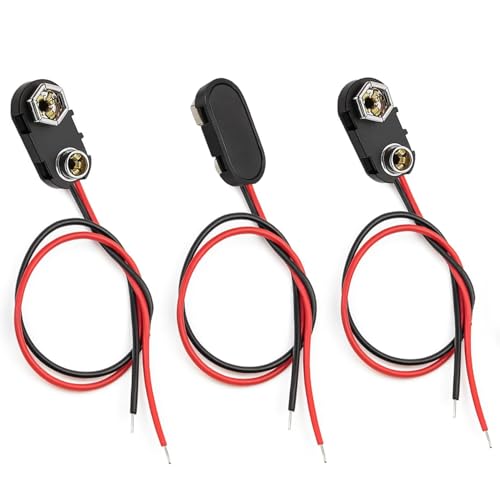
Arduino boards and sensor breakouts generally want an I-style snap rather than a T-style, since the leads exit in line with the battery’s shorter axis. This 3-pack ships that orientation in a hard shell that survives frequent bench use.
Where the previous T-type clips push leads out the wider edge, this one keeps cables flat against your project. Owners commonly report the housing fits cleanly inside standard project boxes without forcing the battery into awkward angles.
What Makes Sense
- I-type exit angle suits slim enclosures and Arduino shields
- Rigid shell keeps contact pressure steady across many swaps
- Anti-static packaging protects clips during long storage
- Pre-tinned leads work with both lead-based and lead-free solder
Things To Consider
- Three-piece count may run short for a classroom set
- Hard shell can mark soft project box foam during insertion
Quick Facts
Whose Shelf It Belongs On
Arduino hobbyists and STEM tinkerers building flat-form-factor sensor rigs.
Look Elsewhere When
Long cable routing through a vehicle or enclosure points to the Teqooza I-Type 9V Clip 10-Pack for its extended lead length.
Soft-shell clips feel different under the fingers, and this I-type version trades rigidity for a gentler bite on battery terminals. The bare-end leads strip fast, so no wire strippers clog up your repair flow.
Where the hard-shell picks above snap on with authority, this one flexes just enough to absorb light knocks without cracking. For a busy repair bench, the longer cable tail reaches into project boxes that swallow shorter leads.
A Few Strong Suits
- Soft housing cushions against vibration in mobile rigs
- Bare-end cable design lets you trim to length on the fly
- Ten-pack count suits shops handling multiple repairs weekly
- Sturdy plastic-and-metal composite resists flex fatigue
Worth Bearing In Mind
- Bare ends need extra care to avoid stray shorts before soldering
- Soft shell holds less spring tension over years of heavy cycling
Best Suited To
Bench repair techs and hobbyists who swap clips often and want gentle contact pressure.
Skip It When
Tight classroom budgets benefit more from the VWEICYY bulk pack, which delivers more pieces per dollar for fresh learners.
The biggest leap forward in this roundup, this kit adds a 2.1×5.5mm female DC barrel jack to a 9V clip, turning a snap battery into a wall-wart-friendly power source for LED strips and small routers. The leather-style housing flexes around corners where hard plastic would pop off.
Compared to the bare-lead clips above, the integrated barrel socket removes one more solder joint from your build. The 5.9-inch (15cm) lead is short but workable, and pure copper wire keeps voltage drop modest across modest loads.
Useful Strengths
- Pre-wired DC barrel socket cuts a solder step from LED builds
- Leather-style housing bends around tight project box corners
- Pure copper wire keeps resistance low for short runs
- 5-piece count matches the pace of one-off prototype weekends
Some Limits To Know
- Barrel jack adds bulk where a slim clip would sit cleaner
- Lead length stays modest for deeply recessed enclosures
Feature Card
Perfect Match For
LED strip and maker-space builders who want plug-and-play 9V feeds without soldering a jack.
Where Another Pick Suits Better
Raw prototyping without a barrel jack calls for the simpler bnafes I-Type 9V Clip 10-Pack, which ships more pieces for less.
Color coding saves headaches on any bench, and these I-type clips ship with one red and one black lead across all ten units. The 15cm length lands in the sweet spot for breadboard work and small project boxes.
Where the CHANZON kit above adds a barrel jack, this pack stays minimal: stripped and tinned leads, soft plastic shell, no extras. For stockroom replenishment at a community makerspace, that simplicity is the point.
What Earns Its Place
- Color-coded leads cut polarity mistakes during rushed builds
- 15cm length fits comfortably in standard project boxes
- Ten-piece count beats most rivals on simple replacement value
- Soft shell handles rough handling in shared workshops
Trade-Offs To Consider
- Soft shell holds slightly less tension than rigid alternatives
- No extra accessories like barrel jacks or terminal blocks
Who Should Grab It
Makerspace coordinators and electronics hobbyists restocking a parts bin on a budget.
Skip It When
Builds that need plug-in power benefit from the CHANZON 9V Clip DC Barrel Kit 5-Pack, which terminates in a ready-to-use DC jack.
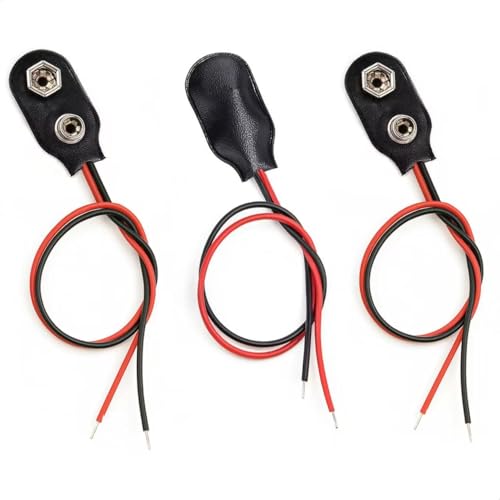
The sibling to the California JOS hard-shell I-type clip earlier in this list, this soft-shell variant trades rigidity for bend and bounce. Leather-style housing flexes around battery corners without splitting.
For portable rigs that get tossed into a gig bag or tool roll, that flex protects the snap joint from impact damage. Tinned leads arrive ready for solder, and the three-piece count fits solo builders who replace parts occasionally.
The Upside
- Leather-style soft shell absorbs drops and bumps well
- Tin-treated leads bond cleanly with standard solder
- Compact I-type form suits slim guitar pedal projects
Room For Improvement
- Three-piece count can run short for repeat failures
- Soft housing offers less tactile feedback during snap-on
Who It Suits Best
Musicians and field technicians running portable 9V gear that takes knocks in transit.
A Better Fit Elsewhere
High-volume stockroom use points to the bnafes I-Type 9V Clip 10-Pack, which supplies more units at a comparable per-piece cost.
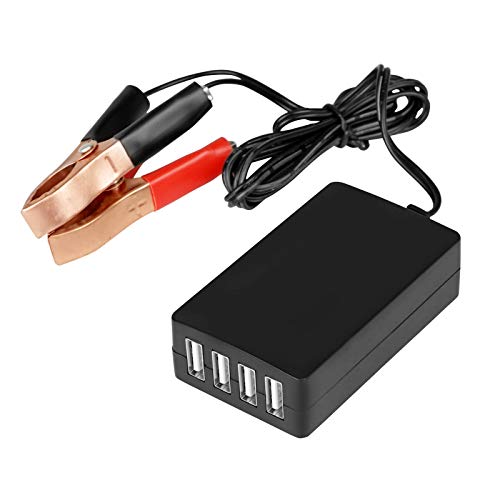
Stepping away from small clips, this buck converter (a circuit that steps voltage down efficiently) takes a 12V or 24V battery and turns it into 5V USB power across four ports at once. The integrated QC3.0 and PD 20W support covers fast-charging phones and tablets.
For van-life builds, camping setups, or backup power from a spare car battery, this turns a single DC source into a multi-device charging hub. Owners commonly report the slim regulator module tucking into tight project boxes without crowding other components.
What It Does Well
- Four-port output handles phones, tablets, and small accessories together
- Wide 8-35V input covers lead-acid and lithium DC sources
- PD and QC fast-charging support speeds modern device top-ups
- Built-in protections guard against reverse polarity and short circuits
Practical Considerations
- Requires a 12V or 24V source, not a direct 9V battery feed
- Heat buildup under sustained full load benefits from airflow
At A Glance
The Right Fit
Van builders and off-grid tinkerers converting a vehicle or solar battery into a USB charging station.
Consider Something Else When
You need to power a single 9V device from a USB source instead, which is exactly the job of the KAABEE USB to 9V Eliminator Cable below.
This cable solves the opposite problem from the converter above: it takes a 5V USB source and delivers a 9V battery-style snap output. The 78-inch (200cm) length stretches across pedalboards, hotel room desks, and makeshift studio setups.
Guitarists running 9V pedals off a USB power bank will find this cable eliminates the disposable battery routine entirely. The output tops out around 0.7A, so high-current stompboxes may need a careful listen for sag under heavy drive.
Real-World Strengths
- 78-inch lead reaches across large pedalboards
- USB input works with any standard 5V/2A charger or bank
- Replaces disposable 6F22/6LR61 cells in compatible devices
- Plastic housing keeps the cable light in travel kits
Where It Is Less Suited
- 0.7A output ceiling may starve current-hungry digital pedals
- Voltage conversion introduces mild heat during extended sessions
Made For
Traveling musicians and field recordists who need clean 9V power from any USB port they can find.
Not Your Match When
You need to charge USB devices from a battery; flip the direction and reach for the YIPIN HEXHA 4-Port DC to USB Buck Converter instead.
Matching Connectors And Adapters To Your Project
Picking the right 9V clip or USB adapter starts with how the project gets powered and where it lives. A classroom kit benefits from bulk counts and forgiving hard shells, while a road case wants flex and gentler contact pressure. The cable length matters more than most shoppers expect, since short leads force awkward battery placement and longer ones add slack you have to manage. For USB-to-9V setups, confirm the output current ceiling matches what your pedal or sensor needs, since some digital circuits pull harder than a 0.7A eliminator can comfortably feed. Hard-shell clips generally hold tighter spring tension over years, while soft-shell versions absorb bumps better in portable rigs. Polarity coding (red and black leads) helps prevent reversed hookups during rushed builds, and a tinned lead finish saves real time at the soldering iron.
Connector Style And Form Factor
T-style clips exit leads along the battery’s long axis, and I-style clips run leads along the short axis. Slim enclosures almost always want I-style to keep cables from forcing the battery into a corner. For T-style setups in open breadboard work, the extra lead clearance can actually help routing.
Lead Length And Termination
Bare-end leads let you trim to fit on the spot, while pre-tinned leads skip a prep step at the iron. Barrel-jack terminations remove a solder joint entirely for LED strip or wall-wart projects. Match the lead length to your enclosure depth before committing, since retrofitting longer leads later means re-soldering.
Power Direction And Conversion
Going from a 9V battery to a USB device requires a step-up converter, and going from USB to a 9V device needs a step-down or regulated eliminator cable. Some builds want neither: a simple clip-and-solder repair that reuses an existing battery compartment. Knowing which direction your power flows prevents buying the wrong adapter entirely.
Common Shopping Slip Ups And Where The Extra Money Goes
Mistakes Worth Dodging
Buying the wrong connector style catches plenty of first-timers, since T-type and I-type clips look nearly identical until you try to seat them. Check the lead exit angle against your battery compartment orientation before adding to cart. Another common slip is grabbing a USB-to-9V cable assuming it works with every pedal, when some high-current stompboxes need more amps than a 0.7A eliminator delivers.
Why Top Tier Costs More
Higher-count packs and integrated barrel jacks raise the price modestly, but the real upgrade cost shows up in regulated conversion modules. Those boards handle heat, voltage spikes, and multi-port distribution without flinching, and they include protection circuits that cheaper clones skip. For occasional hobby use, a basic clip earns its keep. For daily-driver builds that run hours at a time, paying for that extra protection and regulation pays back in reliability.
Frequently Asked Questions
What is the difference between T-type and I-type 9V clips?
T-type clips exit leads from the wider edge of the battery, while I-type clips run leads along the shorter axis. I-type fits slimmer enclosures and most Arduino boards, where T-type suits open breadboard layouts with more clearance.
Can a USB power bank run a 9V device through an eliminator cable?
Yes, a 5V/2A USB source can feed a 9V eliminator cable for low-current pedals and sensors. High-current digital stompboxes may draw more than 0.7A and show voltage sag under heavy use.
How long do 9V battery clips typically last?
Hard-shell clips hold up for years in low-vibration setups, while soft-shell variants absorb drops better in portable gear. Spring tension gradually weakens after thousands of insertions, but most home users see years of service.
Is it safe to solder directly onto a 9V clip?
Yes, as long as the battery is removed before soldering and hands stay dry. Tinned leads flow cleanly under a standard iron, which is why most replacement clips arrive pre-treated.
Do I need a buck converter to charge a phone from a 12V battery?
Yes, a buck converter steps 12V down to the 5V USB standard safely. Direct 12V to a phone risks damage without regulated voltage conversion.
The Takeaway
A simple 9V clip keeps small projects alive without burning through disposable cells, and a USB-to-9V cable expands where you can power that gear from. Match the clip style to your enclosure, choose lead length for the layout you actually have, and step up to a regulated converter only when your builds run for hours or feed multiple devices. The right pick ends up being the one that fits the specific project in front of you, not the one with the longest feature list.