A dead 9V clip can stop a weekend build cold, and most folks don’t realize how much the connector matters until a wire pops off mid-solder. Whether you’re wiring a guitar pedal, repairing a smoke alarm, or stocking a STEM classroom kit, the right clip keeps your project powered and tidy. The list below covers ten solid options for hobbyists, students, and tinkerers who want reliable connections without overthinking it.
The Essentials At A Glance

CHANZON 9v Battery Clip Connector Holder T-Type with Hard Plastic Shell

CHANZON 9v Battery Clip with 2.1×5.5mm Female DC Connector I-Type

9V Battery Connector T-Type 10 PCS Hard Plastic Shell for Student Experiment

California JOS 3 PCS 9V Battery Connector T-Type Hard Plastic Shell
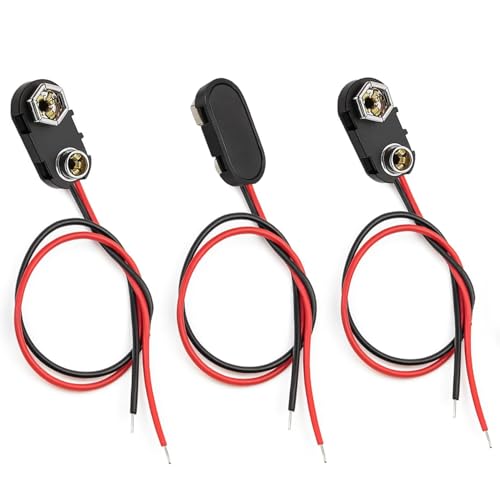
California JOS 3 Pack 9V Battery Clip Connector Hard Shell I-Type

Pack of 120 I-Type 9V Battery Connector with Hard Buckle Housing

Pack of 5 I-Type 9V Battery Connector with 22AWG Wire and Hard Housing

9V Battery Clip Connector Long Cable Soft Shell I-Type Black, Pack of 10

CHANZON UL Wires 5 Pack 9V Battery I-Type DC Connector Clip

5pcs 9V Battery Clip with 15cm Lead Wire I Type DIY Battery Buckle Connector
Why These Options Stand Out
A ten-pack of T-type connectors with UL-listed 24AWG pigtails gives hobbyists enough spares for a long stretch of builds. The 5.9-inch wire length lands in a sweet spot: long enough to reach a project box terminal, short enough to keep the build tidy. The hard ABS shell around the buckle resists the cracking that plagues softer clips after repeated battery changes, which matters during demo days when you’re swapping cells every few minutes.
Each clip terminates in a soft, tinned lead end that takes solder cleanly and accepts heat-shrink tubing without fraying. For Arduino prototyping, LED strip runs, and STEM kits, the bulk pricing spreads the cost across enough units that losing a clip no longer derails the whole project. The pure copper conductors inside the housing keep voltage drop minimal on low-current sensor circuits, so your readings stay honest.
Strong Points
- Ten-clip bulk pack suits multi-project workflows and classroom sharing
- Hard ABS shell stands up to repeated insertion and removal cycles
- UL-listed 24AWG pigtails provide flexibility without excess bulk
- Tinned copper leads accept solder cleanly and resist oxidation during storage
Things To Consider
- T-type layout requires extra clearance compared to slim I-type connectors
- 5.9-inch leads may fall short in tall enclosures where routing needs length
Key Specs
Who It Suits Best
Arduino hobbyists and LED strip builders stocking a workbench want a dependable ten-pack they can grab from without worry.
Where Another Pick Suits Better
The CHANZON UL Wires 5 Pack 9V Battery I-Type DC Connector Clip suits anyone who needs a pre-terminated DC male plug instead of bare leads.
Skip the soldering iron entirely with this I-type clip that ends in a standard 2.1×5.5mm DC barrel jack. The female connector plugs straight into any Arduino, Raspberry Pi, or development board that accepts barrel power, turning a loose 9V battery into a bench supply in seconds. The 5.9-inch cable gives enough reach to drape the battery off the edge of a workbench without tugging on the board.
Compared to the bare-lead clips above, this one’s job is convenience over versatility. You give up the freedom to solder the leads into a custom circuit, but you gain the speed of swapping power sources between projects. The hard plastic housing around the buckle holds up to repeated insertions, and the UL-listed cable jacket keeps insulation intact when the wire bends near the strain relief.
The Value In It
- Pre-attached DC jack removes soldering from the workflow
- Standard 2.1×5.5mm size fits most development board power inputs
- Five-clip pack covers multiple bench setups
Trade Offs
- Fixed connector limits use to barrel-jack-compatible devices
- Bulkier termination resists routing through tight project enclosures
Made For
Makers running plug-and-play Arduino or Pi setups who want battery power without reaching for the soldering iron.
Skip It When
Builds that demand custom wiring or tight panel-mount installation call for the CHANZON 9v Battery Clip Connector Holder T-Type instead.
Lab benches eat clips for breakfast, and this ten-pack of T-type connectors keeps the parts drawer full through a semester. The dipped-tin cable tails wick solder fast, which matters when students race through experiments and need quick, reliable joints. The hard plastic shell around the buckle keeps the contact pins aligned during the inevitable drops onto a tile floor.
For school electronics kits, the simplicity is the selling point. No DC jacks, no pre-terminated plugs, just a clean wire end that drops into a breadboard or terminal block. Compared to the CHANZON pack above, the build quality feels similar on the housing, though the cable jacket here is a touch thinner. For student work where the clip lives a few weeks and gets replaced, that’s plenty.
Points In Its Favor
- Ten-clip quantity handles full classroom sets with spares left over
- Tin-dipped wire ends flow solder quickly for fast lab work
- Hard shell holds contact pins straight through rough handling
Worth Noting
- No wire length or gauge listed, so check before assuming standard 15cm
- Soft cable jacket may kink at tight bend radii over time
Best Suited To
Electronics classrooms and lab instructors stocking kits for student experiment rotations.
Not Your Match When
The California JOS 3 PCS 9V Battery Connector T-Type suits a single hobbyist who only needs a handful of clips.
Three clips is the right size for a single project or a first repair job, and this T-type set keeps the inventory tight. The hard plastic shell survives beginner mistakes like yanking the battery out by the wire. Solder-dipped tails help newcomers get a solid joint without struggling to tin the conductors first.
For someone fixing an old multimeter or wiring a single guitar pedal, ten clips feels like overkill. The three-pack here trims the waste and keeps the parts bin organized. Compared to the California JOS I-Type version below, the T-type layout here gives you two leads splitting out of the buckle, which some legacy circuits actually need for vintage transistor radio replacements.
Everyday Wins
- Right-sized three-pack avoids cluttering drawers with extras
- Solder-friendly dipped tails speed up first-time repairs
- Hard shell forgives rough handling from new builders
Honest Caveats
- Small pack runs out fast for classroom or workshop use
- Safety guidance recommends clean, dry hands, which limits cold-weather soldering
Right Fit For
First-time tinkerers repairing one broken device or wiring a single weekend project.
A Better Fit Elsewhere
The VWEICYY T-Type 10 PCS works better for instructors buying in bulk for an entire classroom.
I-type clips pack a slimmer profile than T-type versions, which helps when you’re squeezing components into a small enclosure. This three-pack ships in an anti-static bag that protects the contacts during long storage between semesters, a detail classroom coordinators tend to appreciate. The hard shell keeps the buckle aligned through repeated battery swaps during a long Arduino unit.
Compared to the bulkier T-type California JOS option above, the I-type form factor trades a hair of mechanical rigidity for a tighter footprint. For STEM kits where students build, dismantle, and rebuild over weeks, that trade usually pays off. The tinned leads flow solder quickly enough that beginners can keep pace with the lesson plan.
A Few Highlights
- Anti-static packaging extends shelf life between projects
- I-type slim profile fits compact project enclosures
- Three-pack suits single-student STEM curriculum kits
Points To Keep In Mind
- Higher per-clip cost than bulk ten-packs for large classes
Who Should Grab It
STEM educators assembling single-student project kits with long storage windows between terms.
Reach For A Different Pick When
Mass classroom deployment calls for the (Pack of 120) I-Type 9V Battery Connector from LampVPath instead.
One hundred and twenty clips in a single box changes the math for repair shops and STEM warehouses. The hard ABS housing matches what you find in single-pack options, so quality stays consistent across every unit you hand out. Bare-lead wire ends land directly in breadboards or terminal blocks, which speeds up the kind of high-volume prototyping a workshop runs daily.
Bulk purchases like this only make sense when you actually move that many clips. For a single hobbyist, the inventory overflows the drawer fast. Where this pack shines is in school districts, maker spaces, and small electronics factories where one or two clips disappear every week. Compared to the five-pack LampVPath option further down, you’re paying for quantity, not convenience features.
Practical Advantages
- Workshop-scale quantity suits repair shops and STEM coordinators
- Consistent ABS housing across the full batch
- Bare leads drop straight into breadboards without modification
- Low per-unit cost when buying for classroom distribution
Room For Improvement
- Storage footprint grows once you crack the seal
- No color-coded leads to speed polarity identification at a glance
Key Specs
Whose Shelf It Belongs On
Repair shops, maker spaces, and district STEM warehouses distributing clips across many classrooms.
Swap It Out When
A hobbyist finishing a single build wants the LampVPath Pack of 5 with 22AWG wires for a friendlier wire gauge.
Red and black color-coded leads take the guesswork out of polarity, which speeds up wiring when you’re elbow-deep in a project. The 22AWG wire is a touch thicker than the 24AWG found on cheaper packs, which carries current more comfortably for sensor arrays and small motor circuits. The 5.9-inch lead length matches the industry standard and tucks neatly into most project boxes.
For hobbyists running a handful of builds per year, this five-pack hits a useful middle ground between single-clip waste and bulk overload. The hard ABS housing feels solid in hand and the buckle snap is firm without being stubborn. Compared to the bare-lead Teqooza option below, the pre-stripped color coding here saves a step during quick repairs.
The Practical Payoff
- Red and black color coding cuts polarity confusion on the bench
- 22AWG wire handles higher current than thinner 24AWG alternatives
- Five-clip pack balances quantity with hobbyist scale
Softer Spots
- Thicker wire can crowd tight breadboard rows
Perfect Match For
Weekend hobbyists running a few projects a year who value quick polarity identification over bulk savings.
Consider Something Else When
The Teqooza 9V-Battery Clip Connector Soft Shell I-Type suits users who want bare leads and don’t need color coding.
Bare wire ends mean you can skip the wire strippers during a quick repair, which is the whole point of this soft-shell I-type clip. The plastic housing still does its job protecting the buckle pins, just without the rigidity of ABS alternatives. For replacement jobs on existing devices with old solder joints, the soft shell flexes slightly under stress rather than cracking.
Owners commonly report the soft housing holds up fine for occasional swap cycles, though heavy daily insertion may wear the buckle faster than hard-shell options. The ten-pack quantity suits anyone running a small repair bench or stocking a parts drawer for emergencies. Compared to the CHANZON T-Type option at the top of the list, the soft shell here trades durability for a friendlier install experience.
Positive Points
- Bare lead design skips the stripping step during fast repairs
- Soft shell flexes under stress instead of cracking on impact
- Ten-pack quantity handles a small repair workload comfortably
Minor Gripes
- Soft housing may show wear faster than ABS under daily swap use
- No color coding on leads, so polarity takes a beat longer to verify
Built With In Mind
Repair bench operators replacing broken connectors on existing devices without pulling out extra gear.
Look Elsewhere When
Daily classroom battery swaps call for the harder-shell CHANZON T-Type ten-pack for longer service life.
A pre-attached 2.1×5.5mm DC male plug turns this clip into a portable bench supply for any device that accepts a barrel jack. The hard plastic housing measures slightly larger than the standard I-type form, which gives the buckle extra rigidity during frequent insertion cycles. The UL-listed cable jacket holds up to repeated flexing without cracking at the strain relief.
The five-pack quantity suits anyone running multiple bench setups, and the male plug orientation differs from the female-jack CHANZON option earlier in the list. Where that earlier pick works for powering a development board, this one works for injecting battery power into a finished device that already has a female barrel input. Compared to bare-lead alternatives, the convenience comes at a small price premium.
Standout Benefits
- Pre-terminated DC male plug drops into finished devices directly
- Larger buckle housing adds rigidity under daily use
- UL-listed cable jacket survives repeated flexing at the strain relief
A Few Limitations
- Male plug orientation limits use to devices with female barrel jacks
- Slightly larger buckle footprint crowds tight enclosure builds
Key Specs
The Right Fit
Bench technicians who want to inject portable 9V power into finished electronics without cracking open the housing.
Another Choice May Suit
The CHANZON Female DC Connector I-Type fits users who want to power a development board rather than a finished device.
The flexible 15cm lead wires on this I-type clip route around tight corners inside compact enclosures, which matters when you’re building custom electronics for drones, intercoms, or vintage radio repairs. The black plastic-and-metal construction matches the standard hard-shell form factor most hobbyists expect. Five clips per pack keeps the cost manageable for a one-off project.
Smoke alarms, wireless microphones, multimeters, and remote control toys all rely on this exact connector style, which gives you a sense of how broadly the form factor applies. The bare lead ends accept any standard soldering setup, and the wires flex without kinking at the strain relief. For DIY builders who already have a soldering station ready, this is a clean, no-frills workhorse.
Everyday Perks
- Flexible leads route easily around tight enclosure corners
- Standard form factor fits common household electronics repairs
- Five-pack quantity covers several DIY builds without excess
Where It May Fall Short
- Bare leads require stripping before use on some connections
- No brand reputation backing for long-term reliability claims
Who Will Love This
DIY builders repairing smoke alarms, intercoms, multimeters, and similar household electronics on a hobby basis.
A Better Fit Elsewhere
The LampVPath 22AWG Pack of 5 suits hobbyists who want color-coded leads and a thicker wire gauge for cleaner polarity checks.
What Matters Most Before Choosing 9v Battery Clips
Understanding Connector Form Factors
I-type and T-type clips describe how the leads exit the plastic buckle. I-type clips run both wires out one side of the housing, which keeps the connector slim for tight enclosures. T-type clips split the leads off opposite sides of the buckle, which some legacy circuits expect and which can simplify routing in larger project boxes. Match the form factor to your enclosure dimensions and your circuit’s existing lead exit points.
Wire Gauge and Length Trade-offs
24AWG wire covers most low-current sensor and microcontroller projects without voltage drop concerns. 22AWG carries current a little more comfortably for motor or LED array circuits but adds bulk that crowds breadboards. The standard 5.9-inch (15cm) lead length handles most bench setups, though compact wearable builds sometimes need shorter pigtails to keep the wiring tidy. Longer leads help when the battery holder sits away from the main circuit board.
Shell Material and Durability
Hard ABS plastic housings resist cracking during repeated battery swaps and rough handling. Soft shell versions flex under stress instead of breaking, which can extend service life in low-impact installations. For classroom or workshop environments where clips change hands often, hard shells usually outlast soft ones. Repair bench operators who swap batteries occasionally may not notice the difference.
Pre-Terminated vs Bare Leads
Bare lead clips require a soldering station or terminal blocks but offer maximum wiring flexibility. Pre-terminated DC barrel jacks (male or female) eliminate soldering entirely and work for plug-and-play Arduino or development board setups. The convenience comes at the cost of versatility, since the fixed connector limits you to compatible power inputs. Pick based on whether your workflow values speed or flexibility.
Key Considerations Across These Picks
Pitfalls Shoppers Hit
The most common mistake is grabbing a T-type clip when the project needs an I-type, or vice versa. Connector geometry affects how the clip seats against the battery and where the leads exit, so mismatches create routing headaches that force rewiring. Another trap is assuming all 9V clips ship with the same wire length; some packs ship shorter leads that don’t reach deep enclosures. Always confirm the form factor and lead length match your project’s physical layout before committing to a pack size.
Where The Extra Money Goes
Premium clips justify higher pricing through UL-listed cable jackets, which resist heat and flex damage better than generic PVC insulation. Hard ABS housings cost a touch more than soft plastic alternatives but survive classroom abuse. Pre-terminated DC plugs add convenience but lock you into a specific connection style, so the upgrade pays off only when your workflow actually uses barrel jacks. For a basic repair or hobby build, the value packs cover the job just fine.
Frequently Asked Questions
What is the difference between I-type and T-type 9V clips?
I-type clips exit both wires from the same side of the buckle housing, which keeps the connector slim. T-type clips split the leads off opposite sides, which some legacy circuits require for proper lead routing.
Can I solder directly to a 9V battery clip?
Yes, bare lead clips accept standard soldering with a typical 60/40 lead-tin rosin-core setup. Pre-tinned or dipped leads flow solder faster than bare copper, so they help beginners get clean joints.
How long do 9V battery clips typically last?
Hard ABS shell clips commonly last through years of regular hobby use. Soft shell versions may show housing wear after heavy daily insertion cycles, though the electrical contacts tend to outlast the plastic in either case.
Are pre-terminated DC connector clips worth the extra cost?
For development board power, the convenience of skipping soldering justifies the premium. For custom circuits that need specific wiring layouts, bare lead clips give you more flexibility at a lower cost.
What wire gauge is best for 9V projects?
22AWG handles slightly higher current loads and resists breakage better during flexing. 24AWG works fine for typical sensor and microcontroller projects and stays more flexible in tight spaces.
Closing Remarks
The right 9V clip comes down to matching the connector geometry, wire length, and termination style to your specific project. Stock a small assortment if you build across multiple categories, and reach for bulk packs only when you actually move that volume. Pick the option above that lines up with how you work, and your projects will stay powered up without a single dead connection.