A 300 amp hour lithium battery can quietly transform how you live off-grid, run a cabin, or push a golf cart through a long weekend. The trade-off is that lithium iron phosphate (LiFePO4, a lithium battery chemistry known for thermal stability and long cycle life) varies wildly between brands, and the wrong pick leaves you short on capacity or stuck in cold weather. The lineup below covers deep-cycle house banks, drop-in RV replacements, trolling motor setups, and powersports starters, so you can match the right cell count to your actual use case.
How The Shortlist Stacks Up

12V 300AH Deep Cycle LiFePO4 Lithium Battery (Self-Heating & APP Monitoring)

12.8V 300Ah Self-Heating LiFePO4 Lithium Battery with APP Monitoring

48V Lithium Battery Golf Cart Batteries Kit

Redodo 12V 100Ah LiFePO4 Battery, Group 31, for RV, Marine

Redodo 2 Pack 12V 100Ah RV LiFePO4 Battery, Group 31, Bluetooth

Redodo 12V 165Ah LiFePO4 Battery, Bluetooth, Group 31, for RV, Marine
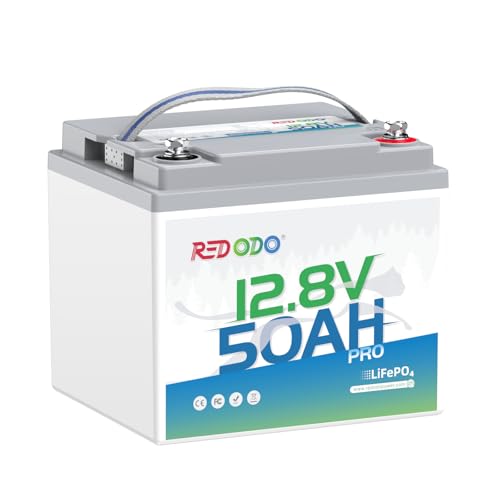
Redodo 12V 50Ah Trolling Motor LiFePO4 Battery, for Marine, RVs

TYKOOL LFP9-BS-STD Lithium Powersports Battery 240CCA 4Ah Digital Volt Readout IP66

TYKOOL LFP14-BS-STD Lithium Battery 400CCA 8Ah with Digital Readout
A Deeper Look At The Lineup
Cold-weather charging is where most lithium banks let you down, and this VATRER POWER unit tackles that head-on. The internal BMS (battery management system, the onboard circuit that protects cells from overcharge, over-discharge, and temperature extremes) continuously watches cell temperature, and once the pack drops below freezing while a charger is pushing more than 10 amps, an internal heating film kicks in to warm the cells before normal charging resumes.
That makes this 12V 300Ah block a strong match for off-grid cabins, van builds in northern climates, and anyone storing gear in an unheated shed. Owners commonly report pairing it with solar arrays and inverters, leaning on the companion phone app to keep an eye on state of charge from indoors.
Advantages To Know
- Automatic low-temperature heating protects cells from freeze damage during charging
- 300Ah capacity translates to roughly 3.8 kWh of usable stored energy per unit
- Bluetooth app gives remote visibility into voltage, current, and temperature
- Drop-in form factor for most 12V deep-cycle enclosures
- LiFePO4 chemistry delivers a long service life versus flooded lead-acid
Things To Consider
- Heating function only activates during active charging, not while discharging in the cold
- Heavy class of pack, so plan mounting and lift assistance before install
- App connectivity relies on staying within Bluetooth range of the unit
Who Will Love This
Anyone running an off-grid system or van build in regions where winter temperatures regularly drop below freezing.
A Better Fit Elsewhere
For a pure summer cabin in a warm climate without sub-zero stretches, the VATRER POWER 12.8V 300Ah Self-Heating LiFePO4 offers similar capacity without paying for the heating hardware you will rarely use.
The sibling to the first VATRER POWER entry shifts the focus from cold-weather charging to raw longevity. The chemistry is rated for thousands of full discharge cycles, which is the kind of spec that pays off for daily-cycled solar arrays or full-time RV house banks that get pulled to low states of charge on a regular basis.
Compared with the previous VATRER POWER pick, this one targets users who care more about long-term durability than the heating feature alone. In most installations you will see it land in a battery box behind a vented panel, with the companion phone app serving as the dashboard for state of charge and cell health.
Noteworthy Benefits
- High cycle rating at deep depth of discharge for daily solar cycling
- Lightweight relative to the lead-acid banks it typically replaces
- Integrated Bluetooth telemetry cuts down on guesswork
- Standard 12V nominal output drops into common inverter and charger setups
Points To Note
- Self-heating only engages while charging, so stored discharge in freezing conditions is still limited
- Total weight is significant for a single block, requiring solid mounting
Feature Snapshot
Best Suited To
Full-time RVers and off-grid solar users who cycle their bank deeply on most days and want a long service horizon.
Reach For A Different Pick When
If your power demand is modest and you want the smallest possible footprint, the Redodo 12V 50Ah Trolling Motor LiFePO4 Battery is easier to lift and install.
Most of this list targets 12V banks, but the Mehrpow kit solves a different problem entirely: dropping a complete 48V lithium pack into a golf cart in a single afternoon. It is built around grade-A prismatic LiFePO4 cells (large-format lithium cells known for high energy density and long cycle life) with balanced voltage across the pack, and the wiring is laid out as plug-and-play rather than a custom fabrication job.
For cart owners tired of watering flooded batteries every month, this is a meaningful upgrade. You may find the real payoff on long courses or hilly terrain where a 48V lithium pack holds voltage far better under load than a tired lead-acid bank.
The Good Stuff
- Complete 48V system removes the guesswork of mixing cells and BMS components
- Deep cycle rating at 80 percent depth of discharge extends usable range per outing
- Plug-and-play harness simplifies installation for first-time converters
- Higher sustained voltage under load versus aging lead-acid banks
Honest Caveats
- Hazmat-shipping regulations mean this item is non-returnable in most cases
- You will want to confirm physical dimensions against your cart’s battery tray before ordering
Built With In Mind
Cart owners seeking a turnkey lithium conversion who do not want to source cells, BMS, and wiring separately.
Where Another Pick Suits Better
For a 12V house-bank application like a camper or boat, the Redodo 12V 165Ah LiFePO4 Battery is a better form factor and voltage match.
Group 31 is the standard battery case size that most RV and marine battery trays were designed around, and Redodo leans directly into that compatibility. The 100Ah capacity lands as a true drop-in replacement for the lead-acid banks that came from the factory, freeing up usable amp hours without forcing a tray modification.
For weekend warriors running modest loads like LED lighting, a water pump, and a small inverter, this is the right scale. Compared with the larger 300Ah VATRER POWER units, you trade total capacity for a much friendlier install weight.
Useful Touches
- Standard BCI Group 31 case drops into factory battery trays (BCI refers to Battery Council International, which sets standardized battery case dimensions)
- Automotive-grade LiFePO4 cells balance cycle life with safety
- Low self-discharge rate holds charge during long storage stretches
- Lightweight relative to the lead-acid battery it replaces
Trade Offs
- 100Ah may feel small for users running an RV air conditioner overnight
- Requires a lithium-compatible charger or profile for full cycle life
Right Fit For
RV and boat owners replacing a tired Group 31 lead-acid bank with a lithium drop-in for moderate weekend loads.
Consider Something Else When
For higher energy needs in the same Group 31 footprint, the Redodo 12V 165Ah LiFePO4 Battery packs significantly more capacity into the same case.
If a single Group 31 leaves you short, this Redodo twin pack stacks to 200Ah while staying inside the same standardized case format. The pair is sold and shipped as a matched set, which removes the worry of mixing cells from different production batches.
Bluetooth monitoring on each unit means you can check state of charge from inside the cab or galley. In our view, this is the most flexible configuration for RV owners who want to start with one battery today and add a second later if their power needs grow.
A Strong Showing
- Matched pair eliminates cell-mismatch concerns from the start
- Bluetooth on each pack for independent state-of-charge tracking
- Standardized Group 31 footprint keeps installation straightforward
- Parallel-friendly design scales to 200Ah or more if needed
Worth Noting
- Heavier combined weight, so plan a sturdy mount or battery box
- Items may ship separately and arrive at different times due to size limits
Perfect Match For
RV owners scaling up from a single 100Ah house battery to a 200Ah bank without redesigning their battery compartment.
Skip It When
For a single-battery setup with tighter space, the standalone Redodo 12V 100Ah LiFePO4 keeps the install lighter and simpler.
This is the capacity-dense sibling to the standard Redodo 100Ah unit. By squeezing 165Ah into the same Group 31 footprint, Redodo gives you roughly 2.1 kWh per battery, enough headroom for an RV roof air conditioner or a marine trolling setup without doubling your battery count.
Compared with the previous twin-pack Redodo entry, this single-block approach trades the flexibility of expansion for a tidier install. The 165A BMS supports the high continuous draw that compressor-driven appliances demand.
Everyday Advantages
- 65 percent more capacity than a standard 100Ah Group 31 in the same case
- High continuous discharge rating supports inverter-driven loads like coffee makers and air conditioners
- Bluetooth app simplifies state-of-charge checks without a shunt install
- LiFePO4 chemistry holds voltage steady as the pack drains
Some Limits To Know
- Single block price point climbs higher than a 100Ah alternative
- Confirm your charger profile supports the higher-capacity lithium charge curve
Feature Snapshot
Whose Shelf It Belongs On
RV and marine owners running high-draw accessories like rooftop air conditioners who need maximum capacity in a single Group 31 slot.
Not Your Match When
For lighter weekend loads, the Redodo 12V 100Ah LiFePO4 Battery offers enough capacity at a lower tier.
Not every boating or RV setup needs a 300Ah brick. This 50Ah Redodo pack trims weight and bulk for kayak anglers, jon-boat trollers, and small RV trailers where carrying a heavy bank just to power a fish finder and a couple of lights feels like overkill.
At roughly one-third the weight of a comparable lead-acid trolling battery, the install becomes a one-person lift. It also delivers nearly the full 50Ah as usable capacity, since LiFePO4 can be drawn down further than flooded cells without damage.
Reasons It Performs
- Manageable weight for kayak, canoe, and small-boat installations
- Higher usable capacity than a same-rated lead-acid trolling battery
- Long cycle rating suited to frequent deep discharges from trolling motors
- Compact footprint fits tight battery compartments
A Few Limitations
- 50Ah will not power an RV air conditioner or large inverter for long
- May require a dedicated lithium-profile charger for full cycle life
Feature Snapshot
Who Should Grab It
Anglers and small-boat owners who want a manageable lithium trolling battery without the weight penalty of larger deep-cycle banks.
Look Elsewhere When
For a full-size pontoon or bay boat with a higher-thrust trolling motor, the Redodo 12V 165Ah LiFePO4 Battery gives you the runtime headroom you actually need.
Shifting away from deep-cycle house banks, this TYKOOL powersports battery fills the YTX9-BS form factor (a standardized case size used across many sport bikes and ATVs) with lithium chemistry, delivering 240 CCA (cold cranking amps, a measure of the battery’s ability to deliver a burst of current to start an engine in cold conditions) in a much lighter package than the lead-acid it replaces.
The IP66 rating (an ingress protection standard indicating dust-tight construction and resistance to powerful water jets) tells you the case can handle wet weather and the occasional wash-down, while the integrated digital volt readout on top lets you check resting voltage at a glance. Compared with the larger deep-cycle entries on this list, this is a specialized starting battery, not a house bank.
Strengths Worth Knowing
- Direct YTX9-BS replacement for many sport bikes and dual-sport machines
- Significant weight reduction over stock lead-acid batteries
- IP66 sealing for weather and wash-down resistance
- Onboard volt readout simplifies at-a-glance state-of-charge checks
Where It May Fall Short
- Not designed for deep-cycle house-bank use; this is a starting battery
- Some bikes may need a charging-system check after switching to lithium
Made For
Riders on mid-displacement sport and naked bikes who want a lighter, weather-sealed lithium replacement for the stock YTX9-BS.
Another Choice May Suit
For larger twins and adventure bikes needing more cranking headroom, the TYKOOL LFP14-BS-STD 400CCA 8Ah battery steps up the output.
The bigger sibling in the TYKOOL powersports range targets machines with larger displacement engines, including ATVs, UTVs, and adventure tourers that demand more cranking amps at startup. The 400 CCA rating gives a comfortable margin even on cold morning starts, and the case mirrors the common YTX14-BS dimensions.
Compared with the LFP9-BS-STD above, you trade a little extra weight for noticeably stronger starting power. You may find the reduced mass versus a lead-acid YTX14 especially welcome on backcountry rides where every pound affects how the bike handles rough terrain.
Bright Spots
- 400 CCA comfortably supports larger-displacement engines
- Substantial weight savings over stock YTX14 lead-acid batteries
- Direct fitment for many ATV, UTV, and adventure-touring applications
- Digital readout on top for quick voltage confirmation before a long ride
Potential Drawbacks
- Higher tier than entry-level bikes actually need
- Lithium batteries can require a periodic top-off charge during long storage
Who It Suits Best
Adventure riders and ATV owners running larger-displacement engines who want lighter weight and stronger cold-start performance than stock lead-acid offers.
Swap It Out When
For a smaller commuter or naked bike, the TYKOOL LFP9-BS-STD 240CCA battery matches the case size and saves on unnecessary cranking headroom.
What To Weigh Before Choosing A 300 Amp Hour Lithium Battery
Capacity Versus Footprint
Capacity in amp hours tells you how much energy a battery stores, but it does not tell you whether the case will actually fit your battery tray, boat console, or RV compartment. Always cross-check dimensions against your existing space before ordering, especially with non-standard 300Ah packs that often run larger than a typical Group 31. If the unit does not drop into the existing hardware, you may end up fabricating new mounts, which adds cost and time.
Cold Weather Behavior
Lithium cells do not accept a charge below freezing without protection, and a plain LiFePO4 pack stored in an unheated shed in winter can refuse input from your solar array. Models with low-temperature charging protection or internal heating elements solve this directly. If your installation sits in a climate that drops below 32°F during charging season, factor that protection in rather than treating it as an upgrade.
Cycle Life And Depth Of Discharge
A LiFePO4 cell rated for several thousand cycles at a stated depth of discharge (the percentage of total capacity you actually use per cycle, often abbreviated DOD) is only telling you part of the story. A battery cycled daily to 80 percent DOD will reach end-of-life far sooner than one gently cycled to 50 percent, even if both sit in identical hardware. Match the rated DOD to how deeply you actually plan to draw the bank, not to the optimistic marketing number.
Charging Compatibility
Most legacy lead-acid chargers will push a lithium bank to roughly 80 percent and then plateau, leaving usable capacity stranded. Confirm your charger, alternator, or solar charge controller has a lithium or customizable profile before relying on the new pack. Skipping that step tends to be the single most common reason new lithium banks underperform expectations.
Smart Buying Advice For 300 Amp Hour Lithium Battery Shoppers
Where Shoppers Go Wrong
The most common slip-up is buying capacity the install cannot physically support, then discovering the heavier brick does not fit the original tray. Another mistake is ignoring charging compatibility and assuming any old converter will top off a lithium bank properly. Before ordering, measure your space, confirm your charger’s profile, and decide whether cold-weather protection matters for your climate.
What The Higher Tier Buys
Paying more for a premium 300Ah pack typically buys tighter cell matching, a more robust BMS with higher continuous discharge, and extras like Bluetooth telemetry or low-temperature heating. Those upgrades pay off for daily-cycled solar arrays, RV air-conditioner loads, and any installation that runs near the battery’s continuous output limit. For occasional weekend use at modest loads, a standard Group 31 lithium pack handles the job without the premium.
Frequently Asked Questions
What Is A 300 Amp Hour Lithium Battery Used For?
A 300 amp hour lithium battery is most commonly used as a deep-cycle house bank for off-grid solar systems, RVs, boats, and cabin power setups, where it stores energy from solar panels or shore charging for use overnight. The 300Ah rating translates to roughly 3.8 kWh of usable stored energy per unit, which can run LED lighting, a fridge, and small electronics for extended stretches.
How Long Does A 300Ah Lithium Battery Last On A Single Charge?
Runtime depends entirely on what you draw from it, but a 300Ah battery powering a 10-amp continuous load would last around 30 hours before needing a recharge. Running a higher-draw appliance like a 1000W inverter shortens that dramatically, while lighter loads like a few LED lights and a phone charger stretch it for days.
Can A 300Ah Lithium Battery Replace A Lead-Acid Battery Directly?
Most 300Ah LiFePO4 packs are designed as drop-in replacements for lead-acid banks of similar capacity, but the charging system must support a lithium profile to actually fill the pack. Older converters and alternators often stop short of a full charge when connected to lithium, so swapping your charger at the same time is commonly recommended.
Is It Safe To Leave A Lithium Battery Charging Overnight?
Quality 300Ah LiFePO4 batteries include a built-in BMS that protects against overcharge, so leaving the pack connected to a properly configured charger overnight is generally fine. The battery management system stops accepting current once the cells reach full charge, and reputable chargers transition to a float or storage stage automatically.
How Cold Is Too Cold For A Lithium Battery?
Standard LiFePO4 cells should not be charged below 32°F, since charging at sub-freezing temperatures can damage the cells. Discharging in cold weather still works but with reduced capacity. Packs with built-in low-temperature heating or charging protection solve this directly, allowing safe charging in sub-freezing conditions.
The Takeaway
The right pick comes down to matching capacity, case size, and climate features to your actual setup, whether that is a 300Ah off-grid bank, a Group 31 RV house battery, or a lithium starter for your bike. Start with the form factor that fits, then layer on the features your installation actually demands. A well-matched battery should disappear into the background and just keep delivering power season after season.