Anyone running a multi-battery boat knows the slow creep of dead cranking amps after a long weekend on the water. The right onboard charger turns that anxiety into a non-issue, topping each bank independently while you sleep. This list walks through eight solid options that handle the wet, the salt, and the multi-chemistry reality of modern marine rigs.
The Leading Options At A Glance

Minn Kota Precision MK-318PCL On-Board Marine Battery Charger
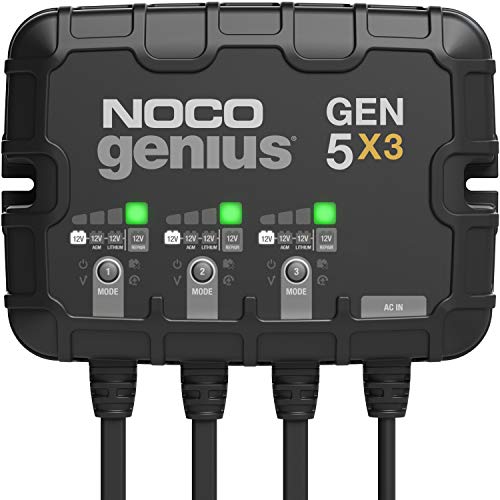
NOCO GEN5X3 12V 15A 3-Bank OnBoard Marine Battery Charger
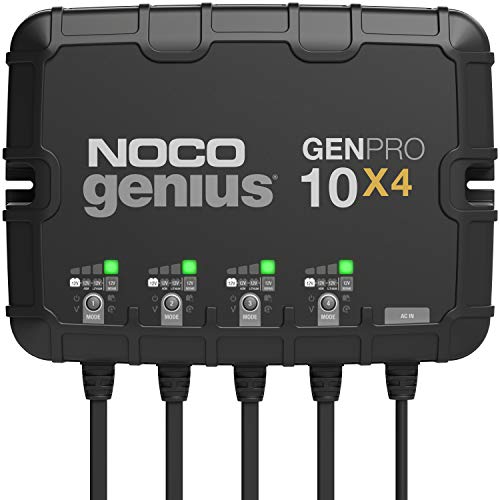
NOCO GENPRO10X4 12V 40A 4-Bank OnBoard Marine Battery Charger
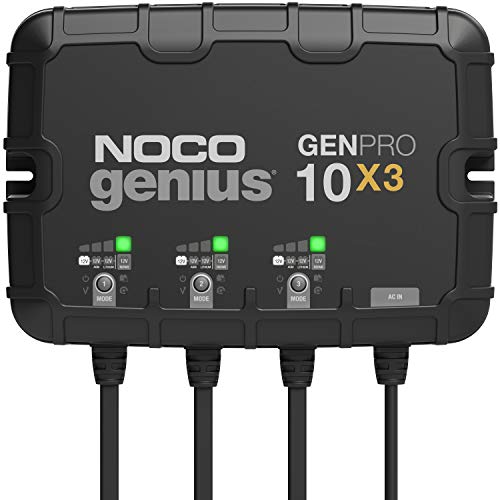
NOCO GENPRO10X3 12V 30A 3-Bank OnBoard Marine Battery Charger

Minn Kota 1823305 MK 330D Digital On-Board Marine Battery Charger
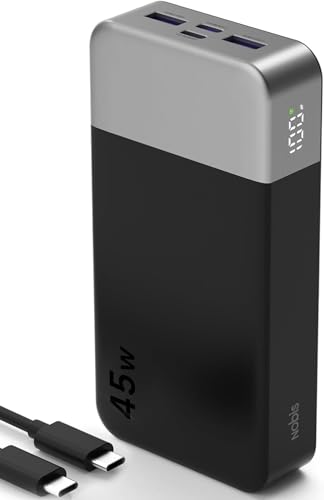
NOBIS 45W 20000mAh Portable Charger Power Bank

NOBIS Portable Charger 20000mAh Power Bank 45W
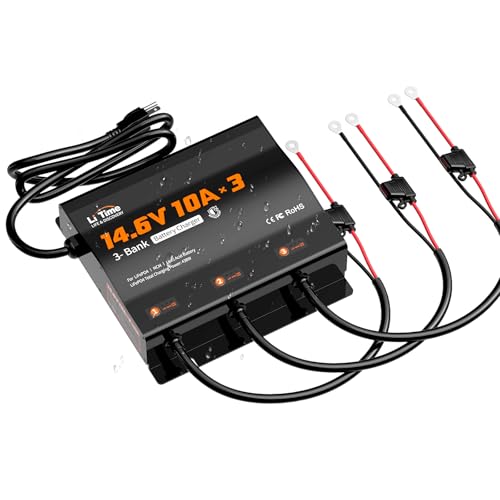
LiTime 3 Bank 12V 10A LiFePO4 Battery Charger Waterproof
More On The Choices That Made The List
Multi-chemistry boats get awkward fast when the house bank is AGM and the starter is a lithium LiFePO4 drop-in. The Minn Kota Precision MK-318PCL solves that by letting you select the battery type for each of its three banks independently, so the right charge curve hits the right battery every time. Six amps per bank is a modest rate, which is enough for overnight top-ups but may feel leisurely for very large house banks.
On a center console with a trolling motor up front and accessories in the back, this unit sits quietly in the bilge and just works. The digital multi-stage control monitors voltage and current throughout the cycle, and automatic temperature compensation adjusts for hot engine rooms or cold early-spring launches. Compared to the NOCO GEN5X3 that follows, this one trades raw amps for finer per-bank control.
The Good Stuff
- Independent chemistry selection per bank, including LiFePO4 support
- Microprocessor-controlled multi-stage charging for safer fills
- Temperature-compensated output handles fluctuating dock power
- Three independent banks mean no fighting over current between batteries
Trade Offs
- Six amps per bank is slower than the 10-amp alternatives on this list
- Larger and heavier than sealed units like the NOCO GEN5X3
- Mounting footprint requires planning in tight bilge spaces
Quick Facts
Who It Suits Best
Anglers with mixed AGM and lithium banks on a mid-size fishing rig.
Consider Something Else When
You need faster turnaround than six amps per bank offers, in which case the NOCO GENPRO10X3 delivers 10A per bank.
Skiffs, tenders, and small runabouts don’t have room for a chunky charger block, and the NOCO GEN5X3 answers that with a fully sealed, waterproof housing that shrinks down compared to older NOCO models. Fifteen amps split across three banks means five amps per bank, which is honest rather than aggressive. For weekend warriors running one starter and two accessory batteries, that’s usually plenty.
Each bank operates independently, so a deeply discharged trolling motor battery doesn’t starve the others. The unit is also designed for harsh marine environments with a closed case that resists moisture intrusion. Where the Minn Kota Precision MK-318PCL offers finer per-bank chemistry menus, this one prioritizes a smaller, tougher package.
Strengths Worth Knowing
- Sealed, waterproof housing for rough marine environments
- Smaller footprint than previous-generation NOCO units
- Independent bank operation prevents current stealing
- Compatible with lead-acid and lithium-ion batteries
Worth Noting
- Five amps per bank is light for large house banks
- Cable length and accessory layout may require planning in tight lockers
Made For
Boaters with compact rigs who value a sealed, low-profile install over high amperage.
Where Another Pick Suits Better
Rigs with serious house banks and faster charging needs will do better with the LiTime 3 Bank 12V 10A LiFePO4 Battery Charger.
When the boat has a house bank plus a starter plus a trolling circuit plus a bow-mounted accessory, three banks stop being enough. The NOCO GENPRO10X4 stretches to four banks while pushing 10 amps per channel, so the totals really do add up. It’s the kind of charger that lives on a 30-foot-plus cruiser or an offshore fishing platform where electrical demands stack up fast.
Compared to the 3-bank units earlier in this list, the housing is larger and you give up some install flexibility, though it still runs smaller than the previous NOCO generation. Sealed construction keeps spray and dust out, and the unit works with both lead-acid and lithium chemistries. For most recreational boats this is overkill, but for the right setup it earns its keep.
The Practical Payoff
- Four independent banks cover complex multi-battery setups
- 10 amps per bank shortens recharge windows on big house banks
- Sealed housing handles engine-room heat and moisture
- Works across flooded, AGM, gel, and LiFePO4 chemistries
Potential Drawbacks
- Total output requires a circuit that can supply sustained 40A charging loads
- Physical size is significant for smaller bilge compartments
- Higher cost than 3-bank alternatives
Quick Facts
Best Suited To
Owners of larger boats with four distinct battery circuits who can use the extra capacity.
Skip It When
Your boat genuinely runs three banks and you don’t need the fourth channel, in which case the NOCO GENPRO10X3 covers you at lower cost.
The NOCO GENPRO10X3 hits a sweet spot for serious recreational anglers who want three banks and don’t want to wait around for them to fill. Ten amps per bank adds up to 30 amps of total output, which moves meaningful current into mid-size house banks overnight. The housing is fully sealed and waterproof, smaller than the previous NOCO generation.
For someone whose Minn Kota Precision MK-318PCL has started feeling sluggish, this is the natural upgrade path. You trade the bank-by-bank chemistry selector for higher amps and a tougher sealed enclosure. Each bank still operates independently, so a deeply discharged starting battery won’t hold the others back. In a saltwater bay boat with a 24V trolling system and a house bank, this charger tends to disappear into the routine.
Useful Strengths
- 10 amps per bank for quicker turnarounds on bigger batteries
- Sealed waterproof design stands up to splash and spray
- Compact relative to earlier NOCO 3-bank units
- Supports lead-acid and lithium chemistries including LiFePO4
Some Limits To Know
- 10A per bank can overwhelm very small batteries if left unattended
- Fewer chemistry curves than the Minn Kota Precision line
- Requires adequate shore-power amperage to deliver full output
Perfect Match For
Boaters who run three sizable banks and value charge speed over granular chemistry menus.
Look Elsewhere When
You run a fourth dedicated battery circuit, since the NOCO GENPRO10X4 covers four banks instead of three.
The Minn Kota MK 330D is one of those chargers that just keeps showing up on trailers and in bilges year after year. Three banks at 10 amps each give the same total throughput as the newer NOCO GENPRO10X3, but in a familiar digital platform that’s been refined over many production runs. It uses a microprocessor-based design that monitors voltage and current through each charging stage.
Automatic temperature compensation adjusts the output for changing conditions, so a hot summer afternoon in a covered slip won’t push the voltage too high. Owners commonly report the unit running for years without issues, though its housing is not the sealed waterproof style of the latest NOCO units. If you’ve had a good run with Minn Kota products before, this one slots right into that comfort zone.
Where It Delivers
- 10 amps per bank for solid overnight recovery on most banks
- Microprocessor-controlled charging for accurate voltage management
- Automatic temperature compensation adjusts to ambient conditions
- Long-running platform with proven reliability
Areas To Watch
- Housing is not fully sealed like the latest NOCO waterproof units
- Mounting footprint is sizeable for tight bilge compartments
- No native LiFePO4 charge curve compared to the Precision line
Who Should Grab It
Boaters with traditional lead-acid banks who want a proven, long-running 3-bank charger.
Swap It Out When
You run lithium LiFePO4 batteries and want chemistry-specific curves, which the Minn Kota Precision MK-318PCL handles natively.
Boat electronics don’t stop at the batteries that turn over the engine. Phones, chartplotters, tablets, and handheld VHF radios all need to stay topped up, and that’s where a USB-C portable power bank earns its spot in the gear bag. The NOBIS 45W unit packs 20,000mAh with a 45W output, enough to fast-charge most modern smartphones and refill itself in around two hours through USB-C.
This is not a substitute for a hardwired marine charger like the Minn Kota Precision MK-318PCL, but it complements one nicely. Toss it in a dry bag for long runs, kayak trips, or marina days where dock power isn’t available. Compared to the LiTime 3 Bank unit further down, this is a totally different tool: shore power for personal devices rather than the boat’s main electrical system.
What Helps Most
- 45W output fast-charges most modern phones and small devices
- 20,000mAh capacity covers several full phone recharges
- USB-C bidirectional charging refills the bank quickly
- Compact enough to slip into a dry bag or console storage
Practical Considerations
- Not a replacement for a hardwired 3-bank marine charger
- Capacity drops in cold weather, which matters on winter trips
Right Fit For
Boaters who need portable power for phones and personal electronics away from shore power.
Reach For A Different Pick When
You actually need to charge the boat’s house, starter, and trolling batteries, in which case the Minn Kota MK 330D handles that core job.
This second NOBIS unit carries the same 20,000mAh capacity and 45W fast charging output as its sibling earlier in the list, packaged for travel and emergency backup. USB-C bidirectional charging means a 2-hour refill from a wall adapter, which is fast for a pack this size. It’s the kind of unit you leave in a travel bag so a dead phone never ruins a launch day.
The unit works well for tablets, e-readers, and handheld electronics that show up at the dock or the campsite. It does not interact with the boat’s battery banks at all, so think of it as a shore-side companion rather than onboard charging infrastructure. Boaters who already have a NOCO GENPRO10X3 wired in will find this a natural supplement for personal devices.
The Value In It
- High 45W output handles phones, tablets, and small laptops
- USB-C port supports bidirectional fast charging
- Refills in roughly 2 hours from a USB-C wall adapter
- Solid capacity for multi-day trips off the grid
Where It Is Less Suited
- Cannot replace a hardwired marine charger for boat batteries
- Airline carry-on rules may restrict 20,000mAh packs on some flights
Whose Shelf It Belongs On
Travelers and boaters who want USB-C fast charging for personal electronics between trips.
A Better Fit Elsewhere
Anyone focused on charging the boat’s starter and house banks should look at the Minn Kota MK 330D instead.
Boats that have gone fully lithium need a charger that speaks LiFePO4 fluently, and the LiTime 3 Bank unit does just that. It outputs 14.6V, the absorption voltage that LiFePO4 packs actually need to reach a full state of charge, rather than the 14.4V profile many universal chargers settle for. Three banks at 10 amps each add up to 30 amps of focused lithium charging.
The waterproof housing suits open boats and saltwater duty, where splash and spray are a constant reality. Compatibility extends to AGM, gel, and traditional flooded batteries, so a transitional setup still works while you migrate banks over. Compared to the Minn Kota MK 330D, this LiTime unit is purpose-built for the lithium crowd and skips some of the older lead-acid-only thinking.
Standout Benefits
- 14.6V output reaches the proper full-charge voltage for LiFePO4
- Waterproof construction handles harsh marine environments
- 10 amps per bank for reasonable lithium pack recovery
- Compatible with multiple chemistries during transitional setups
Honest Caveats
- Bulkier than the compact NOCO GEN5X3 sealed units
- Less common brand recognition than Minn Kota or NOCO in dealer networks
At A Glance
Built With In Mind
Boaters running all-lithium banks who want chemistry-correct charging from a sealed unit.
Where A Sibling Pick Shines
Mixed AGM and lithium banks pair better with the Minn Kota Precision MK-318PCL’s bank-by-bank chemistry selection.
What Matters Most Before Choosing 3 Bank Onboard Battery Chargers
Match Output To Your Bank Sizes
Amperage per bank is the number that decides how fast you’ll be back on the water. A small starter battery feels no difference between 5A and 10A, but a 200Ah house bank absolutely does. For most recreational setups, 10A per bank is the comfortable middle: fast enough to recover overnight, gentle enough to avoid cooking smaller packs. If your banks are tiny or you’re topping up between short trips, a 5A-per-bank unit like the NOCO GEN5X3 will do the job without over-stressing the batteries.
Decide How Independent Each Bank Needs To Be
Three banks that share a single charging circuit often shortchange the deepest-discharged battery. Truly independent banks, like those on the Minn Kota Precision MK-318PCL or the LiTime 3 Bank unit, let one deeply cycled house battery pull full current without starving the starter. That independence also matters when banks are different chemistries, because the charger needs to apply the right curve to each one separately.
Think About The Install Environment
Sealed waterproof housings earn their place in open boats, center consoles, and any spot where splash or hose-downs happen. Vented housings like older Minn Kota designs run cooler and lighter but want a drier bilge. Mounting footprint matters too, especially on smaller craft where a chunky charger can crowd wiring and batteries. Measure the space before falling for the highest-amp option, since a charger that doesn’t physically fit won’t get used.
Plan For The Chemistry You Have, And The Chemistry You’re Moving To
Right now, many boats run AGM or flooded lead-acid. Over the next few seasons, more will add at least one LiFePO4 drop-in for the trolling or house bank. Chargers like the Minn Kota Precision MK-318PCL, with per-bank chemistry selection, cover that transition cleanly. All-lithium boats can pick a chemistry-specific unit like the LiTime 3 Bank charger and skip the universal menus altogether.
Key Considerations Across These Picks
Wrong Turns To Avoid
A common slip is matching charger amperage to the dock outlet rather than to the batteries. A 15-amp shore circuit can’t supply a 40-amp charger at full tilt, so the unit simply runs longer without harm, but you paid for capability you can’t use. The other trap is choosing a vented-style housing and mounting it where spray or rain can reach it, which shortens component life. Match the housing to the install spot, and confirm the shore-power circuit can keep up.
When Paying More Pays Off
Spending up usually buys one of three things: faster recovery, better sealing, or finer per-bank chemistry control. A premium unit like the NOCO GENPRO10X4 covers four banks at full output for offshore setups, while the Minn Kota Precision MK-318PCL earns its premium through chemistry-specific charge curves. Both are worth the upgrade when the boat actually needs those capabilities. Paying extra for a feature the boat never exercises is the one scenario where premium doesn’t pay off.
Frequently Asked Questions
How many amps per bank do I actually need?
For typical Group 27 or Group 31 starter batteries, 5A to 10A per bank handles overnight recovery well. Larger house banks over 150Ah benefit from 10A per bank so you don’t wait two nights for a full charge. Smaller accessory banks are comfortable with even less.
Can one charger really handle three different battery chemistries?
Yes, but only if the charger offers independent bank control. Units such as the Minn Kota Precision MK-318PCL let you set each bank to its own chemistry, including LiFePO4 on one and AGM on another. A charger without that flexibility is best used on banks of the same type.
Do I need a waterproof housing for an inland lake boat?
You still want splash resistance at minimum. Even on a freshwater lake, condensation, rain, and the occasional wash-down reach the bilge. A sealed housing like the NOCO GEN5X3 adds margin for any environment.
How long does it take to charge a typical house bank?
A 100Ah AGM house bank at 50% depth of discharge needs roughly 5 hours on a 10A-per-bank charger, assuming full absorption time. Lead-acid banks also need a float stage, so plan on leaving the charger connected overnight rather than expecting a quick top-up.
Can I use a portable power bank to charge my boat batteries?
No. Power banks like the NOBIS 45W unit are designed for USB devices, phones, and tablets. Marine cranking and house batteries need a dedicated onboard charger with proper voltage regulation and multi-stage profiles to charge safely.
The Takeaway
A solid 3 bank onboard charger is the difference between waking up to a dead trolling motor and waking up ready to fish. Match the amperage, chemistry support, and housing to your specific boat, and the rest of the routine takes care of itself. Pick the unit that fits your banks and your install spot, and you’ll stop thinking about charging altogether.