Big battery banks used to mean loud generators, soggy lead-acid, and a maintenance routine that felt like a second job. Lithium iron phosphate (LiFePO4) has changed the math: lighter cases, deeper usable capacity, multi-thousand-cycle lifespans, and Bluetooth apps that whisper when something looks off. The list below gathers ten of the strongest options across RV, marine, off-grid, and golf-cart setups, with notes on who each one actually serves.
The Choices Worth Comparing

VATRER POWER 12V 300Ah LiFePO4 with Self-Heating

VATRER POWER 12V 300Ah LiFePO4 Dual-Mode

VATRER POWER 12.8V 300Ah Self-Heating LiFePO4

Redodo 12V 200Ah Marine LiFePO4 Battery

Mehrpow 48V Lithium Golf Cart Battery Kit

Redodo 12V 100Ah LiFePO4 Battery Group 31

Redodo 2-Pack 12V 100Ah RV LiFePO4 Bluetooth

Redodo 12V 165Ah LiFePO4 Battery Group 31

Redodo 2-Pack 12V 100Ah RV Lithium Group 31
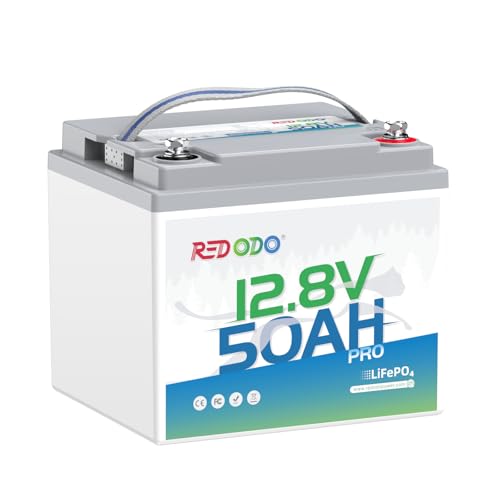
Redodo 12V 50Ah Trolling Motor LiFePO4
More Details On Our Top Picks
Cold mornings kill ordinary lithium packs long before they kill lead-acid. This 12V 300Ah LiFePO4 (lithium iron phosphate) unit solves that with a built-in heating film that warms the cells before charging begins, which matters if you camp at altitude, fish through shoulder seasons, or park an RV outside a winter cabin.
The BMS (battery management system) watches temperature continuously and only pulls power from the incoming charger current, so the heating itself does not drain your stored capacity. A companion app surfaces cell voltage, state of charge, and charge cycles on your phone, which makes seasonal storage much less of a guessing game.
A Few Strong Suits
- Automatic low-temperature heating protects cells below freezing without manual intervention
- 300Ah deep-cycle capacity runs a fridge, lights, and small inverter for several days off-grid
- Phone-based monitoring tracks state of charge and individual cell health at a glance
- LiFePO4 chemistry tolerates thousands of full cycles, far beyond lead-acid equivalents
Things To Consider
- Heating feature requires a charger delivering more than 10A to function
- Owners commonly report the casing runs warm during cold-weather charging sessions
- Larger 300Ah footprint demands adequate battery-box ventilation
Who It Suits Best
Anyone running a four-season RV, ice-fishing shanty, or remote cabin where sub-freezing temperatures would otherwise shorten battery life.
A Better Fit Elsewhere
Shoppers running warm-climate solar sheds without winter exposure will find the VATRER POWER 12V 300Ah LiFePO4 Dual-Mode a smarter match, since its dual-mode design favors engine-start and cycling over heating.
Most lithium batteries are one-trick ponies: deep cycle for house loads, but not much help cranking an engine. This dual-mode 12V 300Ah pack flips between roles through the BMS, drawing on LiFePO4’s high-rate discharge capability to deliver up to 1,500A of instantaneous current for starting a marine or RV engine.
Drop back into normal mode and it behaves like a standard 300Ah deep-cycle house battery with thousands of cycles behind it. That kind of flexibility is uncommon at this capacity, and it cleans up a battery bay by replacing both a starting battery and a house bank in a single footprint.
Everyday Wins
- Switches between starting bursts and deep-cycle duties without separate packs
- Phone app shows state of charge, voltage, and current draw in real time
- 300Ah storage covers multi-day fridge and lighting loads without generator backup
Honest Caveats
- Starting current depends on engine size; verify compatibility for large diesels
- Owners commonly recommend dedicated bus bars or marine-grade cabling for the high-amperage mode
Made For
Boat owners and van builders who want one battery to cover both engine cranking and house loads during weekend trips.
Consider Something Else When
Cold-weather RVers should look at the VATRER POWER 12V 300Ah LiFePO4 with Self-Heating instead, since that model adds freeze protection this dual-mode version lacks.
Full-time off-grid cabins eat batteries the way trucks eat tires. This 12.8V 300Ah LiFePO4 pack is engineered for that pace, rated at over 5,000 full depth-of-discharge cycles (meaning you can drain it to nearly empty and recharge it more than five thousand times before noticeable wear).
It carries the same internal heating film as the other VATRER POWER flagship, so it warms up before charging on cold mornings. Energy density is high for its class, which means you store more kilowatt-hours per pound compared with lead-acid banks that take up the same floor space.
Benefits That Matter
- 5,000-plus cycle rating supports daily solar cycling for over a decade
- Integrated heater protects cells when ambient temperatures drop below freezing
- Compact footprint reduces battery-box clutter in tight installations
- App-based monitoring lets you check state of charge from inside the cabin
Points To Keep In Mind
- Heating function still depends on a charger capable of supplying at least 10A
- Lithium packs above 200Ah generally need heavier gauge cabling than smaller banks
Right Fit For
Off-grid homeowners and remote-cabin dwellers who cycle their battery bank hard every single day and need long-term durability.
Swap It Out When
Mobility-focused RV travelers get more mileage from the Redodo 2-Pack 12V 100Ah RV Lithium Group 31, which delivers expandable 2560Wh capacity in a smaller, easier-to-handle form.
The Redodo 12V 200Ah steps down from the 300Ah giants but still pushes serious energy, and its upgraded 200A BMS (battery management system, the electronic brain that protects cells from overcharge and overdraw) supports 2,560W of continuous output to run microwaves, induction cooktops, or AC units on a moderate draw.
Compared with the VATRER POWER 300Ah flagships, this unit sheds roughly a third of the capacity but trims weight and cost meaningfully. It also fits tighter compartments where a full-size 300Ah brick simply will not slide into place.
Why It Works Well
- 200A BMS delivers continuous loads for kitchen-class appliances
- Lighter than comparable-capacity lead-acid banks, easing installation
- Standard form factor drops into existing marine and RV battery trays
Trade Offs
- 200Ah is a noticeable step down from the 300Ah picks above
- No built-in heating, so cold-climate charging requires manual battery warming
Best Suited To
Mid-size RV owners and weekend sailors who want enough capacity to run appliances without committing to a full 300Ah build.
Look Elsewhere When
Full-time liveaboards and long-duration off-gridders should pick the VATRER POWER 12.8V 300Ah Self-Heating LiFePO4 instead, where extra capacity and winter protection pay off year-round.
Golf cart owners replacing a tired bank of six 8V lead-acid batteries face a tangle of wiring diagrams and battery acid. Mehrpow’s 48V 100Ah complete kit sidesteps both problems by bundling matched cells, balanced voltage, and a plug-and-play harness so the swap finishes in one session rather than a weekend.
Built around grade-A EVE LiFePO4 cells (top-tier lithium cells from a recognized manufacturer), the kit claims more than 10,000 deep cycles at 80% depth of discharge. For a cart that runs 36 holes a week through retirement, that durability dwarfs anything the original lead-acid bank ever delivered.
Real Benefits
- 10,000-plus cycle rating translates into years of daily cart use
- Plug-and-play harness eliminates complicated rewiring
- LiFePO4 chemistry tolerates partial state-of-charge without damage
Things To Weigh Up
- Item ships under hazardous-materials regulation, so delivery can take longer than standard parcels
- Built specifically for golf carts, so it is not a fit for RV or marine applications
Who Should Grab It
Cart owners and course maintenance crews looking to retire aging lead-acid banks with a one-time, weekend-friendly swap.
Reach For A Different Pick When
Boat or RV owners should reach for the Redodo 12V 100Ah LiFePO4 Battery Group 31 instead, which is sized and rated for marine and camper use.
Group 31 is the lingua franca of marine and RV battery boxes, and Redodo’s 12V 100Ah LiFePO4 drops straight into that standard tray. A 3% monthly self-discharge rate keeps stored charge through off-season months far better than lead-acid, which can self-discharge at five to ten times that rate.
Cycles land between roughly 4,000 and 15,000 depending on depth of discharge (how empty you let the battery get before recharging), so most recreational users will see a decade of service before capacity meaningfully fades. Bluetooth monitoring is available on related variants for those who like to watch their state of charge in real time.
What Helps Most
- Group 31 form factor fits common marine and RV battery trays without modifications
- Low 3% monthly self-discharge preserves charge during winter storage
- Multi-thousand-cycle lifespan handles daily weekend use for years
Room For Improvement
- 100Ah is half the capacity of the larger 200Ah and 300Ah picks in this roundup
- Owners commonly report needing a charger with a dedicated lithium profile for full performance
Perfect Match For
Standard RV and marine installations where one or two Group 31 batteries cover the typical lighting, water-pump, and fridge load.
Skip It When
Anyone running an inverter for microwave or AC duty should step up to the Redodo 12V 165Ah LiFePO4 Battery Group 31, which delivers higher continuous output in the same footprint.
Two Group 31 cases wired in parallel double your capacity to 200Ah while keeping each individual battery light enough to lift solo. This Redodo pair arrives with Bluetooth monitoring and a low-temperature cut-off that protects cells from charging damage when the mercury dips.
Compared with the single Redodo 12V 165Ah from the next entry, this bundle trades a slightly smaller per-pack capacity for the convenience of matched pairs that are easier to balance on long cable runs. Owners commonly report using these for boondocking RVs where two batteries slide neatly under a dinette seat.
What It Does Well
- 200Ah combined capacity covers moderate inverter and appliance loads
- Bluetooth connectivity shows state of charge on your phone
- Low-temperature cut-off prevents charging damage in cold conditions
Small Caveats
- Owners commonly note that the two batteries may ship in separate boxes on different days
- Wiring two packs in parallel requires matched cabling and a fused connection
Built With In Mind
RV travelers who want more capacity than a single 100Ah battery offers but prefer two manageable units over one heavy 200Ah block.
Where Another Pick Suits Better
Trollers and kayak anglers are better served by the Redodo 12V 50Ah Trolling Motor LiFePO4, since a smaller, lighter pack suits portable watercraft better.
Cramming 165Ah into a Group 31 case is a neat bit of engineering, and Redodo pulls it off with 2,112Wh tucked where a standard 100Ah battery normally lives. The 165A BMS keeps the pack running air conditioners, coffee makers, and other demanding loads without tripping protection.
This single-battery option sits between the basic Redodo 100Ah Group 31 and the bundled 200Ah pairs above, making it a smart middle-ground for travelers who want extra punch without managing two packs. Bluetooth monitoring is built in for those who want a quick voltage glance at the camp site.
Strengths Worth Knowing
- 2,112Wh capacity exceeds typical 100Ah batteries while keeping a Group 31 footprint
- 2,112W continuous output drives high-draw appliances like induction cooktops
- Bluetooth support lets you monitor voltage and current from a phone
Things To Consider
- Higher continuous output can push some alternators and chargers to their limits
- Owners commonly recommend verifying cable gauge before installation
Who Will Love This
Solo RV and boat owners running inverter-driven appliances who want a single-battery upgrade path without jumping to a 200Ah-plus block.
Another Choice May Suit
Long-duration off-gridders are better served by the VATRER POWER 12V 300Ah LiFePO4 with Self-Heating, which triples the usable capacity and adds winter protection.
Off-grid solar arrays thrive on banks that can grow alongside the panel count. This Redodo 2-Pack delivers 2,560Wh of combined storage and supports expansion up to a 4P4S configuration (four packs in parallel and four in series, reaching 51.2V 400Ah) for serious home-scale arrays.
Compared with the Bluetooth-equipped twin earlier in the list, this version leans toward a more traditional installation without the wireless monitoring feature. The trade-off is straightforward pricing and the same Group 31 form factor that drops into marine trays, travel trailers, and cabin power walls.
Useful Highlights
- 2,560Wh of combined storage covers multi-day off-grid weekends
- 4P4S expandability scales up to 51.2V 400Ah for larger solar systems
- Automotive-grade LiFePO4 cells target a 10-year service life
A Few Limitations
- Owners commonly report the two batteries may arrive on separate days due to size limits
- No Bluetooth monitoring on this variant compared with the twin above
The Right Fit
Off-grid solar installers and serious boondockers planning a power system that can expand as panel capacity grows.
Where A Sibling Pick Shines
Shoppers wanting phone-based monitoring should pick the Redodo 2-Pack 12V 100Ah RV LiFePO4 Bluetooth instead, which adds the wireless feature in the same bundle.
Trolling motors and kayak anglers need power that does not weigh down the watercraft. At 11.6 pounds, this Redodo 50Ah pack is roughly a third the weight of a comparable lead-acid battery, yet delivers 100% usable capacity instead of the partial usable range that lead-acid allows.
For most paddlers pushing a 30-55 lb thrust trolling motor across a full day of fishing, 50Ah is plenty, and 4,000-plus cycles at 100% depth of discharge keep the battery going for years. Owners commonly report appreciating the lighter carry from the truck to the launch ramp.
Positive Points
- 11.6-pound weight is easy to carry from vehicle to kayak or jon boat
- Full usable capacity outperforms lead-acid batteries twice its rated size
- Long cycle life supports years of regular fishing trips
Less Ideal Details
- 50Ah capacity is too small for cabin or RV whole-house use
- Some portable variants ship without the Bluetooth monitoring found on related models
Whose Shelf It Belongs On
Kayak anglers, jon-boat owners, and small-craft trollers who prize portability above raw capacity.
Not Your Match When
Anyone powering an RV or off-grid cabin should jump up to the Redodo 12V 100Ah LiFePO4 Battery Group 31, which offers four times the capacity in a still-manageable form.
What Matters Most Before Choosing a 300 Amp Lithium Battery
Capacity And Real-World Run Time
Ah (amp-hour) ratings tell you how much current a battery can deliver over an hour, and a 300Ah LiFePO4 pack holds roughly 3.84kWh of usable energy at 12.8V. For weekend boondocking, that covers fridge cycles, LED lighting, water pumps, and phone charging for three to five days without recharging.
If your typical load stays under 50A continuous, a 200Ah or paired 100Ah setup can save weight and money. Larger inverter-driven loads, like air conditioning or induction cooking, generally benefit from a 300Ah or larger bank to avoid deep daily cycling.
BMS And Cold-Weather Behavior
The battery management system (BMS) is the electronic brain that prevents overcharge, overdischarge, and short circuits. A robust BMS with a 200A continuous rating handles microwave-class loads without tripping protection.
Cold-weather charging is the silent killer of lithium batteries, because charging below freezing can permanently damage cells. Self-heating models draw current from the charger to warm the cells before charging resumes, which matters for anyone camping or storing batteries outdoors in winter climates.
Form Factor And Expansion
Group 31 cases drop into the most common marine and RV battery trays, while 200Ah-plus bricks often need custom battery boxes or compartment modifications. Plan your physical space before you pick the capacity.
If a future solar upgrade is on the horizon, look for packs that support 4P4S scaling (parallel and series combinations to grow both capacity and voltage). That flexibility lets a starter setup evolve into a full home battery bank without replacing existing units.
Key Considerations Across These Picks
Pitfalls Shoppers Hit
Underestimating cable gauge is one of the most common mistakes with high-capacity lithium banks. A 300Ah battery can deliver hundreds of amps through undersized wiring, creating a heat hazard that an undersized BMS cannot catch.
Forgetting charger compatibility is the other quiet trap. Standard lead-acid chargers sometimes lack a dedicated lithium profile and can leave LiFePO4 packs chronically undercharged, which shortens their usable lifespan.
Where The Extra Money Goes
Premium picks in this category spend their budget on three things: more sophisticated BMS circuitry, higher-grade LiFePO4 cells, and integrated heating films. Those features buy real-world durability rather than headline capacity.
The upgrade makes sense when you cycle the battery daily, run cold-weather charging, or rely on inverter loads. For occasional weekend use in mild climates, a basic Group 31 LiFePO4 already outperforms lead-acid by a wide margin.
Frequently Asked Questions
How long will a 300Ah lithium battery last on a single charge?
Runtime depends entirely on the load: a 300Ah pack running a 10A fridge and lights can easily last over 24 hours, while a 100A inverter powering a microwave drains it in a fraction of that time. Most recreational setups see two to five days of usable power before recharging.
For accurate planning, divide the battery’s watt-hour capacity by the total watt-hours your devices draw per day, then add a 20% buffer for reserve.
Can I replace my lead-acid battery with lithium without changing other components?
Often yes, but the charger is the most common upgrade. Lithium batteries need a charger with a LiFePO4 profile to reach full capacity and avoid long-term undercharging damage.
Alternators and solar charge controllers generally work fine, though a DC-DC converter helps in vehicles with smart alternators that vary voltage aggressively.
Is a self-heating lithium battery worth the extra cost?
For anyone charging in temperatures below freezing, the heating feature is genuinely useful, because it prevents the cell damage that standard LiFePO4 packs suffer when charged cold.
Shoppers in mild or warm climates rarely need the heating film and can save the cost by choosing a standard model.
How many cycles will a LiFePO4 battery really deliver?
Quality LiFePO4 cells typically deliver 4,000 to 10,000 full cycles depending on depth of discharge and operating conditions. Many packs in this roundup are rated for 5,000 or more cycles at full depth.
Partial cycling (keeping depth of discharge under 80%) can extend cycle counts further, often doubling the effective lifespan of the pack.
Can I connect multiple lithium batteries in series or parallel?
Yes, but matching batteries of the same brand, age, and capacity is critical for balanced performance. Mismatched packs in series can cause cell imbalance and premature wear.
Most manufacturers publish guidance for parallel and series configurations, and a battery balancer or Bluetooth monitoring helps catch drift early.
Closing Remarks
The right 300 amp lithium battery comes down to honest matching between your climate, your loads, and your battery bay. Start with the form factor that fits, then weigh capacity against the cycle life and cold-weather protections your routine actually demands. Whichever pick ends up in your rig, the jump from lead-acid to LiFePO4 tends to be one of those upgrades you stop noticing only because everything just works.