Running a boat with a trolling motor, a starter battery, and a house bank means three batteries need three independent charging paths. A 3 bank battery charger handles that job in one sealed unit mounted permanently in the bilge, so every battery gets its own charge curve instead of fighting for the same current. Choosing the right one comes down to amperage per bank, battery chemistry support, and how well the housing shrugs off splash, salt, and humidity over years of hard use.
A Side-By-Side Look
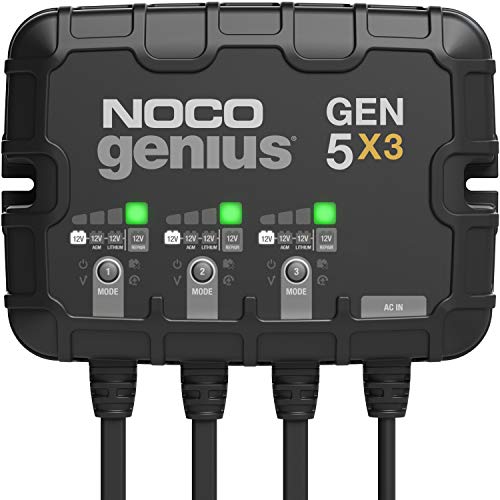
NOCO GEN5X3 12V 15A 3-Bank OnBoard Marine Battery Charger
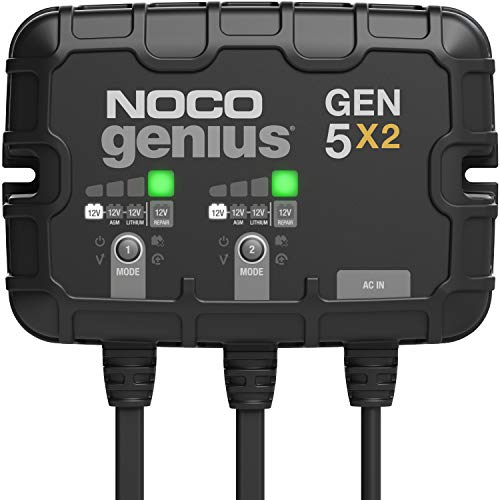
NOCO GEN5X2 12V 10A 2-Bank OnBoard Marine Battery Charger
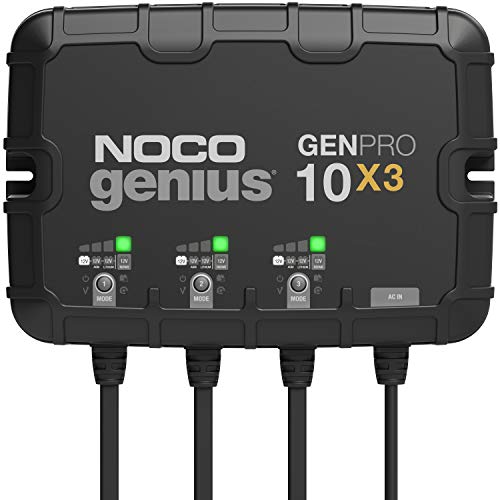
NOCO GENPRO10X3 12V 30A 3-Bank OnBoard Marine Battery Charger

Minn Kota Precision MK-318PCL On-Board Marine Battery Charger

Minn Kota 1823305 MK 330D Digital On-Board Marine Battery Charger
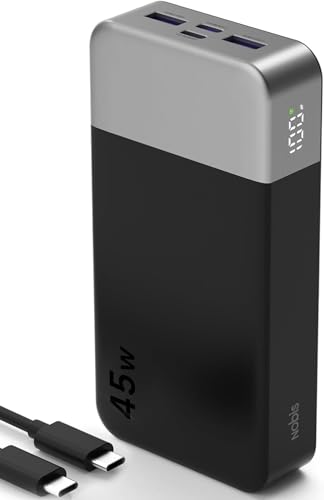
NOBIS 45W 20000mAh Portable Charger Power Bank

NOBIS 20000mAh Power Bank 45W Fast Charging
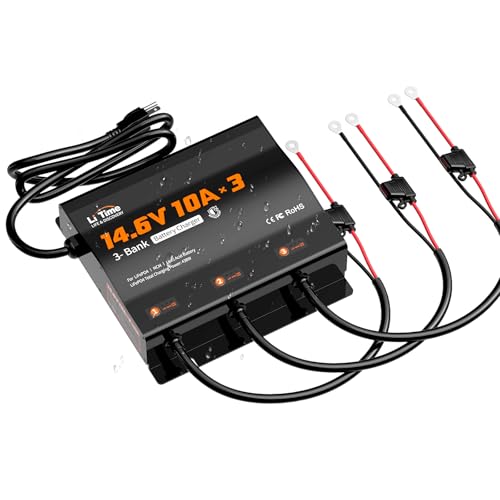
LiTime 3 Bank 12V 10A LiFePO4 Battery Charger
The Details Behind The Selections
The NOCO GEN5X3 slots into a boat’s wiring scheme the same way a stereo amplifier does: one box, three outputs, sealed against spray. Five amps per bank is enough headroom to refill trolling motor, starter, and house packs overnight without overworking the unit, and the fully sealed housing shrugs off the damp, salty conditions that punish lesser electronics.
Unlike the twin-bank GEN5X2 below, this model is the right call when three battery groups actually need three independent charge curves. Owners commonly mount it low in the bilge, route leads to a battery switch, and rely on temperature compensation to keep the charge honest across a hot summer and a cold spring launch.
Key Advantages
- Five amps per bank handles group 24 to group 31 banks without long overnight dwell times.
- Independent channels let mixed chemistry banks (one AGM, one lithium) charge on their own profiles.
- Sealed construction means splash, rain, and the occasional washdown do not reach the internals.
- Temperature compensation adjusts voltage up or down as ambient shifts, protecting batteries in unheated boathouses.
Worth Noting
- Five amps per bank is light for very large house banks over 200 amp hours, where recovery can run into the next day.
- The compact housing runs warm under sustained load, so leave clearance around vents during installation.
Key Attributes
Made For
Recreational boaters running a starter, trolling, and house bank who want one quiet, sealed charger mounted permanently.
Skip It When
You run a large AGM or lithium house bank past 200 amp hours and need faster refill, where the NOCO GENPRO10X3 below makes more sense.
The GEN5X2 carries the same sealed construction and chemistry support as the GEN5X3 above, just with two banks instead of three. For smaller skiffs, kayaks with trolling motors, and runabouts that only need a starter plus an accessory battery, that is the cleaner fit.
Five amps per bank matches the GEN5X3 on a per-circuit basis, so charging speed per battery is identical, the trade-off shows up in how many batteries you can run. Overcharge protection and temperature compensation behave the same way, and the IP68 rating means the same dunk-it-in-the-bilge installation style.
What Pays Off
- Two-bank layout costs less and frees up mounting space on smaller hulls.
- Same sealed construction as its bigger siblings, so spray and humidity do the same amount of damage (none).
- Independent charging channels let a lead-acid starter sit next to a lithium house pack without cross-talk.
Trade Offs
- Two banks simply do not cover boats with a dedicated house, starter, and trolling setup.
- At five amps per bank, large group 31 deep-cycles still need long charge windows.
Right Fit For
Anglers and weekend boaters with two battery banks who do not need a third charging channel.
Consider Something Else When
You split power across three banks, where the NOCO GEN5X3 above or the GENPRO10X3 below covers the extra circuit.
The GENPRO10X3 is the muscle version of the GEN5X3, pushing 10 amps per bank instead of five. That extra headroom turns overnight charging into a same-evening job, especially for large AGM house banks or lithium packs that recover in a few hours of dock power rather than a full night.
Compare that to the GEN5X3 at the top of this list: same sealed housing, same chemistry support, just more current behind each channel. For bigger offshore boats, dual-battery trolling rigs, or any setup pulling real amp hours between trips, that current difference is the whole story.
Where It Helps
- Ten amps per bank refills group 31 and lithium house banks in a fraction of the time a five-amp charger takes.
- Three independent outputs mean each battery gets a tailored charge curve, so AGM, gel, and LiFePO4 can coexist.
- Overcharge protection stops the cycle once a bank is full, switching to a maintenance float without manual intervention.
Points To Keep In Mind
- The unit runs warm under load and benefits from ventilation around the case during install.
- Draws more shore power than smaller chargers, so check your dock pedestal circuit rating.
Built With In Mind
Boat owners running large deep-cycle or lithium banks who want fast recovery between sessions.
Look Elsewhere When
You only run small group 24 batteries and do not need the extra current, since the NOCO GEN5X3 above handles that workload at a smaller footprint.
Minn Kota built the Precision line around anglers who run 12-volt lithium trolling batteries and want a charger that knows the difference between LiFePO4 and flooded lead-acid. The MK-318PCL delivers six amps per bank, sitting between the NOCO GEN5X3 (5 amps) and the GENPRO10X3 (10 amps) on raw current.
Where it stands out is per-bank chemistry selection. Each output can be dialed to the type of battery wired to it, which is useful for mixed trolling and starter banks that owners commonly leave unattended for long stretches.
Good Reasons To Consider
- Per-bank chemistry selection lets you mix flooded, AGM, and lithium on the same charger.
- Six amps per bank is a balanced middle ground for boats with medium-size banks.
- Built by a brand with a long track record in trolling motor accessories.
Honest Caveats
- Six amps per bank is lighter than the NOCO GENPRO10X3, so large house banks take longer to refill.
Feature Snapshot
Whose Shelf It Belongs On
Tournament and weekend anglers who run Minn Kota trolling motors and want a matched charger for the rig.
A Better Fit Elsewhere
Boats with very large house banks need the higher per-bank current of the NOCO GENPRO10X3 above.
The MK 330D is the long-running workhorse of Minn Kota’s on-board charger family, and it has been in continuous service on fishing boats for years. Three banks at 10 amps each match the NOCO GENPRO10X3’s output, so the choice between the two often comes down to brand loyalty and installation style.
The MK 330D uses automatic multi-stage charging and temperature compensation, which together prevent the chronic undercharge that wrecks deep-cycle banks left plugged in for weeks. For guides and commercial anglers who leave boats on a charger most of the off-season, that durability story is the reason this model still shows up on tender lists.
Noteworthy Benefits
- Ten amps per bank matches higher-output competitors for faster recovery.
- Microprocessor-controlled charging adapts the curve to each bank.
- Automatic temperature compensation adjusts voltage as conditions change.
- Long product history and replacement parts availability.
Small Caveats
- Larger physical housing than some newer sealed units, so plan mounting space.
- Older design language compared to the latest NOCO Generation X line.
Best Suited To
Commercial fishermen, guides, and fleet owners who value a proven, long-lived charger over the smallest footprint.
Reach For A Different Pick When
You want the latest sealed housing and lithium-specific profiles, where the Minn Kota Precision MK-318PCL above is a closer match.
Stepping away from marine hardwired chargers for a moment: this NOBIS unit is a 20,000 mAh power bank with 45-watt fast charging output. It is not a 3-bank marine charger in the wiring sense, but it sits in the same charging-tools category and earns its place for travelers who want phone and laptop top-ups on the road.
The 45-watt USB-C output (a fast-charging standard that pushes enough wattage to refill modern phones and many tablets at full speed) handles most personal electronics, and the 20,000 mAh capacity (a measure of stored energy) is enough for several phone recharges between wall outlets.
Benefits That Matter
- 45-watt output speeds up phone and tablet charging over older 10-watt banks.
- USB-C bidirectional charging means the bank itself refills quickly from a compatible wall adapter.
- Capacity covers multi-day trips without an outlet.
Some Limits To Know
- It is a personal electronics charger, not a marine battery charger, so it cannot refill 12-volt trolling banks.
- Capacity drops at high output, which is normal for this category.
Who Should Grab It
Travelers, campers, and commuters who want a fast, high-capacity backup for phones, tablets, and small laptops.
Not Your Match When
You need to refill 12-volt marine batteries, which is the job of the NOCO and Minn Kota units in this list.
The second NOBIS bank on this list covers essentially the same ground as the first: 20,000 mAh capacity and 45-watt fast charging. The differences between the two listings mostly come down to minor product variations and current retailer stock.
Same story with the first NOBIS unit: it is a personal-electronics charger, not a marine on-board charger. The honest read is that you choose between these two NOBIS banks based on which listing is currently shipping, since the underlying specs are nearly identical.
The Upside
- 45-watt output delivers fast top-ups for modern phones and tablets.
- USB-C bidirectional charging speeds up bank refills as well as device refills.
- 20,000 mAh covers several days of phone use between wall outlets.
Practical Considerations
- Does not charge 12-volt marine batteries.
- Heavy for pocket carry; better in a daypack or boat bag.
Perfect Match For
Travelers who need a high-capacity, fast-output bank for personal electronics on the road.
Swap It Out When
Your charging needs are for a 12-volt boat bank, which sends you back to the marine chargers earlier in this roundup.
LiTime makes this 3-bank charger specifically for LiFePO4 batteries, with a 14.6-volt output that matches the absorption stage those lithium cells need. For a boat or RV that has moved entirely to lithium chemistry, that targeted voltage profile is more important than raw amperage.
Ten amps per bank sits in the same neighborhood as the NOCO GENPRO10X3 and the Minn Kota MK 330D, but the LiTime unit trades some chemistry flexibility for a stronger lithium focus. The waterproof housing is welcome on deck or in damp bilge installations.
Strengths Worth Knowing
- 14.6-volt output matches LiFePO4 absorption requirements for full charges.
- Three banks at 10 amps each cover a full lithium house bank setup.
- Waterproof housing handles marine and RV environments.
Where It Is Less Suited
- Chemistry support is narrower than the NOCO units, which cover flooded, AGM, gel, and lithium in one box.
- Best value appears in dedicated lithium setups, less so for mixed-chemistry boats.
Quick Facts
Who It Suits Best
Boat and RV owners running fully lithium battery banks who want a charger tuned to LiFePO4 voltage requirements.
Where Another Pick Suits Better
Mixed-chemistry boats benefit from the NOCO GENPRO10X3 above, which handles flooded, AGM, gel, and lithium on a single dial.
What Matters Most Before Choosing 3 Bank Battery Chargers
Match Amperage To Battery Capacity
A common rule of thumb is to pick a charger delivering roughly 10 to 25 percent of a bank’s amp-hour rating per bank. A group 31 AGM at 100 amp hours works well with a 10-amp bank, while a small group 24 starter at 75 amp hours charges fine on a 5-amp output. Under-sizing means long overnight dwell times and chronically undercharged banks.
Confirm Chemistry Compatibility
Lithium iron phosphate (LiFePO4) batteries charge to a higher absorption voltage (about 14.6 volts) than flooded or AGM (around 14.4 volts). Chargers with selectable profiles per bank, like the Minn Kota Precision MK-318PCL, let you mix chemistries safely on the same unit.
Check Sealing And Mounting Location
A bilge mount, a transom locker, or an exposed RV bay all expose the charger to splash or condensation. Fully sealed, waterproof housings shrug off those conditions, while lower-rated units may need extra protection. Mounting clearance around the case also matters: higher-output chargers run warm under load.
Plan For Shore Power And Ventilation
A 30-amp charger draws real current from the dock pedestal. Make sure your shore-power circuit and extension cord rating match, and leave airflow space around the unit so heat can dissipate during long charging sessions.
Key Considerations Across These Picks
Where Shoppers Go Wrong
The most common slip is matching total charger amperage to total bank capacity, then ending up with a 15-amp charger trying to feed three 100-amp-hour banks. That undersizes each output, leading to chronically undercharged deep-cycles. Pick chargers based on per-bank output, not the headline total. Another trap is buying a sealed unit with no chemistry selector, then discovering it cannot charge LiFePO4 to its full absorption voltage.
The Upgrade Payoff
Stepping up from a 5-amp-per-bank charger to a 10-amp-per-bank unit roughly halves charge time on mid-size banks, which matters when you only get a few hours between trips. Premium sealed housings, per-bank chemistry selection, and automatic temperature compensation also earn their keep on boats that sit plugged in for weeks at a time. The honest read is that for casual weekend use, a mid-tier charger covers the job, while serious anglers and liveaboards benefit from the upgrade.
Frequently Asked Questions
What does a 3 bank battery charger actually do?
It charges three separate 12-volt batteries or battery banks at the same time, with each output getting its own independent charge cycle. That is ideal for boats with a starter, trolling, and house battery, since each battery can have a different size or chemistry without fighting for shared current.
Can I charge lithium and lead-acid batteries on the same 3 bank unit?
Yes, provided the charger has selectable profiles per bank, like the Minn Kota Precision MK-318PCL or the NOCO GENPRO10X3. Each output is set to match the chemistry wired to it, so a flooded starter can sit next to a LiFePO4 house pack on the same charger.
How many amps per bank do I need for a group 31 battery?
A group 31 deep-cycle (roughly 100 to 130 amp hours) charges efficiently on a 10-amp output. Five amps per bank works but takes longer; ten amps is the more common middle ground for boats with mid-size banks.
Are onboard marine chargers safe to mount in the bilge?
Yes, when the unit is fully sealed and rated for splash or submersion, like the IP68-rated NOCO GEN5X3 and GENPRO10X3. Mounting clearance and airflow around the case still matter for heat dissipation during long charge cycles.
Do these chargers work as maintainers in storage?
Most modern 3-bank onboard chargers include a maintenance or float mode that holds batteries at full charge without overcharging. Leaving them plugged in for weeks is generally fine, though periodic checks of electrolyte (for flooded banks) or voltage are still a good idea.
Closing Remarks
A 3 bank battery charger is one of those pieces of gear you install once and then forget about, until it saves you from a dead starter on launch morning. The right match comes down to bank size, chemistry mix, and how much current you need to put back between trips. Run through those three points, and the shortlist above should narrow down quickly to the unit that fits your boat, RV, or trailer.