A weekend on the water shouldn’t depend on whether your house bank, starting battery, and trolling motor bank all woke up ready to go. Anglers, pontoon owners, and small-cruiser skippers regularly juggle three different battery chemistries on one hull, and a mismatched charger can quietly shorten battery life between trips. The right onboard charger handles that silently in the background while you rig rods, load coolers, and check the bilge.
This roundup walks through ten 3 bank marine battery chargers that fit common 12V setups, from compact weekend rigs to tournament-grade trolling setups. You’ll see where each model earns its place, where the trade-offs sit, and which one matches the way you actually boat.
A Closer Look At The Lineup

Minn Kota Precision MK-318PCL On-Board Marine Battery Charger 3 Banks 6 Amps
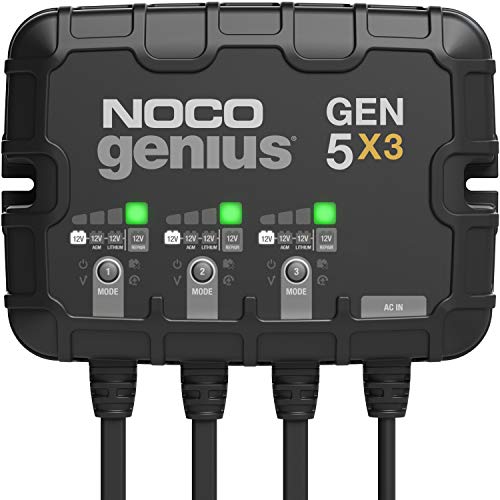
NOCO GEN5X3 12V 15A 3-Bank OnBoard Marine Battery Charger

FirstPower Pro 3 Bank Marine Battery Charger 5X3 15A
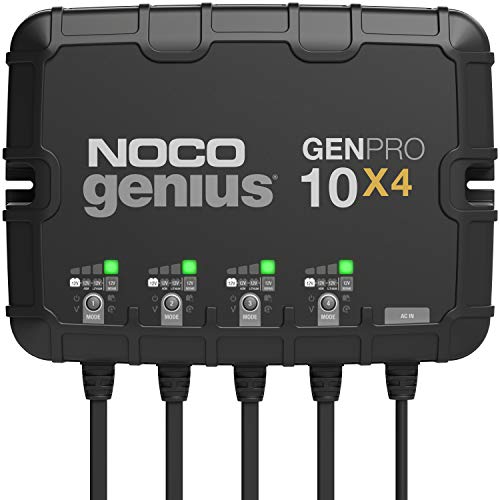
NOCO GENPRO10X4 12V 40A 4-Bank OnBoard Marine Battery Charger
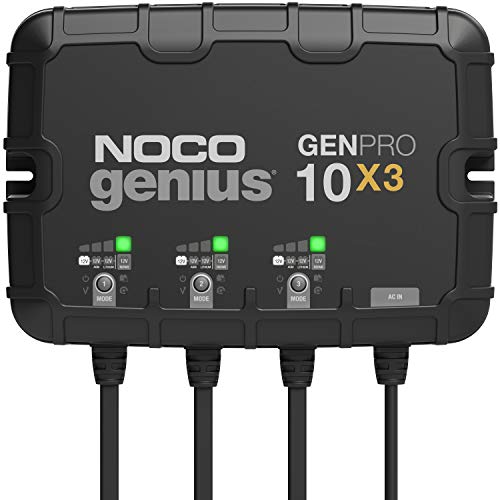
NOCO GENPRO10X3 12V 30A 3-Bank OnBoard Marine Battery Charger

Minn Kota MK 330D Digital On-Board Marine Battery Charger 3 Bank 10A

Anegine 3 Bank Marine Battery Charger 12V 5A per Bank IP68
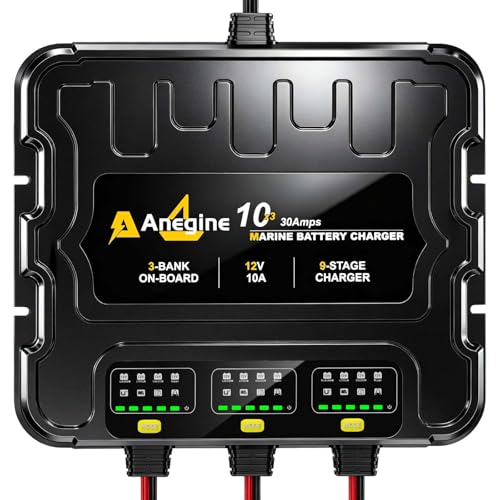
Anegine 3 Bank Marine Battery Charger 10X3 30A 12V
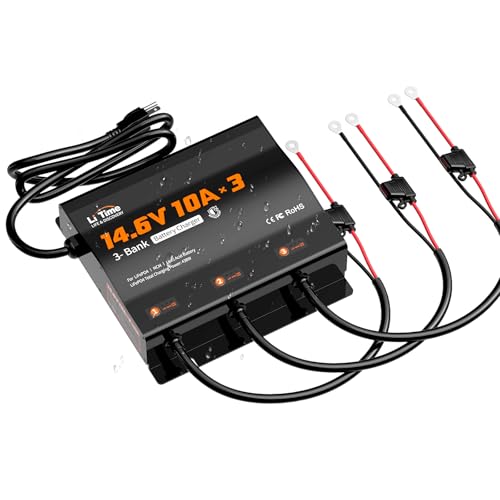
LiTime 3 Bank 12V 10A LiFePO4 Battery Charger Waterproof
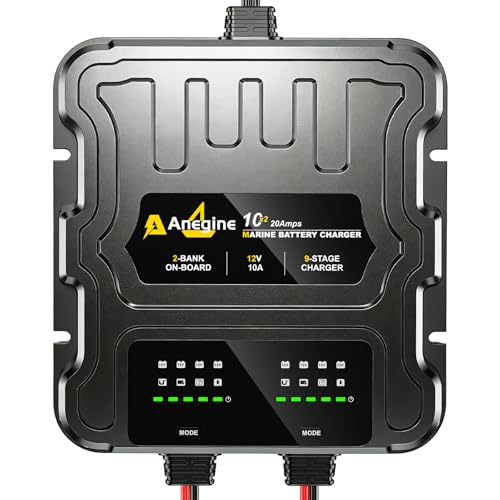
Anegine 2 Bank Marine Battery Charger 20A 10A per Bank IP68
Why These Options Stand Out
The Minn Kota Precision MK-318PCL stands out because each of its three banks can be set independently to a specific battery chemistry, including LiFePO4. That single feature solves the most common headache on multi-bank boats: a starting battery that needs flooded charge profile while the house bank runs on lithium. Most owners see the value when they realise they no longer have to baby one bank to protect the other.
Inside, a microprocessor-based digital controller manages voltage and current through every charging stage. Automatic temperature compensation adjusts output for ambient conditions, which matters on boats that sit in summer sun or winter cold. You can leave it plugged in during storage without worrying about overcooking a battery.
The Good Stuff
- Per-bank chemistry selection covers 12V AGM, flooded, gel, and LiFePO4 batteries
- Automatic multi-stage charging delivers a faster, more controlled top-off
- Temperature compensation keeps output steady in engine rooms that run hot
- Six amps per bank suits moderate trolling motor and house bank setups
Points To Note
- Six amps per bank is modest for very large deep-cycle banks that need quicker turnarounds
- The feature set commands a higher outlay than entry-level sealed units
Best Suited To
Boaters mixing a lithium trolling motor bank with a lead-acid starting battery on a single hull, especially tournament anglers who need chemistry-specific charging every trip.
Look Elsewhere When
The NOCO GENPRO10X3 makes more sense for rigs that want 10 amps per bank and can run a single chemistry across all three banks.
NOCO’s GEN5X3 is built for skippers who lost a third of their locker’s space to the previous generation charger. The fully sealed housing shrugs off moisture in the bilge, and the redesigned layout is compact enough to mount inside a console or under a leaning post. Owners running small center consoles and bay boats get a charger that fits without a custom bracket.
Five amps per bank is the trade-off for the smaller footprint. For moderate house banks and lighter trolling motor use, the rating handles overnight charging comfortably. Independent bank operation means a weak starting battery gets its own recovery cycle without dragging the house bank down with it.
Where It Excels
- Sealed, waterproof housing tolerates wet bilge environments
- Compact form factor simplifies mounting in tight console spaces
- Independent per-bank operation isolates battery faults
- Supports flooded, AGM, gel, and LiFePO4 chemistries
Things To Consider
- Five amps per bank stretches thin on large group 31 and group 34 banks
- Higher-tier NOCO units offer faster recovery for deep-cycle users
Who Should Grab It
Weekend boaters with smaller battery banks and limited mounting room who want a sealed, low-maintenance onboard charger.
Swap It Out When
The Minn Kota Precision MK-318PCL suits owners who run mixed lithium and lead-acid chemistries and need per-bank profile selection.
The FirstPower Pro 3 Bank Marine Battery Charger targets recreational anglers who want sealed onboard charging without paying for a premium badge. Its fully sealed IP68-rated housing is built for mounting near the bilge, where splash and spray are part of life. Owners running pontoons and small bowriders get a low-maintenance unit they can leave plugged in.
Three charging modes cover the common chemistries you’ll find on a typical rig: SLA/AGM lead-acid, lithium, and calcium. The 5A-per-bank output is fine for moderate banks, though larger deep-cycle banks will take longer to fully recover. Independent bank control means each battery gets its own profile without competing with the others.
Everyday Wins
- IP68 sealing handles wet mounting locations
- Three modes cover lead-acid, AGM, calcium, and lithium batteries
- Independent banks allow continuous onboard charging
- Accessible price point for first-time onboard charger shoppers
Trade Offs
- Five amps per bank is modest for larger group 31 house banks
- Brand recognition is lower than established marine electronics names
Made For
Recreational boaters on a budget who want sealed, multi-chemistry charging for moderate-sized battery banks.
Reach For A Different Pick When
The Anegine 3 Bank Marine Battery Charger 10X3 30A suits owners with bigger deep-cycle banks who need 10 amps per bank.
NOCO’s GENPRO10X4 is the workhorse for boats that run four batteries instead of three. Cruisers, larger center consoles, and offshore rigs often split the electrical system into a starting bank, two house banks, and a trolling bank. The 10 amps per bank across four outputs handles that load without leaving anything starved overnight.
The fully sealed housing has been shrunk from the previous generation, a small but meaningful gain in tight mechanical rooms. Wide chemistry support, including LiFePO4, lets you upgrade to lithium house banks in stages while keeping the older flooded starting battery on its own profile.
Where It Helps
- 10 amps per bank across four outputs supports larger house banks
- Fully sealed waterproof housing tolerates damp engine rooms
- Compatibility with lead-acid and lithium-ion chemistries
- Compact redesign fits where older 4-bank chargers wouldn’t
Honest Caveats
- Four-bank capacity is overkill on a basic runabout with two batteries
- The 40A total draw demands a properly rated shore power connection
Right Fit For
Boaters running four separate battery banks who need 10 amps per output for quicker recovery between heavy use days.
Not Your Match When
The NOCO GEN5X3 fits better on simpler rigs that only need three banks and 5 amps each.
When trolling motors draw hard for hours, the house bank earns a real workout. The NOCO GENPRO10X3 delivers 10 amps per bank across three outputs, so a depleted trolling bank recovers in a reasonable overnight window. Compared to the entry-level GEN5X3 above, the doubled amperage per bank is the meaningful difference for serious anglers.
The waterproof sealed housing installs in damp lockers, and the chemistry support covers flooded, AGM, gel, and LiFePO4 batteries. Owners who have already moved to lithium trolling banks will find the dedicated LiFePO4 mode useful for hitting proper absorption voltage.
What Helps Most
- 10 amps per bank cuts overnight recovery time on larger banks
- LiFePO4 mode delivers correct absorption voltage for lithium chemistry
- Independent banks isolate battery conditions
- Sealed housing suits deck-mounted and bilge installations
Possible Compromises
- Higher output draws more shore power than 5A-per-bank units
- Costs more than the GEN5X3 for marginal use cases
Perfect Match For
Tournament and serious recreational anglers with high-capacity trolling motor banks who need faster recovery.
A Better Fit Elsewhere
The NOCO GEN5X3 is a smarter spend for smaller boats with moderate-capacity batteries that don’t need 10 amps per bank.
The Minn Kota MK 330D has been on the market long enough to develop a reputation as a dependable workhorse. The microprocessor-based digital controller manages the multi-stage charge cycle across all three banks, which is the same core approach used on newer chargers. Owners replacing an aging Minn Kota with the same model tend to appreciate not having to redo their wiring layout.
Ten amps per bank puts it in the higher-output tier alongside the NOCO GENPRO10X3. Automatic temperature compensation adjusts output to ambient conditions, useful for boats stored outdoors through winter. The trade-off is a more conventional housing that may not carry the same sealing rating as newer sealed designs.
What It Does Well
- 10 amps per bank supports faster recovery on larger banks
- Digital multi-stage charging protects batteries through the full cycle
- Automatic adjustment for ambient temperature fluctuations
- Established track record in the trolling motor community
Where It Is Less Suited
- Housing sealing is not specified to the same level as newer IP-rated units
- No explicit LiFePO4 support listed in the documented chemistry set
Whose Shelf It Belongs On
Boaters replacing a previous Minn Kota onboard charger who want a familiar design with strong per-bank output.
Skip It When
The Minn Kota Precision MK-318PCL is a stronger fit for owners who want per-bank LiFePO4 selection on top of multi-stage charging.
The Anegine 3 Bank Marine Battery Charger is the model you grab when the household runs more than one boat, or one boat that sees duty as both a fishing platform and a tow vehicle for a dinghy. It handles lead-acid, AGM, EFB, LiFePO4, and lithium chemistries, which covers anything from a cranking battery to a deep-cycle house bank and a portable lithium jump pack.
An onboard LCD readout shows charge status at a glance, a feature not commonly found on chargers in this output class. Combined with IP68 sealing and overcharge protection, the package is built for owners who want visibility into what’s happening in the bilge without pulling a cover off.
The Helpful Details
- LCD display provides visible charge status without removing panels
- IP68 sealing tolerates submersion and heavy splash
- Overcharge protection and temperature compensation are included
- Broad chemistry support spans lead-acid, AGM, EFB, LiFePO4, and lithium
Trade-Offs To Consider
- Five amps per bank stretches thin on large deep-cycle banks
- Brand awareness is lower than NOCO or Minn Kota
Built With In Mind
Multi-boat households or anglers who want chemistry flexibility across lead-acid and lithium banks without paying a premium-brand premium.
Consider Something Else When
The NOCO GENPRO10X3 suits owners who need 10 amps per bank for faster deep-cycle recovery.
The Anegine 10X3 is the higher-amperage sibling of the LCD-equipped charger above. Ten amps per bank matches what the NOCO GENPRO10X3 and Minn Kota MK 330D deliver, but the Anegine brings IP68 sealing and full chemistry support into the same package. For owners of larger deep-cycle banks on a budget, it’s the upgrade that skips a premium badge.
Independent bank operation means a deep-discharged trolling bank recovers alongside a healthy starting battery without one pulling the other down. The sealed housing installs in damp bilge areas without extra enclosure work.
Benefits That Matter
- 10 amps per bank accelerates overnight recovery on bigger banks
- IP68 sealing handles wet mounting locations
- Independent banks isolate battery conditions
- Chemistry support spans lead-acid and lithium-ion batteries
Worth Bearing In Mind
- LCD readout feature present on the lower-output Anegine sibling is not specified here
- Brand reputation is still building compared to NOCO or Minn Kota
The Right Fit
Boaters who want 10 amps per bank and full sealing without stepping up to a premium-tier charger brand.
Where A Sibling Pick Shines
The Anegine 3 Bank Marine Battery Charger 12V 5A per Bank IP68 is the better match when LCD visibility matters more than raw amperage.
The LiTime 3 Bank 12V 10A Charger targets owners who have moved their entire electrical system to LiFePO4 lithium batteries. The 14.6V output is the absorption voltage LiFePO4 cells need to reach full capacity, a value most generic chargers won’t deliver. For all-lithium builds, that single specification is the reason this charger exists.
Wide chemistry support also covers NCM lithium-ion, AGM, gel, and traditional flooded batteries, so you can keep one legacy bank on the system during a phased lithium upgrade. The waterproof housing handles typical marine mounting conditions.
Useful Touches
- 14.6V output matches LiFePO4 absorption voltage for full charging
- 10A per bank supports quicker recovery on deep-cycle lithium banks
- Chemistry compatibility includes NCM, AGM, gel, and flooded
- Waterproof housing fits exposed marine mounting locations
A Few Limitations
- Optimised for LiFePO4, so mixed-chemistry rigs get less benefit from its specialty profile
- Brand history is shorter than long-established marine electronics names
Who Will Love This
Owners who have converted their entire boat to LiFePO4 batteries and need proper absorption voltage on every bank.
Where Another Pick Suits Better
The Minn Kota Precision MK-318PCL is the better fit for mixed lithium and lead-acid rigs that need per-bank chemistry selection.
The Anegine 2 Bank Marine Battery Charger fills the gap for owners who don’t need three banks at all. Small runabouts, dinghies with electric start plus a house bank, and tow vehicles often run just two batteries. The IP68 sealing handles exposed mounting, and ten amps per bank gives both batteries proper recovery overnight.
Lead-acid, AGM, gel, LiFePO4, and lithium chemistries are supported, which means the same charger can move between boats in a household without needing a chemistry-specific unit. The LCD readout adds visibility into the charging cycle.
Notable Upsides
- Two-bank design fits simpler battery layouts without wasted capacity
- 10 amps per bank handles recovery on moderate battery groups
- IP68 sealing suits outdoor and marine mounting
- Chemistry support spans lead-acid, AGM, gel, LiFePO4, and lithium
Small Caveats
- Two banks won’t cover rigs with separate trolling motor batteries
- LCD readout visibility may be limited in tight bilge installations
Right Fit For
Boaters with a starting battery plus a single house battery who don’t need a third bank at all.
Look Elsewhere When
The NOCO GEN5X3 is the stronger fit for boats running three separate banks at 5 amps each.
Choosing The Right Onboard Charger For Your Boat
Selecting a 3 bank marine battery charger is less about brand loyalty and more about matching the unit to how your boat actually runs. Battery chemistry, total bank capacity, mounting environment, and how quickly you need to recover between outings all matter.
Match The Charger To Your Battery Chemistry. A flooded lead-acid starting battery, an AGM house bank, and a LiFePO4 trolling motor bank each need different absorption voltages. Chargers with per-bank chemistry selection, like the Minn Kota Precision MK-318PCL, let you set a flooded profile on one bank and a lithium profile on another without compromise. Generic multi-chemistry units apply the same profile to all banks, which works fine for single-chemistry setups but undercharges lithium or overcharges flooded.
Right-Size The Amperage To Your Banks. As a rule of thumb, a charger should deliver roughly 10 percent of a battery’s amp-hour capacity per bank. A 100Ah deep-cycle bank benefits from at least 10 amps per bank. Smaller banks, like those on a lightweight electric-start outboard rig, charge fine on 5 amps per bank.
Think About The Mounting Environment. Bilge areas get wet, lockers collect condensation, and exposed mounting brackets see spray. Chargers with IP68 sealing, such as the NOCO GEN5X3 and the Anegine units, tolerate those conditions without requiring a separate enclosure. Chargers with conventional housings work fine in dry compartments but need protection elsewhere.
Plan For Charging Speed And Shore Power. Higher-output chargers, like the 30A NOCO GENPRO10X3, recover banks faster but draw more shore power. A standard 15-amp dock pedestal can run a 30A charger at reduced output, while a 30- or 50-amp shore connection handles full output without tripping. Boats on basic shore power often do fine with a 5A-per-bank charger.
What To Watch For Before You Commit
Common Buying Traps
The biggest mistake is matching a charger to the number of banks rather than the size of those banks. A 5A-per-bank charger on three group 31 deep-cycle batteries can take days to recover from a heavy day of trolling. Conversely, a 10A-per-bank charger on a single group 24 starting battery is overspec and adds cost without benefit. Another common slip is ignoring chemistry support, which leads to undercharged lithium banks or overcharged flooded banks.
When Spending Up Makes Sense
Premium-tier chargers earn their higher cost through per-bank chemistry selection, stronger sealing, and faster recovery. If your boat runs lithium house banks alongside a flooded starting battery, that per-bank selection pays for itself in longer battery life. For weekend anglers with a single-chemistry setup, a sealed mid-tier unit like the NOCO GEN5X3 handles the job without the premium.
Frequently Asked Questions
Can a 3 bank marine battery charger handle different battery chemistries at the same time? Per-bank chemistry selection is available on premium chargers like the Minn Kota Precision MK-318PCL, allowing each bank to run its own profile. Standard multi-bank chargers apply a single chemistry profile across all banks, which works for uniform setups but limits mixed-chemistry boats.
How many amps per bank do I need for a deep-cycle trolling battery? A 10 amps per bank output is a strong fit for 100Ah or larger deep-cycle banks, supporting overnight recovery after a day of trolling. Smaller banks in the 50Ah range recover adequately on 5 amps per bank, especially on boats that don’t run the trolling motor for extended sessions.
What does IP68 sealing actually mean for a marine charger? IP68 means the housing is rated for continuous submersion beyond one meter, which is overkill for most bilge installations but reassuring for deck or transom mounting. In practice, it tells you the charger tolerates splash, spray, and the occasional dunking without a separate enclosure.
Is a 10A per bank charger worth the cost over a 5A unit? Boats that deplete deep-cycle banks regularly benefit from the faster recovery a 10A charger provides. Boats that run light loads and have all night to recover can save money with a 5A per bank charger without practical downsides.
Can I leave a marine battery charger plugged in all winter? Multi-stage chargers with a maintenance or float mode can stay connected for long-term storage without overcharging. Chargers without proper float staging should be disconnected after the bank is fully charged to avoid long-term damage.
Bottom Line
Three banks is a common configuration because most boats need a starting battery, a house battery, and either a trolling battery or a backup. The right charger quietly handles that trio while the boat sits at the dock, the trailer, or the storage lot. Match the unit to your chemistry mix, right-size the amperage to your bank capacity, and pick a housing that fits your mounting environment. The picks above cover the common combinations, from simple 5A-per-bank sealers to specialty LiFePO4 units.