Your garage isn’t really finished until the battery in the project car, the trolling motor, or the camper’s auxiliary bank stays topped without babysitting. Modern 12v lithium battery chargers have quietly evolved from clunky transformers into intelligent devices that talk to LiFePO4 (lithium iron phosphate, the most common 12V lithium chemistry for deep-cycle use) and lead-acid batteries alike, protecting cells and squeezing every usable amp-hour back in. This list gathers ten models that handle very different jobs, from a 1A trickle that keeps a motorcycle healthy all winter to a 20A bench charger that revives a drained 300Ah house bank. Read on for the strengths, the honest limits, and the right user for each one.
The Picks In Brief
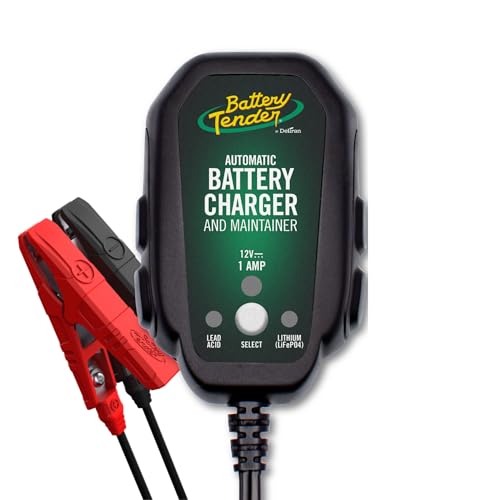
Battery Tender Junior 12V, 800mA Battery Charger and Maintainer

JMR 12V Battery Charger for McLaren, Cig. Port

Jovialpoa 12V 20A Lithium Battery Charger, 0V Activation

Dyness 12V 20A Lithium Battery Charger, 0V Activation

NOCO GENIUS1 1A 6/12V Smart Battery Charger

NOCO GENIUS10 10A 6/12V Smart Battery Charger

NOCO GENIUS5 5A 6/12V Smart Battery Charger

NOCO GENPRO10X1 12V 10A OnBoard Marine Charger

Jovialpoa 12V 10A Lithium Battery Charger, 0V Activation

Jovialpoa 12V 100Ah LiFePO4 Battery with 14.6V 20A Charger
Why These Options Stand Out
The Battery Tender Junior has earned a near-cult following among weekend riders and garage tinkerers for one reason: it works, then it gets out of the way. At 800mA of output it isn’t going to revive a deeply discharged lawn-tractor pack overnight, but for keeping a motorcycle, scooter, or ATV topped off through weeks of sitting, it earns its corner-shelf real estate.
A push-button chemistry switch on the front lets you flip between lead-acid and LiFePO4 modes, which matters because lithium batteries want a different absorption voltage than flooded or AGM (absorbent glass mat, a sealed lead-acid variant) cells. In practice, you clip it on, walk away, and the four-stage charging logic handles the rest. Compared to the larger, fixed-voltage bench chargers later on this list, it’s much less intimidating for a first-time owner.
Everyday Wins
- Dual chemistry switch covers LiFePO4, AGM, flooded, and gel cells without buying a second unit.
- Compact housing tucks easily into a saddlebag, trunk cubby, or shop drawer.
- Floating maintenance mode (a low-voltage hold that keeps a full battery topped indefinitely) lets it stay connected for months without cooking the battery.
- Reversible ring or alligator clips arrive in the box, so no extra shopping trip.
Things To Consider
- 800mA is genuinely slow on anything past a 30Ah battery; expect long overnight runs on larger banks.
- The plastic housing can warm up noticeably during extended duty cycles in a hot garage.
Quick Facts
Built With In Mind
Casual riders, classic-car owners, and anyone storing a powersport battery for weeks at a time.
Skip It When
You need to top off a deep-cycle house bank quickly, where the NOCO GENIUS10 10A 6/12V Smart Battery Charger is a smarter match.
JMR’s McLaren-specific charger earns its place here for one narrow but very real reason: certain McLaren models bury the 12V accessory battery behind panels and trim that most owners don’t want to pull apart on a Sunday morning. The plug-and-play 12V cigarette-lighter adapter routes around that hassle entirely, threading charging current through the existing port.
An “Add Lithium Mode” toggle accepts LiFePO4 cells alongside AGM, lead-acid, wet, gel, EFB (enhanced flooded battery, common in start-stop vehicles), MF (maintenance-free), and calcium types, so a switched chemistry doesn’t require a different unit. For a non-electric McLaren parked between weekend drives, that convenience alone can justify the cost.
A Few Highlights
- Cigarette-port hookup skips panel removal on hard-to-reach factory batteries.
- Wide chemistry coverage including LiFePO4 and calcium variants.
- Listed compatibility spans 720S, 750S, 570S, 675LT, 12C, 600LT, 765LT, GT, GTS, 650S, and 620R models.
Worth Noting
- Niche audience: not much value to anyone outside the McLaren ecosystem.
- Charging speed is moderate; you trade raw amps for the convenience of the port route.
- Confirm the cigarette lighter in your specific model stays live when the car is off before relying on it.
Whose Shelf It Belongs On
McLaren owners who want a clean way to maintain a stock or upgraded 12V battery without cracking trim panels.
A Better Fit Elsewhere
Daily drivers benefit more from the NOCO GENIUS5 5A 6/12V Smart Battery Charger, which is the more flexible generalist option.
This Jovialpoa 20A unit sits in a different weight class from the maintainers above. With a 14.6V output and 0V activation built in, it targets the kind of deep-cycle LiFePO4 banks found in golf carts, RVs, trolling-motor setups, and off-grid solar arrays.
The 0V activation is the real talking point. Many LiFePO4 packs ship with a BMS that disconnects the terminals when the cells drop too far, which can leave a standard charger reading “zero volts” and refusing to engage. This unit forces a recovery charge, restoring connection without you having to crack the pack open. Universal 100-240V AC input also means it travels well between a home shop and a destination property on a different grid standard.
A Strong Showing
- 20A output shortens recharge times on 100Ah to 300Ah banks.
- 0V activation revives BMS-shut-down lithium packs that ordinary chargers refuse.
- Wide AC input range handles generator power and varied grid standards.
Trade Offs
- Larger and heavier than typical consumer chargers; plan for a permanent spot on a bench.
- Active cooling fans can run audibly under heavy load in a quiet shop.
Key Product Details
Right Fit For
Off-grid installers, RV owners, and anyone running a 100Ah-plus LiFePO4 house bank that needs fast turnaround between trips.
Reach For A Different Pick When
You mostly maintain small garage batteries, where the Battery Tender Junior 12V, 800mA Battery Charger and Maintainer is a more proportionate tool.
Dyness pitches a smart three-stage charging profile: precharge, fast charge, and constant voltage. Each stage addresses a specific stress mode on LiFePO4 cells, with precharge gently lifting deeply discharged packs before the unit ramps into its 20A bulk phase.
On paper, the unit brings a 100Ah battery from empty to full in roughly five hours, a meaningful gain over a 10A charger that would double that window. The 0V activation function again handles BMS-locked packs, which is a recurring theme across this category and a useful insurance policy if you store batteries through winter.
What Makes Sense
- Three-stage logic is gentler on cell health than a single-stage constant-current feed.
- 0V activation recovers BMS-protected packs without manual intervention.
- 14.6V output voltage matches LiFePO4 absorption targets precisely.
Honest Caveats
- Useful only on 12V LiFePO4, not a multi-chemistry unit for mixed garage fleets.
- Requires adequate ventilation around the housing during heavy charge cycles.
Made For
Solar DIYers, RV boondockers, and marine users running 100Ah-plus LiFePO4 banks that need frequent top-ups.
Look Elsewhere When
You split time between lithium and lead-acid batteries, where the NOCO GENIUS10 10A 6/12V Smart Battery Charger covers both worlds.
The GENIUS1 is the smallest entry in NOCO’s smart-charger lineup, and it leans into that role honestly. At 1A it isn’t going to refill anything larger than a motorcycle battery in a hurry, but its chemistry coverage and Force Mode feature make it a quiet workshop favorite for maintaining small packs year-round.
Compatibility with both 6V and 12V systems opens the door to classic cars, vintage tractors, and even small standby applications. Force Mode gives you a manual override to push charge into a deeply discharged battery that the unit would otherwise reject as unsafe, a small detail that adds meaningful flexibility when resurrecting neglected equipment.
What It Does Well
- Supports both 6V and 12V batteries in a single palm-sized chassis.
- Force Mode can push charge into deeply depleted packs the auto-detect would refuse.
- Handles LiFePO4 plus flooded, gel, AGM, and deep-cycle lead-acid cells.
A Few Limitations
- 1A output is fine for batteries up to about 30Ah but slow beyond that.
- Lead-accent cables are short, so mounting the unit near the battery is usually required.
Spec Overview
Best Suited To
Owners of small batteries (motorcycles, lawn gear, classic cars up to 30Ah) who want a set-and-forget maintainer.
Swap It Out When
You routinely service larger automotive or marine banks, where the NOCO GENIUS10 10A 6/12V Smart Battery Charger makes more sense.
The GENIUS10 earns its place near the top of this list because it does almost everything: 6V and 12V compatibility, LiFePO4 alongside wet/gel/AGM lead-acid, a built-in desulfator (a mode that sends high-voltage pulses to break down lead sulfate crystals that build up on neglected plates), Force Mode for stubborn packs, and temperature compensation that adjusts output for hot engine bays or cold winter garages.
At 10A it sits in the sweet spot for mid-sized automotive and marine banks up to about 230Ah. Owners with mixed garage fleets covering classic cars, daily drivers, and a small boat can standardize on this one unit, rather than maintaining separate chargers for each.
Where It Excels
- 10A output handles batteries up to roughly 230Ah, the most common garage range.
- Temperature compensation adjusts output for ambient extremes automatically.
- Desulfator mode can rescue neglected lead-acid packs that have sat through several seasons.
Worth Bearing In Mind
- Heavier and pricier than the GENIUS1 or GENIUS5 siblings, so overkill for small battery duties.
- Alligator and ring terminal accessories are sometimes bundled separately depending on the package.
Perfect Match For
Multi-vehicle households, small-boat owners, and home mechanics who want one charger that covers most jobs.
Not Your Match When
You mainly store motorcycles and small powersport gear, where the lighter Battery Tender Junior 12V, 800mA Battery Charger and Maintainer is plenty.
The GENIUS5 occupies the middle rung between the GENIUS1 trickle and the GENIUS10 workhorse. At 5A it’s quick enough for daily-driver batteries in the 50Ah to 120Ah range without the bulk and cost of the 10A model.
The 6V/12V dual support and LiFePO4 compatibility track the rest of the NOCO family, so swapping between a vintage tractor and a modern motorcycle is friction-free. The Force Mode and repair features carry over too, which is a meaningful bonus for older vehicles with sulking batteries.
Useful Highlights
- 5A output balances recharge speed and weight for typical daily-driver batteries.
- Covers 6V and 12V systems, lead-acid plus LiFePO4, in a single unit.
- Repair mode can recover mildly sulfated lead-acid packs that wouldn’t take a normal fill.
Points To Note
- Mid-range size still feels bulky for tight motorcycle fairings or small engine bays.
- Slow on anything approaching the upper 120Ah spec window.
Who Should Grab It
Commuters with one or two daily drivers who want a single do-it-all charger that handles both 6V classics and 12V modern vehicles.
Consider Something Else When
You split time between a motorcycle and a boat, where the NOCO GENPRO10X1 12V 10A OnBoard Marine Charger is purpose-built for marine duty.
The GENPRO10X1 is purpose-built for marine installation: fully sealed, waterproof, and designed to live permanently mounted in a bilge or under a console. At 10A across a single bank, it suits a single house battery or starter battery on a small to mid-sized boat.
Chemistry coverage mirrors the rest of NOCO’s GENIUS family: flooded, AGM, gel, and LiFePO4 are all handled automatically. The redesigned chassis comes in smaller than its predecessor, which matters in cramped engine rooms where every cubic inch is contested space.
What Stands Out
- Sealed waterproof housing tolerates bilge splash and salt air.
- 10A output handles house banks up to about 230Ah.
- Compatible with flooded, AGM, gel, and LiFePO4 chemistries for one-boat-any-cell flexibility.
Some Limits To Know
- Single-bank design means boats with separate starting and house batteries need either two units or a different multi-bank model.
- Installation requires running AC shore power to the unit, so plan wiring before purchase.
Who Will Love This
Anglers, weekend cruisers, and anyone with a single deep-cycle or starter battery in a saltwater or freshwater boat.
Another Choice May Suit
Garage-focused users get more flexibility from the NOCO GENIUS10 10A 6/12V Smart Battery Charger, which is portable rather than mounted.
Jovialpoa’s 10A sibling to its 20A unit targets smaller LiFePO4 banks. With a 14.6V output and 0V activation in the same housing family, it covers roughly the same use cases as the larger model but at a friendlier price point and slower refill rate.
A 50Ah pack charges in around 2.5 hours under ideal conditions, while a 100Ah bank takes closer to five. For modest solar sheds or weekend camper batteries, that pacing is usually plenty, and you avoid paying for capacity you won’t use.
Noteworthy Benefits
- 10A output fills 50Ah batteries in roughly 2.5 hours.
- 0V activation handles BMS-locked LiFePO4 packs.
- Lower price point for users who don’t need 20A throughput.
Minor Gripes
- Active cooling fans are audible in quiet spaces.
- Not multi-chemistry: this is a LiFePO4 specialist, not a do-it-all garage unit.
Right Fit For
Campers and small solar setups running LiFePO4 banks up to about 100Ah who don’t need fastest possible recharge.
Look Elsewhere When
You want a single charger that handles lithium and lead-acid in rotation, where the NOCO GENIUS10 is the better generalist.
Jovialpoa’s bundle pairs a 12V 100Ah LiFePO4 battery with the brand’s matching 14.6V 20A charger. For someone starting from scratch on an RV or camper electrical upgrade, that matching eliminates the spec-mismatch guessing game: the charger is tuned to the battery’s absorption profile, which avoids the partial-charge cycle that mixed-brand setups sometimes suffer from.
The 1280Wh capacity and IP65 rating (a standard that certifies dust-tight and water-jet resistance) make the pack a sensible fit for travel-trailer house banks. Low-temperature protection prevents charging when cells sit below freezing, which matters for anyone camping through shoulder seasons.
Where It Helps
- Battery and charger tuned to each other out of the box.
- 1280Wh of usable energy for typical RV or camper loads.
- Low-temperature protection prevents cold-weather charging damage.
Points To Keep In Mind
- Bundled bundle price is higher than picking a standalone charger alone.
- IP65 is splash-resistant, not submersion-rated, so don’t plan on underwater mounting.
Perfect Match For
RV or travel-trailer owners building a complete 12V lithium system from one purchase.
Skip It When
You already own a charger and just need a battery, where the Jovialpoa 12V 20A Lithium Battery Charger, 0V Activation is the more focused buy.
What To Weigh Before Choosing a 12V Lithium Charger
Match the charger’s amperage to the battery’s capacity first. A common rule is to aim for roughly 10-30% of the battery’s Ah rating in charger output, so a 100Ah LiFePO4 bank pairs comfortably with a 10A to 30A charger. Anything smaller will technically work but stretches refill times; anything larger risks stressing cells without proper thermal monitoring.
Next, verify chemistry support. LiFePO4 cells want a 14.6V absorption target with tight voltage tolerances, while lead-acid variants (flooded, AGM, gel) sit closer to 14.4V with different float behaviors. A dual-chemistry unit costs a bit more but protects you from accidentally feeding lithium cells a lead-acid voltage curve, which is one of the more common ways these batteries get damaged early.
Consider installation context. Portable bench units like the NOCO GENIUS10 work well for garage duties, while onboard waterproof designs like the NOCO GENPRO10X1 make more sense on a boat. For wall-mounted solar sheds, look for an active cooling fan and a sealed housing that shrugs off dust.
Finally, check the smart features. 0V activation matters if you store batteries through long winters. Temperature compensation prevents overcharging in summer heat and undercharging in winter cold. Force Mode gives you manual control when a deeply discharged battery would otherwise refuse to accept a charge.
Shopper Traps And Upgrade Trade-Offs
Traps First Timers Fall Into
A common slip is grabbing the cheapest 12V charger on the shelf and assuming it will safely handle a lithium pack. Lead-acid chargers can drift into voltages that stress LiFePO4 cells over time, even if they don’t cause immediate damage. Always confirm the spec sheet explicitly lists LiFePO4 support before plugging in.
Another mistake is over-spec’ing the charger for the battery. A 50Ah pack on a 30A charger will technically refill faster, but the high current can trip BMS protections and shorten cell life. Matching output to roughly 20% of Ah keeps things comfortable.
Where The Extra Money Goes
Higher-tier models typically earn their premium through smarter charging profiles, broader chemistry support, and physical build quality. Features like temperature compensation, desulfation, and 0V activation each add manufacturing cost but extend the useful life of both the charger and the batteries it services. For a single-vehicle household, a mid-range pick like the NOCO GENIUS5 covers most needs. For multi-battery garages, marine installations, or off-grid solar banks, the extra spend on the GENIUS10 or a 20A Jovialpoa unit pays back through longer battery life and fewer recovery situations.
Frequently Asked Questions
Can any 12V charger handle a LiFePO4 battery?
No. Lead-acid-only chargers can push voltages and float behaviors that stress LiFePO4 cells. Look for a charger that explicitly lists LiFePO4 or lithium-iron-phosphate compatibility before use.
What does 0V activation actually do?
It forces a recovery charge into a lithium pack whose BMS has shut off output because the cells dropped too low. Without this feature, a standard charger often refuses to engage at all.
How big of a charger do I need for a 100Ah battery?
A 10A to 20A charger is the practical sweet spot. That output range refills a 100Ah LiFePO4 bank in roughly five to ten hours under ideal conditions, balancing speed against cell stress.
Do I need a special charger for cold weather?
Look for a unit with low-temperature protection or temperature compensation. Charging lithium cells below freezing can cause permanent damage, so some smart chargers refuse to engage when sensors detect unsafe temperatures.
Can I leave a lithium battery on a charger indefinitely?
Most modern smart chargers switch to a float or maintenance state once the battery is full, which makes long-term connection generally safe. Still, periodic checks every few weeks help you catch any unexpected behavior early.
Closing Remarks
The right 12V lithium battery charger depends less on raw specs and more on the battery it serves. Match the chemistry, the amperage to the bank size, and the form factor to where you’ll actually use it, and you’ll avoid the most common regrets. Whether you land on a tiny maintainer for the motorcycle or a 20A workhorse for the camper’s house bank, a properly matched charger pays you back through longer battery life and fewer weekend troubleshooting sessions.