A Quick View Of The Lineup

Optimate 4 Quad Program Premium Edition TM631-PR

Victron Energy Blue Smart IP65 Charger 12V 7A
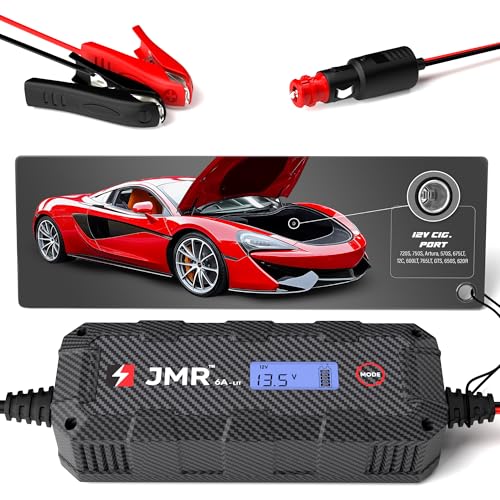
JMR 12V Battery Charger for McLaren

Dyness 12V 20A Lithium Battery Charger

Jovialpoa 12V 20A LiFePO4 Charger
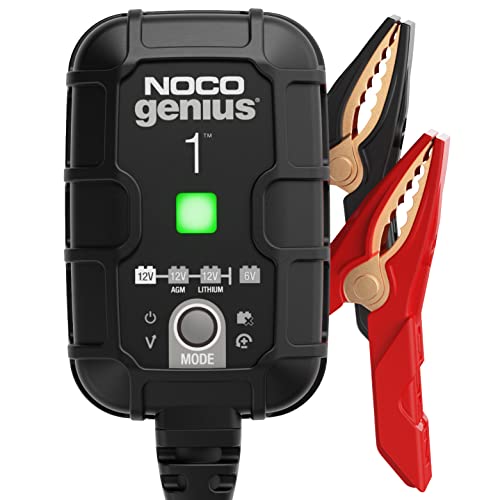
NOCO GENIUS1 1A 6/12V Charger
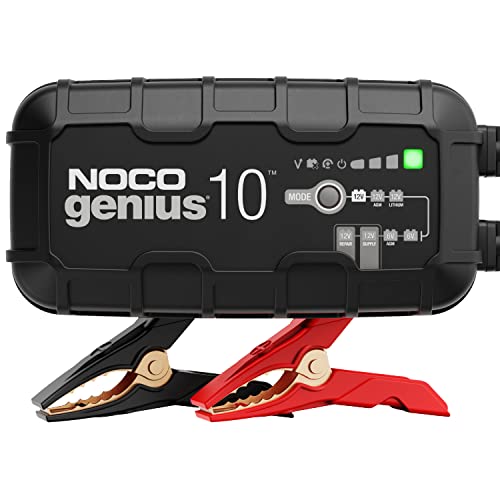
NOCO GENIUS10 10A 6/12V Charger
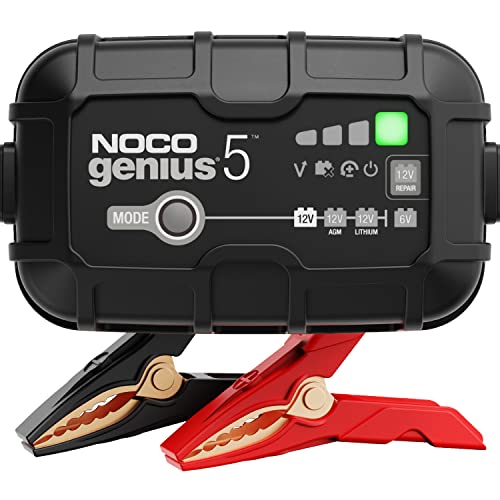
NOCO GENIUS5 5A 6/12V Charger

Jovialpoa 12V 10A Lithium Charger

Jovialpoa 12V 100Ah LiFePO4 Battery with Charger
The Picks, Examined More Closely
Riders who park their bikes through winter know the sinking feeling of a dead battery in spring. The Optimate 4 Quad Program charges a 12V battery (or its 12.8V lithium cousin) at a steady 1.25A, slow enough to nurse a tired cell without cooking it. Four onboard programs cover direct-to-battery lead-acid charging, BMW CAN-bus socket charging on models from 2004 onward, and matching lithium profiles.
Compared with the NOCO GENIUS1 sitting lower in this lineup, the Optimate leans harder into the powersports niche. It is not chasing raw amperage; it is chasing compatibility with bikes that already speak a charging language through their diagnostic port. Owners storing a BMW, Triumph with CAN-bus, or premium European machine will appreciate that handshake.
Why It Works Well
- CAN-bus program charges through the BMW DIN socket without splicing into factory wiring.
- 9-step process includes desulfation and recovery modes for neglected batteries.
- Dedicated lithium profile protects LiFePO4 chemistry from overcharge damage.
- 1.25A trickle rate suits small motorcycle and ATV batteries for long winter storage.
Things To Consider
- Low amperage means overnight charging for anything bigger than a mid-sized powersports battery.
- Premium price for a charger aimed at a narrow audience.
At A Glance
Built With In Mind
Riders with BMW motorcycles from 2004 onward who want winter storage charging through the factory diagnostic port.
Look Elsewhere When
The NOCO GENIUS10 serves you better when you want one charger for both a car and a motorcycle.
The Victron Blue Smart makes its case quietly through a phone app rather than flashy buttons. Built-in Bluetooth streams voltage, current, and charge stage straight to the Victron Connect app, so you can check on a battery from the kitchen while the charger lives in the garage. The IP65 rating means it shrugs off rain if you forget to bring it inside.
Where the Optimate 4 Quad focuses on powersports compatibility, the Victron focuses on visibility. Seven amps sits in the middle of the pack: stronger than a 1A trickle but lighter than a 20A workshop unit. Owners with mixed battery banks, from a daily driver to a marine starter, may find this balance useful.
The Case For It
- Bluetooth monitoring turns charging into a data-driven routine rather than guesswork.
- IP65 sealed housing handles damp basements and outdoor outlets.
- Adaptive multi-stage algorithm works on lead-acid and lithium chemistries alike.
Worth Noting
- 7A current feels modest for large deep-cycle battery banks.
- App dependency adds setup friction for users who just want to plug in and forget.
- Owners report cable length is shorter than expected for some garage layouts.
Right Fit For
Tech-minded homeowners who want charging telemetry on their phone and own multiple vehicles.
Where Another Pick Suits Better
The Dyness 12V 20A Lithium Charger is a stronger choice for large off-grid battery banks needing faster turnaround.
Owning a 720S or 765LT means dealing with battery access that often requires removing panels. JMR solved that with a 12V cigarette lighter plug-and-play approach: open the ashtray cubby, plug in, and let the charger top off the starter battery without cracking any carbon fiber. It covers lithium, AGM, lead-acid, gel, and calcium chemistries, which matters when a McLaren battery has been swapped over the years.
Where the Victron Blue Smart appeals to data-driven owners, the JMR appeals to owners who value convenience above all else. This is a specialty product with a narrow audience, and that shows in the feature set.
Points In Its Favor
- Designed specifically for McLaren non-electric models including the 720S, 750S, 570S, 765LT, and GT.
- Lithium mode switch handles modern aftermarket LiFePO4 conversions.
- Cigarette port access avoids the headache of opening the battery compartment.
Some Limits To Know
- Compatibility is locked to McLaren vehicles, limiting versatility for multi-car households.
- Narrow use case may leave the charger sitting unused most of the year.
Best Suited To
McLaren owners with multiple vehicles in rotation and a cigarette-later port for easy charging access.
Skip It When
The Optimate 4 Quad Program is a better match for riders storing multiple European machines rather than one specific exotic.
Twenty amps of output moves the Dyness into genuine workshop territory. The 3-stage profile handles precharge recovery, fast bulk charging, and constant voltage topping for 12V LiFePO4 banks, and the 0V activation feature can revive a battery that has been shut down by its BMS (battery management system) protection circuit. That last detail separates it from chargers that simply refuse to handshake with a deeply depleted cell.
Compared with the Victron Blue Smart at 7A, the Dyness delivers nearly three times the current for much faster turnaround on big battery banks. The catch is that size and power demand a dedicated outlet and decent ventilation.
What Makes Sense
- 20A output refills a 100Ah LiFePO4 bank in roughly five hours.
- 0V activation recovers BMS-protected batteries that read zero volts.
- 3-stage profile optimizes for battery longevity rather than raw speed.
Trade Offs
- Larger footprint than 1A to 7A consumer chargers.
- 20A draw requires a dedicated 15-amp or higher circuit for safe continuous use.
- Cooling fan noise under heavy load may bother workshop neighbors.
Key Specs
Who Should Grab It
Off-grid cabin owners and van lifers running 100Ah+ LiFePO4 banks who want fast recovery from deep cycling.
Reach For A Different Pick When
The NOCO GENIUS5 fits better for someone with a single car battery and no interest in deep-cycle gear.
Where the Dyness 20A charger targets a specific deep-cycle user, this Jovialpoa model stretches across a much wider battery range. It charges small 10Ah packs in roughly 30 minutes to 1.5 hours while still pushing big 100Ah to 300Ah banks. The 0V activation mode handles BMS-protected batteries that have dropped off the bus, and the 100V to 240V universal AC input makes it a natural choice for travel.
The 14.6V output at 20A maxes out at the standard absorption voltage for a 12V LiFePO4 cell, so no surprises on the chemistry side. Storage-wise it is bulkier than a wall-wart trickle charger but lighter than a true industrial unit.
Useful Highlights
- Wide capacity range from 10Ah to 300Ah covers nearly all 12V LiFePO4 use cases.
- Universal AC input supports both North American and European outlets for traveling owners.
- 0V activation revives BMS-shutdown batteries without manual intervention.
Points To Keep In Mind
- Higher amperage demands a properly rated extension cord and outlet.
- Lacks the app connectivity found on the Victron Blue Smart.
- Plastic housing feels light compared to metal-cased workshop units.
Perfect Match For
RV and marine owners running mixed battery banks from small trolling-motor packs to large house banks.
Swap It Out When
The Victron Blue Smart fits better for owners who want Bluetooth monitoring alongside charging.
The NOCO GENIUS1 is the kind of charger you tuck into a shelf and forget about until the lawn tractor refuses to start in March. At just 1A it is not going to refill anything larger than a small motorcycle or compact LiFePO4 pack quickly, but for maintenance charging on vehicles that sit for weeks, the gentle 1A flow keeps the cells topped without overcharging.
Compatibility covers 6V and 12V lead-acid (AGM, gel, flooded, deep-cycle) plus lithium-ion (LiFePO4) batteries up to 30Ah. It is a noticeable step down from the larger GENIUS5 and GENIUS10 siblings in the same product family, both in power and in supported capacity.
Reasons It Performs
- Smallest footprint in the GENIUS lineup, easy to mount in a tight garage corner.
- Force mode can recover deeply discharged cells that other chargers ignore.
- Multi-chemistry support means one unit covers classic and lithium batteries.
Small Caveats
- 1A current is too slow for anything above a small powersports battery.
- Lacks temperature compensation found on the larger GENIUS10.
Feature Snapshot
Who It Suits Best
Owners of small motorcycles, lawn tractors, and classic cars who need a set-and-forget maintenance charger.
Not Your Match When
The NOCO GENIUS10 makes more sense for garage mechanics working on full-size car batteries every week.
The GENIUS10 sits at the top of NOCO’s consumer offerings and earns its position through a dense feature set: 10A output handles batteries up to 230Ah, a built-in desulfator can revive lightly sulfated lead-acid cells, and temperature compensation adjusts charging voltage based on ambient conditions. Force mode lets the unit handshake with deeply discharged batteries that other chargers refuse.
Where the GENIUS1 is a shelf-dweller for occasional use, the GENIUS10 is a daily workhorse. Garage owners, small fleet operators, and serious hobbyists will get the most out of the extra amperage.
Where It Helps
- 10A charging capacity handles batteries up to 230Ah.
- Desulfator mode can restore aging lead-acid batteries rather than replacing them.
- Temperature compensation adjusts output for cold garages or hot summer attics.
A Few Limitations
- Larger and pricier than the GENIUS1 and GENIUS5 siblings.
- 10A continuous draw means you want a dedicated outlet in older homes.
Made For
Garage mechanics and small fleet operators maintaining multiple vehicles across seasons.
A Better Fit Elsewhere
The Dyness 12V 20A Charger serves you better when the priority is fast charging deep-cycle LiFePO4 banks rather than lead-acid repair.
The GENIUS5 splits the difference between the 1A GENIUS1 and the 10A GENIUS10, and for many sedan and SUV owners that middle ground is exactly right. Five amps handles a full-size car battery in a reasonable overnight window, and the multi-chemistry support covers both the lead-acid battery under the hood and a LiFePO4 replacement if you upgrade later.
It does not have the desulfator or temperature compensation of the GENIUS10, which keeps the price lower and the feature list approachable. For a daily driver parked outside through New England winters, this is a sensible middle-ground choice.
The Good Stuff
- 5A output suits typical 50Ah to 120Ah automotive batteries without overnight marathons.
- Force mode revives deeply discharged cells that refuse normal charging.
- Compact design stores easily on a garage shelf or workbench.
Honest Caveats
- No temperature compensation or desulfator, unlike the larger GENIUS10.
- Not built for deep-cycle banks over 120Ah.
The Right Fit
Sedan and SUV households wanting a versatile charger that handles both starter and small lithium batteries.
Consider Something Else When
The NOCO GENIUS10 is the smarter choice if you maintain multiple vehicles and want desulfation features.
This 10A Jovialpoa lands between the brand’s 20A heavy-duty unit and the smaller trickle chargers, filling a gap for owners who want meaningful charging speed without paying for full workshop output. Under ideal conditions, a 50Ah pack fills in roughly 2.5 hours, a 100Ah in five. The 14.6V output and 0V activation are consistent with the 20A sibling’s profile.
It is a sensible mid-tier choice for marine and trailer applications where a smaller 20A unit feels like overkill but a 5A GENIUS-class charger takes too long.
Positive Points
- 10A output fills a 100Ah battery in roughly five hours.
- 0V activation revives BMS-protected cells that have shut down.
- 14.6V absorption voltage matches standard LiFePO4 charging requirements.
Practical Considerations
- Less common than the 20A sibling, so finding accessories may take longer.
- Plastic housing is lightweight but less rugged than metal-cased alternatives.
Whose Shelf It Belongs On
Boat and trailer owners running mid-size battery banks who want faster turnaround than a 5A charger offers.
Another Choice May Suit
The Jovialpoa 20A Charger is a better pick if your battery banks regularly exceed 200Ah and need serious throughput.
For someone building a camper electrical system from scratch, buying the battery and charger as a matched pair removes the guesswork about voltage compatibility. The 100Ah LiFePO4 pack stores 1280Wh, rated for thousands of deep cycles, and the included 14.6V 20A charger tops it off in roughly five hours from empty. Low-temperature protection is built in for cold-weather camping.
Where the other chargers in this list assume you already own a battery, this bundle assumes you do not. The IP65 rating on the battery helps it survive the splash zone in a travel trailer battery compartment.
Practical Pluses
- Matched battery and charger removes compatibility guesswork for new builds.
- IP65 rated battery housing handles the moisture common in trailer compartments.
- Low-temperature protection prevents charging damage in cold weather camping.
Less Ideal Details
- 20A charger is overkill if you only need maintenance charging.
- Bundled units are heavier and bulkier than a charger alone.
Feature Card
Who Will Love This
Travel trailer and camper builders starting from a blank electrical slate who want matched components.
Where A Sibling Pick Shines
The Jovialpoa 20A Charger alone is a better match if you already own a healthy LiFePO4 battery.
Picking The Right Match For Your Battery Bank
Match Charger Output To Battery Size
A 1A charger handles small motorcycle and lawn tractor batteries but stalls on anything bigger. Mid-size 5A to 7A units like the NOCO GENIUS5 or Victron Blue Smart are the daily driver sweet spot for car owners who want overnight recovery. Heavy 10A to 20A models like the Dyness or Jovialpoa 20A unit are built for deep-cycle banks where turnaround time matters.
Check Chemistry Compatibility
LiFePO4 batteries charge at a different absorption voltage (around 14.6V) than flooded lead-acid (closer to 14.4V). Chargers without a dedicated lithium mode either undercharge the pack or rely on a generic profile that may shorten its life. Confirm the unit lists LiFePO4 in its supported chemistry list before plugging into a lithium bank.
Look At Special Features You Will Actually Use
Bluetooth monitoring on the Victron Blue Smart is a real perk for data-driven owners but a distraction for those who just want to plug in and walk away. CAN-bus compatibility on the Optimate 4 Quad matters only if you ride a BMW or similar European bike. Desulfation on the NOCO GENIUS10 helps revive aging lead-acid batteries but is irrelevant if you have already switched to lithium.
Plan For Power And Ventilation
Chargers pulling 10A to 20A continuously need a dedicated outlet on a properly rated circuit. They also generate heat under heavy load, so garage ventilation or mounting the unit on a shelf with airflow around it helps with long-term reliability.
Key Considerations Across These Picks
Pitfalls Shoppers Hit
The most common mistake is choosing a charger based only on amperage, then discovering it lacks the lithium profile a LiFePO4 battery needs. Equally common is buying a high-output 20A unit for a small motorcycle battery and cooking it within a few cycles. Match the charger’s output range and chemistry list to your actual battery bank before anything else.
What The Higher Tier Buys
Paying more for a premium charger typically gets you Bluetooth monitoring, temperature compensation, desulfation modes, or specialty compatibility like CAN-bus. For a single daily driver parked in a temperate climate, those extras are often unnecessary. For a multi-vehicle household or a workshop, the upgrade typically pays off in fewer battery replacements and more visibility into charging health.
Frequently Asked Questions
Can I use a regular lead-acid charger on a LiFePO4 battery?
It depends on the charger’s voltage profile. Many basic lead-acid chargers push absorption voltages too high for LiFePO4 chemistry, which can shorten cell life or trip the BMS. Chargers with a dedicated lithium mode are a safer choice.
How long does it take to charge a 100Ah LiFePO4 battery?
A 20A charger fills a 100Ah pack in roughly five hours under ideal conditions, while a 10A unit stretches that to about ten hours. Actual time depends on the starting state of charge, ambient temperature, and any absorption stage hold time.
What does 0V activation do?
It allows the charger to handshake with a battery that reads zero volts, often because the BMS has shut the pack down for protection. Without this feature, many chargers simply ignore the cell and never begin charging.
Do I need Bluetooth monitoring on a charger?
For most casual users, Bluetooth adds convenience rather than necessity. It becomes valuable when you maintain multiple batteries, want to verify charge stages remotely, or need to log charging data over time.
Can one charger handle both my car and my RV battery?
Yes, provided the chemistry and voltage match. A multi-chemistry unit like the NOCO GENIUS10 covers automotive and deep-cycle lithium banks in a single package, though heavy RV banks still benefit from a higher-amperage dedicated charger.
Closing Remarks
The right 12V LiFePO4 charger depends entirely on what you own and how you use it. A weekend rider storing a BMW through winter leans toward the Optimate 4 Quad, while a van lifer running a 200Ah house bank needs something closer to the Dyness or Jovialpoa 20A models. Match the chemistry, the amperage, and the special features to your actual scenario, and any of these ten picks will treat your battery well.