Lithium iron phosphate (LiFePO4) chemistry has quietly rewritten the rules for off-grid power, trolling motors, and weekend tool kits. The right 12v battery now lasts longer, weighs less, and shrugs off deep discharge far better than the lead-acid bricks it replaces. Picking the right one still comes down to capacity, cold-weather behavior, and the kind of charging setup you actually live with.
This list rounds up ten options that cover the common scenarios: RV solar banks, marine trolling motors, kid-sized ride-on toys, fish finders, and workshop tools. Each pick is matched to a specific use case, so you can skip straight to the battery that fits how you plan to use it.
A Side-By-Side Look

Redodo 12V 100Ah LiFePO4 Battery with 14.6V 20A Lithium Charger

GOLDENMATE 12V 10Ah LiFePO4 Lithium Battery IP67 Waterproof
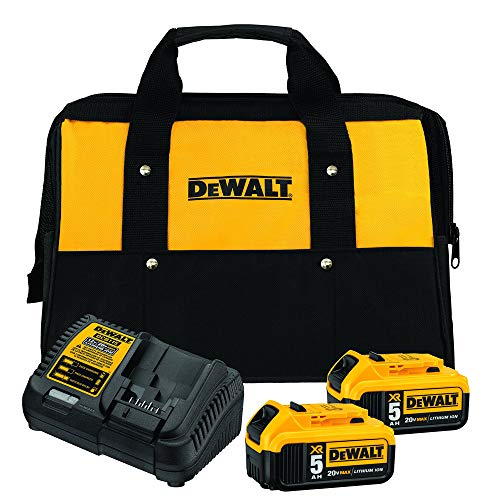
DEWALT 20V MAX Battery Charging Kit 5Ah 2-Pack (DCB205-2CK)

Milwaukee 48-59-2401 M12 Lithium Ion 12 Volt Battery Charger

GOLDENMATE 12V 7Ah Lithium LiFePO4 Battery IP67 Lightweight

GOLDENMATE 12V 12Ah Lithium LiFePO4 Battery 2-Pack IP67

Redodo 12.8V 100Ah LiFePO4 Battery with 14.6V 10A Charger

Redodo 12V 165Ah LiFePO4 Battery with 14.6V 20A Charger

Redodo 36V 50Ah Trolling Motor Lithium Battery with 43.8V 25A Charger

Redodo 16V 30Ah LiFePO4 Battery with 18.25V 10A Charger for Fish Finder
Why These Options Stand Out
A 100Ah LiFePO4 (lithium iron phosphate, a chemistry known for thermal stability and long cycle life) pack from Redodo anchors the list because it pairs a Bluetooth-equipped BMS (battery management system, the onboard circuitry that protects cells from overcharge, over-discharge, and shorts) with a 20A dedicated charger in one box. In a small solar shed or backup closet, that bundle removes the usual friction of buying the cells and the charger separately.
The 100Ah capacity runs a dorm fridge for a day or a sump pump through several cycles, which makes this the most flexible option for homeowners leaning into off-grid prep. You monitor voltage and remaining capacity from your phone and shut the pack down remotely if a storm rolls in.
What Works In Its Favor
- Bluetooth 5.0 app shows live voltage, current, and remaining capacity so you stop guessing in the dark.
- 20A charger refills the pack in roughly 5 hours, useful after cloudy stretches.
- Low-temperature cutoff protects cells when the mercury drops below freezing.
- Group-size 100Ah fits most standard battery boxes and solar cabinets.
Honest Caveats
- The bundled 20A charger is rated for indoor locations, so outdoor installs need a separate weatherproof enclosure.
- Items may ship separately, so plan a few days of buffer before a planned off-grid trip.
Feature Snapshot
Who It Suits Best
Homeowners building a small backup or solar system who want one purchase that covers cells plus a matched charger.
Swap It Out When
The Redodo 12V 165Ah LiFePO4 Battery with 14.6V 20A Charger fits better for RV owners who need more amp-hours in a Group 31 footprint.
Step down to 10Ah and you get a battery that fits in a kayak hatch or behind a boat seat without a fight. GOLDENMATE seals this one to IP67 (a rating that means full dust ingress protection and brief submersion survival), so rain spray and accidental splashes do not faze it.
It pairs nicely with a fish finder, a string of camp LEDs, or a small trolling motor on a jon boat. The internal BMS handles the usual voltage and short-circuit protection so you can leave it connected between trips.
What It Does Well
- IP67 sealing handles spray and short immersion, which matters on open boats.
- Lightweight enough to carry between vehicles and campsites without back strain.
- Built-in BMS keeps the pack safe during long storage, even at partial charge.
Small Caveats
- 10Ah is a working capacity for small electronics; it will not run a fridge overnight.
- Charging through a standard automotive lead-acid charger is not recommended, so plan a LiFePO4-compatible supply.
The Right Fit
Kayak anglers and weekend campers who need a sealed pack for a fish finder, small light bar, or portable fan.
Where Another Pick Suits Better
The GOLDENMATE 12V 12Ah Lithium LiFePO4 Battery 2-Pack IP67 makes more sense for mobility scooter users who want a swap-ready spare.
DEWALT sidesteps the off-grid crowd and lands squarely in the shop. This kit delivers two 5Ah XR packs plus a multi-voltage charger that handles 12V, 20V, and 60V MAX batteries. For contractors who already own DEWALT gear, that cross-compatibility simplifies the wall outlet situation.
Total capacity of 10Ah across the two packs keeps a circular saw and an impact driver fed through a long workday. The included soft bag protects the cells between trucks and job sites, a small touch that adds up.
Points In Its Favor
- Two 5Ah packs let you rotate through cuts without waiting on a charge.
- Multi-voltage charger reduces clutter for users running mixed DEWALT platforms.
- Soft storage bag keeps contacts clean during transport.
Worth Noting
- 20V MAX packs are designed for tool platforms, so they will not replace a deep-cycle house battery.
- Charger fan noise runs louder than a typical wall wart, which matters in quiet offices.
At A Glance
Best Suited To
Contractors and remodelers who already run DEWALT 20V tools and need a matching charging setup.
Consider Something Else When
The Milwaukee 48-59-2401 M12 Lithium Ion 12 Volt Battery Charger is a better fit for crews standardized on the M12 platform.
This is a charger rather than a battery, which changes the role it plays on the list. For anyone already invested in Milwaukee’s M12 cordless line, the 48-59-2401 unit refreshes compact packs in as little as 30 minutes, with status LEDs to confirm charge state.
LED indicators signal charging, charged, and fault conditions so you do not have to babysit the bench. Larger high-capacity packs stretch to about an hour, but the fast turnaround on common 2.0 and 3.0Ah packs keeps a trim carpenter moving.
What Earns Its Place
- Compact packs reach full charge in around 30 minutes for tight job schedules.
- Onboard LEDs communicate status at a glance, even from across the bench.
- OEM build matches the M12 platform without firmware mismatches.
Practical Considerations
- The unit tops out at M12 packs, so users with M18 or MX tools need a different charger.
- Larger M12 high-output packs stretch refill times toward an hour.
Whose Shelf It Belongs On
M12 platform users who want a factory-matched charger that handles small packs quickly.
Look Elsewhere When
The DEWALT 20V MAX Battery Charging Kit 5Ah 2-Pack (DCB205-2CK) covers more ground for mixed 12V, 20V, and 60V tool systems.
At 2.07 lb, this 7Ah pack is the lightest option on the list, and that matters more than you would expect. Kids ride-on toys, emergency lighting, and small fish finders all gain a lot from a battery that an eight-year-old can swap.
IP67 sealing means the toy can sit in the grass through a sprinkler session and still take a charge later. Built-in BMS protection handles the brief over-currents that ride-on motors tend to pull during hill climbs.
Real Benefits
- 2 lb weight makes battery swaps painless for kids and small mobility aids.
- IP67 case shrugs off lawn water and puddle splashes.
- 5000+ cycle rating supports years of weekend use before noticeable wear.
Trade Offs
- 7Ah limits continuous draw, so it is not the cell for a 30 lb thrust trolling motor.
- LiFePO4 cells need a compatible charger, which means rebuying if you have only lead-acid gear at home.
Quick Facts
Made For
Parents replacing dead SLA batteries in kid ride-on toys or small UPS-style lighting setups.
Not Your Match When
The GOLDENMATE 12V 10Ah LiFePO4 Lithium Battery IP67 is a better call when you need slightly more headroom for fish finders.
Two 12Ah packs in one box changes the math for anyone running mobility scooters, kayak fish finders, or backup sump alarms. One cell stays in service while the other charges, so you avoid the silent-failure problem of a single aging pack.
IP67 sealing matches the smaller GOLDENMATE siblings, and the BMS handles overcharge and short-circuit events during fast charging. Owners commonly rotate the pair weekly, which spreads wear and extends usable life.
A Few Highlights
- Two-pack format supports hot-swap routines for mobility and emergency gear.
- IP67 sealing keeps cells healthy through outdoor storage.
- BMS protection reduces the chance of a deep-discharge failure mid-trip.
A Few Limitations
- Two-pack shipping weight adds up, which can complicate hand-carry runs.
- 12Ah still falls short of a 100Ah deep-cycle build for household backup.
Perfect Match For
Mobility scooter users and kayak anglers who want a fresh spare without waiting for a recharge cycle.
Another Choice May Suit
The GOLDENMATE 12V 7Ah Lithium LiFePO4 Battery IP67 fits better for lighter kids ride-on toy replacements.
Redodo ships the same 100Ah LiFePO4 cell as the first pick, but pairs it with a quieter 10A charger instead of the 20A model. Refill times stretch to roughly 10 hours, which trades speed for a gentler charge cycle and a more budget-friendly bundle.
For homeowners plugging the pack into a wall outlet overnight, the slower charge is rarely an issue. You wake up to a topped-off bank that runs through the next day’s fridge or sump duty without drama.
The Helpful Details
- Lower 10A charge rate produces less heat during refill, which can preserve cell longevity.
- Same 100Ah LiFePO4 cell as the top pick, just with a quieter charger.
- Long cycle life cuts replacement frequency over years of seasonal use.
Points To Note
- 10A charging means a full refill takes closer to 10 hours, which limits rapid turnarounds.
- No Bluetooth app on this bundle, so remote monitoring requires a separate shunt or meter.
Spec Overview
Who Will Love This
Backup-power planners who charge overnight and prefer a gentler refill profile.
Reach For A Different Pick When
The Redodo 12V 100Ah LiFePO4 Battery with 14.6V 20A Charger suits people who need Bluetooth tracking and faster turnarounds.
For serious off-grid installs, 100Ah sometimes feels thin. Redodo responds with a 165Ah LiFePO4 cell wrapped in a Group 31 case, plus the same Bluetooth BMS and 20A charger as the Editor’s Choice option. You gain roughly 2112Wh of usable capacity without moving to a larger battery box.
An RV with a 2000W inverter or a small cabin solar rig can ride through cloudy stretches on a single 165Ah pack. The Bluetooth monitor still reports state of charge, which matters when you are miles from a service center.
Where It Excels
- 165Ah capacity in a Group 31 footprint fits most standard RV battery trays.
- Bluetooth BMS reports live state of charge from a phone, useful off-grid.
- 20A charger fully refills the pack in around 8 hours.
Things To Consider
- Higher capacity means heavier handling at install, which can be a two-person lift.
- Battery and charger may ship separately, so the box might arrive in two waves.
Who Should Grab It
RVers and cabin owners building mid-sized solar arrays who need more amp-hours than a 100Ah cell delivers.
A Better Fit Elsewhere
The Redodo 12.8V 100Ah LiFePO4 Battery with 14.6V 10A Charger makes more sense for budget backup where 165Ah is overkill.
Trolling motors like the Minn Kota and MotorGuide 36V class need a matched voltage battery, not three 12V cells wired in series. Redodo’s 36V 50Ah pack handles that on its own, with a 43.8V 25A charger that refills the pack in roughly 2 hours.
Tuned for 100 to 120 lb thrust motors, it covers the common bass boat setup without an external balancer or wiring harness. The single-pack design cuts install time at the ramp.
Everyday Perks
- Single 36V pack replaces three series-wired 12V batteries, simplifying install.
- 25A charger refills the bank in around 2 hours between fishing spots.
- Tuned output for 100 to 120 lb thrust trolling motors.
Worth Bearing In Mind
- Higher voltage means charger compatibility matters; mixing with 12V-only chargers risks damage.
- Boat wiring may need a new connector to match the pack’s terminal layout.
Right Fit For
Boat anglers running 36V trolling motors in the 100 to 120 lb thrust range.
Skip It When
The Redodo 12V 100Ah LiFePO4 Battery with 14.6V 20A Charger is a smarter call for cabin solar where 12V is the working voltage.
Modern fish finders and 360 sonar systems pull more voltage than a standard 12V cell can comfortably deliver across a long day. Redodo’s 16V 30Ah pack steps the voltage up slightly, which keeps sonar units running clean through extended trips.
The 18.25V 10A charger refills the pack in about 3 hours. Anglers commonly mount the cell inside a dry hatch with a fused lead running to the head unit, which keeps the deck uncluttered.
A Favorable Mix
- 16V output matches the demands of newer sonar and 360 imaging units.
- 30Ah capacity covers a full day of graphing on the water.
- 10A charger refills the pack in around 3 hours between launches.
Small Caveats
- Non-standard voltage means it will not drop into a generic 12V electronics setup.
- Charging gear is bundle-specific, so a replacement charger must match the 18.25V output.
Built With In Mind
Kayak and bass boat anglers running Garmin, Lowrance, or Humminbird sonar units that benefit from a 16V supply.
Where Another Pick Suits Better
The GOLDENMATE 12V 10Ah LiFePO4 Lithium Battery IP67 fits smaller, simpler fish finder setups that run fine on 12V.
What To Weigh Before Choosing A 12v Lithium Ion Battery
Match Capacity To The Load, Not The Hype
Capacity ratings (Ah) tell you how much energy the cell stores, but the real test is how long it runs your specific gear. A 7Ah pack is plenty for a kid ride-on toy but vanishes fast under a 100W inverter. List the devices you plan to run, estimate their combined draw in amps, and divide by usable capacity (typically 80 to 90 percent for LiFePO4, since pulling cells to absolute zero shortens life). That gives you a realistic runtime in hours.
Check The Charger Match Before You Click
Lithium chemistries need chargers that match their voltage profile. A lead-acid charger set to equalize can push LiFePO4 cells above their safe ceiling. Bundles like the Redodo 100Ah kits remove this concern, but standalone cells like the GOLDENMATE IP67 packs assume you already have a LiFePO4-compatible supply on hand. Worth double-checking before buying two systems that do not talk to each other.
Think About Cold Weather Behavior
If your battery lives in an unheated garage or an open boat, low-temperature cutoff matters more than peak capacity. The Redodo 100Ah Smart pack stops charging below freezing to protect the cells, while IP67 marine packs often work fine down to about 32°F on discharge but limit charging. Climate ratings decide whether your winter battery still works in February.
Key Considerations Across These Picks
Where Shoppers Go Wrong
Most sizing mistakes come from comparing amp-hours only, without checking the actual continuous discharge rating. A 100Ah cell rated for 100A continuous can run heavier inverters, while a 100Ah pack limited to 50A continuous will trigger BMS shutdown under the same load. Match the BMS rating to your inverter or motor spec before assuming capacity is the whole story.
The Case For Spending Up
Higher-tier picks in this list earn their keep with Bluetooth monitoring, faster chargers, and larger BMS headroom. For a kid ride-on toy, the 7Ah GOLDENMATE does everything required, but for off-grid solar, the Redodo 100Ah Smart bundle earns back the difference through remote monitoring and a 20A charger that finishes overnight refills in roughly 5 hours rather than 10.
Frequently Asked Questions
How long does a 12v lithium ion battery typically last?
A quality LiFePO4 pack delivers several thousand discharge cycles at moderate depth, which often translates to 8 to 10 years of regular use before noticeable capacity loss.
Can I replace a lead-acid battery with a lithium drop-in?
Most deep-cycle applications accept LiFePO4 drop-ins, but you must replace or reconfigure any charger set to equalize lead-acid cells above 14.6V.
Do lithium batteries work in freezing temperatures?
Discharge usually works to about -4°F, but charging below freezing can damage cells, which is why cold-protection BMS circuits matter in winter climates.
Is a higher amp-hour rating always better?
Not always, since a larger pack costs more and weighs more, while a smaller properly sized cell may run your specific load more efficiently.
What is the difference between LiFePO4 and regular lithium-ion?
LiFePO4 uses lithium iron phosphate chemistry, which trades some energy density for much longer cycle life and far greater thermal stability.
Closing Remarks
The right 12v lithium battery comes down to your real load, your climate, and how much monitoring you want. Match the pack to the job, charge it with a compatible supply, and you will spend more time using your gear than worrying about it.