A garage shelf cluttered with loose AAAs, a jump starter rattling around in a trunk, a portable power bank you can’t find anywhere in the house, that’s the everyday reality for most people. Battery boxes solve the small chaos: keeping cells sorted, jump starters cushioned, generator hookups sealed, and solar circuits organized in one safe enclosure. The picks below cover everything from compact organizer cases to heavy-duty power distribution boxes, so there’s something for weekend tinkers, RV owners, and off-grid solar users alike.
An Overview Of The Picks

NOCO GBC101 Boost X EVA Protection Case

HOSOCASE Waterproof Hard Case for NOCO GBX155/GB150

LUGECASE Hard Box for NOCO Boost GB70/GBX75

BESYL 30-Amp Generator Inlet Box

NOCO GBC014 Boost HD EVA Protection Case

NOCO GBC015 Boost Pro EVA Case (Pack of 2)

NOCO GBC017 Boost XL EVA Protection Case

IZTOSS 300A Bus Bar Power Distribution Block
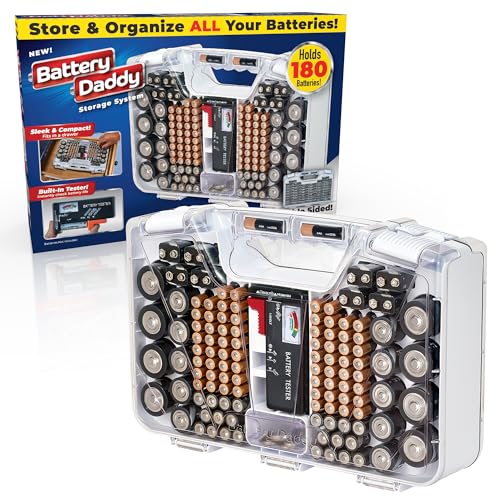
Ontel Battery Daddy Storage & Organizer Case
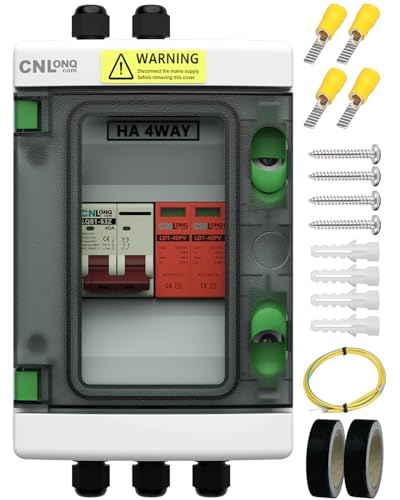
CNLonQcom Solar Disconnect Switch with Surge Protector
More Details On Our Top Picks
The GBC101 wraps the GBX45 UltraSafe Lithium Jump Starter in a tailored EVA shell. Unlike the bulkier hard cases further down this list, this sleeve-style design slips easily into a glove box or backpack, which makes it the natural companion for drivers who keep a compact booster on hand for emergencies. EVA, short for ethylene-vinyl acetate, is a semi-rigid foam that absorbs shock while staying light, so the case adds protection without turning your jump starter into a brick.
For commuters and road-trippers, the form-fitting build keeps cables, clamps, and the unit itself in one tidy bundle. Compared to the organizer case in pick 9, this option focuses on a single device rather than a mixed collection of cells.
Benefits That Matter
- Form-fitting EVA shell cushions the GBX45 against trunk vibrations and minor drops
- Slim profile fits in glove boxes, center consoles, and small cargo nets
- Single-purpose design means cables stay wrapped against the unit
- Lightweight enough that you forget it’s in your bag
Things To Consider
- EVA construction handles everyday bumps, but a heavy impact on concrete could still dent the shell
- Not waterproof, so wet road trips or boat decks call for a sealed alternative
Who It Suits Best
Daily commuters and weekend travelers who want a slim, no-fuss case for their GBX45 jump starter.
A Better Fit Elsewhere
The HOSOCASE waterproof hard case is the smarter call for owners of larger GB150 or GBX155 boosters who need crushproof protection.
Where the GBC101 trades ruggedness for portability, this hard-shell case from HOSOCASE goes the other direction. It’s built to cradle the larger GBX155 (4250A) and GB150 (3000A) units, both of which weigh more and deserve serious protection on job sites or service trucks. The hard outer layer resists crushing, and the interior is shaped to hold the booster plus its wall charger, car charger, cables, and quick charger in dedicated slots.
Anyone who already owns a high-output lithium booster and a tangle of accessories will appreciate the all-in-one layout. It’s a clear step up from soft EVA sleeves when the gear travels off-road or sits in a workshop drawer.
Key Advantages
- Rigid exterior shields expensive high-amperage boosters from drops and pressure
- Dedicated compartments keep the wall charger, car charger, and quick charger from tangling
- Compatible with both the GBX155 and the GB150, which simplifies fleet storage
- Water-resistant hard build handles wet truck beds and rain better than foam cases
Worth Noting
- Noticeably bulkier than the NOCO GBC101, so it won’t vanish into a glove box
- Case only, the jump starter and chargers must be sourced separately
- Hard shells can scuff easily if tossed around a metal truck bed
Made For
Mobile mechanics, roadside responders, and prosumer drivers who already own a GBX155 or GB150 and want one organized home for it.
Skip It When
The LUGECASE hard box is a tighter, lighter option for owners of smaller GB70 or GBX75 boosters.
The LUGECASE sits in the middle ground between the slim EVA sleeves and the bigger HOSOCASE hard shell. It’s a custom-fitted hard box for the GB70 and the newer GBX75, two of NOCO’s most popular mid-range boosters. The snug interior keeps the unit from rattling, and the compact footprint makes it easy to stash behind a truck seat or in a deep door pocket.
For owners who upgrade from a GB50 to a GB70, this case fills the gap that NOCO’s own GBC014 (pick 5) handles for some users. It’s a solid middle-ground option for daily drivers who don’t want to commit to a full-size hard case but still want more protection than foam.
Useful Touches
- Custom cutout for both GB70 and GBX75, so one case covers two popular models
- Hard shell offers better crush resistance than the foam NOCO cases
- Smaller footprint than the HOSOCASE, easier to fit in a sedan trunk
- Locks cables and clamps in place so nothing goes missing under the seat
Trade Offs
- Doesn’t include the booster or accessories, so factor that into the total cost
- Less weather sealing than the HOSOCASE, which is better suited to wet environments
Best Suited To
Owners of mid-tier NOCO boosters who want firmer protection than foam without the bulk of a pro-grade hard shell.
Consider Something Else When
The NOCO GBC014 Boost HD EVA Protection Case is a better fit if you prefer lightweight foam over a hard shell and want a NOCO-branded case.
Stepping away from jump-starter storage, the BESYL 30-Amp Generator Inlet Box is a hardwired enclosure that mounts to the side of a house or shop. It accepts a NEMA L14-30P plug, a 4-prong twist-lock connector standard on many portable generators, and routes 125/250V power into a transfer switch so a backup generator can feed the home safely. The unit supports up to 7,500 watts, which is enough for essentials like a fridge, sump pump, and a few lights.
RV owners also use these inlet boxes at campsites to plug in a portable generator to their coach. Compared to the soft organizer cases earlier in this list, this is permanent infrastructure, the kind of box an electrician wires in once and forgets about.
The Upside
- Supports up to 7,500 watts, which covers most home-backup generator scenarios
- Weatherproof design suitable for indoor or outdoor mounting
- Pre-drilled design simplifies wiring, no knockouts to chisel out
- ETL listed, a third-party safety certification recognized by many local codes
Points To Keep In Mind
- Requires electrical know-how or a licensed electrician for safe installation
- Not a portable option, this is fixed hardware for a permanent location
Right Fit For
Homeowners preparing for outages and RV owners who want a clean, code-friendly way to bring generator power inside.
Look Elsewhere When
The CNLonQcom solar disconnect switch in pick 10 is a better match for off-grid solar arrays that need DC-rated protection.
The GBC014 is the NOCO-branded EVA case tailored for the GB70 UltraSafe Lithium Jump Starter. Where the third-party LUGECASE option (pick 3) leans hard on rigid plastic, this sleeve uses NOCO’s own molded EVA shell with a soft melange velvet interior. That lining helps prevent the kind of micro-scratches that show up on glossy jump-starter bodies over time.
The integrated handle and steel-rimmed zipper make it a travel-friendly choice for tailgaters and long-distance drivers. It shares a design language with the GBC101 in pick 1, just sized up for the chunkier GB70.
Why It Works Well
- Velvet lining cushions the GB70’s finish against scuffs during transport
- Molded EVA absorbs shocks from rough trunk rides
- Reinforced handle and over-molded pull tabs hold up to repeated use
- Lightweight build keeps the whole package portable
Small Caveats
- Tailored to the GB70 only, so it doesn’t fit the GBX75 or larger NOCO models
- EVA isn’t waterproof, heavy rain will still find its way in
Who Should Grab It
GB70 owners who want a first-party NOCO case with a soft-touch interior and easy-carry handle.
Not Your Match When
The LUGECASE hard box is worth a look if you carry a GBX75 or want rigid crush protection.
The GBC015 pack brings two EVA cases built for the GB150, the largest booster in NOCO’s consumer lineup. Buying a two-pack makes sense for shops with multiple GB150 units or families that keep one in each vehicle. Each case mirrors the design of the GBC014, just scaled up for the bigger booster, with the same velvet lining and reinforced handle.
For mobile detailers, tow truck operators, or anyone running a small fleet, the dual-pack layout streamlines storage without leaving one unit naked on a workbench.
Positive Takeaways
- Two-pack format suits shops, families, and roadside assistance crews
- Velvet lining mirrors the GBC014 and protects the GB150’s glossy finish
- Reinforced zippers and pull tabs built for repeated daily handling
- Stackable shape simplifies shelf organization in a garage or van
A Few Limitations
- Costs more upfront than a single GBC014, so it’s overkill for one-booster owners
- EVA shells are dust-resistant, but not dust-proof, so debris can creep into the zipper line
Perfect Match For
Workshops and small businesses running multiple GB150 boosters who want a matched, organized storage setup.
Reach For A Different Pick When
The HOSOCASE waterproof hard case is the smarter upgrade if one GB150 gets bumped and battered in a service truck.
The GBC017 is the smallest of NOCO’s branded EVA cases, designed for the GB50, which is itself NOCO’s pocket-friendly jump starter. For drivers who keep a GB50 in a backpack or purse, this sleeve adds a layer of scuff protection without adding noticeable bulk. The thermoformed EVA exterior has a rubber-like finish that resists light moisture, and the molded shape means cables tuck neatly alongside the unit.
Compared to the GBC101 (pick 1) which fits the larger GBX45, this case is even more travel-friendly, the kind of thing you forget is in your bag until you actually need it.
A Few Strong Suits
- Compact shell fits in glove boxes, laptop bags, and small backpacks
- Rubber-like exterior finish shrugs off light splashes and dust
- Custom-molded interior keeps the GB50 from sliding around
- Adds almost no weight to the overall carry
Honest Caveats
- Only fits the GB50, no flexibility for other NOCO models
- EVA absorbs everyday bumps, but a sharp fall onto pavement can still leave a dent
Built With In Mind
Light packers and urban drivers who already own a GB50 and want minimal added bulk.
Swap It Out When
The NOCO GBC101 is the better pick for GBX45 owners who want similar slim protection for a slightly larger unit.
The IZTOSS bus bar is a different breed of battery box. Instead of storing cells or jump starters, it’s a power distribution block that consolidates multiple 12V connections onto a single, organized terminal strip. A bus bar, in plain terms, is a thick conductive bar that splits one power source into several output studs, reducing cable clutter in marine, automotive, RV, and solar setups.
Rated for 300A continuous current with a 7mm-thick copper plate and four M8 (5/16″) stainless steel studs, this block handles serious loads. The waterproof cover adds a layer of safety in engine bays and bilge compartments, where stray tools or splashes can short a circuit.
Where It Helps
- 300A continuous rating handles demanding marine and solar loads
- Thick copper plate keeps voltage drop low across multiple outputs
- Four M8 studs simplify wiring for inverters, lights, and accessories
- Waterproof cover protects terminals from accidental shorts
Factors To Consider
- Requires basic electrical skill to wire correctly, not a beginner plug-in accessory
- Heavier than plastic terminal blocks, so mounting location matters
The Right Fit
Marine electricians, van builders, and solar DIYers who want one clean distribution point instead of a spaghetti of inline fuses.
Where Another Pick Suits Better
The CNLonQcom solar disconnect switch handles the cutoff and surge side of an off-grid system, while this IZTOSS handles distribution downstream.
Shifting away from power equipment, the Battery Daddy is the household pick. It’s a double-sided organizer with a clear locking lid that holds up to 180 cells across AA, AAA, 9-Volt, C, D, and coin-cell sizes. The clear lid lets you spot the right battery at a glance, which is a small but underrated feature when the remote dies at 9 PM.
A built-in tester checks cell health on the spot, and the secure latches keep curious kids out. Compared to the EVA sleeves earlier in this list, this case stores loose cells, not boosters, and it pulls double duty in junk drawers and workshop shelves alike.
What It Does Well
- Holds up to 180 cells across common household sizes
- Clear lid makes it easy to spot the right battery without opening
- Built-in tester removes guesswork on which cells are still good
- Portable handle moves the whole stash from kitchen to garage
Possible Compromises
- Batteries not included, so the case alone won’t replace a dead remote
- Plastic hinges and latches are functional, but feel lighter than metal hardware
Whose Shelf It Belongs On
Households and hobbyists juggling a mix of AA, AAA, 9V, and coin cells across remotes, toys, and gadgets.
Where A Sibling Pick Shines
The NOCO GBC101 is a better fit for anyone prioritizing jump-starter storage over loose-cell organization.
Rounding out the list is a specialty box built for off-grid solar arrays. The CNLonQcom combines a 40A DC circuit breaker (rated for 500V), a lightning surge arrester, and an IP65-rated enclosure in a single unit. A disconnect switch lets you isolate the solar panel side from the inverter for safe maintenance, while the surge protector bleeds off voltage spikes from nearby lightning strikes.
IP65 means the box is dust-tight and protected against low-pressure water jets, so it survives rooftop and pole-mount installations. Compared to the BESYL generator inlet box (pick 4), which handles AC power, this one is purpose-made for the DC side of a solar system.
Advantages To Know
- 40A DC breaker with 500V rating covers most residential solar arrays
- Integrated surge arrester protects inverters from lightning-induced spikes
- IP65 enclosure handles rain, dust, and rooftop UV exposure
- Single-box design simplifies inspection and code compliance
Worth Bearing In Mind
- Specialized gear, overkill for anyone without a solar array
- Wiring a DC breaker requires confidence with high-voltage DC, which behaves differently from AC
Who Will Love This
Off-grid solar installers and DIYers who want a single, weather-sealed enclosure for disconnect and surge protection.
Another Choice May Suit
The BESYL 30-Amp Generator Inlet Box covers the AC backup-power side, while this CNLonQcom unit focuses on DC solar isolation.
What To Weigh Before Choosing Battery Boxes
The right battery box depends on what you’re actually trying to store, protect, or distribute. For loose household cells, capacity and a clear lid matter most, and the Battery Daddy covers that need in one shot. For jump starters, fit is everything: an EVA sleeve sized for the wrong NOCO model slides around and protects nothing. Hard cases like the HOSOCASE and LUGECASE options trade portability for crush resistance, which suits rough work environments.
Larger electrical boxes, like the BESYL inlet and the CNLonQcom solar disconnect, belong in a different conversation. These are installed hardware, not portable accessories, so electrical skill and code requirements should drive that decision. For mobile power distribution in vans, boats, or off-grid rigs, the IZTOSS bus bar consolidates messy wiring into one organized terminal block, but assumes you already know what you’re connecting.
Climate matters too. EVA foam shrugs off light dust and minor splashes, but it’s not waterproof. If you live somewhere wet or work near salt spray, hard-shell cases with sealed covers earn their keep. And if your battery box needs to live outdoors year-round, an IP rating (a two-digit standard that rates dust and water resistance) is worth chasing.
Smart Habits For Battery Box Shoppers
Common Shopping Slip Ups
The easiest mistake is buying a case based on brand alone without confirming the model number. NOCO makes EVA cases for the GB50, GB70, GBX45, and GB150, and each case fits only its specific unit. A GB70 case won’t safely hold a GBX75 even though they look similar on paper. Always cross-check the model number in the product listing before adding to cart.
The other common slip is treating a battery box like a one-size solution. A foam sleeve protects against scratches but does little in a flood. A hard case resists crushing but adds bulk. Knowing what you actually need, portable storage, weather sealing, or fixed installation, prevents paying for the wrong features.
What The Higher Tier Buys
Paying more usually buys two things: better materials and better fit. Premium EVA cases use molded interiors and velvet linings that protect glossy finishes, while budget sleeves rely on generic foam. Hard cases at the top of the price range add waterproof gaskets, metal hardware, and dedicated accessory compartments that cheaper versions skip.
For installed hardware like the BESYL inlet box or the CNLonQcom disconnect, the higher tier typically adds recognized third-party safety certifications and weatherproofing that holds up to inspection. The honest read is that for occasional home use, mid-tier usually suffices, but for daily professional environments, the upgrade pays off in fewer replacements and cleaner installations.
Frequently Asked Questions
What is a battery box used for?
A battery box stores, protects, or distributes power-related gear, ranging from loose household cells and portable jump starters to fixed electrical enclosures for generators and solar arrays.
Are EVA cases safe for lithium jump starters?
Yes, EVA foam is a common protective material for lithium jump starters because it absorbs shock without trapping heat, which matters for cells that warm up under use.
What is the difference between a bus bar and a battery box?
A bus bar is a conductive component that splits one power feed into multiple outputs inside an electrical system, while a battery box is the broader category of enclosure that may store cells, house jump starters, or contain electrical hardware.
Can a generator inlet box be installed indoors?
Yes, weatherproof inlet boxes like the BESYL model are rated for both indoor and outdoor mounting, though outdoor placement typically simplifies generator cable routing.
How many batteries can the Battery Daddy hold?
The Battery Daddy is rated to hold up to 180 batteries across common sizes, including AA, AAA, 9V, C, D, and coin cells. Batteries are sold separately.
Wrap Up
Battery boxes come in more shapes than most shoppers expect, from slim jump-starter sleeves to wall-mounted disconnects. Match the box to the gear you already own, and the rest of the decision tends to fall into place.