A single power outage during a storm is all it takes for a sump pit to overflow. Heavy rain pushes groundwater up, the primary pump loses juice, and within hours the basement can flood. Homeowners in storm-prone regions, finished-basement owners, and anyone storing valuables one floor below grade all benefit from a backup system. The right add-on turns a vulnerable pump into a reliable, around-the-clock guardian.
The Essentials At A Glance

NPP HR12280W FR 12V 85Ah Sealed Lead Acid Battery

VIOPUMPO 2500W Sump Pump Backup Battery System

Basement Watchdog Big Dog CONNECT Backup Pump System

Wayne Preassembled Primary & Battery Backup Combo

NPP 12V 110Ah AGM Deep Cycle Battery (Group 31)

NPP 12V 80Ah AGM Deep Cycle Battery 2-Pack (Group 24)
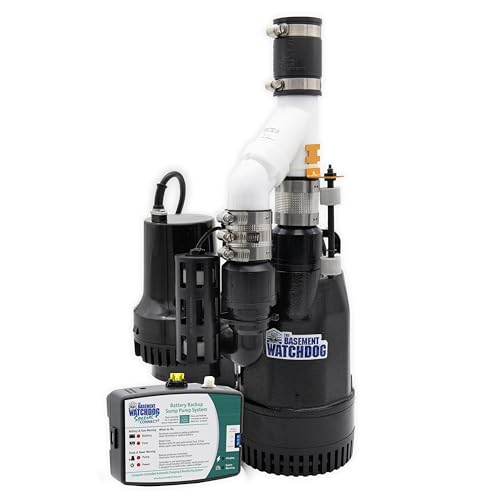
Basement Watchdog Combo CITS-50 System

Basepump RB750-EZ Water-Powered Backup System

NPP 12V 40Ah AGM Deep Cycle Battery 2-Pack
More On The Choices That Made The List
Built for high-rate discharge, the NPP HR12280W FR delivers 85 amp-hours at 12 volts, giving a sump pump backup system plenty of fuel to keep running through extended outages. Its sealed lead-acid design uses absorbent glass mat (AGM) construction, where the electrolyte is held in fiberglass mats rather than free-flowing liquid, so it resists spills and can sit in a basement utility corner without venting concerns.
Homes with deeper sump pits or pumps that cycle frequently benefit most from this capacity, since the higher amp-hour rating translates to longer runtimes between recharges. Compared to the smaller NPP options reviewed later, this unit trades compact size for sheer endurance, making it a fit for finished basements where reliability matters more than footprint.
The Good Stuff
- 85Ah capacity supports long backup runtimes during multi-day storms.
- Sealed AGM design eliminates acid spills and reduces routine maintenance.
- High-rate discharge suits sump pumps that draw significant starting current.
- Compact footprint fits near most sump installations without dedicated shelving.
Worth Noting
- Heavier than smaller AGM batteries, so plan for sturdy placement near the pump.
- Requires a compatible charger rated for its capacity to reach full potential.
- Periodic terminal cleaning helps maintain strong connections over years of use.
Who It Suits Best
Homeowners with high-demand backup systems in flood-prone regions who prioritize runtime over compact sizing.
Consider Something Else When
Smaller basements with modest water tables should consider the NPP 12V 80Ah AGM 2-Pack reviewed later, which costs less for lighter-duty setups.
Where most battery backups simply pass along stored current, the VIOPUMPO 2500W system converts DC battery power into clean pure sine wave AC output, the same smooth waveform the utility grid delivers. That distinction matters for sensitive pump electronics and ensures automatic switching from grid to battery the moment an outage hits.
The included remote controller with LCD screen puts status data at eye level rather than at floor height, a thoughtful touch when the pump lives under a basement stairwell. Larger homes with high-horsepower primary pumps that demand steady AC power tend to get the most out of this configuration. Where the earlier NPP battery is a fuel source, this VIOPUMPO unit is the complete inverter-and-display package.
Standout Benefits
- Pure sine wave output protects pump motors from the choppy current that modified sine inverters produce.
- Automatic switching eliminates manual transfer during an outage.
- LCD remote lets you check system status without crouching by the sump pit.
- 2500W rating handles demanding primary pumps with headroom to spare.
Honest Caveats
- Battery is typically sold separately, so total cost climbs beyond the inverter unit alone.
- Pure sine wave inverters run warmer than simpler designs and need ventilation clearance.
Made For
Whole-home sump setups where the homeowner wants inverter-grade power and a wall-mounted status readout rather than a basic charger-and-battery pair.
A Better Fit Elsewhere
A budget-focused shopper who already owns a compatible deep-cycle battery should look at the NPP 12V 110Ah AGM reviewed later for a simpler, more economical backup path.
The Basement Watchdog Big Dog CONNECT is a purpose-built backup pump, not just a battery add-on, and that difference shows in raw output. Rated at 3,500 gallons per hour at zero lift and 2,500 GPH at 10 feet of vertical rise, it can keep pace with primary pumps in basements that see serious groundwater intrusion. The copper-wound motor (copper wiring inside the motor windings, rather than aluminum, for better heat tolerance) signals a design meant for continuous duty rather than occasional emergencies.
A USB port accepts an add-on WiFi module so you can receive alerts when away from home, and a remote terminal lets you wire it into a home-security panel for whole-house awareness. High-water-table homes with chronic seepage find the most value here. Compare this to the Wayne combo system reviewed next: Wayne ships primary and backup together, while Big Dog replaces only the backup side.
Points In Its Favor
- 3,500 GPH at zero lift handles severe inflow events without falling behind.
- Copper-wound motor supports long run cycles during multi-day storms.
- WiFi-ready design pushes real-time alerts to phones and email.
- Remote terminal integrates with home-security systems for whole-property monitoring.
Trade Offs
- WiFi module is sold separately, raising total cost for connected functionality.
- Battery must be sourced and matched separately to reach full runtime.
- Owners commonly report needing professional guidance to size the right battery for their pit depth.
Best Suited To
Homeowners in high-water-table regions who need a backup pump strong enough to rival the primary, not just assist it.
Skip It When
Those wanting a single box that includes both primary and backup pumps in one pre-plumbed unit should choose the Wayne Preassembled Combo reviewed next.
For a homeowner who has never opened a sump pit, the Wayne Preassembled Combo arrives with primary pump, backup pump, and plumbing already connected, so installation mostly involves lowering the unit in and connecting discharge pipe. The 1/2 horsepower primary pump handles typical household water load, while the top-suction design on the primary side minimizes the chance of debris clogs at the intake.
The combo runs on either a 40Ah or 75Ah deep-cycle battery (sourced separately), giving you flexibility to scale runtime to your regional risk level. First-time installers and anyone hiring a handyman rather than a plumber find the most value here. Where the Basement Watchdog Big Dog reviewed earlier is a backup-only upgrade, Wayne ships the complete primary-plus-backup pair.
Everyday Advantages
- Pre-plumbed assembly cuts install time for less experienced homeowners.
- Top-suction primary design resists clogs from pit debris.
- Compatible with multiple battery sizes for flexible runtime scaling.
- Heavy-duty cast-iron construction on the primary extends service life.
Some Limits To Know
- Backup battery is not included, so budget for a separate deep-cycle purchase.
- Combo dimensions need a wide basin or pit, so measure the existing sump before ordering.
Who Will Love This
First-time installers replacing a single, aging pump who want both primary and backup in one preassembled package.
Reach For A Different Pick When
Homeowners satisfied with their current primary pump but needing only backup protection should consider the NPP HR12280W battery reviewed earlier, paired with a basic inverter charger.
At 110 amp-hours, this NPP AGM battery sits at the top of the deep-cycle range suitable for residential sump duty, and the Group 31 case size (roughly 13 by 6.7 by 8.7 inches) means it slides into standard battery boxes. Its sealed, maintenance-free VRLA (valve-regulated lead-acid) construction eliminates routine electrolyte checks, so once installed it can sit quietly for years. T16 terminals accommodate heavy-gauge cabling needed for inverter hookups.
The battery supports series and parallel wiring for 24V to 48V solar and hybrid inverter systems, which gives flexibility if you plan a broader off-grid or backup-power project later. Extended-runtime basements and homeowners who already own a compatible inverter benefit most. Compared to the earlier NPP 85Ah, this unit offers 25 extra amp-hours of fuel at the cost of added weight (69.4 lbs).
What Pays Off
- 110Ah capacity extends backup runtime well beyond mid-size batteries.
- Maintenance-free AGM design means no electrolyte top-offs.
- Series and parallel compatibility allows 24V to 48V system expansion.
- Spill-proof sealed case allows indoor installation with basic ventilation.
Practical Considerations
- At 69.4 lbs, it requires firm, level placement and a sturdy battery box.
- Owners commonly report slower recharge times compared to lower-capacity AGM units.
Feature Snapshot
Perfect Match For
Extended-runtime basements in storm-heavy regions where every additional hour of pump operation matters during multi-day blackouts.
Swap It Out When
Smaller pits with lighter cycling demands should consider the NPP 12V 80Ah AGM 2-Pack reviewed next, which ships two batteries for parallel configurations.
The 2-pack format of this NPP 80Ah AGM battery turns a single sump installation into a parallel-bank configuration, doubling available runtime while still using common Group 24 cases (10.76 by 8.46 by 6.61 inches). Wired in parallel, the two batteries share the load and recharge through a single charger, a setup that many backup controllers accept natively.
Sealed lead-acid construction means no acid spills and no routine water checks, so installation stays straightforward even in tight utility rooms. Budget-conscious households that want deeper runtime without buying a single oversized cell find real value here. Against the 110Ah Group 31 reviewed earlier, this pack trades single-battery simplicity for matched-pair flexibility.
The Upside
- Two batteries enable parallel wiring for roughly double the runtime of a single unit.
- Sealed AGM design removes spill and maintenance concerns.
- T14 terminals match common sump backup controllers.
- Group 24 case dimensions fit widely available battery boxes.
Details To Watch
- Two batteries require more floor space near the sump pit.
- Identical cable lengths between batteries and charger help balance the load.
The Right Fit
Budget-conscious households that want extended backup runtime by pairing two mid-size batteries rather than buying one large premium unit.
Where A Sibling Pick Shines
Homeowners with limited floor space who prefer a single oversized battery should look at the NPP 12V 110Ah reviewed earlier.
What separates the Basement Watchdog Combo CITS-50 from a typical preassembled pair is the dedicated monitoring controller, which checks pump, power, and battery conditions 24 hours a day. The included backup controller sounds an alarm and illuminates indicators the moment anything drifts out of spec, a meaningful upgrade over systems that rely on a single red light.
The 1/2 HP copper-wound PSC (permanent split capacitor) primary motor balances efficiency with longevity, and the entire unit ships preplumbed for a quick install. WiFi capability is built in via an add-on module, similar to the Big Dog CONNECT reviewed earlier. Remote-aware homeowners who travel frequently find the most reassurance in this design.
A Few Strong Suits
- Dedicated monitoring controller catches pump, power, and battery faults proactively.
- Copper-wound PSC primary motor balances efficiency with long service life.
- Preassembled and preplumbed design shortens install time.
- WiFi-ready for push, text, or email alerts when paired with the add-on module.
Where It May Fall Short
- WiFi module sold separately, adding to the overall system cost.
- Combo dimensions run larger than backup-only units, so measure the pit first.
Feature Snapshot
Built With In Mind
Remote-aware homeowners who travel often and need continuous pump, power, and battery diagnostics pushed to their phone.
Look Elsewhere When
Homeowners replacing a single failing battery on an existing system should consider the NPP 12V 110Ah AGM reviewed earlier for a less invasive upgrade.
The Basepump RB750-EZ takes a fundamentally different approach from every other item on this list: it runs on municipal water pressure rather than stored battery power. With no battery, no charger, and no electricity involved, the system can keep operating as long as city water keeps flowing through the supply line. It delivers up to 15 gallons per minute under rated conditions.
That design eliminates the entire battery-replacement conversation, which appeals to homeowners tired of testing battery health every season. The trade-off is a continuous use of household water to drive the pump, so municipal-water homeowners with reliable supply see the most value. Off-grid properties with well pumps would not benefit from this design.
Everyday Wins
- Water-powered operation eliminates batteries, chargers, and replacement cycles.
- Up to 15 GPM output handles significant inflow during heavy storms.
- No electricity required, so it works during the longest blackouts.
- Fewer components mean less to maintain over the system’s life.
Things To Consider
- Uses municipal water continuously during operation, raising utility usage during outages.
- Requires adequate household water pressure to function at rated capacity.
Feature Snapshot
Whose Shelf It Belongs On
Municipal-water homeowners who want backup protection without ever testing or replacing a battery.
Not Your Match When
Rural properties on well water should consider the NPP 12V 110Ah AGM reviewed earlier, paired with a proper inverter for off-grid backup.
Small sump basins in condos, narrow crawlspaces, or older homes with tight utility corners rarely have room for a Group 31 battery. The NPP 12V 40Ah 2-Pack solves that problem with a Group U1 case size (7.76 by 6.50 by 6.69 inches), small enough to tuck beside a pump without rearranging plumbing. Wired in series, the pair delivers 24V; in parallel, it doubles 12V capacity.
The sealed AGM chemistry keeps the batteries spill-proof and maintenance-free, so installation amounts to positioning, cabling, and connecting to a compatible sump charger. Owners of mobility equipment and small UPS systems have long favored this form factor, and it translates well to compact sump installations. Against the larger 110Ah reviewed earlier, this pair trades absolute runtime for compact placement.
Real-World Strengths
- Compact Group U1 case fits tight sump corners and small utility rooms.
- Sealed AGM chemistry removes acid-spill and maintenance concerns.
- Series or parallel wiring supports flexible system configurations.
- T14 nut-and-bolt terminals accept standard sump-cable hardware.
Where It Is Less Suited
- 40Ah per battery means shorter total runtime than higher-amp-hour options.
- Two batteries still need organized cabling to keep terminals clean over time.
Feature Snapshot
Right Fit For
Small sump basins and tight utility corners where a single large battery simply will not physically fit.
Another Choice May Suit
Homeowners with room for a bigger single battery and longer runtime should consider the NPP 12V 110Ah AGM reviewed earlier.
## What Matters Most When Shopping For Sump Pump Backup Power### Match Battery Capacity To Pump DemandA sump pump’s amp draw at startup runs higher than its running draw, and battery capacity, measured in amp-hours, determines how long that draw can be sustained. Smaller 40Ah batteries handle intermittent cycling in modest basins, while 100Ah-plus units keep high-demand pumps running through multi-day storms. Over-sizing the battery costs little in performance, but under-sizing guarantees an early failure during the first extended outage.### Decide Between Battery And Water-Powered DesignsMost backup systems store energy in a deep-cycle battery that recharges from the wall. The water-powered Basepump RB750-EZ reviewed earlier skips batteries entirely and uses municipal supply pressure as its energy source. Battery systems offer silent operation and reusable energy, while water-powered units trade household water usage for total immunity from power loss. The right choice depends on whether your home sits on city water or a well, and how you weigh water cost against battery maintenance.### Look At Monitoring And Alert FeaturesA backup pump that runs silently during an outage is useless if you never learn it activated. Controllers like the Basement Watchdog CITS-50’s dedicated monitor and the Big Dog CONNECT’s WiFi-ready port both surface pump, power, and battery status before small issues become flooded basements. For frequent travelers or second-home owners, that remote visibility often justifies the upgrade cost over a simpler charger-and-battery setup.### Check Physical Fit And Installation PathGroup 24, Group 31, and Group U1 batteries all share standardized footprints, but standardized does not mean identical. Measure the sump corner, battery box, and cable reach before ordering, especially when choosing a 2-pack that doubles floor-space needs. Pre-plumbed combos like the Wayne unit reviewed earlier remove much of the install guesswork for first-timers, while standalone batteries require more planning around chargers and inverters.## Key Considerations Across These Picks### Pitfalls Shoppers HitA common trap is buying a high-output backup pump without matching battery capacity to actually run it, leaving the system silent when power drops. Another mistake is assuming a “12V sump battery” works with any charger, when in fact undersized chargers leave AGM batteries chronically undercharged, shortening their life. Always confirm charger output and battery chemistry compatibility before connecting.### Where The Extra Money GoesHigher-tier units like the VIOPUMPO 2500W inverter system and the Basement Watchdog Combo CITS-50 charge more because they add genuine capability: pure sine wave output, dedicated monitoring controllers, and preassembled plumbing. The premium pays for fewer add-ons to buy later, longer runtime diagnostics, and cleaner power for sensitive pump electronics. For a homeowner whose basement has finished space or stored valuables, that extra layer of protection is often worth the upcharge.## Frequently Asked Questions### How Long Will A Battery Backup Run My Sump Pump?Runtime depends on battery amp-hours and the pump’s cycling frequency, but a 75Ah to 110Ah AGM battery typically powers a residential sump pump for 6 to 12 hours of active pumping. In a basement where the pump cycles intermittently, that same battery can last several days before needing recharge.### Do I Need A Special Charger For An AGM Sump Battery?Yes, AGM batteries require a charger specifically designed for sealed lead-acid chemistry with appropriate voltage regulation. Using a flooded-cell charger can overheat AGM batteries and shorten their lifespan, so match the charger to the battery type before installation.### Can I Add A Battery Backup To My Existing Primary Pump?Most primary sump pumps can be paired with a battery backup system by installing a separate backup pump alongside the existing one, plus a battery, charger, and proper plumbing. Preassembled combos like the Wayne system reviewed above simplify the process by shipping primary and backup already integrated.### Is A Water-Powered Backup Better Than A Battery Backup?Neither is universally better; it depends on your water supply and priorities. Water-powered systems like the Basepump RB750-EZ work during any outage and never need battery replacement, but they consume household water continuously. Battery systems use no water but require periodic testing, charging, and eventual replacement.### How Often Should I Test My Sump Pump Backup?Testing the backup system every three to six months helps confirm the battery holds charge and the pump activates properly. Pour a bucket of water into the sump pit, unplug or simulate a power outage, and verify the backup pump engages and the alarm sounds as expected.## Bottom LineChoosing the right battery backup comes down to matching capacity, footprint, and monitoring features to your basement’s specific risk profile. A high-water-table home with a finished basement needs more runtime and visibility than a small utility basement with modest seepage. The picks above span every common configuration, from compact dual-packs to whole-home inverter systems, so the right fit comes down to your pit size, your water table, and how much remote visibility you want when the power goes out.