A dead battery never picks a good time. Whether your truck won’t crank on a frosty morning or the boat motor just clicks at the launch ramp, an automotive battery tester takes the guesswork out of what’s really going on under the hood. The ten models below cover everything from quick home checks to more advanced diagnostics, and each one earns its spot for a clear reason.
A Quick View Of The Lineup

TOPDON BT300P 12V/24V Automotive Battery Load Tester

TOPDON BT600 Plus 6V/12V/24V Battery Tester with Printer
Clore Automotive SOLAR BA9 Digital 12V Battery Tester

TOPDON BT100 12V 100-2000 CCA Battery Load Tester
Veepeak 12V 100-2000 CCA Battery and Alternator Tester

ANCEL BA101 Plus 6V/12V 20-2000 CCA Load Tester

ANCEL BA101PRO 12V/24V Battery Tester with Color Display

ANCEL BA101 12V Digital Alternator and Battery Tester

TOPDON BC100 12V 100-2000 CCA Load Tester

TOPDON BT600 12V/24V Battery and Alternator Tester with Printer
What Each Pick Brings To The Table
For someone running a small repair bay or just wants paper proof for customers, the TOPDON BT300P earns attention with one rare feature: a built-in thermal printer that spits out a diagnostic receipt on the spot. It covers 12V and 24V systems, so it walks between a daily-driver sedan and a heavy diesel work truck without missing a beat.
The unit also runs cranking tests on both 12V and 24V starter motors and checks charging health on 12V and 24V electronics. For a home user with one car, that 24V side may sit unused. For a shop that sees a mix of vehicles, it pulls real weight.
A Few Strong Suits
- Thermal printer produces a clean diagnostic receipt customers can take with them.
- Covers both 12V passenger systems and 24V commercial setups in one tool.
- Cranking and charging system tests catch problems a basic voltage probe would miss.
- Handheld form factor fits in a drawer or a service truck without bulk.
Trade Offs To Consider
- Thermal paper rolls eventually run out and replacements add to the long-term cost.
- The printer adds weight compared with screen-only testers from the same brand.
Made For
Mobile mechanics and small shop owners who hand customers a printed diagnostic slip after every battery service.
Look Elsewhere When
The ANCEL BA101 Plus is the smarter call for beginners who don’t need a printer and want a friendlier price tag.
The BT600 Plus steps the BT300P’s formula up a level. It adds 6V testing, which matters for anyone maintaining older motorcycles, golf carts, or classic vehicles that still run a six-volt electrical system. The printed receipts and broader voltage coverage give a tech more reasons to keep one on the bench.
Beyond battery health, this tester also measures internal resistance, which helps flag a battery that looks fine on voltage alone but is quietly failing. For working techs who bill by the job, that extra layer of data usually pays for the tool.
Benefits That Matter
- 6V, 12V, and 24V coverage handles just about anything rolling into a shop bay.
- Internal resistance readings catch weak batteries that voltage alone can miss.
- Built-in printer creates a clean paper trail for each test.
- Sequence and resistance tests add diagnostic depth beyond a simple load test.
Points To Keep In Mind
- Carries a higher price than 12V-only testers in the same family.
- Menu structure takes a session or two to learn before it feels quick.
Right Fit For
Working technicians who service a mix of vintage and modern vehicles and want paper documentation.
Reach For A Different Pick When
The TOPDON BT300P covers your needs if 6V testing isn’t part of your daily routine.
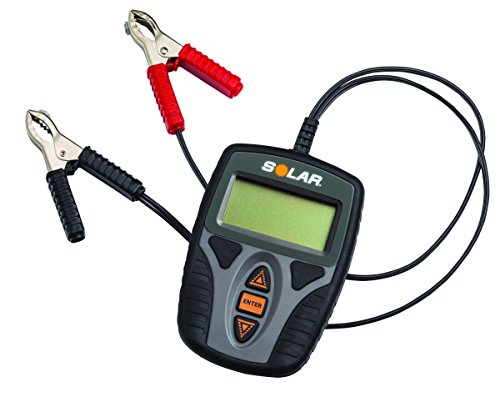
The SOLAR BA9 from Clore has been a shop-staple for years, and for good reason. It’s a compact 12V-only tester that handles flooded, AGM flat plate, AGM spiral, and gel cell batteries across a 40-1200 CCA range. The LCD screen stays readable in everything from a dim garage to direct sunlight.
It also runs system tests, so a tech can move from battery health straight into charging checks without grabbing a second tool. That mix of simplicity and durability is exactly what made it stick around workbenches for so long.
Useful Touches
- 7-15V operating range fits most 12V batteries in use today.
- Compatible with flooded, AGM, spiral wound, and gel cell constructions.
- System test mode checks alternator output after the battery test finishes.
- Pocket-sized body slips into a toolbox drawer or a shirt pocket.
Worth Noting
- CCA range tops out at 1200, so heavy-duty commercial batteries fall outside its reach.
- No Bluetooth or app connectivity, which some newer testers now offer.
Best Suited To
Working techs and serious DIYers who want a rugged, no-nonsense 12V tester that lasts.
Swap It Out When
The ANCEL BA101PRO is the better match if you need 24V support for trucks and heavy equipment.
The BT100 sits at the budget end of the TOPDON line but pulls more weight than its price suggests. It works across regular flooded, AGM flat plate, AGM spiral, EFB, and gel batteries, covering just about every 12V lead-acid battery on the road. The 100-2000 CCA range also handles everything from a small motorcycle battery to a large truck battery.
It reports State of Health (SOH, basically how much usable life remains in the battery), State of Charge (SOC, how full it is right now), voltage, current, and the battery’s rated CCA. For a home garage, that data tells you almost everything you need before a long trip.
Key Advantages
- Broad chemistry support from flooded to EFB and gel cell batteries.
- SOH and SOC readings give a real picture of remaining battery life.
- Compact enough to toss in a glove box between uses.
- Covers cars, trucks, motorcycles, ATVs, SUVs, boats, and yachts.
Honest Caveats
- 12V only, so it won’t test the 24V systems found on commercial trucks.
- No built-in printer, which shops usually want.
Perfect Match For
Home mechanics and budget-conscious shoppers who want broad battery coverage without paying for shop features.
A Better Fit Elsewhere
The ANCEL BA101PRO is worth the upgrade for anyone needing 24V support for heavy equipment.
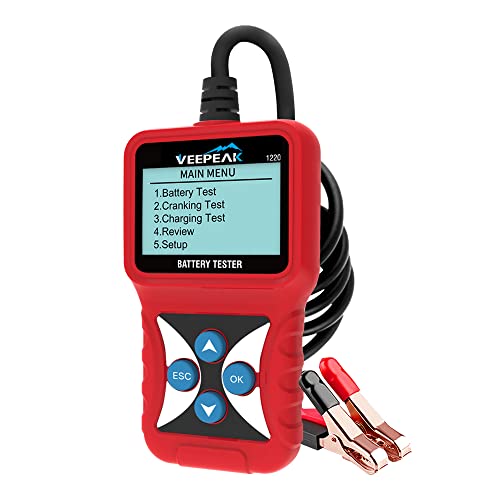
Veepeak built this tester for the person who wants to know if the alternator is the real culprit, not just the battery. It measures ripple voltage along with loaded and unloaded readings while the engine runs. A quick cranking test finishes the picture. The 100-2000 CCA range covers most consumer batteries, from motorcycles up to big truck batteries.
It’s a sensible pick for someone whose commute depends on a car starting every morning. The internal resistance reading helps spot a battery that’s about to leave you stranded on a cold morning, before it actually does.
Points In Its Favor
- Ripple voltage check catches a failing alternator diode before it kills a new battery.
- Works on cars, trucks, motorcycles, boats, ATVs, and RVs in one tool.
- CCA, voltage, SOH, SOC, and internal resistance in a single test cycle.
A Few Limitations
- Limited to 12V systems, so no commercial truck testing.
- Clamps and cable length feel shorter than some competing models.
Whose Shelf It Belongs On
Daily commuters and multi-vehicle households who want a quick health and charging check.
Not Your Match When
The TOPDON BT600 Plus makes more sense if you service vehicles with 6V or 24V electrical systems.
The BA101 Plus opens up to a wider audience by extending the CCA floor all the way down to 20. That matters for testing small engines on lawn mowers, generators, and similar gear that uses modest batteries. ANCEL also threw in 6V support, so classic car owners and motorcycle hobbyists have a reason to keep it on hand.
The menu walks you through each step without much guesswork, which is a real win for someone buying their first tester. CCA, voltage, internal resistance, SOH, and SOC come back in plain English rather than codes that take a manual to decode.
Why It Works Well
- 20-2000 CCA range covers everything from lawn tractors to large trucks.
- 6V testing opens the door to vintage and motorcycle batteries.
- Plain-language menu reduces the learning curve for first-time users.
- Works with flooded, AGM flat, AGM spiral, gel, and EFB battery types.
Small Caveats
- 12V only beyond the 6V battery test, so no 24V commercial support.
Who Should Grab It
Newcomers and homeowners who want one tester for the car, the mower, and the motorcycle.
Skip It When
The ANCEL BA101PRO is the smarter pick if your garage sees 24V trucks or heavy equipment.
The BA101PRO pushes the BA101 line into 24V territory, which puts commercial trucks, RVs, and heavy equipment on the same test list as passenger cars. A 2.8-inch color display sits in the middle of the unit, making the readouts easier on aging eyes than the small monochrome screens common at this price.
It’s a natural step up for someone already comfortable with the BA101 family. If you service a fleet, tow rig, or work truck, the 24V mode earns its keep from the first job.
The Case For It
- 12V and 24V support covers cars, trucks, SUVs, RVs, and boats.
- 2.8-inch color screen is easier to read than monochrome alternatives.
- CCA range of 100-2000 handles most consumer and commercial batteries.
- Cranking and charging tests round out the battery health check.
Areas To Watch
- Larger body than 12V-only testers, so it takes more drawer space.
- Color screen adds a touch more weight than basic units.
Built With In Mind
Fleet owners and rural drivers who run diesel trucks, RVs, or farm equipment alongside a daily car.
Where Another Pick Suits Better
The ANCEL BA101 is a lighter, simpler pick for households that never touch 24V gear.
The original ANCEL BA101 has stuck around longer than most battery testers in this category. It checks 12V batteries from 100-2000 CCA across flooded, AGM, and gel constructions, then runs a cranking and charging test to round out the diagnosis. That trio of tests catches most battery and charging problems without extra equipment.
It’s also the tester that put ANCEL on the map for home mechanics. If you’ve spent time on automotive forums, chances are you’ve seen it recommended more than once. The design has held up because it covers what most people actually need, without piling on features they don’t.
A Few Highlights
- CCA range of 100-2000 fits cars, trucks, boats, RVs, and marine vehicles.
- SOH, SOC, voltage, current, and CCA readings in a single pass.
- Cranking and charging analyzer spots bad alternators and starters too.
- Long-running design with a loyal following among home mechanics.
Potential Drawbacks
- 12V only, no support for older 6V systems or commercial 24V trucks.
- Screen is smaller and dimmer than newer color displays.
Who Will Love This
Multi-vehicle households and DIYers who keep a long-trusted tool on the shelf and don’t need fancy extras.
Consider Something Else When
The ANCEL BA101 Plus is the obvious step up if you need 6V support for a classic car.
The BC100 is TOPDON’s most affordable 12V tester, and it doesn’t strip away the important chemistry coverage. It works across regular flooded, AGM flat plate, AGM spiral, gel, and EFB batteries in the 100-2000 CCA window. For the price, it pulls in tests that you’d usually need a pricier unit for.
It also runs cranking and charging tests, so a failing alternator doesn’t get to hide behind a healthy battery reading. For a homeowner who wants a single tool that does the basics well, it covers the bases without padding the bill.
Real-World Strengths
- Broad chemistry support including EFB, which many newer cars use.
- 100-2000 CCA range fits small engines and large truck batteries alike.
- Cranking and charging system tests come standard at this price tier.
- Compact body works in a glove box or small tool drawer.
Where It Is Less Suited
- Limited to 12V systems, no 6V or 24V support.
- No internal resistance data, which some pricier units offer.
Who It Suits Best
Occasional checkers and small-fleet owners who want chemistry coverage without a premium price.
Another Choice May Suit
The TOPDON BT300P makes more sense if you need a built-in printer for shop records.
The BT600 pairs a 3.5-inch screen with the same 12V and 24V testing the BT300P offers, plus a thermal printer for receipts. The bigger display makes a real difference when you’re squinting at numbers in a tight engine bay, and the conductivity-based testing reaches accurate reads for batteries across the 100-2000 CCA range.
It’s built for working techs who run from car to car all day and need to read results fast. The cranking and charging tests help pinpoint whether the battery, the starter, or the alternator is the actual culprit behind a no-start complaint.
Positive Points
- 3.5-inch screen is far easier to read than smaller monochrome displays.
- 12V and 24V testing fits cars, trucks, and light commercial vehicles.
- Thermal printer creates paper documentation for each diagnostic.
- Cranking and charging tests isolate battery vs. alternator vs. starter faults.
Things To Weigh Up
- Bigger body and screen add bulk compared with pocket testers.
- Sits above several models in price without adding 6V support.
Whose Shelf It Belongs On
Working technicians and mobile service operators who need fast reads and paper documentation in one tool.
A Better Fit Elsewhere
The TOPDON BT600 Plus is the natural pick if your shop also services 6V vehicles.
Getting The Right Tester For Your Garage
Picking an automotive battery tester comes down to matching the tool to the vehicles in your driveway. A home user with one daily driver has very different needs from someone running a small shop with a steady stream of cars and trucks coming through the bay.
Voltage And Chemistry Coverage
The first thing to check is voltage support. Most passenger cars and light trucks run 12V systems, so a 12V tester covers the average homeowner just fine. Classic cars and many motorcycles still use 6V electrical systems, which means a 6V-capable tester like the ANCEL BA101 Plus or TOPDON BT600 Plus becomes useful. Commercial trucks, diesel pickups, RVs, and heavy equipment typically run 24V systems, and only a handful of testers in this lineup support that range, including the TOPDON BT300P, BT600, BT600 Plus, and the ANCEL BA101PRO.
Chemistry coverage matters just as much. AGM (absorbed glass mat) and EFB (enhanced flooded battery) constructions dominate newer vehicles with start-stop systems, and not every older tester recognizes them. Flooded lead-acid batteries remain common in older cars and lawn equipment. If your garage sees a mix, look for a tester that lists each chemistry by name.
CCA Range And Real-World Use
CCA (cold cranking amps) measures how much current a battery can deliver in cold weather, and the rating directly affects whether a tester can read your battery accurately. Small engines on lawn tractors and motorcycles often sit below 200 CCA, while heavy-duty truck batteries can exceed 1500 CCA. A tester with a 100-2000 CCA window covers most consumer vehicles, but make sure the low end matches the smallest battery in your garage.
In daily use, you’ll find yourself reaching for a tester mostly during seasonal transitions: a slow crank on a cold morning, a boat that sat all winter, or a car that’s been sitting through a long repair. SOH (state of health) and SOC (state of charge) readings tell you whether to charge, replace, or simply drive more.
Built-In Printers And Shop Features
Shop owners and mobile mechanics often want paper documentation for each diagnostic, which is where testers with built-in thermal printers earn their premium. For a home user, the printer adds cost and weight that rarely gets used. Cranking and charging tests matter more universally, since they catch alternator and starter problems that a battery-only test would miss entirely.
Budget And Build Quality
Spend less and you usually get a smaller screen, fewer voltage options, and no printer. Spend more and you pick up 6V or 24V support, larger color displays, and shop-friendly extras like resistance readings. The honest read is that most home users don’t need the top tier, but anyone running a working shop quickly feels the limits of a bare-bones tool.
Key Considerations Across These Picks
Common Shopping Slip Ups
The most common mistake is buying a 12V-only tester and then discovering your old farm truck or RV needs 24V support. The opposite trap is paying for features you’ll never use, like a built-in printer, when you only test your own car twice a year. Match the tool to the vehicles you actually own or service, not the ones you might someday. Another quiet pitfall is ignoring battery chemistry. A tester that doesn’t recognize AGM or EFB batteries will give misleading readings on modern start-stop vehicles, which can lead to replacing a perfectly good battery.
What The Higher Tier Buys
The jump from a budget tester to a mid-tier or premium model usually buys three things: broader voltage support, a larger and more readable display, and extra diagnostic depth like internal resistance or ripple voltage readings. For a home user with one or two vehicles, the upgrade rarely pays off. For a working technician or a household with a wide mix of vehicles, those extras turn into saved diagnostic time and fewer return visits. The honest case for spending up comes down to how often you test and how many different battery types you see.
Frequently Asked Questions
How Often Should You Test A Car Battery?
Testing once a season catches most problems before they leave you stranded, and a quick check before any long trip is a smart habit. Batteries older than three years benefit from more frequent checks, since internal resistance climbs as the battery ages.
Can A Battery Tester Damage The Battery Or The Vehicle?
Modern handheld testers draw very little current and connect through the battery terminals, so they won’t damage a healthy electrical system. The key is connecting positive to positive and negative to a clean ground point rather than a moving part.
Do You Need A 24V Tester For A Regular Car?
No, regular passenger cars and light trucks run 12V systems, so a 12V tester is all you need for daily driving. 24V testers earn their keep on commercial trucks, RVs, diesel work vehicles, and some heavy equipment.
What’s The Difference Between CCA And Reserve Capacity?
CCA measures starting power in cold weather, which matters most on a frosty morning. Reserve capacity measures how long the battery can run accessories if the alternator fails, which matters more on a long road trip with the headlights on.
Can These Testers Read Lithium Or AGM Batteries?
Most testers in this list explicitly support AGM, gel, and EFB batteries. Lithium batteries use a different chemistry and typically need a tester specifically rated for lithium-ion chemistries, which most of the picks above do not cover.
Closing Remarks
The right tester makes a dead battery a problem you catch in the driveway instead of at the boat ramp. Match the voltage range to your vehicles, pay attention to battery chemistry support, and decide whether shop features like a printer actually earn their cost. Any of the ten picks above will do honest work, and the better one for you is the one that fits the way you actually use it.