A dead battery rarely warns you first. One morning the engine turns a half-revolution and stops, a parasitic drain has been quietly sapping voltage, or a corroded terminal finally stops passing current. The right automotive battery parts catch small problems before they strand you, and they turn a complicated repair into a Saturday afternoon project. This list covers the gear that handles charging, jumping, grounding, and connection work across cars, trucks, powersports vehicles, and medium-duty work trucks.
The Choices Worth Comparing

Goodyear Heavy Duty Jumper Cables (4-Gauge, 16 ft)

GM Genuine Parts 15179982 Body Static Ground Strap
Kikerike Battery Jump Post Kit with Bracket Cable

NOCO NCP2 MC303 Oil-Based Terminal Protectors (Pack of 2)

Battery Tender 12 ft SAE Extension Cable (4-Pack)

Kikerike 2 PCS Battery Jump Post Kit with Bracket Cable

Kikerike 250A Remote Battery Terminals with 4 AWG Cable

OptiMate3 0.8A Smart Battery Charger for 12V Lead-acid
Bates SAE to O-Ring Terminal Harness (2 ft, 6-Pack)

Automann Battery Box Cover Assembly (Freightliner Style)
More Details On Our Top Picks
Few things feel worse than a dead battery in a parking lot at night, and that’s exactly where a long, heavy-gauge cable pays for itself. The Goodyear cables use 4-gauge wire, which keeps resistance low so cranking amps actually reach the dead battery instead of dissipating as heat along the run. Sixteen feet of length means you can park nose-to-nose or side-by-side in a tight lot without dragging the donor vehicle around.
For most commuters and weekend road-trippers, this is the cable you keep in the trunk and forget about until you need it.
Well-Handled Touches
- 4-gauge copper-clad aluminum keeps weight manageable while carrying serious cranking current.
- Sixteen-foot reach handles most awkward parking arrangements without needing to reposition a donor car.
- PVC insulation stays flexible across wide temperature swings, so winter mornings don’t leave you wrestling a stiff cable.
- Included carrying case keeps the set coiled and clean in your trunk, so the cables don’t tangle with groceries and gear.
- Color-coded clamps reduce the chance of reversed polarity during a stressful roadside moment.
Points To Keep In Mind
- Sixteen feet can actually be too much cable for two compact cars parked nose-to-nose, leaving slack to manage.
- The clamps are solid for consumer use but lack the extra-thick jaws that heavy-duty tow operators prefer for repeated daily use.
Built With In Mind
Commuters, families, and small-fleet drivers who want a single reliable set that lives in the trunk year-round.
Reach For A Different Pick When
Medium-duty operators who jump trucks all day should look at the Kikerike 250A Remote Battery Terminals for permanent in-vehicle jump posts instead.
Ground straps look like simple braided cables, but they carry the return current for every accessory on the vehicle. A corroded or stretched strap shows up as dim headlights, lazy accessories, and mysterious warning lights. The GM Genuine Parts 15179982 is engineered and validated by General Motors for its own trucks and SUVs, which removes the guesswork around length, gauge, and terminal fit.
Unlike the universal-fit straps sold in bulk bins, this one drops in without trimming, drilling new holes, or jury-rigging ring terminals.
A Few Strong Suits
- Factory-spec length and terminal ends match GM mounting points, so installation usually takes minutes.
- Validated OE construction means the strap handles the same current loads the original harness was designed for.
- Tinned copper braid resists corrosion better than bare copper, which matters in salt-belt climates.
Trade-Offs To Consider
- Limited to GM applications, so it won’t help if you run a mixed fleet of Ford, Ram, or import trucks.
- Pricing is typically higher than a generic braided strap from a parts bin, reflecting the OE validation rather than copper content.
Feature Card
Whose Shelf It Belongs On
Owners of GM trucks and SUVs chasing a flickering dash light or chasing a phantom battery drain on a known GM platform.
Swap It Out When
Anyone running a non-GM vehicle should skip this and pick up a universal braided ground strap sized to their chassis ground point.
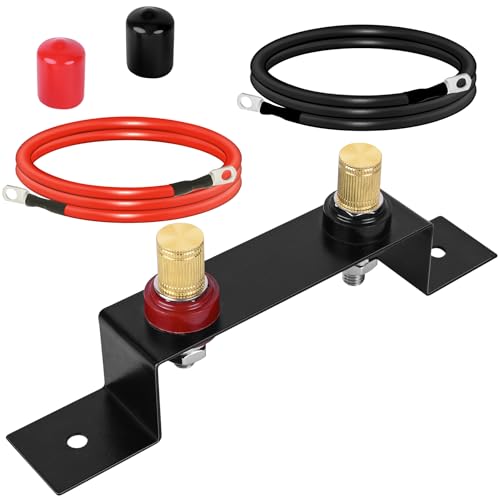
Battery relocation kits exist because some builds just don’t have room for a battery in the stock location, or the builder wants jump access without reaching over a hot intake manifold. The Kikerike single-post kit moves one charging or jump point to an accessible bracket-mounted location. UTV and ATV owners with relocated batteries in the bed or rear cargo area appreciate having a clean, dedicated post instead of dangling ring terminals.
Compared with the heavier 250A kit further down this list, this one trades raw capacity for a smaller footprint on the firewall or fender.
Noteworthy Benefits
- Compact remote post frees up engine-bay space for intake upgrades, taller valve covers, or a tucked harness.
- Bracket-mounted design gives you a defined spot for a charger clamp or jumper cable, instead of fishing around behind the battery.
- Compatible with UTVs, ATVs, cars, trucks, RVs, tractors, and boats, so the same kit follows you across the fleet.
Things To Weigh Up
- Single-post configuration means you still need a second ground point or stock battery post to complete the circuit on most vehicles.
- Installation requires basic electrical knowledge, including ring-terminal crimping and routing away from heat sources.
Right Fit For
Side-by-side and ATV owners with a relocated battery who want a tidy jump and charge point within reach of the cab.
Consider Something Else When
Builders running high-amperage accessories should pick the Kikerike 250A Remote Battery Terminals with 4 AWG cable instead, since it includes a beefier harness and matched pair.
White or bluish fuzz on a battery post is more than cosmetic. It’s sulfate buildup that increases resistance and slowly chokes cranking performance. The NOCO NCP2 MC303 protectors are felt washers saturated in an oil-based corrosion inhibitor that sits between the terminal and the post. The oil doesn’t dry out or evaporate, so the protection lasts the life of the battery rather than weeks.
For anyone who has scraped terminal gunk off a clamp with a screwdriver, this is the cheapest insurance on the list.
What Pays Off
- Oil-based formula stays active for the life of the battery, unlike spray coatings that wear off in months.
- Compatible with all standard top-post batteries, including the AGM and gel units common in modern starts.
- Simple drop-on installation takes seconds during a routine terminal cleaning.
- Made from organic felt, so it doesn’t introduce stray metal fibers into the electrical path.
Small Caveats
- Won’t reverse damage already done by years of corrosion, so terminals with heavy pitting still need cleaning or replacement first.
- Side-post batteries require a slightly different protector style, so confirm your battery type before installing.
Feature Card
Best Suited To
Anyone replacing a battery or cleaning terminals who wants a one-time fix that outlasts the next swap.
Skip It When
Owners chasing an existing no-start issue should diagnose with a multimeter first, since corrosion washers don’t repair bad cables or a failing alternator.
Battery Tender chargers are everywhere in home garages, and the 12-foot SAE extension cables solve the most common complaint: the lead is too short to reach a tucked battery. With a fused, weather-resistant cable and quick-disconnect plugs on both ends, you can mount the charger on a wall and run leads out to multiple bikes, a lawn tractor, and a spare car. The four-pack gives you a lead for each vehicle, so swapping the charger between machines becomes unnecessary.
This is also a quieter alternative to hauling a battery inside for winter storage, which spares you from acid spills on the carpet.
The Helpful Details
- Twelve-foot reach reaches batteries mounted under seats, in tail sections, or behind body panels.
- Fused lead protects the charger and vehicle from a downstream short in the harness.
- Four-pack covers a multi-vehicle garage at a lower per-lead cost than buying singles.
- SAE quick-disconnect plugs match standard Battery Tender chargers with black connectors.
Some Limits To Know
- Not compatible with the 6V Battery Tender Plus or older chargers using white quick-disconnect plugs.
- 10A rating makes it fine for charger leads but too light for jump-start or high-draw accessory circuits.
Feature Card
Perfect Match For
Home mechanics storing motorcycles, ATVs, and project cars on tender chargers through the off-season.
Where Another Pick Suits Better
Shoppers who need a permanent high-current charging post on a vehicle should look at the Kikerike single-post kit instead.
When you relocate a battery to a trunk, toolbox, or rear cargo area, you need both positive and negative posts accessible from outside. The Kikerike two-post kit ships as a matched pair with the cables and bracket hardware needed for a balanced installation. Trucks and RVs benefit most, since the relocated battery often lives far from the original engine-bay jump points.
This is the logical step up from the single-post kit reviewed earlier, and the cleaner option for full relocation builds.
Everyday Advantages
- Matched positive and negative posts eliminate mismatched hardware and inconsistent crimp quality.
- Bracket-mounted posts give a defined jump and charge location on a clean panel surface.
- Broad compatibility across UTVs, ATVs, trucks, RVs, tractors, and boats makes it a flexible shop shelf item.
Practical Considerations
- Cable length and gauge may not suit high-amperage accessory loads like a 2,000-watt inverter.
- Requires routing the harness through a firewall or panel, which adds install time versus a single-post setup.
Who Should Grab It
Truck and RV owners relocating a battery to a toolbox or rear compartment and wanting symmetric jump and charge points up front.
A Better Fit Elsewhere
Heavy-duty builds running winches and inverters should pick the Kikerike 250A Remote Battery Terminals with 4 AWG cable for higher current headroom.
Most relocation parts assume modest accessory loads, but real work trucks run winches, inverters, and dual batteries that pull serious current. The Kikerike 250A kit ships with a heavy-duty bracket, 4 AWG cable, heat shrink, and protective boots, so the install doesn’t require sourcing extra hardware from three separate vendors. The 3/8-inch stud accepts standard ring terminals from heavy-gauge wire, which is what most high-amperage accessories ship with.
Against the smaller Kikerike kits above, this one is the build-it-once option for trucks that earn their keep on job sites.
Key Advantages
- 250A continuous rating covers winches, inverters, and dual-battery isolator circuits without voltage drop.
- 4 AWG cable included, so you avoid the usual scavenger hunt for compatible heavy-gauge wire.
- Heat shrink and terminal boots ship in the box, which speeds up a clean, sealed install.
- 3/8-inch stud accepts standard ring terminals used across most high-amperage accessories.
- Works on UTVs, RVs, trucks, mowers, and boats, giving the kit crossover appeal across the garage.
Potential Drawbacks
- Bigger cable and bracket footprint require more mounting space than the single-post kit.
- Overkill for stock electrical systems that never pull more than a few hundred amps at peak.
Feature Card
Made For
Work truck owners, overlanders, and farm operators running high-amperage accessories that need a real-rated remote post.
Not Your Match When
Stock daily drivers without winches or inverters are better served by the Goodyear jumper cables and a stock battery setup.
Motorcycle and powersport batteries tend to die from neglect more than from use, since most bikes sit for weeks at a time between rides. The OptiMate3 is a 0.8A smart charger that doubles as a maintenance charger and a desulfator, meaning it can recover a deeply discharged lead-acid battery that a basic trickle charger would walk away from. Once connected, it runs through its charge, test, and maintenance cycles automatically.
For owners who park a bike over winter, this is the kind of charger you plug in and forget about until spring.
Bright Spots
- 0.8A output is gentle on small motorcycle batteries, which can’t take the higher amperage of car-sized chargers.
- Automatic multi-stage program charges, tests, then maintains without manual switching.
- Compatible with AGM, gel, standard flooded, and deep-cycle 12V lead-acid batteries commonly found in powersports vehicles.
- Desulfation mode can recover batteries that basic chargers have already given up on.
Less-Strong Areas
- Too slow for jump-start or quick top-up duty, since 0.8A takes many hours to refill a deeply drained battery.
- Designed for 12V systems, so it won’t help with 6V vintage bikes or 16V lithium race packs.
Who It Suits Best
Riders storing motorcycles, ATVs, or personal watercraft through the off-season and wanting a true maintenance charger rather than a basic trickle.
Look Elsewhere When
Owners with a 6V classic bike need a charger specifically rated for 6V systems, since the OptiMate3 is built for 12V only.
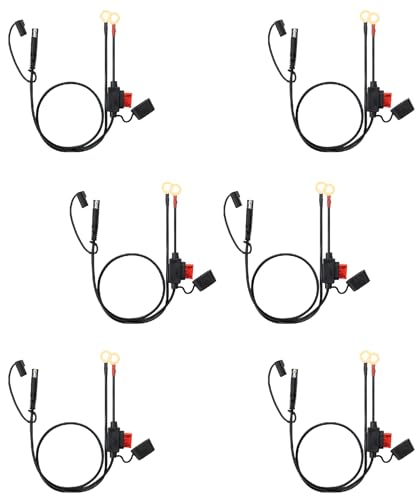
SAE connectors are the universal language of low-current accessories, from maintainer chargers to small solar panels. The Bates harness adapts a standard SAE quick-disconnect to ring terminals, which is what most batteries and accessories actually have on them. Six leads in a pack covers the bench, the trailer, the generator, and a few project cars without leaving you short.
Two feet of length is short on purpose, since adapters are meant to live near the battery, not run across a vehicle.
Where It Helps
- Six-pack format covers multi-vehicle households and small shops in one order.
- SAE quick-disconnect end matches any standard maintainer or accessory plug.
- O-ring terminal end bolts directly to a battery post, fuse block, or ground stud.
- 18 AWG SPT-2 wire is flexible enough for tight battery compartments but rated for typical accessory loads.
Honest Caveats
- 18 AWG wire isn’t suitable for high-amperage accessories like inverters or air compressors.
- Two-foot length is intentionally short, so longer runs need a separate cable in series.
Who Will Love This
DIYers and bench mechanics wiring maintainers, trickle chargers, and low-draw accessories across multiple vehicles.
Where A Sibling Pick Shines
Higher-current accessory work calls for the Kikerike 250A Remote Battery Terminals instead, since 18 AWG wire will not carry winch loads safely.
A lost or cracked battery box cover on a medium-duty truck looks minor until the box fills with road spray, dirt, and salt, and the batteries start to drain through the grime. The Automann cover assembly fits the Freightliner M2 with a three-battery setup and ships with the HLK2113 clamp and yellow retaining clips needed for a complete install. Hood-clamp latch style means no drilling or improvising, just a direct replacement.
This is the only item on the list aimed squarely at commercial truck owners, where downtime means lost revenue.
What Makes Sense
- Direct-fit replacement for the Freightliner M2 three-battery setup, removing fabrication work.
- Includes clamp and yellow clips, so the install needs a basic socket set rather than a parts run.
- Restores the seal that keeps road grime and water off the batteries and tray hardware.
Things To Weigh
- Narrow fitment scope, so it won’t help owners of Cascadia, Columbia, or other Freightliner platforms.
- Hood-clamp latch style varies by build year, so confirm the latch style in the product photos before ordering.
The Right Fit
Fleet mechanics and owner-operators running a Freightliner M2 with the three-battery configuration and a worn or missing cover.
Another Choice May Suit
Light-duty pickup owners looking for a simple battery hold-down should source a universal tray strap and bracket instead of a commercial cover.
What To Weigh Before Choosing Automotive Battery Parts
Match the part to the system it lives in. A 250A remote post does nothing for a stock Civic, and a 4-gauge jumper cable set is overkill for a scooter battery. Start with the vehicle and its electrical demand, then choose the part that meets that load without overspending.
Cable gauge and post rating matter more than marketing language. Lower gauge numbers mean thicker wire and lower resistance, which is what you want when carrying cranking or accessory current. Remote posts should be rated for the continuous amperage of the accessories they feed, not just the jump-start spike.
Confirm compatibility with your battery and connector type. SAE leads only fit SAE chargers, top-post protectors only fit top-post batteries, and OE ground straps only fit the platforms they were validated for. A two-minute fitment check before ordering saves a return shipment.
Build quality shows up in insulation, hardware, and finishing. PVC-jacketed cables, tinned copper braid, sealed boots, and heat-shrink terminations all reduce the corrosion and chafing that kill electrical parts long before the rated service life. Cheap parts often skip these details, which is why mid-tier kits frequently outlast the bargain-bin options.
Common Slip Ups And Where The Money Goes
Pitfalls Shoppers Hit
Buying the cheapest jumper cable is the most common mistake. Thin 8 or 10 gauge wire loses too much voltage over the cable length, leaving the dead battery under-cranked. For most passenger vehicles and light trucks, 4 gauge is a reasonable minimum, and longer cable runs demand an even heavier wire to compensate.
Another easy trap is assuming a relocation kit replaces proper cable routing. Kits give you the post, bracket, and short leads, but the run back to the original equipment still needs correct gauge, fusing, and protection from heat and abrasion.
What The Higher Tier Buys
Premium battery parts spend the extra money on copper content, insulation, and validated fitment. A heavier copper cable carries more current with less voltage drop, a tinned braid resists corrosion longer in salt-belt climates, and an OE-validated ground strap removes the question of whether the gauge and length match the factory design. For daily drivers in mild conditions, mid-tier parts are usually enough. For work trucks, marine use, or vehicles stored outdoors, the upgrade tends to pay for itself in fewer repeat replacements.
Frequently Asked Questions
How do I know if my battery needs replacement or just a charge?
A healthy battery holds voltage above roughly 12.4 volts at rest and recovers quickly after a brief load. A failing one drops below 12 volts overnight or after a short crank. A smart charger like the OptiMate3 confirms whether the battery accepts and holds a charge.
Are SAE connectors the same as battery tender plugs?
Most modern SAE plugs follow the same two-pin standard, but color conventions vary by brand. Black plugs typically indicate maintainer-duty wiring, while white plugs appear on some older or higher-current products. Match the plug style to the charger’s lead, not just the shape.
Can I use a relocation kit on a daily driver?
Yes, but it adds complexity that doesn’t always pay off on a stock commuter. Relocation makes sense when the battery physically doesn’t fit the stock location, or when the engine bay needs freed up for upgrades. For a stock daily, you usually don’t need to move it.
What gauge jumper cable is enough for most cars?
For typical four- and six-cylinder engines, 6 gauge handles most jumps. For larger V8 engines, diesel trucks, or extended cable runs, 4 gauge provides more headroom. Anything thinner than 6 gauge loses too much voltage to crank a stubborn engine reliably.
Do anti-corrosion washers really extend battery life?
They prevent the buildup that increases resistance at the terminal, which over time degrades cranking performance. They don’t reverse existing damage, but on a fresh install they keep the connection clean for the full service life of the battery.
Closing Thoughts
Pick the part that matches your vehicle, your climate, and the way you actually use the garage. A thoughtful match turns a mystery electrical gremlin into a Saturday afternoon fix, and the right accessories keep the next one from happening at all.