A drawer full of half-used batteries is a familiar problem at home. Remotes die mid-show, game controllers quit during a boss fight, smoke detectors chirp at midnight. A reliable tester turns guesswork into a quick check, so you know which cells still have life and which belong on the recycle pile. This lineup mixes standalone testers, organizer cases with built-in checkers, and a serious analyzer for rechargeable cells. Each pick handles a different kind of clutter, so you can spend less time sorting batteries and more time using the devices they power.
The Lineup, Simplified

KIWIFOTOS 58 Slots Battery Case with Tester

KIWIFOTOS 28 Slots 18650 Battery Organizer

ECO Battery Bin Test, Store & Recycle

GWCASE Battery Organizer Storage Case with Tester

KIWIFOTOS 24 Slots CR2 CR123 Lithium Organizer

Dlyfull Battery Tester with LCD Display

Dlyfull Battery Tester Household Checker

JJC AA Battery Case Holder with Tester
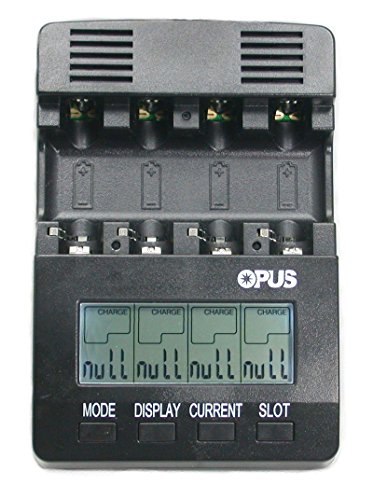
OPUS BT-C2400 Charger Analyzer Tester

Dlyfull Battery Tester Button Cell Checker
More Details On Our Top Picks
The KIWIFOTOS 58-slot organizer doubles as a tester, which makes it appealing for anyone tired of loose cells rolling in a junk drawer. The IP67 rating (a dust-tight seal that survives temporary submersion) means a spilled drink in the kitchen won’t ruin your stockpile. Compared to the JJC case in spot 8, this one fits a much wider variety of cell types, including coin-shaped button batteries.
Detachable inner compartments let you reconfigure the layout depending on what you own. You may find the foam inserts hold up well over time, though heavy-handed opening can wear the slots.
Where It Delivers
- Holds 30 AA, 18 AAA or AAAA, plus 10 coin cells in one shell
- IP67 seal keeps moisture and dust away from stored cells
- Detachable coin cell tray adapts to different button battery sizes
- Built-in checker removes the need for a separate tester
Worth Noting
- Tester function focuses on AA and AAA, leaving button cells untested
- Larger footprint than single-purpose testers takes up shelf space
Best Suited To
Mixed-cell households juggling remotes, toys, and small electronics benefit most from this organizer and checker combo.
Skip It When
Stick with the Dlyfull Battery Tester with LCD Display if you mainly want quick voltage readings without storing anything.
The 28-slot 18650 case targets a very specific audience: flashlights, headlamps, and vape users who deal in cylindrical rechargeable cells. The IP67 rating gives you confidence tossing it into a camping bag. Compared to the KIWIFOTOS 58-slot case, this one sacrifices capacity for a more portable footprint.
The inner tray slides out, turning the empty shell into a compact storage box for small action cameras or first-aid gear. Owners commonly appreciate the foam padding that keeps cells from rattling around.
The Good Stuff
- Stores 28 18650 cells in a foam-padded interior
- IP67 sealing handles rain and brief submersion
- Removable tray converts shell into a gear case
- Compact footprint fits inside a drawer or pack
Trade Offs
- Form factor is specific to 18650 cells, not general household sizes
- No built-in tester, so pairing with a separate checker helps
Whose Shelf It Belongs On
Outdoor enthusiasts running high-drain flashlights or backup power banks get the most from this rugged storage solution.
Consider Something Else When
The OPUS BT-C2400 Charger Analyzer Tester fits hobbyists who actually recharge and analyze 18650 cells regularly.
The ECO Battery Bin combines three jobs: testing, storing, and collecting spent cells for recycling. That makes it a fit for households where dead batteries tend to pile up on counters before anyone remembers to drop them off. Unlike the GWCASE organizer, this one focuses more on triage than fine-grained organization.
It accepts AA, AAA, C, and D cells in clearly marked sections. You may find the tester function adequate for quick sorting, though it doesn’t offer the precision of a dedicated analyzer.
Advantages To Know
- Three functions in a single bin: test, store, recycle
- Clearly labeled compartments speed up sorting
- Helps keep spent cells contained before recycling drop-off
Possible Compromises
- Test results are basic compared to LCD-equipped testers
- Limited capacity compared to large organizer cases
Who Will Love This
Families with kids’ toys generating a steady stream of dead cells benefit from the recycle-friendly design.
Look Elsewhere When
The GWCASE Battery Organizer Storage Case with Tester handles a much larger stockpile with finer slot control.
The GWCASE organizer tackles the highest capacity on this list, holding 150+ cells across AA, AAA, 9V, C, D, and coin formats. The hard shell gives it more structure than soft-fabric alternatives. If you collect batteries for emergency kits or garage projects, the slot variety here is genuinely impressive.
A built-in tester removes the need to keep a separate device on the counter. The mesh zip pocket adds room for small accessories or screwdrivers.
A Few Strong Suits
- Capacity covers 64 AA, 52 AAA, 8 9V, 8 C, 8 D cells, plus coin slots
- Hard shell protects cells from drops and pressure
- Mesh pocket adds storage for small tools
- Integrated tester handles quick voltage checks
Points To Note
- Bulky dimensions require shelf or garage space
- Tester reads basic voltage without detailed cell analysis
The Right Fit
Large households, preppers, and workshop organizers get real value from this high-capacity storage approach.
A Better Fit Elsewhere
For a more compact footprint, the KIWIFOTOS 58 Slots Battery Case with Tester covers essential sizes in a smaller box.
Photographers and flashlight collectors know that CR123 and CR2 cells are notoriously easy to misplace. This KIWIFOTOS case addresses that with a foam-lined interior that holds 24 cylindrical lithium cells snugly. The IP67 seal is a meaningful upgrade over loose zip bags.
Cell compatibility extends to CR123A, CR2, CR16340, CR18350, and CR15270 chemistries. Maximum supported battery dimensions sit around 17 by 33.5mm, so larger protected cells may not fit.
A Favorable Mix
- Foam inserts cushion fragile lithium cells
- IP67 seal guards against humidity and splashes
- Compatible with CR2, CR123, CR123A, and related sizes
Less Ideal Details
- Niche cell focus limits household usefulness
- Maximum cell size rules out longer protected batteries
Key Specs
Perfect Match For
Camera owners and tactical flashlight users running CR123A cells get purpose-built protection and organization.
Swap It Out When
Choose the KIWIFOTOS 28 Slots 18650 Battery Organizer if your collection centers on 18650 rechargeable cells instead.
The Dlyfull tester reads almost any household cell you throw at it: AA, AAA, C, D, 9V, plus a long list of button cells and odd sizes like CR123A and 2CR5. The LCD screen shows voltage in plain digits, so you can stop guessing whether a battery is truly dead. That’s a real upgrade over single-LED testers.
Pull the contact arm, drop a cell in, and the screen reports quickly. One AAA ships in the box so you can test right away.
Benefits That Matter
- Compatible with cylindrical cells from AA through D and 9V
- Reads button cells including CR2032 and CR1632 formats
- LCD displays clear voltage rather than vague bars
- Included AAA battery lets you start testing immediately
Where It May Fall Short
- Contact arm can feel fiddly with very small button cells
- Doesn’t store cells, so pairing with a case helps
Feature Snapshot
Who Should Grab It
Anyone juggling a drawer full of mixed cell types gets clear voltage readings without buying multiple testers.
Not Your Match When
Switch to the OPUS BT-C2400 Charger Analyzer Tester if you recharge NiMH or NiCd cells and want capacity analysis.
This second Dlyfull tester on the list mirrors the format of the spot 6 model but ships as a more streamlined household checker. The same wide compatibility applies across cylindrical and button cells. If you already own the other Dlyfull, this one might feel redundant, but for a single purchase it covers nearly every format you’ll encounter.
The LCD readout is the real value: it distinguishes between “weak” and “replace” rather than just on or off.
Standout Benefits
- Handles AA through 9V and most coin cell formats
- LCD screen separates weak from truly depleted cells
- Compact body slips into a drawer or junk drawer caddy
Some Limits To Know
- No included battery in this version, so you’ll need a fresh AAA
- Smaller contact points can be tricky with wide button cells
Built With In Mind
Kitchen drawer dwellers looking for a fast, no-fuss voltage reading benefit most from this streamlined version.
Reach For A Different Pick When
The JJC AA Battery Case Holder with Tester suits those who want basic AA sorting plus a built-in checker.
The JJC AA case keeps things focused on a single cell type, holding 28 double A batteries in snug slots that prevent contact between terminals. The detachable tester reads both AA and AAA, with a three-light indicator showing good, low, or replace.
For a household built around AA-powered remotes, clocks, and game controllers, this is a tidy solution. Compared to the Dlyfull testers, the JJC trade-off is simpler feedback but built-in storage.
What Makes Sense
- Snug slots prevent terminals from shorting against each other
- Detachable tester works on both AA and AAA cells
- Three-LED indicator simplifies good versus low readings
Honest Caveats
- Limited to AA and AAA formats, not C, D, or 9V
- Indicator is light-based, not numerical voltage
Quick Facts
Made For
Living rooms packed with AA-driven remotes and game controllers benefit from this compact case-and-tester pairing.
Where A Sibling Pick Shines
Pick the GWCASE Battery Organizer Storage Case with Tester if you want C, D, and 9V coverage in the same shelf footprint.
The OPUS BT-C2400 sits in a different league, functioning as both a charger and an analyzer for AA and AAA NiMH (nickel-metal hydride) or NiCd (nickel-cadmium) rechargeables. Four independent channels run their own programs, so you can charge one set while discharging another.
That kind of control matters if you rely on rechargeables for photo flashes or radio gear. The backlit LCD shows capacity, voltage, and elapsed time at a glance.
The Case For It
- Four independent channels handle four cells at once, each on its own program
- Displays capacity, voltage, and elapsed time during operation
- Adjustable charging rate scales with cell size
- Multiple modes include charge, discharge, refresh, and analyze
What To Weigh
- Only works with rechargeable NiMH and NiCd cells, not alkaline or lithium
- Higher learning curve than a basic push-button tester
Spec Overview
Who It Suits Best
Hobbyists, photographers, and frequent rechargers who depend on healthy NiMH cells get serious value from this analyzer.
Where Another Pick Suits Better
The Dlyfull Battery Tester with LCD Display fits casual users who just want quick alkaline cell checks.
This third Dlyfull tester targets newcomers who want something simple. The compatibility list mirrors its siblings, covering cylindrical and button cells in the 1.5V and 3V range. The one-button operation means there’s no mode switching or setup screens.
If you’ve never owned a battery tester before, the LCD readout removes the ambiguity that comes with single-LED models.
Practical Advantages
- Single-button operation works without reading instructions
- Handles 1.5V and 3V button cells alongside AA through D
- LCD readout avoids the guesswork of LED-only testers
Things To Consider
- Lacks the storage features of an organizer case
- Doesn’t analyze rechargeable capacity like the OPUS BT-C2400
Feature Rundown
Right Fit For
First-time testers who want a no-setup introduction to battery checking benefit most from this straightforward design.
Another Choice May Suit
Step up to the OPUS BT-C2400 Charger Analyzer Tester once you’re ready to measure rechargeable capacity in detail.
Picking The Right Aa Battery Tester For Your Drawer
A good tester solves a different problem depending on your situation. Photographers worry about CR123A cells going flat before a shoot. Parents deal with a weekly flood of dead AAAs from kids’ toys. Hobbyists run rechargeables through hundreds of cycles and want to know the real capacity, not just the voltage.
Match The Tester To Your Cell Mix
Start by listing the batteries you actually own. A wide-format tester like the Dlyfull models covers everything from coin cells to 9V in one device, which is ideal for mixed households. Specialty cases like the KIWIFOTOS 24-slot CR2 organizer target very specific cell types and do that job well, but they don’t help if your drawer is full of AAAs.
Decide If Storage Matters As Much As Testing
Some picks double as organizers. The GWCASE holds 150+ cells with a built-in tester, which keeps everything in one place. Standalone testers like the Dlyfull or OPUS BT-C2400 take up less space but leave you with a separate storage decision. For most people, combining a tester with a simple case works better than chasing one product that does both imperfectly.
Look For Clear Voltage Readouts
Single-LED testers give you a vague green or red. LCD testers show actual voltage numbers, which helps you spot cells that are technically alive but too weak for high-drain devices like digital cameras. If you’ve ever pulled a “good” battery from a flashlight only to have it die in a game controller, you understand why the readout format matters.
Rechargeables Need Different Tools
Alkaline cells lose voltage gradually as they deplete. NiMH rechargeables often hold voltage right up until they’re nearly empty, then drop sharply. A simple voltage tester can’t tell you a rechargeable’s true remaining capacity. That’s where the OPUS BT-C2400 earns its keep, since it actually measures capacity in mAh (milliamp-hours, the unit that describes how much energy a battery can store).
Key Considerations Across These Picks
Pitfalls Shoppers Hit
A frequent mistake is buying a tester that only covers AA and AAA when your household also runs on coin cells and 9V batteries. Another is assuming any tester can analyze rechargeables, when most can only read surface voltage. Check the supported cell list before committing, especially if you own specialty sizes like CR2 or CR-P2.
Where The Extra Money Goes
Higher-tier picks like the OPUS BT-C2400 add real measurement capability, charging control, and multi-channel operation that budget testers skip. You pay for accuracy and detail rather than just a yes or no reading. For casual use, that upgrade is hard to justify. For anyone running rechargeables in professional gear, the extra cost recovers itself by extending cell life.
Frequently Asked Questions
Do Aa Battery Testers Work On Rechargeable Cells?
Most basic testers read voltage on any cell type, but they can’t measure the true capacity of NiMH or NiCd rechargeables. For that, you need an analyzer like the OPUS BT-C2400 that runs a discharge test.
Can A Tester Tell If A Battery Is Leaking?
No standard consumer tester detects leaks. Visual inspection of the cell surface and the device’s battery compartment is the only reliable check for corrosion or residue.
How Accurate Are Cheap Battery Testers?
Basic LED-style testers give a rough read that’s fine for sorting obviously dead cells. LCD testers show precise voltage, which is more useful when deciding whether to keep borderline cells for low-drain devices like remote controls.
Is A Built-In Tester Better Than A Separate Device?
Built-in testers save space and keep everything together, but they often read fewer cell types. Separate testers usually support wider compatibility and offer clearer displays.
Should I Test Batteries Before Recycling Them?
Yes, since many “dead” cells still hold partial charge. Testing helps you identify cells worth keeping for low-drain uses and ensures the rest truly belong in the recycle bin.
Bottom Line
The right Aa Battery Tester depends on what your drawer actually holds. Mixed households get the most from a wide-format LCD tester or a high-capacity organizer. Specialty users running specific cell types benefit from a focused case. Rechargeable hobbyists should look at analyzers that measure real capacity, not just voltage. Pick the tool that matches your cells, and you’ll stop guessing about which batteries still have life left.