A dead phone battery, a flat tire on a dark road, a power outage during a storm. AA-powered flashlights earn their place precisely because they ignore all of that. No charging cables, no proprietary cells, no worry about a lithium pack dying in storage for two years. You grab a handful of AAs from the kitchen drawer and you’re back in business. This lineup collects eight solid AA battery flashlights that suit everyday carry, emergency kits, workshops, and weekend trips, with options ranging from sub-$10 mini lights you can scatter around the house to compact rechargeable units that push serious lumens.
The Lineup, Simplified

LUXPRO LP290V3 LED Flashlight 6 Pack

LUXPRO LP290V3 LED Flashlight 4 Pack
LUXPRO LP1305 LED Flashlight

Streamlight 68750 Dualie 3AA HAZ-LO

EverBrite 18-Pack Mini LED Flashlights

VTIGER T1A Mini Pocket EDC Flashlight

VTIGER T2A Compact EDC Flashlight
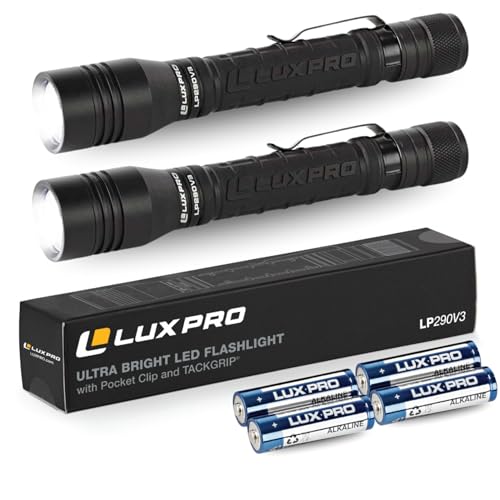
LUXPRO LP290V3 LED Flashlight 2 Pack
The Picks, Examined More Closely
A six-pack of identical flashlights makes sense for households that want to scatter units across drawers, glove boxes, and bedside tables without keeping track of which one belongs to whom. Each LP290V3 weighs 0.29 lbs and measures 6.31 inches, with a pocket clip for clipping onto a belt loop or jacket hem.
The IPX4 waterproof rating means a splash of rain or a tumble into the kitchen sink is not a death sentence. Output tops out at 300 lumens across three modes, which is plenty for a hallway or a car engine bay. You may find the pocket clip a bit stiff out of the box.
Positive Points
- Six units means you can equip a whole house plus a couple of cars without thinking twice about it.
- Each flashlight is light enough to toss into a jacket pocket or glove box without noticing the weight.
- The three modes let you choose between a dim reading setting and a brighter 300-lumen output.
- IPX4 weather sealing handles wet boots, fog, and the occasional downpour.
Small Caveats
- AA batteries for six lights adds up; budget for replacements if you keep them in heavy rotation.
- Plastic bodies feel less rugged than the aluminum shells you’ll find on premium single-unit picks.
Whose Shelf It Belongs On
Families building a household emergency kit on a budget who want one flashlight per room plus spares.
Look Elsewhere When
The EverBrite 18-pack mini set is a smarter grab for someone who wants many more ultra-compact lights for classrooms or party favors.
Four lights hits a middle ground for roommates, couples, or anyone who wants one in the kitchen, garage, car, and bedside drawer. The 4-pack version of the LP290V3 shares the same core specs as the 6-pack above: 300 lumens, three modes, 6.31 inches long, 0.29 lbs, and IPX4 sealing.
You won’t need to argue over who borrowed which flashlight. Pocket clips keep the units from rolling around the trunk, and AA compatibility means a quick battery swap at any gas station or corner store.
A Few Highlights
- Four lights cover the typical household without forcing you to ration.
- The 300-lumen output is enough for camping tasks, attic work, or walking the dog.
- IPX4 weather protection keeps the units usable after an unexpected downpour.
- AA power means no charger cables and no proprietary battery to hunt down.
Things To Consider
- Output is modest next to high-lumen compact units like the VTIGER T2A.
- Plastic construction won’t survive a hard drop onto concrete as well as aluminum.
Key Product Details
Right Fit For
Couples, roommates, and small families who want one flashlight per main living space.
Swap It Out When
The LUXPRO LP290V3 6-pack is a smarter choice for households that want a spare tucked into a travel bag or office desk.
Where the LP290V3 lights target casual use, the LP1305 steps into proper workhorse territory with a 2000-lumen output and a long-range beam. An aluminum body gives it the kind of heft and grip that feels right in a gloved hand.
The patented TackGrip exterior is a tactile feature: a rubberized texture that resists slipping when your hands are wet or muddy. Compared to the multi-packs earlier in this list, this is a single serious tool, not a stack of utility lights.
Useful Highlights
- 2000 lumens easily lights up a backyard, a construction trench, or a long driveway.
- The aluminum housing holds up to drops and weather better than plastic shells.
- TackGrip exterior prevents slippage during wet or cold conditions.
- AA compatibility keeps the unit field-serviceable with batteries from any store.
Honest Caveats
- 2000 lumens drains batteries quickly; expect shorter runtimes than lower-output units.
- Heavier than the pocket lights, so it’s not the natural choice for jacket pocket EDC.
Made For
Outdoor enthusiasts, property owners, and anyone who needs serious reach from a familiar battery platform.
A Better Fit Elsewhere
The Streamlight 68750 Dualie 3AA is a stronger match for hazardous-location work where beam pattern and safety matter more than raw lumen count.
The Dualie 3AA is built for environments where a single forward beam is the wrong tool. Two LEDs create two distinct beams: a spot beam that reaches 171 meters, and a downward flood beam that lights up the work surface without forcing you to aim the whole flashlight.
The HAZ-LO designation means the unit is engineered for hazardous-location use, including environments where flammable gases or vapors might be present. The yellow body is easy to spot if you set it down on a busy site. Output tops out at 140 lumens, modest on paper but plenty when paired with the dual-beam design.
Where It Excels
- Dual-beam setup lights up both the path ahead and your hands at the same time.
- 18-hour runtime on a single set of AAs handles a full shift comfortably.
- HAZ-LO engineering suits industrial, marine, and utility environments.
- High-visibility yellow housing prevents the unit from getting left behind.
Practical Considerations
- 140 lumens is lower than most consumer flashlights in this lineup.
- Pricing tends to sit above general-purpose AA lights due to the safety certification.
Quick Facts
Who Should Grab It
Tradespeople, inspectors, and first responders who need a hands-free friendly beam on a familiar battery.
Reach For A Different Pick When
The LUXPRO LP1305 is the smarter pick if pure lumen output for outdoor use matters more than beam configuration.
Eighteen tiny flashlights in one box changes the math on what an “emergency light” costs. Each unit is genuinely mini, the kind that disappears into a glove box, a desk drawer, or a kid’s backpack.
EverBrite positions this as a bulk set for hostels, classrooms, party favors, or anywhere you want to hand out a working flashlight. The aluminum body keeps them light, and AA batteries are the same ones in your junk drawer. Depending on your use case, you may find this overkill, but at this scale the per-unit cost is genuinely hard to beat.
Benefits That Matter
- Eighteen lights in a single buy covers an entire building or a long-term supply project.
- Compact size slips into pockets, purses, and glove compartments without notice.
- AA compatibility means a fresh battery is never more than a kitchen drawer away.
- Aluminum housing holds up better than plastic mini lights at similar size.
Trade-Offs
- Mini lights lack the throw and runtime of full-size units like the Streamlight Dualie.
- Eighteen sets of batteries add up over time if you cycle through them.
Best Suited To
Educators, event organizers, preppers stocking deep, and anyone who wants a flashlight in every room of a large building.
Consider Something Else When
The VTIGER T1A is the better grab for one person who wants a single serious EDC flashlight rather than a stash of mini lights.
EDC means everyday carry, and the T1A earns the label. At 3.8 inches long, 0.7 inches wide, and 2 ounces, it disappears into a fifth jeans pocket until you need it. The clip keeps it locked to a hat brim or a belt loop.
The T1A runs on a 920mAh rechargeable cell charged over USB-C, but it’s also AA-compatible. That dual-power trick means a dead rechargeable battery isn’t the end of the world. Output reaches 1300 lumens and the beam stretches to 170 meters, surprising for something small enough to forget you’re carrying.
Bright Spots
- 3.8-inch frame slips into pockets, purse pockets, and even some watch pockets.
- 1300 lumens from a body this small is genuinely impressive for nighttime walks or trail use.
- AA fallback means no panic when the rechargeable cell runs flat.
- Magnetic tail cap attaches the unit to metal surfaces for hands-free work.
Potential Drawbacks
- Small size can be hard to find when set down on a cluttered workbench.
- USB-C charging is convenient, but adds another cable to your travel kit.
Feature Snapshot
Who It Suits Best
Commuters, dog walkers, and casual hikers who want serious light output from a body small enough to forget they’re carrying.
Not Your Match When
The Streamlight 68750 Dualie 3AA is the stronger pick for industrial users needing a hands-free flood beam configuration.
The T2A is the bigger sibling to the T1A, and the upgrade is meaningful. Output climbs to 1500 lumens, the beam reaches 200 meters, and the included 1800mAh USB-C battery pushes runtime up to 60 hours on lower settings. AA compatibility remains, so you’re never stuck waiting for a charge.
The tail-cap switch and magnetic base give it a tactical feel that works equally well for campsite tasks and emergency signaling. Compared to the LUXPRO LP1305 above, the T2A is shorter but trades some raw reach for pocket-friendlier dimensions.
A Strong Showing
- 1500 lumens in a pocketable form factor handles most outdoor tasks with room to spare.
- 200-meter beam reaches across fields and down hiking trails.
- 60-hour runtime on lower settings stretches a single charge across a long weekend.
- Magnetic tail cap attaches the light to hoods, toolboxes, and car panels.
Worth Bearing In Mind
- Higher output drains the rechargeable battery faster than the smaller T1A.
- The tactical tail switch takes getting used to if you’re coming from a side-button design.
Core Details
Perfect Match For
Outdoor enthusiasts, preppers, and homeowners who want a rechargeable workhorse with AA as a backup plan.
Where Another Pick Suits Better
The VTIGER T1A is the better match if absolute smallest size matters more than the extra 200 lumens and longer beam reach.
Two flashlights, one for each of you. The 2-pack version of the LP290V3 keeps the same 300-lumen output, 6.31-inch frame, 0.29 lb weight, IPX4 rating, and three-mode operation as the larger multi-packs.
It suits couples, roommates, or anyone who simply wants a primary light and a backup. Pocket clips and AA power keep both units field-ready without special cables or chargers.
Standout Benefits
- Two-unit pack covers the typical person with a spare for car or travel.
- 300 lumens and three modes handle most daily lighting tasks.
- IPX4 sealing survives the kitchen sink or a wet campsite.
- AA compatibility means battery swaps anywhere, anytime.
Some Limits To Know
- Modest output doesn’t match the throw of high-lumen picks like the LUXPRO LP1305.
- Plastic housing is lighter but less rugged than aluminum alternatives.
Who Will Love This
Couples, students, and anyone who wants a matched pair without committing to a larger multi-pack.
Skip It When
The LUXPRO LP290V3 4-pack is the smarter move for a household that needs more than two units scattered around.
What To Weigh Before Picking Aa Battery Flashlights
AA compatibility sounds simple until you actually compare models. Here’s where the differences start to matter.
Output Versus Runtime
Lumens describe how bright a flashlight gets at its highest setting, but most real-world use happens at lower modes where the battery lasts longer. A 1300-lumen peak that drops to a 30-lumen low for 12 hours is far more useful than a 2000-lumen peak that drains the cells in 90 minutes. Match the output to the typical task: a 300-lumen light handles indoor walks, while 1000+ lumens is better for outdoor search or trail use.
Beam Pattern and Throw
Spot beams concentrate light into a narrow column for distance work. Flood beams spread light wide for close-up tasks. Dual-beam designs like the Streamlight Dualie 3AA give you both. Pickers shopping for EDC pocket carry benefit from a balanced beam, while job-site users may want a tight spot pattern.
Build and Weather Resistance
Anodized aluminum bodies shrug off drops better than plastic, and IPX4 sealing covers splashes and rain. Industrial users should look for HAZ-LO designations where flammable atmospheres are a concern.
Rechargeable Versus Replaceable
Rechargeable units cut long-term battery costs but require a charging cable. Pure AA models are field-serviceable but need a steady supply of cells. Hybrid designs that accept either a rechargeable pack or AA cells cover both situations.
Key Considerations Across These Picks
Common Shopping Slip Ups
The biggest mistake is buying on peak-lumen numbers alone. A flashlight advertising 2000 lumens but running for an hour isn’t more useful than a 300-lumen unit that lasts a full evening. Reach and runtime matter more than advertised peak output for most household tasks.
Another pitfall is ignoring battery access. Lights with sealed rechargeable packs feel convenient until the cell dies mid-trip and you have no way to swap in fresh cells. AA-compatible units avoid that headache entirely.
When Paying More Pays Off
Higher-tier models typically add aluminum bodies, better seals, dual-beam setups, or hybrid power systems. The upgrade makes sense when you actually use those extras: a homeowner dealing with power outages, a tradesperson working in tight spaces, or a hiker who needs reliable runtime. Casual users can save money with the basic multi-packs and never notice the difference.
Frequently Asked Questions
Are AA flashlights better than rechargeable ones?
Neither is universally better. AA flashlights are field-serviceable and work after years in storage, while rechargeable models save long-term cost and usually deliver more output. Hybrid designs like the VTIGER T1A give you both options in one unit.
How long do AA batteries last in a flashlight?
Runtime varies widely based on brightness setting. On low, a typical AA light runs 10 to 20 hours. On high, expect 1 to 5 hours depending on the model and battery type. Lithium AAs extend runtime compared to alkaline cells.
What does IPX4 mean?
IPX4 is a weatherproofing rating meaning the unit resists splashing water from any direction. It is fine for rain and wet conditions but not for submersion. For underwater use, look for IPX7 or IPX8 ratings.
How many lumens do I need for home use?
Most household tasks work well between 100 and 300 lumens. Outdoor use, walking the dog at night, or navigating a dark yard benefits from 500 lumens or higher. Anything above 1000 lumens is useful but not essential for everyday carry.
Can AA flashlights sit unused for years?
Yes. Storing a flashlight with fresh alkaline or lithium AAs in a drawer means it will work when you finally need it. Rechargeable models with lithium-ion packs slowly lose charge over months, so AA units have an edge in long-term emergency storage.
Bottom Line
AA battery flashlights remain the most practical lighting category for most people, and the eight picks above cover the realistic scenarios: bulk storage for households, compact pocketable power for everyday carry, and serious output for outdoor use. Match the form factor and output to how you’ll actually carry and use the light, and you’ll end up with a tool that earns its drawer space.