Nine-volt cells quietly run smoke alarms, walkie-talkies, guitar pedals, multimeters, and a dozen other things you don’t think about until they die mid-use. A solid rechargeable setup removes that surprise, slashes long-term waste, and keeps your gear ready without late-night drugstore runs. The picks below cover standalone battery packs, multi-chemistry chargers, and a few specialty options, so you can match capacity, chemistry, and count to how you actually use them.
The Essentials At A Glance

HiQuick Battery Charger for AA AAA 9V NI-MH

BEVIGOR AA AAA Battery Charger

Quzmo 2-Pack 9V Rechargeable Lithium-ion Batteries

Quzmo 3-Pack 9V Lithium-ion Rechargeable Batteries
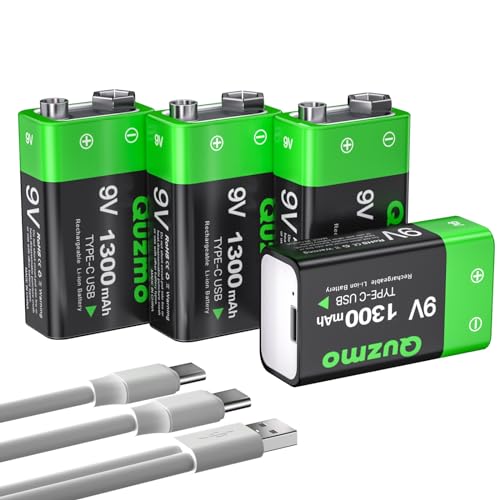
Quzmo 4-Pack 9V Lithium-ion Rechargeable Batteries

Quzmo 5-Pack 9V Lithium-ion Rechargeable Batteries

Quzmo 6-Pack 9V Lithium-ion Rechargeable Batteries

Quzmo 8-Pack 9V Lithium-ion Rechargeable Batteries

HW 9V Rechargeable Batteries 4 Pack, NiMH 200mAh

EBL 9V Batteries 8 Pack, Alkaline, 7-Year Shelf
A Closer Look At Each Pick
The HiQuick unit earns its place by tackling the messy reality of household battery inventories. It handles Ni-MH (nickel-metal hydride) and Ni-CD (nickel-cadmium) cells across AA, AAA, and 9V formats, so a drawer full of mixed cells doesn’t need three different chargers. The built-in AC plug means you drop it into a wall outlet and start topping off cells the moment it arrives.
For anyone juggling remote controls, smoke alarms, and a couple of small electronics, consolidating charging into a single unit simplifies the routine. Compared with the standalone battery packs later in this list, this one focuses on the charging side, so it pairs naturally with cells you may already own.
The Upside
- Charges AA, AAA, and 9V Ni-MH and Ni-CD cells in a single unit
- Twelve individual slots let you top off cells one at a time without pairing
- Direct AC plug skips the brick-and-cable clutter on your outlet strip
- Mixed charging mode fills empty slots even when other cells are full
Things To Consider
- No rechargeable batteries included, so budget for cells separately
- Only handles Ni-MH and Ni-CD chemistries, not lithium-ion 9V packs
Key Specs
Who It Suits Best
Households with a deep bench of mixed-size rechargeable cells will appreciate having a single charger for everything.
Consider Something Else When
The Quzmo USB-C packs below make more sense for anyone who already needs 9V cells and prefers in-battery USB charging over a multi-format dock.
Where the HiQuick leans on capacity, the BEVIGOR charger focuses on charge intelligence. The smart chip shifts to a trickle charge near full capacity, a slower topping-off rate that protects cell longevity, while red-and-green LED indicators surface what’s actively charging and what’s done. Automatic shutoff and thermal protection keep the unit cool overnight, which matters when you’ve dropped a partial batch in before bed.
It fits up to sixteen AA or AAA cells plus a pair of 9V batteries, so bigger households with a heavy rotation of AAs gain a wider runway than the HiQuick’s twelve slots. The clear housing doubles as a status window, useful when you want to peek at progress from across the room.
Positive Takeaways
- Trickle-charge mode near full capacity helps extend NiMH cell life
- Sixteen AA/AAA slots suit households cycling through heavy AA use
- Red and green LED indicators surface charge state at a glance
Points To Note
- Only two 9V slots means larger 9V rotations still need a second dock
- Batteries are not included, an early added cost for new users
Made For
Frequent AA cyclers who want safe overnight charging without babysitting the dock.
A Better Fit Elsewhere
Anyone focused on 9V cells should reach for the Quzmo 4-Pack instead, since that route puts charging inside the battery itself.
This Quzmo pair offers the lowest-commitment way to step into 9V rechargeables. Each cell has its own USB-C port (the small reversible connector used in modern phones and laptops) right on the body, so you skip a separate charger entirely and run the included 2-in-1 cable from any USB power source. The 1300mAh capacity (milliamp-hours, a measure of how long a battery can deliver current) lands well above most NiMH 9V alternatives, which usually sit closer to 200mAh.
For a smoke alarm or two, or a single multimeter on the bench, this two-pack covers the bases without overstocking. It’s the cleanest entry point before scaling up to the larger Quzmo counts below.
Bright Spots
- USB-C port built into each battery removes the need for a separate charger
- 1300mAh capacity runs longer between charges than typical NiMH 9V cells
- LED status lights confirm charge progress without guesswork
Worth Noting
- Two cells leave no spare if one is on the charger and a device needs a battery
- Higher upfront cost per cell than NiMH alternatives if you only need short bursts
Feature Snapshot
Right Fit For
First-time rechargeable shoppers with one or two 9V devices will find the lowest commitment point here.
Skip It When
Households needing more than a couple of cells should jump to the Quzmo 4-Pack or 6-Pack for spares and rotation.
Adding a third cell to the lineup gives you rotation breathing room: one in use, one on standby, one charging. The same 1300mAh capacity and USB-C onboard design carry over from the 2-pack, so the chemistry experience stays consistent if you later scale up to the 4-, 5-, or 6-pack options.
Three cells fit neatly into common small-home layouts, such as two smoke alarms plus a multimeter, or a smoke alarm, a guitar pedal, and a wireless mic receiver. Compared with the 2-Pack’s tight margins, this middle option takes the panic out of running a cell flat mid-use.
Where It Delivers
- Adds enough cells for rotation between in-use, spare, and charging states
- Same USB-C onboard charging as the rest of the Quzmo line for consistency
- LED lights keep status visible without unplugging to check
Honest Caveats
- Marginal upgrade over the 2-pack for very small device inventories
Best Suited To
Couples or small apartments running a handful of 9V devices will hit the sweet spot with three cells in rotation.
Look Elsewhere When
The Quzmo 5-Pack suits users with several devices needing simultaneous coverage without rotation downtime.
Four cells hit the everyday middle of the Quzmo family. The 1300mAh rating matches the smaller packs, but doubling up gives you enough inventory to cover a full set of smoke alarms on a single floor, with a charged spare ready to swap in. The onboard USB-C keeps the charging workflow identical to the rest of the line, so the only thing changing between packs is cell count.
For most homes with three or four 9V devices, this is where rotation stops feeling like a juggling act. You may find the per-cell cost lower than at the 2-pack level once you factor in redundancy.
The Case For It
- Full coverage for typical single-floor smoke alarm installations
- Identical USB-C charging workflow as the rest of the Quzmo family
- Spare cells let you swap without waiting for a recharge cycle
Trade Offs
- Higher total spend than smaller packs if you only need two cells in rotation
Feature Card
Who Should Grab It
Homeowners wanting full alarm coverage on one floor with a charged spare will appreciate the four-cell balance.
Reach For A Different Pick When
Larger homes with more alarms should step up to the Quzmo 6-Pack to avoid juggling rotations.
Five cells is where the Quzmo line shifts from simple rotation into real multi-device readiness. The same 1300mAh capacity, USB-C onboard charging, and LED indicators carry over, but the extra count covers typical smoke alarms plus a couple of secondary devices like a wireless mic, multimeter, or portable radio.
You may find five cells land at a per-cell price that’s noticeably friendlier than the smaller packs, depending on retailer pricing at the time. It’s a sensible middle jump for households that started at the 2- or 3-pack level and want fewer swap-outs.
What Makes Sense
- Covers alarms plus a couple of secondary devices without constant swapping
- Consistent charging experience across the Quzmo line for easy stocking
- Lower per-cell cost than the 2- or 3-pack options in many cases
A Few Limitations
- Five cells require more charging slots or rotation than the included 2-in-1 cable offers at once
Built With In Mind
Multi-device users running alarms alongside work or hobby electronics will keep enough charged cells on hand without constant juggling.
Not Your Match When
The HW 4-Pack NiMH option fits occasional-use radios and meters where low self-discharge matters more than capacity.
The 6-pack pushes the Quzmo line into whole-home coverage territory. Six cells handle multi-floor smoke alarm layouts with room left over for a wireless mic, a multimeter, or a kids’ toy, all on the same 1300mAh cells. Onboard USB-C and LED indicators match the smaller packs, so charging habits stay consistent.
Compared with the 4-Pack’s single-floor coverage, the 6-pack removes the moment of “wait, which cell is charged?” that’s familiar to anyone running alarms on two levels. It’s a meaningful upgrade before stepping to the 8-Pack below.
Points In Its Favor
- Covers two-floor alarm layouts with a spare in rotation
- Same 1300mAh cells as the rest of the line, so capacity stays predictable
- LED indicators on each cell simplify tracking during batch charging
Less Ideal Details
- Charging six cells one pair at a time stretches full-batch recharge windows
Whose Shelf It Belongs On
Two-story homes and small workshops that need broad device coverage will find the 6-pack fits without overbuying.
Swap It Out When
The Quzmo 8-Pack suits heavy multi-device users who want the deepest bench of charged spares.
The largest Quzmo count lands eight cells of the same 1300mAh, USB-C onboard setup as the rest of the family. This is the pack for households, small studios, or repair workshops that cycle through multiple 9V devices daily and never want to think about which cell is charged.
Bulk count lowers per-cell cost in most cases, and the consistency across the line means your charging routine stays the same whether you run two or eight cells. The honest read is that eight is more than most homes need, but for the right user it’s a long-term inventory investment.
The Good Stuff
- Lowest per-cell cost of the Quzmo family at typical retailer pricing
- Enough cells for workshops, studios, or alarm-heavy households
- Identical charging workflow simplifies stocking and rotation
Worth Bearing In Mind
- Recharging eight cells on the included 2-in-1 cable requires four cable swaps per cycle
- Overkill for households that only run two or three 9V devices
Feature Rundown
Perfect Match For
Workshops, studios, and alarm-heavy households benefit most from the bulk count and consistent capacity.
Where A Sibling Pick Shines
Households with just a few devices will find the Quzmo 4-Pack a more right-sized fit at lower total cost.
The HW pack breaks the lithium-ion pattern with NiMH chemistry at a 200mAh capacity, a fraction of the Quzmo cells’ output, but the trade comes with a real upside. Low self-discharge means the cells hold most of their charge while sitting idle, so a multimeter or backup radio that only runs occasionally doesn’t surprise you with a dead cell months later.
For emergency kits, garage radios, and bench meters, that shelf stability matters more than peak capacity. The leak-proof construction also protects the surrounding gear, which matters when a cell sits untouched for long stretches.
Noteworthy Benefits
- Low self-discharge keeps cells ready across long idle periods
- Leak-proof design protects radios, meters, and other gear from corrosion
- Recharges up to 500 times, lowering long-term replacement cost
Practical Considerations
- 200mAh capacity means shorter runtime per charge than lithium-ion 9V packs
- Charges via separate NiMH-compatible charger, not onboard USB-C
The Right Fit
Owners of bench meters, emergency radios, and similar occasional-use electronics will value the shelf stability most.
Another Choice May Suit
The Quzmo 4-Pack works better for daily-use alarms where higher per-charge capacity matters more than idle retention.
The EBL pack rounds out the list with a different angle: alkaline, not rechargeable, but rated to hold power for up to seven years in storage. That shelf life makes these cells a strong backup layer for emergency kits, go bags, and remote sensors that sit idle most of the time.
The honest read is that alkaline cells cost more per unit of energy over the long run than rechargeables, but for a drawer you open once a year, the trade often works out. Pairing an EBL pack with the Quzmo lithium cells covers both the active and the standby sides of the equation.
Everyday Wins
- Seven-year shelf life suits emergency kits and rarely-touched gear
- Eight-cell count covers multiple backup devices in one purchase
- No charger needed, drop them in and forget about them
Soft Spots
- Single-use design means replacements over time once cells deplete
- Higher long-term cost per unit of energy than rechargeable chemistry
Who Will Love This
Preparedness-minded households stocking emergency kits or backup gear benefit most from the long shelf window.
Reach For A Different Pick When
Daily-use alarms are better served by the Quzmo USB-C packs, which recharge rather than replace.
What To Weigh Before Buying 9v Rechargeable Battery With Charger
Chemistry And Capacity Basics
Lithium-ion 9V cells like the Quzmo line store 1300mAh and recharge via USB-C, while NiMH cells like the HW pack sit around 200mAh but hold their charge longer on a shelf. Pick lithium-ion for daily-use alarms and devices that drain quickly; pick NiMH for radios, meters, and emergency gear that sit idle for months.
Cell Count And Rotation
Count the 9V devices in your home, then add one or two spares so you can rotate charged and depleted cells without downtime. A 2-Pack works for one or two devices, while the 6- and 8-Packs suit multi-floor alarm layouts and workshop use.
Charging Style And Convenience
Onboard USB-C cells cut out the extra dock and cable clutter, which suits small apartments or travel setups. Multi-format chargers like the HiQuick and BEVIGOR handle a mix of AA, AAA, and 9V cells at once, which helps anyone consolidating a deep battery drawer.
Shelf Life And Backup Strategy
Rechargeables lose a small percentage of charge each month when idle, so a backup set of long-shelf alkaline cells like the EBL pack covers gear you rarely touch. A combined approach (rechargeable for daily use, alkaline for backup) covers the most ground.
Key Considerations Across These Picks
Wrong Turns To Avoid
Buying a charger-only product when you don’t yet own cells, or skipping cells entirely when you need an all-in-one kit, leaves you stuck with a dock and nothing to charge. Match the format to your existing setup, and confirm the chemistry on the cells matches what your charger supports before adding anything to the cart.
Where The Extra Money Goes
Higher-tier packs earn their cost through larger per-cell capacity, leak-proof construction, or low self-discharge chemistry. You pay more for longer runtime per charge, fewer mid-cycle surprises, and gear that survives long storage. The upgrade pays off most for daily-use alarms, professional tools, and emergency kits where reliability matters more than the initial outlay.
Frequently Asked Questions
Can You Recharge Any 9V Battery?
Only cells labeled as rechargeable should be put on a charger. Standard alkaline 9V batteries can leak or rupture if charged, so pair your charger with NiMH or lithium-ion cells designed for recharging.
How Long Do Rechargeable 9V Batteries Last Per Charge?
Lithium-ion 9V cells like the Quzmo line typically run devices for weeks in low-drain alarms, while NiMH cells like the HW pack last days to weeks depending on the load. Heavy-drain devices like guitar pedals shorten that window noticeably.
Do I Need A Separate Charger For USB-C 9V Batteries?
No, the USB-C port built into each Quzmo cell charges directly from any standard USB power source. The included 2-in-1 cable lets you charge two cells from one USB outlet at a time without any extra dock.
What Is The Difference Between NiMH And Lithium-Ion 9V Batteries?
NiMH cells hold charge well during long idle periods but store less energy per cell, while lithium-ion cells store several times more energy but slowly lose charge when unused. Choose NiMH for backup gear and lithium-ion for daily-use devices.
How Many Rechargeable 9V Batteries Do I Need?
Count every 9V device you actively use, then add one or two spares for rotation. Most households land between four and six cells for full coverage with a charged spare ready.
The Takeaway
A reliable 9V rechargeable setup quietly removes one of the most annoying household surprises: a silent smoke alarm or a dead multimeter at the wrong moment. Match the chemistry to your devices, pick a cell count that supports rotation, and add a long-shelf backup layer if you want full coverage. The picks above cover everything from a casual 2-Pack to a heavy-duty 8-Pack, so you can build a setup that fits your home without overbuying.