A 6 volt lantern battery is one of those products you forget about until a storm knocks out the lights or your camp lantern finally gives up. That’s when the spring terminals, the chemistry inside, and the exact capacity suddenly matter. The right cell keeps a Coleman-style lantern glowing for hours, powers a vintage flashlight for a late dog walk, or backs up an emergency light in a hallway closet.
This roundup breaks down ten of the most popular 6V options currently listed on Amazon. You’ll see sealed lead-acid rechargeables built for repeated camping seasons, single-use alkaline cells made for grab-and-go emergency kits, and carbon-zinc budget picks for low-drain use. Each entry explains what the battery actually does, where it fits your situation, and where another pick on the list might suit you better.
Your Options, Compared

Battery Hawk 10 Pack SLA 6V5 Spring Terminal Lantern Battery

Upstart Battery UB645 6V 4.5Ah Replacement Battery

Duracell MN908 6V Alkaline Lantern Battery

Eveready 1209 6V Super Heavy Duty Lantern Battery

Battery Hawk 6V 5AH SLA UB650 Spring Terminal Battery

Battery Hawk 2 Pack Hunter 28314 6V 5AH SLA Battery

Battery Hawk 4 Pack SLA 6V5 5000mAh Spring Terminal Battery

Eveready 1209 Super Heavy Duty 6V Spring Lantern Battery

PKCELL 6 Volt 4R25 Lantern Battery 4 Pack Spring Terminals
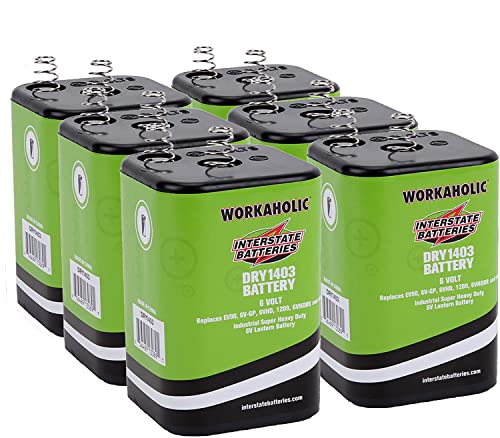
Interstate Batteries 6V HD 7000 mAh Lantern Battery 6-Pack
More On The Choices That Made The List
Ten cells in one box, all built around the same 6 volt 5Ah SLA recipe, all wired with spring terminals on top. This is the kind of pack you buy when you maintain several lanterns at once or run a workshop where dead batteries are a routine nuisance.
Each cell measures about 2.58 by 2.58 by 4.50 inches and weighs roughly 1.81 pounds, so the box adds up fast. The chemistry inside is sealed lead-acid, meaning it can be recharged hundreds of times if you own the right charger, and it sits upright without leaking under normal conditions.
Benefits That Matter
- Ten matching 6V 5Ah cells let you rotate replacements without scrambling for a spare.
- Spring terminals slot straight into most lantern battery compartments without adapter fuss.
- Compact footprint of roughly 2.58 by 2.58 by 4.50 inches fits standard lantern wells.
- Sealed lead-acid chemistry tolerates repeated recharging, lowering long-term waste.
- UB650 direct replacement design simplifies swaps across common lantern models.
Worth Noting
- Total weight of nearly 18 pounds across ten cells is awkward for a single trip from the porch.
- Lead-acid cells self-discharge over months, so spares benefit from a top-up charge before long storage.
Best Suited To
Workshop owners, scout leaders, and households with multiple spring-terminal lanterns who want one bulk order to cover seasonal rotations.
Where Another Pick Suits Better
The Upstart Battery UB645 is a better fit when you only need a single cell for one Coleman-style lantern and value clean sealed construction over bulk quantity.
This single 6V 4.5Ah sealed lead-acid cell covers a surprising amount of ground. Upstart Battery built it as a direct replacement for Coleman lanterns, older Sears and Craftsman flashlights, vintage Dorcy units, and even modified ride-on toys like Hot Wheels cars or Barbie Jeeps.
It ships pre-charged with covered terminals for safe handling, which means less fiddling when the lights go out. Compared to the bulky 10-pack above, this one trades volume for flexibility, sitting at the right capacity for many older lanterns without forcing you to inventory spares.
Why It Works Well
- Sealed construction prevents leaks, a real plus when a lantern sits in a closet for years between uses.
- Covered terminals keep fingers and metal tools from shorting across the posts during swap-outs.
- Compatibility list spans lanterns, flashlights, and ride-on toys, so one cell solves multiple household needs.
- Pre-charged design removes the wait time between purchase and first use.
Things To Consider
- 4.5Ah capacity gives shorter runtime than the 5Ah and 7Ah cells elsewhere in this list.
- Terminal style is fixed, so lanterns expecting spring posts need a quick adapter check before swapping.
Feature Snapshot
Made For
Coleman lantern owners, hobbyists restoring vintage flashlights, and parents powering a 6V ride-on toy who want one cell that adapts across the household.
Consider Something Else When
The Battery Hawk 10 Pack SLA 6V5 is the stronger call for anyone running several spring-terminal lanterns and preferring to stock spares at the same chemistry.
Sometimes the right battery is one you can leave alone for years and trust on the day you finally crack it open. Duracell’s MN908 is a non-rechargeable alkaline cell built around exactly that idea, sitting quietly in a closet until a storm pulls the grid down.
Date coding on each cell confirms freshness, and the brand quotes long shelf stability, which matters when an emergency kit sits untouched for several seasons. This is the opposite of the Battery Hawk cells above: single-use chemistry, no charger required, and a clear end-of-life signal when the light starts to dim.
Noteworthy Benefits
- Alkaline chemistry gives a multi-year shelf life, ideal for emergency storage.
- Date code on the cell lets you rotate stock by age rather than guess.
- No charger needed, making it a true grab-and-go option during power loss.
Honest Caveats
- Single-use design means replacement cost adds up with frequent lantern use.
- Performance drops in very cold storage, so unheated garages may shorten usable life.
Perfect Match For
Anyone maintaining an emergency kit, a weather radio station, or a seldom-used hallway lantern who values a long shelf life over recharge cycles.
Look Elsewhere When
The Interstate Batteries 6V HD 6-Pack is a better choice when you run a high-drain outdoor light often enough that disposable alkaline costs become a real line item.
For a no-frills, single-shot battery in a familiar red and black wrap, the Eveready 1209 keeps things simple. It’s a carbon-zinc 6V cell with spring terminals on top, designed for moderate to heavy drain in standard lantern housings.
The internal chemistry is zinc-manganese dioxide, free of added mercury or cadmium, and the cell carries an ANSI-908D and IEC-4R25 designation for cross-reference against other 6V lantern batteries. It weighs around 21 ounces and operates across a wide temperature range, making it a sensible fit for a garage or a workshop shelf.
What Makes Sense
- Spring terminals slot into common lantern battery compartments with no extra hardware.
- Zinc-manganese chemistry delivers a low upfront cost per cell for budget shopping.
- Wide operating temperature range suits unheated sheds and outdoor storage cabinets.
Trade-Offs To Consider
- Carbon-zinc capacity is modest compared to alkaline or SLA alternatives, so runtime under heavy load drops.
- Single-use build means frequent users end up replacing it several times a year.
Quick Facts
Right Fit For
Anyone replacing a lantern battery a few times a year on a tight budget, especially in a garage, basement, or workshop that does not see daily use.
A Better Fit Elsewhere
The Duracell MN908 Alkaline is a stronger pick when longer shelf life and steadier output matter more than the lowest up-front price per cell.
Single cell, no frills, just the same UB650-class sealed lead-acid recipe that keeps showing up in spring-terminal lanterns. If you only need one fresh battery and want to test the SLA waters before committing to a bigger pack, this is a clean place to start.
It carries the same 2.58 by 2.58 by 4.50 inch dimensions and 1.81 pound weight as the larger Battery Hawk bundles, so it slots into any housing sized for the 10-pack above. The chemistry recharges on a standard SLA charger, giving you a second life out of each cell once a year of camping wraps up.
Where It Excels
- 6V 5Ah capacity gives a useful runtime bump over older 4.5Ah replacements in similar lanterns.
- UB650-class footprint matches the dimensions of many OEM lantern batteries for a clean swap.
- Spring terminal design keeps installation tool-free in the dark.
- Rechargeable chemistry lowers long-term waste once you own an SLA charger.
Room For Improvement
- Single-cell purchase can feel steep compared to a multi-pack if you know you will need spares soon.
- Sealed lead-acid self-discharge over months, so off-season storage benefits from periodic top-up charging.
Who Should Grab It
First-time SLA shoppers and anyone restoring a single spring-terminal lantern before a planned camping trip.
Another Choice May Suit
The Battery Hawk 4 Pack SLA 6V5 is a smarter order when you already know you will rotate through multiple lanterns within a year.
Two cells is the sweet spot for a couple of weekend trips or a backup pair to keep in the car. Both units carry the same Hunter 28314 cross-reference and DE650-S class dimensions, so they slot into the same lanterns that take the single Battery Hawk cell above.
Built as a sealed lead-acid UB650-class replacement with spring terminals on top, this pair lets you carry one fresh and one spare without paying for a full 10-pack. It is the kind of bundle that quietly solves the “the lantern is dead at the campsite” problem without forcing a charger decision right away.
Where It Delivers
- Two-cell pack covers a weekend of camping with a hot spare already charged.
- 6V 5Ah rating matches the runtime of many common OEM lantern batteries.
- Spring terminals align with the standard layout of older Coleman and similar lanterns.
- Sealed SLA construction tolerates vehicle storage between trips.
Some Limits To Know
- At roughly 3.6 pounds for the pair, it adds noticeable weight to a backpack.
- Spare cell benefits from periodic top-up charging once it sits past a few months unused.
At A Glance
Whose Shelf It Belongs On
Couples and small families running two spring-terminal lanterns on weekend trips who want a hot spare without the weight of a 10-pack.
Skip It When
The Interstate Batteries 6V HD 6-Pack is a stronger match if you run heavy-duty lanterns often and want the higher 7000 mAh capacity over volume.
Mid-size households tend to fall between a single cell and a full case. Four matching 6V 5Ah SLA batteries cover that gap nicely, giving you a working pair plus a stored spare pair without overstocking the garage shelf.
Each cell in this bundle carries the same spring terminals and UB650-class form factor as the rest of the Battery Hawk lineup. They cross-reference against common model numbers like APG-645S and BW 650S, so compatibility with mainstream lanterns is rarely a concern.
What Stands Out
- Four matching cells keep a working rotation plus two spares on hand at all times.
- Spring terminal layout drops into most lantern housings without rewiring.
- 6V 5Ah rating balances runtime and recharge time for frequent weekend use.
- Sealed lead-acid chemistry tolerates partial state-of-charge storage better than flooded cells.
Points To Keep In Mind
- Four cells together weigh roughly 7.2 pounds, which is noticeable on a single carry from the door.
- Stored spares will self-discharge over time and need a top-up charge before a long trip.
The Right Fit
Households running two or three spring-terminal lanterns across both indoor and outdoor spaces who want a balanced stash without committing to a 10-pack.
Where Another Pick Suits Better
The Upstart Battery UB645 single cell is a better match when only one lantern needs attention and you prefer a sealed terminal cover over a multi-pack bundle.
Eveready’s Super Heavy Duty 1209 is the kind of cell that suits an older lantern sitting in a basement for decades. It’s a carbon-zinc 6V lantern battery with spring terminals on top, designed for clocks, radios, flashlights, and other low to moderate drain gear around the home.
Unlike the rechargeable SLA picks elsewhere on the list, this one is meant to be used and replaced. The familiar Eveready branding signals a baseline of dependable low-drain power without the premium pricing of an alkaline cell, which keeps the cost reasonable when you only swap the lantern battery once or twice a year.
Where It Helps
- Carbon-zinc chemistry keeps the per-cell cost low for occasional-use lanterns.
- Spring terminals match the layout found in many older lantern battery compartments.
- No charging routine required, so storage is simple between uses.
Factors To Consider
- Capacity is modest compared to alkaline or SLA alternatives, so runtime under heavy use shrinks quickly.
- Single-use build creates recurring replacement cost for frequently used lanterns.
Feature Card
Built With In Mind
Vintage flashlight collectors and homeowners reviving an old lantern or radio that has not been powered up in years.
Reach For A Different Pick When
The Interstate Batteries 6V HD 6-Pack makes more sense if your lantern sees frequent heavy-duty use and you want a higher mAh capacity behind it.
Where most entries on this list focus on spring-terminal lanterns, the PKCELL 4R25 cells lean toward the larger square-style 6V battery used in some outdoor lanterns, ceiling lights, deer feeders, and similar gear around a property.
You get four matching cells with spring terminals on top, ready to feed more than just a camping lantern. If your setup includes a few different spring-terminal devices, this pack spreads a single purchase across multiple uses without forcing a chemistry decision per device.
Advantages To Know
- 4R25 form factor fits both classic lanterns and certain outdoor fixtures like game feeders.
- Spring terminal layout simplifies installation in dark sheds or early-morning campsite conditions.
- Four-cell bundle covers several devices across a property without multiple orders.
Worth Bearing In Mind
- Capacity sits in the moderate range, so runtime depends heavily on the device’s drain profile.
- Performance in extreme cold can drop, so unheated outdoor storage may shorten usable life.
Quick Technical Notes
Who Will Love This
Property owners running multiple spring-terminal devices, including outdoor lanterns, ceiling fixtures, or deer feeders, who want one bulk order to cover them all.
Swap It Out When
The Battery Hawk 2 Pack Hunter 28314 is a cleaner choice if your only device is a standard spring-terminal camping lantern rather than a mixed outdoor setup.
When runtime matters more than shelf life, the Interstate 6V HD cells jump ahead of the rest of this list. The 7000 mAh rating per cell outclasses the 5000 mAh SLA units above, giving heavy-duty lanterns and high-drain flashlights noticeably longer sessions between swaps.
Six cells in one bundle covers a household running multiple lanterns, a small rental cabin, or anyone who uses a 6V lantern as a regular work light. Spring terminals on top maintain the drop-in convenience shared by the other SLA picks, so installation stays simple even at the end of a long day.
Key Advantages
- 7000 mAh capacity delivers the longest runtime per cell in this lineup.
- Six-cell bundle keeps spares ready for heavy-duty lanterns that drain quickly.
- Spring terminals preserve tool-free installation in standard lantern housings.
- HD build suits high-drain outdoor work lights and frequent camping use.
Where It May Fall Short
- Heavier per-cell weight than smaller 4.5Ah or 5Ah options, so six cells together add up.
- Higher capacity means longer recharge times on a standard SLA charger between uses.
Best Suited To
Frequent outdoor power users, contractors, and homeowners who run 6V lanterns as work lights and want fewer swaps during a busy week.
Where A Sibling Pick Shines
The Duracell MN908 Alkaline is the smarter call for an emergency kit that sits untouched for years, where shelf life matters more than peak capacity.
Choosing a 6 Volt Lantern Battery That Actually Fits
Chemistry Sets The Personality
Lead-acid, alkaline, and carbon-zinc cells behave very differently in real-world use. SLA (sealed lead-acid) cells are rechargeable and tolerate hundreds of cycles, which makes them a fit for camping households that rotate through the same lantern every summer. Alkaline cells are single-use but reward long shelf storage, while carbon-zinc cells sit in the budget corner with modest capacity. Your household’s rhythm usually picks the chemistry before the brand ever matters.
Match The Terminal Layout First
Before capacity or brand, check the spring terminal arrangement on your lantern. Most spring-terminal lanterns expect the standard top-mounted coil layout, but some 4R25 designs and modified toys use different post spacing. A quick visual match against the original battery prevents a frustrating return cycle and keeps the swap under a minute in the dark.
Capacity And Run Time In Real Terms
A 4.5Ah cell drives a moderate lantern for several hours per charge, while a 7000 mAh HD cell extends that window further under heavy drain. If your lantern sits on a porch for evening reading, a smaller cell is plenty. For nightly power-outage use or worksite lighting, higher mAh saves you from mid-week swaps.
Stock Strategy And Storage Habits
Bulk packs reduce per-cell cost but only pay off if you actually rotate cells. Sealed lead-acid spares self-discharge over months and benefit from a periodic top-up charge. Alkaline and carbon-zinc cells hold their charge longer on a shelf, making them a cleaner fit for emergency kits that rarely see action.
Key Considerations Across These Picks
Where Shoppers Go Wrong
A common slip is choosing capacity over terminal match, then discovering the spring posts do not sit right in the lantern. Another is treating alkaline shelf life like SLA cycle life and leaving a sealed lead-acid cell discharged for a season, which shortens its overall lifespan. Always confirm the terminal style first, and plan a top-up schedule for any rechargeable you plan to store.
When Paying More Pays Off
Higher-tier cells justify their cost when the lantern sees frequent use, deep discharges, or cold storage. The jump from a basic 4.5Ah SLA to a 7000 mAh HD cell adds real runtime that frequent users notice within a season, and a bundled multi-pack brings the per-cell cost down for households running several lanterns. Spending up makes sense when you would otherwise replace a budget cell two or three times in the same period.
Frequently Asked Questions
How long does a 6V lantern battery usually last per use?
Runtime depends on the lantern’s bulb wattage and the battery’s capacity, but a typical 5Ah SLA cell powers a moderate 6V lantern for several hours of continuous use, while a 7000 mAh HD cell extends that window noticeably.
Can I recharge any 6V lantern battery?
Only sealed lead-acid cells are designed for recharging with a compatible SLA charger. Alkaline and carbon-zinc cells are single-use and should be replaced once depleted, not recharged.
Will a 6V lantern battery work in very cold weather?
Cold temperatures reduce effective capacity across most chemistries, but carbon-zinc and certain SLA cells rated for wide temperature ranges still operate, just with shorter runtimes. Storing spare cells in an insulated area helps.
How do I know which spring terminal style my lantern needs?
Most spring-terminal lanterns use the standard top-mounted coil layout shared by the cells in this list. A quick visual check against the original battery confirms whether the spacing matches before you order a replacement.
Are all 6V lantern batteries the same size?
No, dimensions vary between spring-terminal SLA cells and the larger 4R25 form factor. Measuring the original battery’s height, width, and depth before ordering prevents fit issues in tighter lantern housings.
The Takeaway
A 6 volt lantern battery is a small purchase that pays off the moment the lights go out or the campsite goes quiet. Match the terminal layout, pick the chemistry that matches how often you use the lantern, and lean toward a higher mAh rating if you run the light for hours at a time. The right cell keeps the glow going without thinking about it, which is exactly what a backup power source should do.