A reliable 6V deep cycle battery is the kind of purchase that quietly runs your off-grid cabin, your golf cart, or your trolling motor for years. The hard part is matching capacity, terminal style, and chemistry to the job, since a 208Ah flooded unit and a 7Ah sealed unit are not interchangeable even if they share a voltage label. This roundup covers nine options across golf carts, emergency lighting, decoys, mobility scooters, and marine use, so you can zero in on the right size and chemistry without guesswork.
The Shortlist At A Glance
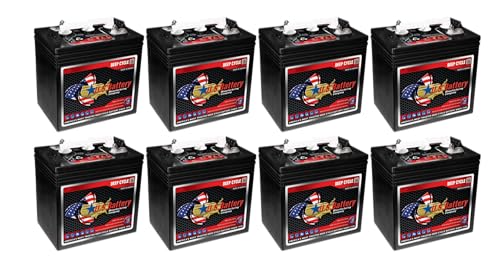
US Battery US1800XC2 6 Volt 208Ah Deep Cycle Set of 8

AJC Battery Compatible with Portalac GS PE6V12 6V 12Ah

AJC Battery Compatible with Lightalarms 860.0018 6V 7Ah

NPP NP6-10Ah Rechargeable Sealed Lead Acid 6V 10Ah 4-Pack

Mighty Max 6V 4.5Ah Battery for Mojo Decoys 2-Pack

LOSSIGY 36V Lithium Golf Cart Conversion Kit with Charger

Dyness 36V 55Ah LiFePO4 Lithium Battery for Trolling Motors
AJC Battery Compatible with Long Way LW-3FM10 6V 12Ah

AJC Battery Compatible with Portalac PE6V10 6V 10Ah
A Breakdown Of The Leading Choices
Eight units at once is a serious commitment, but that is exactly the point of the US Battery US1800XC2 bundle. Each cell is a flooded lead acid BCI Group GC2 unit rated at 6V with a 208Ah capacity at the 20-hour rate, and the set scales cleanly into a 48V golf cart bank or a 24V RV solar array when wired in series.
Because GC2 is one of the most common footprints in the golf cart world, these drop into existing trays without fabrication. Compared to the smaller AJC sealed replacements later in this list, this is a purpose-built traction pack rather than a backup unit, so owners running fleet carts or off-grid cabins get meaningful runtime gains.
Benefits That Matter
- 208Ah capacity at the 20-hour rate delivers long runtimes between charges, which matters for solar banks where cloudy days can stack up.
- 392 capacity minutes at 25 amps translates to real sustained output for trolling motors and floor scrubbers.
- Standard GC2 footprint fits the trays used by most golf carts and utility vehicles without any custom bracket work.
- Buying eight at once ensures a matched set, which helps the bank age evenly and avoids the weak-cell problem that plagues mixed banks.
- Flooded lead acid chemistry is field-serviceable, so you can top up cells and equalize charges instead of scrapping the pack.
Trade Offs To Weigh
- Flooded cells vent hydrogen during heavy charging, so the battery box needs ventilation and you should plan for occasional water top-ups.
- Eight GC2 batteries are heavy, and depending on your vehicle’s payload rating, you may need to confirm the total weight fits your use case.
- These are not sealed, so mounting orientation matters and rough marine environments call for a proper enclosure.
Feature Snapshot
Made For
Golf cart owners, solar off-gridders, and RV enthusiasts building a full 48V bank from matched GC2 cells.
Where Another Pick Suits Better
The Dyness 36V 55Ah LiFePO4 fits anglers who want a single lithium pack over a flooded lead acid bank.
The AJC replacement for the Portalac GS PE6V12 is the kind of part you buy once and forget about for a few years. It carries a 6V nominal voltage, a 12Ah capacity, and F1 terminals that match the original Portalac footprint, which is what you want when the exit sign on the third floor starts beeping at 2 a.m.
Sealed lead acid chemistry (a maintenance-free design where the electrolyte is held in absorbent glass mats, so the case never needs topping off) makes this a fit for ceiling-mounted fixtures and tight electrical closets. Compared to the larger US Battery set covered earlier, this is a single-purpose backup unit, not a traction pack.
What Earns Its Place
- Direct replacement form factor for Portalac GS PE6V12 fixtures, so installation usually takes minutes.
- Sealed construction eliminates routine watering and reduces leak risk in ceiling-mounted units.
- F1 terminals match the existing wiring harness on most Portalac emergency lights.
Things To Consider
- 12Ah capacity is sized for emergency runtime, so it is not appropriate as a trolling motor or scooter battery.
- Sealed lead acid still has a finite service life, and depending on the test cycle in your building, you may be replacing these every few years.
Right Fit For
Facility maintenance crews and building owners who need a direct Portalac GS PE6V12 swap without rewiring.
Swap It Out When
The NPP NP6-10Ah 4-pack is a better call for mobility scooter owners who need a maintenance-free 10Ah unit in multiples.
The AJC Lightalarms 860.0018 replacement is the smaller sibling to the Portalac unit above, and it exists for one reason: the original Lightalarms spec calls for a 6V 7Ah sealed battery, not 12Ah. Some fixture models simply do not have the physical room for the larger cell.
It uses the same F1 terminal style and sealed lead acid construction as other AJC emergency light batteries, which keeps the swap straightforward. Where the US Battery US1800XC2 powers a cart for hours, this one keeps a stairwell lit for the legally required 90 minutes during a power outage.
Useful Touches
- 7Ah capacity matches the smaller Lightalarms 860.0018 form factor where a 12Ah cell would not physically fit.
- Sealed lead acid means no maintenance access is needed, which suits ceiling-mounted installations.
- F1 terminal layout mirrors the OEM wiring, so the swap is essentially unplug and reconnect.
Honest Caveats
- 7Ah runtime is shorter than a 12Ah unit, so depending on the fixture’s load, monthly test cycles will deplete it faster.
- Single-unit pack size means you are ordering one at a time, which adds up if you manage a large building.
Best Suited To
Building engineers maintaining Lightalarms 860.0018 fixtures that physically cannot accept the larger 12Ah cell.
Consider Something Else When
The AJC Long Way LW-3FM10 6V 12Ah replacement is a better match for backup cabinets that have room for the bigger cell.
The NPP NP6-10Ah comes four to a pack, which makes it the practical choice for anyone running mobility scooters, ride-on toys, or small backup banks that eat batteries in pairs. Each cell is 6V at 10Ah, sealed with AGM (Absorbent Glass Mat, a construction where the electrolyte is suspended in fiberglass mats so the case can be mounted in any orientation) and VRLA (valve-regulated lead acid) construction, and the footprint is roughly 5.94 x 1.97 x 3.7 inches.
Compared to the single AJC emergency light units covered earlier, this is built for higher-discharge applications like scooter motors. The lower self-discharge rate (under 3% per month) means spares hold their charge on the shelf, which is genuinely useful when you keep backups in the garage.
Useful Highlights
- Four-pack format matches how scooter and toy batteries are typically replaced, so you are not stuck with one leftover cell.
- Sealed AGM design lets you mount the battery in any position without leak risk, which helps in tight scooter battery compartments.
- Low self-discharge rate under 3% per month means a stored spare stays ready between uses.
- Maintenance-free operation removes the routine watering that flooded cells require, and depending on your use case, that alone saves real time.
Worth Noting
- 10Ah per cell is smaller than the 208Ah US Battery GC2, so this is not a golf cart replacement despite the same 6V label.
- AGM cells can be sensitive to chronic overcharging, so pairing the right charger matters for long service life.
Feature Card
Whose Shelf It Belongs On
Mobility scooter owners and small backup-system users who want maintenance-free 6V 10Ah cells in a ready-to-go four-pack.
Look Elsewhere When
The Mighty Max 6V 4.5Ah 2-pack is the better pick for waterfowl hunters powering Mojo decoys on long sits.
Hunters running Baby Mojo or Floater Mallard decoys know the pain of a dead spinner halfway through a sit, and the Mighty Max ML4-6 solves that specific problem. It ships as a 6V 4.5Ah SLA (sealed lead acid) cell in a 2-pack, sized to slip into the decoy’s battery tray without modification.
This is a niche product compared to the 208Ah US Battery GC2 or the marine-rated Dyness LiFePO4 covered elsewhere, but for its intended job the form factor and shock resistance matter more than raw capacity. You mount it, run the decoy, and rotate the spare.
Everyday Advantages
- Compact 2.76 x 1.89 x 4.21 inch footprint fits the Baby Mojo and Floater Mallard battery compartments without shimming.
- Sealed AGM construction resists the shock and vibration of being transported in trucks and layout blinds.
- Wide operating temperature range keeps the decoy spinning on cold morning sits and warm afternoons alike.
- Two-pack format means you can rotate a fresh cell in mid-hunt without returning to the truck.
Some Limits To Know
- 4.5Ah capacity is small, so depending on how long your sits run, you may want a third cell as insurance.
- F1 terminals only, so this is not a drop-in for decoys that use spade or barrel connectors.
Who Should Grab It
Waterfowl hunters running Mojo Baby or Floater Mallard decoys who need a vibration-resistant sealed 6V cell on hand.
Not Your Match When
The Dyness 36V 55Ah LiFePO4 is the better fit for anglers running a trolling motor from a real boat battery bank.
The LOSSIGY 36V kit is not technically a single 6V battery; it is a complete lithium replacement for a 36V golf cart bank, which is built by wiring six 6V-class cells in series. Where the US Battery set above is six flooded lead acid GC2 units, this swaps that whole architecture for one lithium pack with a built-in BMS (Battery Management System, the onboard electronics that protect cells from overcharge, over-discharge, and temperature extremes).
The kit includes the charger and a converter, which matters because lithium packs need a different charge profile than lead acid. For cart owners tired of watering six cells, that single change is often the deciding factor.
The Good Stuff
- Built-in BMS protects the cells from common failure modes like over-current and short circuits during hard acceleration.
- Lithium chemistry drops a significant amount of weight compared to a six-unit lead acid bank, which can free up payload or improve range.
- Bundle includes the matching charger and converter, removing the guesswork of matching voltages to an existing cart.
- Higher cycle count than flooded lead acid means fewer replacements over the life of the cart, depending on how heavily you use it.
Things To Consider
- Lithium packs can struggle in extreme cold, so storage in unheated sheds may warrant an insulated compartment.
- Conversion kits require confirming your cart’s mounting tray dimensions before ordering, and depending on the year, adapter brackets may be needed.
Quick Technical Notes
Built With In Mind
Golf cart owners ready to retire a six-pack of lead acid batteries for a lighter, lower-maintenance lithium setup.
Reach For A Different Pick When
The US Battery US1800XC2 8-pack is the better answer for owners who prefer field-serviceable flooded chemistry at a lower entry cost.
The Dyness 36V 55Ah LiFePO4 (lithium iron phosphate, a lithium chemistry prized for thermal stability and long cycle life) pack is purpose-built for anglers who need a single sealed unit on a wet boat deck. The IP65 rating (a standard that defines resistance to dust and low-pressure water jets) covers dust ingress and low-pressure water jets, which covers spray, rain, and the occasional splash over the gunwale.
Where the AJC emergency batteries and the Mighty Max decoy cells are tiny standby units, this is a serious propulsion battery. The upgraded 3C discharge capability means it can deliver high current to a trolling motor without voltage sag, which matters when you are fighting current on a windy day.
Where It Excels
- IP65 rating protects internal electronics from salt spray and rain that would corrode an unsealed pack.
- 3C discharge rate supports continuous high current draw from a trolling motor without rapid voltage drop.
- LiFePO4 chemistry holds up to thousands of cycles, so a few seasons of heavy use will not kill the pack.
- Sealed construction means no watering, no acid spills on carpeted boat decks, and no terminal corrosion to chase.
Room For Improvement
- Marine environments still demand checking terminals periodically for salt buildup, even on a sealed pack.
- LiFePO4 cells can lose usable capacity in extreme cold, so winter storage in an unheated boathouse may shorten runtime on the first spring trip.
Who Will Love This
Anglers running 36V trolling motors who want a single lithium pack that survives spray and delivers steady current all day.
A Better Fit Elsewhere
The LOSSIGY 36V Conversion Kit is the better pick for golf cart owners retrofitting from a lead acid bank.
The AJC Long Way LW-3FM10 replacement is the kind of OEM-match battery that facility managers and medical equipment owners hunt for when the original cells age out. The 6V 12Ah rating and F1 terminals match the Long Way spec directly, so installation is a matter of unclipping the old battery and seating the new one.
Sealed lead acid chemistry keeps the unit zero-maintenance, which is exactly what backup cabinets and UPS-style applications demand. Compared to the larger NPP 4-pack, this is a single-cell replacement for one specific device rather than a fleet.
What It Does Well
- Direct-fit replacement for the Long Way LW-3FM10 means no rewiring or shimming during installation.
- Sealed construction suits enclosed equipment cabinets where venting would be impractical.
- F1 terminal layout accepts the existing harness connectors used on Long Way devices.
Softer Spots
- 12Ah capacity only suits the load profile of the original device, so using it as a general-purpose 6V battery is a stretch.
- Sealed lead acid has a finite float life, and depending on ambient temperature, expect a replacement every few years in always-on service.
The Right Fit
Owners of Long Way LW-3FM10 powered devices who want a sealed replacement that drops in without modification.
Another Choice May Suit
The AJC Portalac GS PE6V12 6V 12Ah is the equivalent direct-fit replacement for Portalac emergency fixtures instead.
The AJC replacement for the Portalac PE6V10 closes out this list with another code-driven backup battery, this time for fixtures rated at 6V 10Ah rather than the 12Ah GS or 7Ah Lightalarms units. Same F1 terminals, same sealed lead acid construction, just sized for the slightly smaller Portalac variant.
For facility maintenance crews running mixed-vintage Portalac exit signs, the model number is the only thing that matters. Match it, install it, and move on to the next fixture.
Notable Gains
- 10Ah capacity matches the original PE6V10 spec exactly, so runtime during outages stays within the manufacturer’s design window.
- Sealed lead acid eliminates the watering schedule that open-cell batteries require.
- F1 terminals accept the OEM harness, which keeps the swap to a few minutes per fixture.
Factors To Consider
- 10Ah is a smaller cell than the 12Ah Portalac GS variant, so you need to match the exact PE6V10 spec when ordering.
- Single-unit packaging means more frequent reorders if you manage a building with many fixtures.
Perfect Match For
Facility maintenance teams running older Portalac PE6V10 fixtures that require a 10Ah sealed cell rather than a 12Ah upgrade.
Skip It When
The NPP NP6-10Ah 4-pack is a smarter buy if you want the same 10Ah rating in bulk for scooters or other gear.
What To Weigh Before Choosing Your 6 Volt Deep Cycle Battery
Match Capacity To The Load You Actually Draw
A 6V deep cycle battery is rated in amp-hours (Ah), which tells you how many amps it can deliver for a set number of hours before dropping to a cutoff voltage. A 12Ah emergency light battery running a small inverter draws very little current, so the Ah rating matters less than the form factor. A 208Ah GC2 cell running a trolling motor all day has very different demands, so the Ah number is the deciding spec. Translating to real ownership: figure out your typical amp draw, multiply by the hours you want between charges, and that is the minimum Ah you should shop for.
Pick The Right Chemistry For The Environment
Flooded lead acid (like the US Battery US1800XC2) is field-serviceable and inexpensive, but it vents gas and needs watering. AGM sealed lead acid (like the NPP NP6-10Ah or Mighty Max decoy cells) mounts anywhere and never spills, which matters in vehicles and boats. LiFePO4 (like the Dyness trolling motor pack) is the lightest and longest-lasting option, but it costs more and behaves differently in winter storage. The honest read is that each chemistry has a setting where it makes the most sense.
Confirm Terminal Type And Footprint Before Ordering
F1 terminals are the most common on small sealed 6V batteries, but GC2 traction cells use large lead posts with wing-nut hardware. Measure your existing tray, count the terminals, and match the footprint before placing an order, since the wrong terminal style turns a quick swap into a wiring project.
Plan For Bank Voltage And Series Wiring
A single 6V cell rarely powers a real device alone. Golf carts use six in series for 36V or eight for 48V, RVs often run two in series for 12V, and solar banks vary widely. Confirm whether you need one cell or a matched set, and buy the whole set at once to avoid mixing old and new units in the same bank, which is the most common cause of premature bank failure.
What To Watch Across These Picks
Hidden Buying Traps In The 6 Volt Category
The biggest trap is treating “6V” as the only spec that matters. A 4.5Ah decoy battery and a 208Ah traction cell share that label but have almost nothing else in common. Other common slip-ups include ignoring the terminal type (F1 versus GC2 posts), buying a flooded cell for a sealed compartment that cannot handle venting, and mixing battery ages in a series bank, which forces the newer cells to compensate for the older ones and shortens the life of the whole pack.
Where The Extra Money Goes On Premium Packs
The jump from a budget AJC replacement to a Dyness LiFePO4 marine pack or a LOSSIGY lithium conversion kit buys three real things: longer cycle life, lower weight, and zero maintenance. For a backup exit sign, that premium is hard to justify. For a trolling motor that pulls all weekend or a golf cart that runs daily, the cycle-life math usually pays for itself in fewer replacements and less hands-on upkeep over the years.
Frequently Asked Questions
How Long Does A 6 Volt Deep Cycle Battery Typically Last?
A 6V deep cycle battery in regular service usually lasts somewhere between three and six years, with the exact number depending on how deeply it is discharged each cycle, how often it is recharged, and the ambient temperature. Flooded lead acid batteries tend to sit at the shorter end of that range, while AGM and LiFePO4 chemistries commonly push past the longer end.
Can You Use A 6 Volt Deep Cycle Battery In Place Of A 12 Volt One?
You can substitute two 6V batteries wired in series for one 12V battery, and that is actually a common upgrade for RV and solar banks because the higher-capacity 6V cells often outlast a single 12V marine battery. You cannot, however, use a single 6V cell where a 12V battery is expected, since the voltage will be half what the device requires.
What Is The Difference Between Deep Cycle And Starting Batteries?
Deep cycle batteries are built to discharge a large portion of their capacity repeatedly, using thick plates that tolerate sustained draw. Starting batteries use thin plates designed to deliver short, high-current bursts for engine cranking. Substituting one for the other usually shortens the life of both, so matching the battery type to the load profile matters.
How Should You Store A 6 Volt Deep Cycle Battery During The Off Season?
For flooded lead acid, store the battery fully charged in a cool, dry place and top it off every few months. For AGM and LiFePO4, a full charge plus a periodic top-up is enough, though lithium cells should avoid prolonged storage at very high or very low temperatures. Disconnecting the load during storage prevents slow parasitic drain from killing the cells.
Is It Worth Upgrading From Flooded Lead Acid To Lithium?
Lithium upgrades make the most sense when weight matters, when maintenance time is scarce, or when the battery sees daily use that burns through flooded cell cycle life. For occasional-use backup lighting or seasonal decoys, flooded lead acid and AGM remain the practical answer.
Closing Remarks
The right 6V deep cycle battery is the one that matches your chemistry, capacity, and footprint to the actual job, not the one with the biggest Ah number on the label. Golf cart and solar owners get the most from a matched flooded set, mobility and decoy users do well with sealed AGM packs, and serious marine or daily-use setups earn the lithium premium. Pick the cell that fits your use case today and you will not be shopping for a replacement again for several seasons.