Anglers and boat owners chasing a quiet, lightweight power source are landing on 36V lithium trolling motor batteries for good reason. The chemistry swaps sluggish lead-acid weight for steady, on-demand thrust, and the right pack keeps a kayak or bass boat gliding past the noon sun without voltage sag. The nine picks below pair deep-cycle endurance with the kind of Bluetooth, BMS, and cold-weather touches that make modern trolling setups genuinely easier to live with.
A Side-By-Side Look

LiTime 36V 50Ah Bluetooth Lithium Trolling Motor Battery

LiTime 36V 100Ah Lithium Battery with 25A Charger

OGRPHY 36V 100Ah Lithium Battery with 200A BMS

OGRPHY 36V 150Ah Lithium Battery with App Monitoring

GRENERPOWER 3-Pack 12V 100Ah LiFePO4 Group 24 Batteries

Enjoybot 36V 100Ah LiFePO4 Battery with Bluetooth
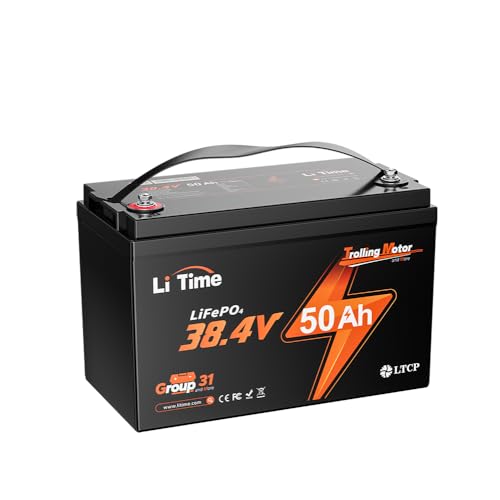
LiTime 36V 50Ah TM LiFePO4 Battery Group31
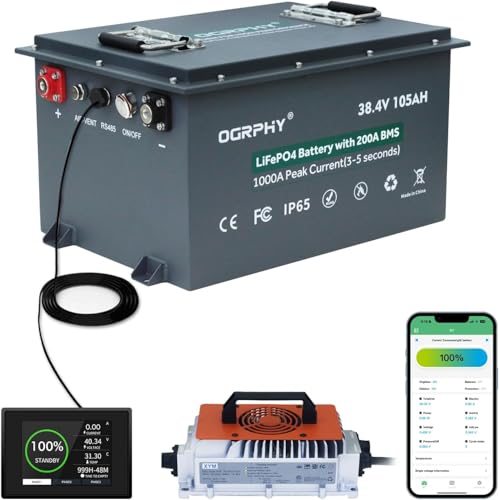
OGRPHY 36V 105Ah Lithium Battery with LCD Monitor

OGRPHY 36V 102Ah Lithium Battery with 12V DC Port
The Strengths Of Each Pick
The 50Ah LiTime earns the opening slot because it tucks enough capacity for a half-day on the water into a frame most kayak anglers can actually lift. The integrated Bluetooth readout pulls state-of-charge, voltage, and temperature onto your phone, so you stop guessing how much throttle you have left before you push off the ramp. Compared to the heavier 100Ah units later in this list, this one trades raw runtime for portability, which matters more than most shoppers expect on small craft.
For owners running mid-thrust 36V motors, the chemistry is LiFePO4 (lithium iron phosphate), known for thermal stability and a long cycle life compared to older lithium-ion formats. The included 15A charger gets the pack back to a full state overnight, and the BMS (battery management system) handles the basic protection work behind the scenes. Most anglers will mount this in a center hatch or behind a seat, and the weight savings over a comparable lead-acid bank are dramatic.
Useful Strengths
- Bluetooth monitoring gives real-time voltage and capacity without a separate gauge
- 50Ah capacity handles a 36V mid-thrust motor for several hours of mixed-speed trolling
- LiFePO4 chemistry holds steady voltage as the pack drains, so thrust stays consistent
- 15A charger included means no extra accessory trip before first use
- Compact footprint fits where Group 31 lead-acid batteries used to sit
Trade-Offs Worth Knowing
- 50Ah is the lighter reserve on this list; full-day fast-trolling may require the bigger 100Ah picks
- Bluetooth antenna performance can dip when the pack is fully enclosed in a metal hatch
Who It Suits Best
Anglers running 36V mid-thrust trolling motors on kayaks, jon boats, or compact bass rigs who want phone-based monitoring without carrying 60+ pounds of battery.
Look Elsewhere When
You fish dawn-to-dusk at higher thrust settings, where the LiTime 36V 100Ah Lithium Battery delivers the runtime you’ll actually need.
If the 50Ah sibling feels too tight on reserve, this 100Ah LiTime doubles your time on the water without doubling the footprint much beyond a standard group-size case. The chassis measures roughly 20.5 by 10.5 by 8.7 inches, which lines up with most marine battery trays designed around lead-acid banks. Owners commonly find that swapping in this pack cuts a meaningful slice of boat weight, which translates to shallower draft and easier trailering.
LiTime markets the unit as ABYC-certified for outboard applications, meaning it has been documented against relevant marine safety benchmarks. The 25A charger that ships in the box recovers a depleted pack faster than the 15A unit paired with the 50Ah version. For anglers running high-thrust 36V motors in chop or current, the extra amp-hour cushion is the difference between heading home early and finishing the drift.
Features That Help
- 100Ah reserve covers a full day of intermittent trolling at moderate speeds
- 25A charger reduces turnaround time between sessions
- Drop-in replacement footprint for common marine battery trays
- LiFePO4 cells with documented marine safety certification
Honest Caveats
- Heavier than the 50Ah pick; plan for a second pair of hands during install
- Box dimensions should be confirmed against your compartment before ordering
- No integrated Bluetooth readout, so state-of-charge checks require the charger’s indicator
Made For
Anglers running 36V high-thrust trolling motors who need all-day runtime and want documented marine-grade construction.
Where Another Pick Suits Better
Shoppers who want phone monitoring and lighter weight should consider the LiTime 36V 50Ah Bluetooth Lithium Trolling Motor Battery from Pick 1.
OGRPHY brings golf-cart battery architecture into the trolling motor world, and the 200A BMS is the headline feature. A higher-amp BMS allows the pack to deliver more current continuously without tripping protection, which matters when you push a 36V motor against wind or a strong current. Where the LiTime units in Picks 1 and 2 focus on steady cruising, this one flexes for harder draws.
The 100Ah capacity stores about 3.84 kWh of energy, and the 25A charger included in the kit refills it at a reasonable pace. Owners using this on heavier jon boats or small pontoon setups commonly report that the steady voltage curve keeps their motor at rated speed even as the pack drains past 50%. The trade-off is physical size; this is not a casual kayak swap-in.
The Practical Payoff
- 200A BMS handles continuous high-current draws from big 36V motors
- 3.84 kWh capacity supports long trolling sessions with margin to spare
- Flat voltage curve preserves motor RPM as the pack drains
- Compatible with solar charging arrays for off-grid recharging
Things To Consider
- Larger case than typical marine battery trays; verify dimensions before ordering
- Heavier than dedicated marine-focused packs at the same capacity
- Originally designed for golf carts, so mounting hardware may need adaptation
Best Suited To
Boaters running high-thrust 36V trolling motors on heavier craft who need sustained current delivery without BMS tripping.
Skip It When
Your setup fits in a kayak or small jon boat and weight matters more than peak current; the LiTime 36V 50Ah Bluetooth pack is the lighter fit.
The 150Ah OGRPHY is the largest pack in this roundup, and the spec sheet leans into multi-use territory. It carries a touch monitor for on-device state-of-charge checks and a mobile app for remote monitoring, which is rare at this capacity tier. Anglers running a 36V trolling motor alongside a fish-finder, livewell pump, and nav lights will appreciate that the BMS handles peaks up to 1000A for short bursts.
This unit stores roughly 5.76 kWh of usable energy and is rated for over 4000 deep cycles at 80% depth of discharge, meaning you can drain it well below half before recharging without shortening its life. For shop owners splitting use between a trolling rig and a solar shed, the dual-purpose design makes sense. The honest read is that this is overkill for casual weekend fishing and ideal for the angler who treats the boat like an off-grid platform.
Reasons It Performs
- 150Ah capacity covers heavy trolling plus accessory loads in one pack
- Touch monitor plus mobile app give two ways to read state-of-charge
- 1000A peak handling supports motor surges without BMS tripping
- Compatible with solar arrays for off-grid recharging between trips
Points To Note
- Substantial weight and case size, so it really needs a fixed battery compartment
- Cycle ratings assume proper charging habits; abuse shortens lifespan fast
- More capacity than a casual angler will ever use in a single session
Who Will Love This
Multi-use boat owners and off-grid enthusiasts who want one battery that powers trolling, electronics, and solar storage in a single unit.
A Better Fit Elsewhere
Recreational weekend anglers will be happier with the lighter footprint and lower outlay of the LiTime 36V 100Ah Lithium Battery covered in Pick 2.
The GRENERPOWER entry breaks the single-block mold by shipping three 12V Group 24 batteries that wire in series to deliver 36V. Group 24 is a familiar battery case size, so fitting three into a battery tray or across a center console is more flexible than cramming one oversized brick. The 100A BMS per unit keeps the current flow within safe limits during hard draws.
The published cycle rating reaches 15,000 cycles, which assumes shallow daily discharges and proper charging habits. For DIY-minded anglers who already understand series wiring and want serviceable, swappable modules, the modular format pays off. The trade-off is wiring complexity and the need to balance cells periodically, which beginners tend to overlook.
Standout Benefits
- Modular 12V units can be replaced individually rather than scrapping a whole pack
- Group 24 footprint fits standard marine trays and battery boxes
- Cylindrical Grade A+ cells offer consistent performance across units
- Series wiring flexibility lets you reconfigure for 24V or 12V accessories
A Few Limitations
- Three units take up more total space than a single 36V brick of equivalent capacity
- Series wiring requires basic electrical confidence or professional installation
- Cells should be top-balanced periodically to maintain even wear
Perfect Match For
DIY anglers comfortable wiring in series who want modular, serviceable battery banks over a single sealed unit.
Swap It Out When
You’d rather skip the wiring and balance work entirely; the OGRPHY 36V 100Ah pack from Pick 3 ships as one ready-to-mount unit.
Enjoybot’s 100Ah pack adds cold-weather smarts that anglers in northern climates genuinely appreciate. The low-temperature cut-off function stops the BMS from accepting a charge when cell temps drop too low, which protects the cells from damage that wouldn’t show up until spring. Bluetooth monitoring rounds out the package, putting voltage, current, and temperature on your phone.
The internal 100A BMS handles the typical continuous draw of a 36V trolling motor without complaint, and the peak current ceiling of 500A gives brief surge headroom. Compared to the LiTime 50Ah Bluetooth pack in Pick 1, this one doubles the runtime while keeping the phone-based readout feature. Owners commonly store the pack in an unheated garage or shed, which is exactly the use case the low-temp protection was designed for.
Key Advantages
- Low-temp charging cut-off prevents cell damage in cold storage
- Bluetooth readout keeps state-of-charge visible without opening the compartment
- 100Ah reserve handles full-day moderate trolling
- LiFePO4 chemistry supports thousands of deep cycles at 80% depth of discharge
Things To Watch
- Cold protection only stops charging, not discharging, so warming the pack before top-ups matters
- Heavier than the smaller 50Ah options in this roundup
- Bluetooth module adds a small parasitic draw when the boat sits unused
Right Fit For
Northern anglers storing batteries in unheated spaces who need cold-weather charging protection plus phone-based monitoring.
Another Choice May Suit
Shoppers in milder climates who don’t need cold protection should consider the LiTime 36V 100Ah Lithium Battery in Pick 2 for similar capacity at a typical lower outlay.
This LiTime model drops into a Group 31 footprint, which is one of the most common marine battery sizes in older boats. The case dimensions line up with trays that were originally cut for lead-acid batteries, so retrofitting older hulls is straightforward. Like the Enjoybot in Pick 6, it carries low-temperature protection, so charging in an unheated shop won’t quietly damage the cells.
The cycle rating reaches up to 15,000 cycles, which assumes shallow discharge habits and proper charging. The 50Ah reserve is the lighter side of the LiTime lineup, so this is the pick for anglers who need cold-weather protection in a compact footprint rather than maximum runtime. The chemistry is LiFePO4, so voltage stays flat through most of the discharge curve and the cells tolerate regular deep cycling far better than older lithium formats.
What Pays Off
- Group 31 fitment slots into existing marine trays without modification
- Low-temp charging protection for cold storage conditions
- Long cycle life rating under shallow discharge conditions
- LiFePO4 chemistry keeps voltage steady as the pack drains
Worth Bearing In Mind
- 50Ah capacity is the lower end of this list; full-day fast-trolling may tax it
- Cycle rating assumes proper charging habits rather than hard deep cycles every session
Built With In Mind
Anglers retrofitting older boats with Group 31 trays who fish in cool climates and want a drop-in replacement that tolerates cold storage.
Reach For A Different Pick When
You need phone-based monitoring; the LiTime 36V 50Ah Bluetooth Lithium Trolling Motor Battery from Pick 1 fills the same capacity slot with a connected readout.
OGRPHY’s 105Ah variant adds a built-in touch LCD monitor, which puts voltage, current, and state-of-charge right on the pack itself. For anglers who don’t want to dig out a phone or rely on a separate gauge, the on-device readout removes a step. The 200A BMS matches the larger OGRPHY units and supports 1000A peak surges for a few seconds, which covers motor startup spikes.
Capacity lands between the 100Ah workhorses in Picks 2 and 3 and the larger 150Ah unit in Pick 4, making this a middle-weight option. The 25A charger refills the pack at a reasonable pace, and the chemistry is documented LiFePO4 for thermal stability. Where the LiTime packs in Picks 1 and 2 feel purpose-built for marine use, this OGRPHY leans toward the golf-cart side of the family tree.
Positive Takeaways
- Touch LCD monitor delivers on-device readouts without a phone or separate gauge
- 200A BMS supports hard draws with 1000A peak headroom
- 105Ah capacity splits the difference between 100Ah and 150Ah options
- 25A charger included for reasonable refill times
Softer Spots
- Golf-cart heritage means marine-specific mounting hardware may need adaptation
- Touchscreen adds cost and complexity over a basic BMS pack
- Heavier than the LiTime marine-focused 100Ah option
Whose Shelf It Belongs On
Tech-friendly anglers who want on-device readouts and don’t mind the golf-cart form factor for the sake of extra features.
Consider Something Else When
You prioritize marine-specific construction over feature density; the LiTime 36V 100Ah Lithium Battery from Pick 2 keeps things purpose-built.
The last entry earns its slot by solving a real install headache. The integrated 12V DC output port lets you run standard 12V accessories like lights, horns, and USB chargers straight off the same pack, without buying and wiring a separate 36V-to-12V converter. For anglers running a trolling motor alongside small electronics, that simplification is meaningful.
The 102Ah capacity sits between standard 100Ah workhorses and the larger 150Ah pack from Pick 4, and the same 200A BMS with 1000A peak headroom carries over from the rest of the OGRPHY family. The touch LCD monitor stays on the case, so state-of-charge checks happen without pulling out a phone. Owners should remember to flip the discharge switch off via the monitor or app after use to avoid draining the pack through the 12V port when the boat sits.
Where It Delivers
- Built-in 12V DC output removes the need for a separate voltage converter
- 102Ah capacity supports motor plus accessory loads in a single unit
- Touch LCD readout keeps state-of-charge visible at a glance
- 200A BMS handles surges with 1000A peak headroom
Potential Drawbacks
- 12V port discharge switch must be manually turned off to prevent accessory drain during storage
- 12V output is convenient but adds another circuit to monitor
- Golf-cart form factor may not match marine-specific mounting expectations
Who Should Grab It
Anglers running 36V trolling motors plus 12V accessories who want a single-pack solution without wiring a separate converter.
Not Your Match When
You don’t run 12V accessories off the trolling battery; the LiTime 36V 100Ah unit from Pick 2 covers the standard motor-only case without the extra port.
Choosing The Right Capacity For Your Time On The Water
Match Amp-Hours To Your Realistic Runtime
The single biggest decision is how many amp-hours you actually need. A 50Ah pack handles short morning sessions on a kayak or jon boat, while 100Ah covers most full-day bass fishing trips with margin to spare. Anglers running 36V motors at higher thrust settings or against wind and current burn capacity faster, so the realistic runtime is shorter than the headline spec suggests. Picking the largest pack you can physically mount tends to be safer than undersizing and running out of juice halfway back to the ramp.
Understand What The BMS Actually Does For You
The battery management system is the unsung component in every modern lithium pack. It protects against overcharge, over-discharge, short circuits, and high current draws, and the BMS rating (100A, 200A) tells you how much continuous current the pack will deliver before the protection trips. Higher-thrust trolling motors draw more current, so pairing a small BMS with a big motor leads to nuisance shutdowns under load. For most 36V setups, a 100A or 200A BMS is plenty.
Plan For Cold Weather And Storage Habits
If the boat sits in an unheated garage or shed through winter, low-temperature charging protection prevents permanent cell damage during cold top-ups. Cold doesn’t stop the pack from discharging, so warming it before charging matters. Owners in mild climates can skip the cold-weather feature and focus on capacity and BMS headroom instead. Storage state also matters: leaving any lithium pack fully depleted for months shortens its cycle life regardless of brand.
Confirm Physical Fit Before You Order
Group 24, Group 27, and Group 31 are common lead-acid battery footprints that lithium replacements often mimic. Measure your tray or compartment before committing to a non-standard case. Single-block 36V packs sometimes ship in larger housings designed for golf carts, so verify dimensions against the available space, especially in confined center console setups.
Key Considerations Across These Picks
Where Shoppers Go Wrong
A common mistake is choosing capacity based on the headline spec alone rather than the actual current draw of your trolling motor at typical speeds. Another is ignoring BMS ratings; a pack with a 50A BMS will trip when paired with a high-thrust motor that draws more than the protection allows. Skipping fitment checks rounds out the list, since the largest pack on paper is useless if it physically won’t fit your tray. Plan capacity, BMS headroom, and dimensions together before committing.
When Paying More Pays Off
Higher-tier models in this category typically buy three things: larger capacity, higher BMS current ratings, and extra monitoring features like Bluetooth or onboard LCDs. Anglers running larger boats, heavier motors, or multi-day trips see real return on the bigger pack because the runtime gap is measured in hours, not minutes. Shoppers running smaller boats on short sessions can skip the extra capacity and still get the core chemistry benefits from the more compact options higher on the list.
Frequently Asked Questions
How long does a 36V lithium trolling motor battery actually last per charge?
Runtime depends on amp-hour capacity and how hard the motor works; a 100Ah pack at moderate trolling speeds typically delivers a full day, while high-thrust use at full speed cuts that significantly.
Can I replace my lead-acid batteries with lithium without changing anything else?
Most modern 36V trolling motors accept lithium drop-ins, but you should confirm your charger’s lithium compatibility and verify your tray dimensions before swapping, since lithium packs sometimes ship in non-standard housings.
What does the BMS actually protect against?
The battery management system guards against overcharge, over-discharge, short circuits, and excessive current draw, which is why a higher BMS rating matters for high-thrust motors.
Is Bluetooth monitoring worth the extra cost?
For anglers who fish in unfamiliar conditions or want to track state-of-charge without opening a compartment, phone monitoring removes a layer of guesswork and is genuinely useful on multi-day trips.
How should I store my lithium trolling battery during the off-season?
Store the pack at roughly a half charge in a dry location, avoid leaving it fully depleted for long stretches, and skip charging in freezing temperatures unless your pack has low-temp protection.
Closing Remarks
The right 36V lithium trolling motor battery comes down to matching capacity, BMS headroom, and physical fit to your boat and your typical day. Smaller craft and short sessions lean toward the 50Ah picks with phone monitoring, while full-day anglers and heavier rigs earn the upgrade to 100Ah or larger. Spend a few minutes measuring your compartment and thinking honestly about your runtime before clicking through, and the rest of the decision tends to fall into place.