Upgrading from lead-acid to a 36V lithium pack changes how your gear feels on the course, on the water, or off-grid. The chemistry runs lighter, delivers deeper usable capacity, and shrugs off the slow degradation that plagues older flooded cells. The picks below cover golf carts, trolling motors, marine use, and solar setups, so matching voltage is only the start of the right call.
A Closer Look At The Lineup
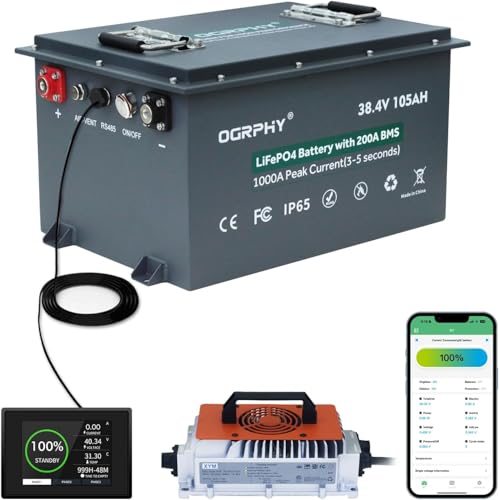
OGRPHY 36V 105Ah Lithium Golf Cart Battery (105AH)

LOSSIGY 36V 100Ah Lithium Golf Cart Battery

LOSSIGY 36V 105AH Lithium Golf Cart Battery

Litime 36V 50Ah Bluetooth Lithium Battery

E-LekTech 36V 100Ah Lithium Golf Cart Battery

CHINS 36V 100AH Lithium Battery

OGRPHY 36V Lithium Battery Conversion Kit (102AH)

OGRPHY 36V 100Ah Lithium Battery (3.84KWh)
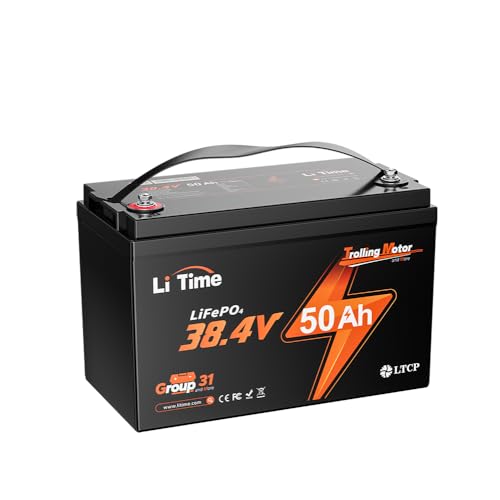
LiTime 36V 50Ah TM LiFePO4 Battery (Group 31)
The Strengths Of Each Pick
The OGRPHY 105Ah pack opens the list because it bundles serious capacity with monitoring you’d normally only see on commercial setups. Where most lithium replacements ship as a black box, this one ships with a touch monitor and a mobile app, so you can watch state of charge, voltage, and current from the cart seat or the driveway. The internal BMS (Battery Management System, the onboard circuitry that prevents over-discharge and short circuits) is rated at 200A continuous with a 1000A peak, which covers most 36V controllers without complaint.
For golfers who actually drive their carts every weekend, the app side is more useful than it sounds. You can check resting voltage the night before a round, and you’ll know whether the pack is balanced before you set off. The Grade A prismatic LiFePO4 cells (a stable lithium-iron-phosphate chemistry known for long cycle life) give the unit its 4000-plus cycle claim, which matters more for fleet or shared-cart use than for occasional weekend play.
Well-Handled Touches
- Touch monitor plus mobile app for live state of charge and current readings
- 200A continuous BMS handles stock and upgraded 36V controllers
- 105Ah capacity replaces roughly six 12V 100Ah lead-acid batteries in parallel
- 4000-plus cycle rating suggests years of weekend use before meaningful capacity loss
- Included 25A charger tops the pack reasonably quickly between rounds
Things To Consider
- The mobile app requires a Bluetooth or Wi-Fi connection that some users find fiddly on first pairing
- Heavier than smaller 50Ah packs, so check your battery tray dimensions before ordering
- Peak current is generous, but very high-torque aftermarket motors may still demand more headroom
Feature Snapshot
Made For
Regular golfers who want telemetry, not just a battery that runs silently.
Consider Something Else When
Shoppers running a small 36V trolling motor on a jon boat should look at the LiTime 50Ah Group 31 pack instead, since it fits tight battery compartments more cleanly.
The LOSSIGY 100Ah option steps in with one feature golfers in wet climates really care about: an IP65-rated enclosure. That rating means the case resists dust ingress and low-pressure water jets, so a sudden rainstorm on the back nine is less of a crisis. Underneath, the pack runs Grade A LiFePO4 cells with a 200A BMS and the same 1000A peak current ceiling you saw on the OGRPHY above.
What separates this pick is the 9-in-1 battery monitor. It’s a wired display rather than an app, which some people genuinely prefer because it lives on the dash and never asks for a software update. You get voltage, current, state of charge, and a handful of cell-level diagnostics without reaching for your phone.
Useful Highlights
- IP65-rated casing handles rain, spray, and dusty cart paths
- 9-in-1 wired monitor delivers cell-level data without an app dependency
- 3840W continuous output suits mid-power golf cart motors
- Class A cells support the deep-cycle claim versus cheaper alternatives
- 25A charger included, so no separate accessory purchase is required
Points To Keep In Mind
- IP65 is splash-resistant, not submersible, so flooded compartments still need attention
- Wired monitor requires a clean mounting spot on the dash or seat support
Built With In Mind
Coastal or rainy-region golfers who want sealed protection without moving to an app-driven setup.
Skip It When
You’d rather check battery status from your living room, in which case the OGRPHY 105Ah with its touch monitor and app pairing will feel more modern.
This second LOSSIGY entry trades the 9-in-1 wired screen for a 2.8-inch touch panel, which feels more like a small tablet bolted to your cart than a battery gauge. The cells and BMS are otherwise familiar territory: 105Ah, 200A continuous, 1000A peak, IP65 sealing. The result is a pack that reads like a flagship without the usual flagship price tag.
If you’ve ever wondered exactly how many amps your cart pulled climbing the big hill on hole 14, this display will tell you in real time. The Bluetooth layer also feeds the same data to your phone, so the touch panel is a dashboard while the phone is the long-term log.
Practical Pluses
- 2.8-inch color touch screen readable in direct sunlight
- 4032W continuous power output handles stock and lightly upgraded motors
- IP65 rating protects against spray and dust on the course or dock
- 105Ah capacity adds a useful buffer over standard 100Ah packs
Room For Improvement
- Touch screen is convenient but adds another potential failure point versus a simple LED gauge
- Same 1000A peak ceiling as smaller LOSSIGY models, so no extra headroom for high-torque builds
Quick Facts
Best Suited To
Golfers who treat their cart like a tech project and enjoy watching live power data.
Look Elsewhere When
You want the cleanest, simplest install possible, in which case the LiTime 36V 50Ah for trolling motors keeps the wiring minimal.
Step down in capacity, step up in marine focus. The LiTime 36V 50Ah is built specifically around trolling motor duty, with Bluetooth monitoring and a form factor that fits a Group 27-style battery tray on most bass boats. LiTime is also a member of the ABYC (American Boat & Yacht Council) and ASA (American Sportfishing Association), which signals the company takes marine certifications seriously rather than treating boats as an afterthought.
Where 100Ah golf cart packs focus on torque and range at low speeds, this one targets anglers who need steady draw-down over many hours at low throttle. The trade-off is fewer amp-hours, so heavy-current accessories like a 36V spotlight or winch may deplete it faster than you’d like.
Notable Gains
- Bluetooth monitoring shows voltage and current on your phone at the helm
- Compact Group 27-friendly footprint fits common marine battery trays
- 25A charger included, so you can recharge overnight between trips
- LiFePO4 chemistry tolerates partial state-of-charge better than lead-acid
Honest Caveats
- 50Ah is half the capacity of the cart-focused packs on this list, so runtime suffers on bigger boats
- Lacks the cold-weather protection of the Group 31 LiTime variant, so winter storage matters
Who Should Grab It
Anglers running a 36V trolling motor on a small-to-mid-sized fishing boat.
A Better Fit Elsewhere
Anyone running a golf cart should look at the OGRPHY 105Ah or E-LekTech 100Ah instead, since the higher capacity matches cart load profiles better.
E-LekTech is the only entry here that explicitly markets a 10-year lifespan, which positions the pack for owners who want to install it and largely forget about battery replacements for a decade. Internally, it shares the familiar LiFePO4 setup with a 200A BMS and 7.68kW max load. The brand also leans on app monitoring, similar to the OGRPHY above, so you can pair the pack with your phone for at-a-glance status checks.
Where this battery earns its place is fleet or rental cart operators, where replacement cost and downtime are recurring line items. The 500A peak current is lower than the 1000A peaks on some rivals, but in real-world use that gap rarely matters unless you’re building a hot-rod cart.
Where It Delivers
- 10-year stated lifespan suits commercial and rental cart operations
- 200A continuous BMS handles typical motor loads comfortably
- App monitoring reduces guesswork for fleet managers tracking multiple carts
- Charger included, simplifying initial setup
Worth Bearing In Mind
- Peak current is rated at 500A, lower than the 1000A peaks on several competitors
- Long-life claims assume proper charging habits, which not every rental operator follows
Spec Overview
Whose Shelf It Belongs On
Course managers and rental operators replacing aging lead-acid banks.
Swap It Out When
You’re running a high-torque aftermarket motor, where the OGRPHY 105Ah’s 1000A peak gives more comfortable headroom.
The CHINS pack slots into the list as the no-nonsense mid-tier choice. It ships with an 18A charger (slower than the 25A units elsewhere) and a monitor, and it targets the same 36V golf cart and trolling motor use cases without leaning on flashy screen tech. For shoppers who simply want a reliable lithium replacement at a standard capacity, this is a sensible starting point.
The slower 18A charger is worth flagging. If you play a quick nine holes in the morning and need the cart ready for an afternoon round, plan to top up overnight rather than expecting a fast turnaround.
What Makes Sense
- Solid 100Ah capacity for typical 36V golf cart and trolling motor use
- 200A continuous, 1000A peak current suits stock and moderately upgraded controllers
- Monitor included for at-a-glance voltage checks
- LiFePO4 chemistry tolerates partial charging between sessions
Things To Weigh
- 18A charger is slower than the 25A units bundled with most rivals
- Less brand recognition than OGRPHY or LOSSIGY in the golf cart space
Right Fit For
Casual cart owners who don’t need a fast charger or a touch screen.
Reach For A Different Pick When
You regularly drive back-to-back rounds, in which case the LOSSIGY 100Ah with its 25A charger recharges more comfortably between sessions.
This OGRPHY entry is positioned as a conversion kit, and the headline feature is a built-in 12V DC output port. That port lets you run cart lights, horns, and USB accessories directly off the main pack without buying a separate 36V-to-12V converter. The integration alone can save an afternoon of wiring on a lead-acid-to-lithium retrofit.
At 102Ah with the same 200A BMS and 1000A peak you saw on the sibling 105Ah pack, the difference is mostly about accessory integration rather than raw power. The touch monitor still feeds live data, and the mobile app gives you remote state-of-charge checks. Just remember to flip the discharge switch off after using 12V accessories, or you’ll drain the pack overnight without realizing it.
Useful Strengths
- Integrated 12V DC port eliminates the need for a separate voltage converter
- 102Ah capacity with the same 200A continuous BMS as the larger OGRPHY pack
- Touch monitor plus app for redundant telemetry
- 4000-plus cycle rating for long service life
Small Caveats
- Forgetting the discharge switch can leave 12V accessories pulling the pack flat
- Slightly lower capacity than the 105Ah sibling at a similar feature count
The Right Fit
DIY converters swapping six lead-acid batteries for a single lithium pack with accessory wiring.
Where A Sibling Pick Shines
Owners who don’t need 12V accessory integration should consider the OGRPHY 105Ah reviewed above, since it offers similar capacity without the extra discharge-switch habit.
The 3.84KWh OGRPHY targets the crossover crowd: golfers who also tinker with solar, plus boaters who want one pack that does both jobs. At 100Ah and 3.84KWh usable energy, the capacity lines up nicely with mid-sized off-grid solar arrays, and the same 200A BMS handles golf cart motors without complaint.
Where it differs from the strictly cart-focused OGRPHY entries is the framing. The brand markets Grade A LiFePO4 cells and a 5000-plus cycle claim, which positions the pack for owners who expect a decade of mixed-use service rather than a few seasons of weekend golf.
Useful Touches
- 3.84KWh energy rating maps well to mid-sized solar charge controllers
- 5000-plus cycle claim extends service life beyond typical golf cart estimates
- 200A continuous, 1000A peak BMS for both motor and inverter loads
- 25A charger included for fast top-ups between uses
Points To Note
- No dedicated low-temperature cutoff, so cold-climate solar owners may need a heated enclosure
- Marketing leans on cycle counts that depend heavily on depth-of-discharge habits
Best Suited To
Off-grid cabin owners and hybrid golf-cart/solar users who want one pack for both jobs.
Not Your Match When
You fish in cold climates, where the LiTime 36V 50Ah Group 31 with low-temp protection makes more sense.
Closing the list is the LiTime Group 31, which earns its spot by being the only pick with explicit cold-weather charging protection. A built-in low-temperature cutoff prevents the BMS from accepting charge when cell temperatures drop below a safe threshold, which matters for ice anglers and winter boaters who leave batteries in unheated compartments.
The 50Ah capacity limits it to smaller trolling setups, but the cycle rating of up to 15,000 cycles is the highest claim in this lineup, supported by automotive-grade LiFePO4 cells. For boats stored outside in northern climates, that combination is genuinely hard to beat.
Positive Points
- Low-temperature charging cutoff protects cells in freezing storage
- Up to 15,000 cycle rating, the highest on this list
- Group 31 footprint fits standard marine battery trays
- Automotive-grade LiFePO4 cells for stable long-term performance
Trade-Offs To Consider
- 50Ah is modest, so high-draw trolling motors on big water may run short
- No touch screen or app, just the standard BMS protections
Who It Suits Best
Cold-climate anglers and boaters who store batteries in unheated spaces through winter.
Where Another Pick Suits Better
Warm-region golfers should default to the E-LekTech 100Ah or OGRPHY 105Ah, where higher capacity pays off more than cold-weather circuitry.
What To Weigh Before Picking Your 36V Pack
Start with capacity, because amp-hours translate directly into runtime. A 100Ah pack at 36V stores roughly 3.84KWh of energy, which on a typical 3kW golf cart motor means a real-world cruising range in the tens of miles before a recharge. Trolling motors draw less aggressively, so a 50Ah pack often runs a full fishing day on smaller boats, while larger vessels benefit from 100Ah or higher.
Next, look at the BMS rating, which is the small computer inside the pack that cuts off discharge or charge when conditions get unsafe. Continuous current should comfortably exceed your motor’s normal draw, with peak current offering headroom for hill climbs or heavy throttle bursts. A 200A continuous BMS paired with a 1000A peak rating is the current sweet spot for most stock 36V controllers.
Form factor matters more than people expect. Measure your battery tray, then compare against Group 27, Group 31, and custom footprints. A pack that’s a half-inch too tall won’t seat properly, and vibration from a loose fit can damage cell connections over time.
Finally, think about monitoring. Touch screens and apps look nice, but a wired gauge that always powers on with the cart may actually be more reliable long term than a Bluetooth pairing that drops out mid-round.
Key Considerations Across These Picks
Where Shoppers Go Wrong
The most common mistake is matching voltage but ignoring capacity. A 36V 50Ah pack on a 7kW golf cart motor will deplete fast under load, leaving you stranded on the back nine. Always cross-reference motor draw against amp-hour ratings before clicking through.
Another misstep is overlooking the BMS ceiling. Buyers sometimes assume any 36V lithium battery handles any 36V controller, then discover peak current limits cause shutdowns on steep terrain. Check continuous and peak ratings side by side.
Where The Extra Money Goes
Premium tiers typically buy better cell grading, longer cycle life ratings, and more advanced monitoring. Whether the upgrade pays off depends on usage: a weekend golfer may not feel the difference between a 4000-cycle and 5000-cycle pack, but a fleet operator replacing batteries every few years certainly will.
Weather protection is another premium-layer feature. IP65 sealing and low-temperature cutoffs cost real money to engineer, and they’re worth it only when your environment actually stresses the battery.
Frequently Asked Questions
How long does a 36V lithium battery typically last?
Most LiFePO4 packs in this category are rated for 4000 to 15,000 cycles depending on cell grade and depth of discharge habits. A weekend golfer can expect many years of service before meaningful capacity loss.
Can I replace six 8V or 12V lead-acid batteries with one 36V lithium pack?
In most 36V golf carts, yes, provided the lithium pack’s footprint and BMS rating match the battery tray and motor controller. Confirm tray dimensions and peak current before ordering.
Do lithium batteries work in freezing temperatures?
Some do, but cold-weather charging requires a low-temperature cutoff to prevent cell damage. The LiTime Group 31 in this lineup includes that protection; most other picks here are better suited to temperate climates.
What size charger do I need?
A 25A charger is the common standard for 100Ah+ packs and tops up overnight between sessions. Slower 18A chargers work fine if you’re not pressed for time.
Are lithium batteries safe on boats?
Yes, when you choose a pack with appropriate sealing and BMS protections. IP65 ratings handle spray and rain, and ABYC-aligned brands like LiTime follow marine-grade standards.
The Takeaway
The right 36V lithium battery depends on whether your priority is golf cart range, trolling motor runtime, or off-grid solar storage. Match capacity to your motor draw, check the BMS peak current against your controller, and pick a form factor that fits without modification. The picks above cover that full range, so the shortlist should narrow quickly once those three boxes are checked.