A dead trolling motor, a CPAP that won’t stay topped off, a scissor lift that groans mid-shift: that’s the daily reality behind a 24v battery search. You’re after dependable power for boats, RVs, off-grid setups, or workshop gear, and the wrong pack can mean a slow sunset or a ruined weekend. This lineup gathers nine solid options across marine, deep-cycle, and charger categories, so you can match the right pack to the way you actually use it.
Your Options, Compared

VATRER POWER 24V 300AH LiFePO4 Lithium Battery 200A BMS

BtrPower 24V 50Ah LiFePO4 Trolling Motor Battery

LiTime 24V 100Ah Bluetooth LiFePO4 Battery
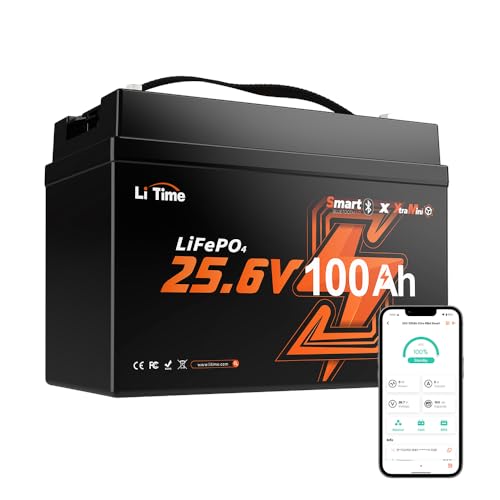
LiTime 24V 100Ah Mini LiFePO4 Trolling Motor Battery

LiTime 24V 50Ah Bluetooth Lithium Trolling Motor Battery

BtrPower 24V 140Ah Deep Cycle LiFePO4 Battery

BtrPower 24V 100Ah Deep Cycle LiFePO4 Battery

FORM 24V 25A Battery Charger for Scissor Lifts

CASIMY 24V 2.7A AC/DC Adapter for Medistrom Pilot-24 Lite
The Strengths Of Each Pick
If you’re running a small cabin solar array or a backup bank for a remote workshop, raw capacity matters more than portability. This VATRER POWER pack delivers a 300Ah rating at 24V (7.68kWh of usable storage) paired with a 200A BMS (the BMS, or Battery Management System, is the onboard circuitry that protects cells from overcharge, over-discharge, and short circuits). Compared to the smaller BtrPower 24V 50Ah reviewed later, this is a completely different class of gear aimed at stationary deep-cycle use rather than grab-and-go trolling.
The built-in app monitoring is a quiet upgrade: you can watch state of charge and current draw from your phone, which matters when the pack is bolted inside a closet and forgotten for weeks.
Advantages To Know
- 300Ah capacity covers multi-day off-grid loads without generator support
- 200A BMS supports high inverter surges for microwaves and induction cooking
- Bluetooth app gives real-time state-of-charge readings without opening the case
- LiFePO4 chemistry (lithium iron phosphate, a safer and longer-lived lithium variant) handles thousands of deep discharge cycles
Trade-Offs To Consider
- The sheer weight and footprint require a permanent installation spot
- Overkill for anyone running a single trolling motor or a small RV
Key Attributes
Whose Shelf It Belongs On
Off-grid homesteaders and solar hobbyists running inverter loads well beyond what a single trolling motor would draw.
Swap It Out When
The BtrPower 24V 50Ah LiFePO4 Trolling Motor Battery is the better call for kayak anglers who care about weight over raw amp-hours.
A kayak angler hauling a 70lb-thrust motor doesn’t need a 300Ah brick. The BtrPower 24V 50Ah LiFePO4 pack is built for that smaller-framed reality, sized as a direct drop-in replacement for the lead-acid Group 24 box that used to live in the stern. Rated for motors in the 70 to 100lb thrust range, it weighs a fraction of an AGM (absorbent glass mat, a sealed lead-acid design) equivalent and slips into tight bilge spaces without modification.
One thing worth considering: this is the no-frills option in the BtrPower family. No Bluetooth, no app. You’re trusting voltage readings from your motor’s display.
Strengths Worth Knowing
- Compact size fits kayak decks and small jon boats
- Drop-in replacement for 24V lead-acid Group 24 batteries
- Compatible with 70 to 100lb trolling motors
- LiFePO4 cells rated for thousands of deep cycles
Worth Noting
- No Bluetooth or app-based state-of-charge monitoring
- 50Ah is tight for all-day full-throttle fishing sessions
Made For
Kayak and jon-boat anglers who need a featherweight 24V pack that won’t dent their hull or weigh down their cartop carrier.
Where Another Pick Suits Better
The LiTime 24V 50Ah Bluetooth Lithium Trolling Motor Battery brings app monitoring to the same 50Ah class, which most weekend anglers will appreciate.
The full-size LiTime 24V 100Ah sits in the middle of the marine sweet spot: enough capacity for a full day on the water, small enough to fit a center-console hatch. Bluetooth 5.0 pairs automatically and streams live state of charge, current, and temperature, which makes pre-launch checks a 30-second job instead of a multimeter ritual. At roughly 46 pounds, it cuts the weight of a comparable lead-acid bank by two-thirds.
The trade-off shows up in dimensions. The case measures 8.2 x 21 x 8.5 inches, so it’s worth a tape-measure check before you commit, since some smaller boats don’t have room for a pack that long.
The Case For It
- 100Ah covers a full day of moderate trolling without recharging
- Bluetooth 5.0 auto-connects for real-time monitoring
- About a third the weight of equivalent lead-acid banks
- Supports parallel-stacking for expanded capacity
Small Caveats
- The length may exceed compact battery compartments
- Parallel-stacking demands matched cells for balanced output
Feature Snapshot
Best Suited To
Boat owners running a center console or bass rig who want real-time diagnostics without pulling out a multimeter at the launch ramp.
Skip It When
The LiTime 24V 100Ah Mini LiFePO4 Trolling Motor Battery is the smarter pick for tighter Group 31 trays where the full-size case won’t fit.
The “Mini” here is honest: LiTime trimmed roughly 8 inches off the length compared to its full-size sibling above to land in a Group 31 (a common automotive/marine battery tray standard) footprint. The case measures 13.11 x 6.93 x 9.45 inches, which opens up installs in skiffs and bass boats where every inch of front deck matters. Same 100Ah capacity, same 70 to 100lb thrust rating, just a tighter chassis.
The catch is height. It clears a Group 31 tray but won’t slide into a standard Group 31 battery box, so owners commonly report retrofitting the lid or mounting it on top.
Noteworthy Benefits
- Group 31 footprint fits trays the full-size version can’t
- Stable voltage for smooth trolling motor thrust control
- Built specifically for 70 to 100lb thrust motors
- Marine-rated construction for splash-zone installs
A Few Limitations
- Won’t fit inside a standard Group 31 battery box
- Slightly higher price-per-amp-hour than the full-size option
Perfect Match For
Skiff and bass boat owners fighting for console space who still want a full 100Ah of trolling runtime.
Look Elsewhere When
The BtrPower 24V 50Ah LiFePO4 Trolling Motor Battery is a lighter, smaller-capacity alternative for kayak anglers who don’t need 100Ah at all.
Same 50Ah class as the BtrPower reviewed earlier, but with two meaningful upgrades: Bluetooth monitoring and TVS surge protection (a transient voltage suppressor that absorbs voltage spikes from motor switching). The built-in 50A BMS adds over 20 protection modes, which matters on rough water when the motor controller spits out voltage spikes every time it shifts direction.
You also get longer cycle life on paper: 4,000 cycles at 100% depth of discharge, scaling to 15,000 cycles if you only run it down to 60% before recharging.
Key Advantages
- Bluetooth app streams state of charge to your phone
- TVS surge protection absorbs motor-controller spikes
- Cycle life scales to 15,000 if you limit depth of discharge
- Marine-grade construction handles splash and vibration
Points To Keep In Mind
- Heavier than the no-frills BtrPower 50Ah option
- Capacity still limits full-throttle all-day runtime
Right Fit For
Weekend anglers fishing choppy water who want both Bluetooth visibility and surge protection on a moderate budget.
A Better Fit Elsewhere
The LiTime 24V 100Ah Mini LiFePO4 Trolling Motor Battery is the upgrade when you need double the capacity in a Group 31 footprint.
The 140Ah rating translates to roughly 3,584Wh of stored energy, which slots neatly between the 100Ah workhorses above and the 300Ah monster from VATRER POWER. It’s the size most solar installers reach for when a single 100Ah pack comes up short but a 300Ah bank is overkill. The 100A BMS handles mid-sized inverters without complaint, and the Grade A LiFePO4 cells are spec’d to hold 80% capacity past 3,000 deep cycles.
The catch is that it lands in an awkward middle ground: not as portable as the 100Ah options, not as roomy as the 300Ah pack. Best for stationary installs where the wheelbarrow test happens once.
What Stands Out
- 140Ah bridges the gap between 100Ah and 300Ah options
- 100A BMS drives mid-sized inverters for solar banks
- 3,000+ cycle rating at 80% retained capacity
- Grade A cells improve cycle stability long-term
Where It May Fall Short
- Sits in a middle-size gap; not as compact as 100Ah packs
- Heavier than smaller-capacity alternatives
Quick Facts
Who It Suits Best
Solar hobbyists and off-grid cabin owners who need more than 100Ah but don’t want to commit to a full 300Ah wall.
Consider Something Else When
The BtrPower 24V 100Ah Deep Cycle LiFePO4 Battery is the cleaner pick for simpler backup-power setups where 140Ah is more than you need.
This is the no-nonsense BtrPower counterpart to the LiTime 100Ah unit reviewed earlier. Same 100Ah capacity, same LiFePO4 chemistry, but stripped of Bluetooth and app connectivity, which is the trade-off that keeps the focus on straightforward deep-cycle work. The 100A BMS protects against overcharge, over-discharge, and the usual fault modes, and the cells are spec’d past 3,000 deep cycles while retaining 80% capacity.
Compared to the LiTime Bluetooth version, you give up the live data feed but gain a simpler, generally friendlier price tier.
The Value In It
- 100Ah covers typical backup-power and RV house-bank needs
- 100A BMS handles common inverter loads safely
- 3,000+ cycle rating at 80% capacity retention
- LiFePO4 chemistry avoids the lead-acid maintenance cycle
Practical Considerations
- No Bluetooth, so state-of-charge reads require a multimeter or monitor shunt
- Less refined than app-connected alternatives
Who Should Grab It
RV owners and backup-power users who want a deep-cycle pack without paying for connectivity features they won’t use.
Reach For A Different Pick When
The LiTime 24V 100Ah Bluetooth LiFePO4 Battery is the upgrade if you prefer live phone monitoring over a simpler, no-frills design.
Not every 24V search ends at a battery. The FORM charger handles the other half of the equation: keeping Genie, Skyjack, and JLG scissor lifts, electric pallet jacks, and floor scrubbers topped off between shifts. Rated at 25A output, it’s a multi-chemistry unit that speaks lead-acid, AGM, LiFePO4, and lithium, which matters on mixed fleets where one shop might run three different battery types.
Ring terminals and a “set it and forget it” maintenance mode make it a clean fit for overnight top-ups in a service yard.
A Few Highlights
- Multi-chemistry support across lead-acid, AGM, LiFePO4, and lithium
- 25A output handles scissor lift packs overnight
- Ring terminal hookup simplifies permanent install
- Maintenance mode holds a full charge without overcooking cells
Less Ideal Details
- Industrial form factor is overkill for a single trolling motor
- Ring terminals require permanent placement or a dedicated adapter
Built With In Mind
Shop supervisors and rental-yard managers who service mixed aerial and material-handling fleets on one charger.
Where A Sibling Pick Shines
The VATRER POWER 24V 300AH LiFePO4 Lithium Battery 200A BMS is the better match if your real need is stationary storage rather than fleet charging.
This is a category-of-one in the roundup. The CASIMY adapter replaces the wall charger for a Medistrom Pilot-24 Lite or PowerLite 24 CPAP backup battery, putting out 24V at 2.7A (about 65W). It accepts an AC input range of 100 to 240V, so it works on foreign mains without a separate transformer. That’s the whole job, but it’s a critical one for anyone whose travel CPAP battery brick has misplaced its wall wart.
The honest read: this only matters if you own the specific Medistrom pack. It isn’t a general 24V supply.
Good Reasons To Consider
- Direct-fit replacement for lost or damaged Pilot-24 Lite chargers
- 100 to 240V input supports international travel
- 2.7A output matches the OEM charge profile
- Compact brick for hotel-room and campsite outlets
A Few Limitations
- Compatibility is locked to the Medistrom Pilot-24 Lite family
- Won’t charge marine or RV deep-cycle banks
Feature Snapshot
Who Will Love This
Travelers and campers relying on a Pilot-24 Lite CPAP backup who need a replacement charger that works internationally.
Not Your Match When
The FORM 24V 25A Battery Charger for Scissor Lifts is the right tool if your need is a fleet charger for aerial equipment, not a single CPAP brick.
What To Weigh Before Choosing A 24V Battery
Capacity versus portability is the first fork in the road. A 50Ah pack moves easily from boat to kayak and back, but it’ll leave you stranded on a long trolling day. A 300Ah wall sits in your cabin and forgets about the grid, but you’ll never wrestle it into a jon-boat hatch. Match amp-hours to your typical session length, then double it for a comfortable margin.
Chemistry dictates lifespan. LiFePO4 cells outlast lead-acid by a wide margin, generally rated for 3,000 to 5,000 deep cycles versus the 300 to 500 you’d see on a flooded lead-acid pack. The trade-off shows up in the price tier, but for daily-use boats and solar banks the math usually favors lithium within two seasons.
Form factor catches many shoppers off guard. Marine batteries come in Group 24, Group 27, and Group 31 footprints, and not every “compact” lithium box lands cleanly in a Group 31 tray. The LiTime 24V 100Ah Mini above is a good example of a pack that fits the tray but exceeds the lid clearance, so measure twice before ordering.
Charging and monitoring round out the decision. Bluetooth monitoring turns a battery you forget about into one you actually manage, which extends cycle life in practice. If you already own a shunt-based battery monitor, you can skip the app and save.
Picking The Right 24V Battery For The Job
Common Shopping Slip Ups
The most frequent misstep is buying by amp-hours alone without checking the BMS rating. A 100Ah pack with a 50A BMS will choke on any inverter load above 600W continuous, leaving you wondering why your microwave trips the protection circuit. Match BMS amperage to your highest sustained draw, not just your capacity number.
Another trap is overlooking low-temperature charging limits. Several LiFePO4 packs refuse to accept a charge below freezing, which can leave a winter-stored RV or boat with a dead brick in March. If your climate sees hard freezes, look for low-temperature charge protection, since owners commonly report cells damaged by sub-zero charging without that cutoff.
When Paying More Pays Off
Higher-tier packs earn their premium through three channels: longer cycle life, better BMS design, and smarter connectivity. A 5,000-cycle cell bank at a higher up-front price beats a 3,000-cycle pack on total cost per cycle for daily-use installs. Built-in Bluetooth and shunt-ready outputs also save the cost of an aftermarket monitor, which closes the gap faster than the sticker suggests.
For a single weekend fishing trip a year, a budget pack makes sense. For a full-time off-grid cabin or a daily-driven boat, the upgrade pays back in fewer replacements and less babysitting.
Frequently Asked Questions
What does LiFePO4 mean for a 24V battery?
LiFePO4 stands for lithium iron phosphate, a lithium-ion chemistry that prioritizes thermal stability and long cycle life over raw energy density. You give up some compactness compared to other lithium variants, but gain safer thermal behavior and thousands of deep cycles, which is why it dominates the deep-cycle marine and solar market.
Can a 24V lithium battery replace a 24V lead-acid setup?
In most cases, yes. The nominal voltage matches, and most modern chargers accept lithium profiles. The exceptions are older chargers with desulfation or equalization modes that push voltages too high for LiFePO4 cells, which is worth checking on legacy marine chargers before swapping.
How long will a 24V trolling motor battery last per charge?
Runtime depends on thrust setting, boat weight, and current. A rough guide: a 100Ah pack at 24V holds about 2.4kWh of usable energy, and a 70lb thrust motor at half speed draws around 20 to 25 amps, which works out to four to five hours of real fishing. Push to full throttle and that drops fast.
Do I need a special charger for a 24V LiFePO4 battery?
A charger with a lithium or LiFePO4 profile is strongly recommended. Lead-acid chargers often push an equalization stage that over-volts LiFePO4 cells, which the BMS will usually block, but the repeated tripping shortens BMS life over time. The FORM 24V 25A charger reviewed above is a multi-chemistry unit that handles this cleanly.
Is Bluetooth monitoring worth the extra cost?
For permanent installs like solar banks or RV house power, yes. Spotting a parasitic draw before it kills your pack saves a replacement. For portable marine use where you visually check the battery each trip, a simple multimeter or built-in monitor often does the same job.
The Takeaway
The right 24V battery depends almost entirely on where it lives and how often you check on it. Kayak anglers get the most from compact 50Ah packs, full-size boat owners live in the 100Ah tier, off-grid cabins justify the 300Ah class, and mixed-equipment shops need a multi-chemistry charger on the wall. Pick the profile that matches your daily reality, and the rest sorts itself out.