A dead battery is a dead project. The right 24v charger turns a stalled forklift, marine bank, or workshop battery into a running machine without a tow truck or a service call.
You’re shopping in a crowded field, though. Marine units, manual workhorses, multi-stage smart chargers, and heavy industrial boxes all promise similar things, but they serve very different roles. The seven picks below cover garage tinkering, weekend boats, and light-commercial equipment, with notes on who each one actually fits.
A Closer Look At The Lineup
A Closer Look At The Lineup

Victron Blue Smart IP67 Marine Battery Charger 24V 8A

PZP 0-15A 12V/24V Manual Charger Maintainer

PZ.P 15A 12V/24V Smart Charger with Temp Compensation
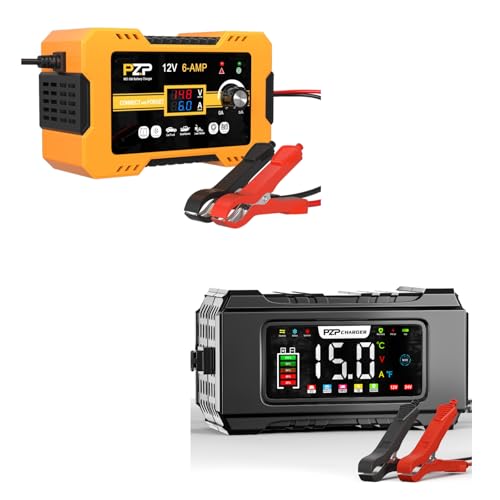
PZP 15A 12V/24V Smart Charger with Color Display

PZP 12V 0-6A Smart Manual Trickle Charger

FORM 24V 25A Industrial Battery Charger

PZP 12V 0-10A Smart Manual Trickle Charger
Meet The Standout Selections
Victron’s Blue Smart line earns its reputation through engineering, not hype. The IP67 rating means the entire unit is dust-tight and rated for temporary water immersion, so a damp bilge or splash at the dock isn’t a worry. The 8-amp output covers a 24-volt bank gently, which is exactly what long-lived deep-cycle and lithium banks need.
Built-in Bluetooth ties the charger to the VictronConnect app on a phone or laptop, giving you voltage readouts, charge stage, and historical data without walking back to the unit. For boat owners, off-grid cabin owners, or anyone whose charger lives outside, this is the kind of “set and forget” hardware that pays back its premium over years of trouble-free service.
A Few Highlights
- IP67 sealed enclosure handles moisture, dust, and salt air with ease.
- Bluetooth monitoring through the VictronConnect app removes guesswork at the dock.
- Adaptive seven-stage algorithm (a programmed sequence that varies voltage and current through bulk, absorption, and float phases) preserves battery health across lead-acid and lithium chemistries.
- Compact footprint fits behind an engine box or inside a service panel.
Worth Noting
- The 8-amp ceiling is too slow for large battery banks that need fast turnaround.
- Premium pricing reflects the build, so budget shoppers may want to look at lighter-duty PZP alternatives below.
- App configuration assumes a basic comfort with Victron’s terminology and settings.
Who It Suits Best
Boat owners, RV enthusiasts, and off-grid solar users who need a sealed, app-monitored charger in a wet or harsh environment.
Where Another Pick Suits Better
The FORM 24 Volt Industrial Battery Charger makes more sense for high-current equipment like scissor lifts and pallet jacks where 25 amps beats gentle 8-amp top-ups.
The PZP manual charger skips the digital stage logic in favor of an analog amp knob you can dial from 0 to 15 amps. For someone restoring an old truck, reviving a deeply discharged battery, or topping off an awkward-sized bank, that hands-on control has real value.
The unit handles both 12-volt and 24-volt systems, which makes it a flexible shop helper when you don’t yet know what vehicle is rolling in next. Just remember this is a manual tool, meaning you’ll need to watch the gauge and disconnect at the right time, or leave it too long and risk overcharging. Compared with the Victron above, this trades smart monitoring for raw adjustability at a friendlier cost.
What It Does Well
- Continuously adjustable amp output from 0 to 15 amps gives precise control.
- Dual 12V/24V compatibility covers most vehicle and equipment banks.
- Accessible price point for hobbyists on a tight budget.
Trade Offs
- No automatic shut-off means you must monitor the session yourself.
- Less suitable for unattended long-term maintenance compared with smart chargers.
Made For
Home mechanics and restoration hobbyists who want a flexible manual charger and don’t mind watching it work.
Consider Something Else When
The PZ.P 15-Amp Smart Charger is the better match for anyone wanting nine-stage automation without manual babysitting.
This PZ.P unit pushes past the basics with a nine-stage charging algorithm that walks the battery through soft start, bulk, absorption, and float, then holds at a safe maintenance voltage. Temperature compensation adjusts the voltage target based on ambient conditions, which matters in a hot garage in summer or an unheated shed in winter.
Chemistry support is broad: LiFePO4 (lithium iron phosphate, a long-life lithium chemistry), AGM (absorbent glass mat, a sealed lead-acid type), gel, and conventional flooded lead-acid all run through the same unit. For households juggling a motorcycle, a lawnmower, a truck, and maybe a small boat, the universal handling removes the need for multiple chargers.
The Good Stuff
- Nine-stage charging protects battery longevity through every phase.
- Temperature compensation keeps voltages safe across seasons.
- LiFePO4 compatibility covers modern lithium upgrades.
Points To Note
- The interface uses small indicator lights rather than a readable screen, so status checks take a moment longer.
- Mode selection can feel unintuitive without the manual in hand.
Who Will Love This
Owners of mixed-vehicle fleets who want one charger that handles lithium and lead-acid without swapping units.
Look Elsewhere When
The PZP 15-Amp Color Display Charger is friendlier if you want at-a-glance voltage and percentage readouts without an app.
The standout feature is right in the name: a full-color LED screen that shows voltage, current, internal temperature, charge percentage, and summer or winter mode at a glance. Most cheap chargers hide that information behind blinking lights, so the display alone makes diagnosis faster.
Under the hood, the same nine-stage algorithm from earlier PZP units runs the show, with adjustable current up to 6 amps and capacity support from 4 to 100Ah (amp-hours, the standard unit of battery capacity). The 6.7-foot cable reaches awkward battery terminals without dragging the unit across the garage floor. Compared with the PZ.P 15-Amp model, this trades raw amperage for visibility.
Strong Points
- Color LED screen readable in direct sunlight.
- Long cable improves reach to hard-to-access batteries.
- Summer and winter modes tune behavior to ambient temperature.
Soft Spots
- 6-amp ceiling is modest for larger 24V banks that need faster recovery.
Best Suited To
Garage users who want to monitor charging progress without pulling out a multimeter every hour.
A Better Fit Elsewhere
The FORM 24 Volt Industrial Charger delivers far more current when you need to refill big equipment banks overnight.
Trickle chargers earn their keep on batteries that sit between uses. A lawnmower parked for winter, a classic car in storage, a motorcycle waiting for spring: this category of vehicle doesn’t need bulk charging, but it does need topping off so the battery doesn’t sulfate (a buildup of lead-sulfate crystals that permanently reduces capacity).
The PZP 0-6A unit covers that role with an adjustable amp range from 0 to 6 amps and support for flooded, AGM, gel, and standard lead-acid types. The “plug and play” approach keeps the setup simple, and the smaller footprint tucks into a corner of the garage. Note that this unit is 12-volt focused, so for 24V banks, the wider PZP lineup above or the FORM unit below is the better call.
Practical Pluses
- Compact size fits shelves, benches, and storage areas.
- Adjustable 0-6A range handles small batteries gently.
- Multi-chemistry support covers most seasonal vehicles.
Honest Caveats
- Limited to 12V systems, which excludes 24V truck and equipment banks.
- Not suited for fast recovery of deeply discharged larger batteries.
- Periodic cleaning of the clamps helps prevent corrosion buildup over months of storage use.
Right Fit For
Homeowners maintaining lawnmowers, ATVs, and classic cars through long periods of inactivity.
Swap It Out When
The PZP 0-15A Manual Charger steps in when you also need to service 24V banks or revive deeper-discharged batteries.
FORM targets the commercial market with a 24-volt, 25-amp output that fills large industrial banks overnight. Scissor lifts from Genie, Skyjack, and JLG, plus electric pallet jacks and floor scrubbers, all run on 24V battery packs that demand serious current. Smaller consumer chargers simply can’t keep up.
Ring-terminal output means permanent installation: bolt the leads to the equipment’s terminals and leave them connected. A “set it and forget it” maintenance mode handles long-term topping. Chemistry support spans lead-acid, AGM, LiFePO4, and lithium, which is rare at this power level. Compared with the Victron, this is the workhorse end of the spectrum: less refinement, more throughput.
Positive Points
- 25-amp output refills large industrial packs in reasonable windows.
- Ring-terminal leads support permanent mounting on equipment.
- Multi-chemistry handling covers modern lithium upgrades in fleets.
A Few Limitations
- Larger and heavier than consumer-focused chargers.
- Overkill for typical automotive or marine use.
Who Should Grab It
Facility managers, warehouse crews, and rental fleet operators running scissor lifts and pallet jacks daily.
Reach For A Different Pick When
The Victron Blue Smart IP67 is more appropriate for marine and outdoor installations where sealed weatherproofing matters most.
Sitting between the 6-amp trickle unit and the 15-amp smart chargers, this PZP model offers a 0 to 10 amp adjustable range aimed squarely at mid-sized car and truck batteries. The “plug and play” approach keeps operation simple: connect the clamps, set the mode, and the charger runs.
Chemistry support covers AGM, gel, STD (standard flooded), and deep-cycle lead-acid, which covers most consumer vehicles on the road today. It’s a versatile pick for someone whose garage hosts a sedan, a small SUV, and a motorcycle through different seasons. Like the 6-amp sibling, it stays in the 12-volt lane, so 24V equipment needs a different tool.
Practical Advantages
- 10-amp ceiling handles mid-size batteries faster than small trickle units.
- Adjustable current allows careful topping of delicate batteries.
- Simple setup works well for non-technical owners.
Some Limits To Know
- 12V-only design excludes larger 24V truck and equipment banks.
- No display means status comes from indicator lights rather than readings.
Built With In Mind
Daily drivers and weekend-project vehicles that need occasional charging without industrial features.
Where A Sibling Pick Shines
The PZP 15A Color Display Charger is the upgrade path when you want a readable screen and broader capacity handling.
What To Weigh Before Buying a 24V Charger
Match The Charger To The Battery, Not The Other Way Around
Chemistry comes first. Lead-acid, AGM, gel, and LiFePO4 batteries each want different voltage targets and absorption phases. A charger without the right chemistry profile will undercharge or overcharge, and over many cycles that shortens battery life. Confirm the unit’s supported types before anything else.
Amperage Sets The Pace
A 2-amp trickle is fine for topping off a stored motorcycle, but a 200Ah equipment bank needs 15 amps or more to recharge in a useful window. As a rule of thumb, divide the battery’s amp-hour rating by ten to find a healthy charging current. Big banks want current, and undersized chargers mean waiting overnight.
Manual Or Smart Matters More Than People Think
Manual chargers give you precise control, but they demand attention. Smart units with multi-stage algorithms and automatic shut-off let you walk away. For weekend tools sitting in storage, automatic maintenance is worth the modest price bump.
Environment And Installation
A garage charger doesn’t need weatherproofing. A marine charger, however, lives in moisture, salt, and splash zones, so IP-rated sealing like the Victron Blue Smart’s IP67 (a rating meaning complete dust protection and immersion resistance to 1 meter for 30 minutes) prevents early failure. For permanent equipment installations, ring-terminal leads make more sense than alligator clips.
Smart Buying Advice For 24V Chargers
Common Shopping Slip Ups
Treating amps as the only spec is the most common trap. A 15-amp charger with no voltage regulation can cook a battery just as easily as it can refill it. Always check that the unit includes proper bulk, absorption, and float stages (the standard three-phase charging sequence: maximum current until voltage target, then held voltage while current tapers, then a lower maintenance voltage).
Why Top Tier Costs More
Premium units add sealed enclosures, Bluetooth telemetry, temperature sensors, and broader chemistry support. Those features cost more to engineer, but they extend battery life and reduce hands-on monitoring. For occasional garage use, the upgrade is hard to justify. For boat owners, fleet operators, or anyone whose charger sits in a harsh spot, the extra spend pays back in reliability.
Frequently Asked Questions
Can a 24V charger handle a 12V battery?
No. A 24V charger outputs roughly 28 to 29 volts, which exceeds the safe charging ceiling of a 12V battery and will damage it. Most quality chargers in this list automatically detect 12V or 24V banks, but always confirm mode selection before connecting.
How long does it take to charge a 24V battery?
Charging time depends on battery capacity and charger output. A 100Ah (amp-hour) battery at 10 amps takes roughly 10 hours for the bulk phase, plus extra time for absorption and float stages. Larger banks or smaller chargers extend the timeline.
What is a multi-stage charging algorithm?
A multi-stage algorithm walks a battery through phases: bulk (maximum current to refill most of the capacity), absorption (held voltage while current tapers), and float (lower maintenance voltage). Some chargers add desulfation (pulses that break down sulfate buildup) and equalization (a periodic higher-voltage charge that balances cells in lead-acid banks) stages to extend battery health.
Is a smart charger worth the extra cost?
For unattended maintenance or expensive batteries, yes. Smart chargers prevent overcharging, switch to float automatically, and often include desulfation or recovery modes. For occasional garage sessions on inexpensive batteries, a manual charger remains serviceable.
Can I leave a 24V charger connected for months?
Only if the charger includes a true float or maintenance mode designed for long-term connection. Quality smart chargers can hold a battery at safe voltage indefinitely, but manual chargers without auto shut-off should be disconnected once the battery is full.
The Takeaway
The right 24V charger comes down to the battery you have and the environment you work in. Marine and harsh-weather owners will lean toward the Victron Blue Smart. Industrial fleet operators need the FORM 25-amp unit. Most home users will find a smart PZP model covers the car, truck, and seasonal gear without complication. Match the chemistry support, amperage, and weatherproofing to your real-world situation, and the choice becomes a lot simpler.