Cordless tools live or die by their batteries, and picking the wrong 18V pack can leave you stranded mid-project with a dead drill or a stubborn saw. Whether you’re building a starter kit from scratch, adding spares to an existing lineup, or hunting a third-party replacement that costs less than the OEM cell, the right pack changes how your tools feel on the job. Below are eight 18V battery and charger options worth your attention, matched to common DIY and trade workflows.
The Essentials At A Glance

RYOBI 18V ONE+ Lithium+ 3.0 Ah Battery Starter Kit P166

Makita BL1850B 18V LXT Lithium-Ion 5.0Ah Battery

Makita BL1830B-2 18V LXT Lithium-Ion 3.0Ah Battery
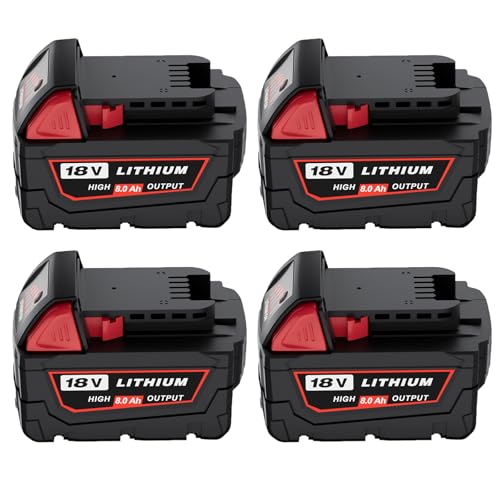
4-Pack 8000mAh Replacement for Milwaukee 18V Battery 48-11-1880
2-Pack 15.0Ah Replacement for Milwaukee 18V Battery and 48-59-1812 Charger

2-Pack 8Ah Replacement for Milwaukee 18V Battery 48-11-1880 and Charger
2-Pack 12000mAh Replacement for Milwaukee 18V Battery and Charger (Red)

2-Pack 8Ah Replacement for Ryobi 18V Battery and P117 Charger (Green)
The Details Behind The Selections
RYOBI’s ONE+ platform has become the default starting point for homeowners dipping into cordless tools, and this starter kit explains why. You get two 3.0 Ah lithium-ion cells, a dual-chemistry charger, and a soft storage bag in one box, so there’s no scrambling to piece together a working setup on day one.
For weekend projects like hanging shelves, building a deck, or running a trim router, two cells is the right count. One charges while the other works, and the bag keeps the whole kit from rolling around in your trunk. The platform alone spans hundreds of tools, so this kit grows with your collection rather than trapping you in a closed system.
The Case For It
- Two 3.0 Ah batteries mean you can rotate cells without sitting idle on the charger.
- Included storage bag cuts clutter and protects cells during transport to the jobsite.
- Works across the entire RYOBI ONE+ lineup, so future drill, saw, or blower purchases stay compatible.
- The dual-chemistry charger accepts older NiCad packs too, easing the transition if you already own legacy RYOBI tools.
Things To Consider
- 3.0 Ah is mid-pack for hungry tools like reciprocating saws or angle grinders, so heavy users may want a higher-capacity spare.
- Third-party RYOBI batteries exist, but sticking with OEM cells here keeps the platform’s electronics protection intact.
Who It Suits Best
First-time DIY builders and homeowners starting a RYOBI ONE+ system who want a complete, ready-to-go bundle.
Skip It When
You already run a Makita shop; the Makita BL1830B-2 twin pack below will slot into your existing chargers without friction.
Single-cell buyers who run Makita hard reach for the BL1850B because it balances weight and stamina better than most 18V packs in this class. At 5.0 Ah, it stores noticeably more energy than the 3.0 Ah cells, which translates to longer cuts, more holes per charge, and fewer trips to the wall outlet.
Contractors framing walls or trim carpenters running miter saws feel the difference most. The cell also communicates with Makita’s tool electronics for overload and over-discharge protection, so the pack lasts longer than cheaper cells that skip those safeguards.
Notable Upsides
- 5.0 Ah capacity extends runtime on high-draw tools like circular saws and impact drivers.
- Onboard electronics protect against overload, overheating, and deep discharge, which extends service life.
- Compatible with every Makita 18V LXT tool, including the expanding XGT-adjacent brushless lineup.
Points To Keep In Mind
- Single-cell purchase means swapping with another battery to keep working; pair it with a charger and a spare if you don’t already own extras.
- Heavier than 3.0 Ah cells, which can wear on overhead drilling tasks.
Key Specs
Made For
Pros and serious DIYers running Makita LXT tools who need a single high-capacity spare to round out their rotation.
Consider Something Else When
You want a twin-pack starting point; the Makita BL1830B-2 next on this list delivers two cells for a similar dollar-per-battery ratio.
The BL1830B-2 is the two-pack most Makita owners quietly wish they’d bought from the start. You get two matched 3.0 Ah cells, each with the brand’s onboard fuel gauge so you can glance at remaining runtime before pulling the trigger.
Mid-capacity cells like these handle roughly 80% of cordless tasks without the weight penalty of larger packs. For an oscillating multi-tool, impact driver, or drill, two batteries in rotation cover a full afternoon of work between charger cycles.
Practical Advantages
- Twin-pack format means a swap is always ready, no downtime waiting for a charge.
- Onboard LED fuel gauge shows remaining capacity at a glance.
- Lighter than 5.0 Ah cells, which reduces fatigue during overhead or one-handed work.
Trade Offs
- 3.0 Ah runtime falls short on saws and grinders in continuous use.
- Charging requires an existing Makita LXT charger or a separate purchase.
Right Fit For
Makita users who already own a charger and want a matched second and third battery for daily rotation.
Look Elsewhere When
You need fewer Amp-hours per pack and more cells overall; the Milwaukee 8.0 Ah four-pack further down fits shop fleets better.
Milwaukee’s M18 platform rewards users who keep several charged packs ready, and this Ibanti four-pack fits that workflow without breaking the budget. Each cell is rated at 8000mAh, and the listings note compatibility with the common Milwaukee 18V battery part numbers including 48-11-1880.
For a small framing crew or a serious garage shop, four matching cells means one person can run a saw while another uses an impact, and a third charges on the bench. Compared to the single Makita cell reviewed earlier, the value math swings hard toward this bundle when you need volume.
The Practical Payoff
- Four cells in one purchase covers multi-tool rotation across a full workday.
- 8000mAh rating extends runtime over standard Milwaukee 5.0 Ah packs.
- Listed compatibility covers common Milwaukee 18V models, easing fitment concerns.
Honest Caveats
- Third-party cells may lack the full onboard protection circuitry found in OEM Milwaukee packs.
- No charger is included, so an existing Milwaukee-compatible charger is required.
- Higher-capacity cells add weight, which can drag during prolonged overhead use.
Key Specs
Best Suited To
Milwaukee M18 owners running shops or crews who need a high volume of spare cells at a lower per-pack cost than OEM.
Swap It Out When
You only need one or two spares and a charger included; the Ibanti Milwaukee 2-pack reviewed next bundles a charger alongside the cells.
For sheer runtime, this Ibanti bundle tops the list. Each cell claims a 15.0 Ah capacity, which is roughly three times the energy of a stock 5.0 Ah Milwaukee pack, and the kit ships with a 48-59-1812 style charger so you can replenish right out of the box.
Long sawzall days, demolition work, or running a blower to clear leaves all benefit from extra Amp-hours per cell. The trade-off is weight: at this capacity, expect a noticeably heavier pack on the back end of an impact driver or drill.
A Favorable Mix
- 15.0 Ah per cell means fewer swaps during all-day tool use.
- Included charger lets you replenish both packs without buying a separate accessory.
- Listed compatibility spans several Milwaukee 18V part numbers for broad fitment.
Potential Drawbacks
- High-capacity cells are heavy, so extended overhead work can strain your wrist and forearm.
- Third-party cells sometimes trade off cycle life compared to OEM packs, depending on cell grade.
Perfect Match For
Tradespeople doing long, continuous cutting or demolition work where stopping to swap batteries breaks momentum.
Not Your Match When
You mostly handle light assembly and drilling; the 3.0 Ah Makita twin pack reviewed earlier is easier on your wrist.
Stepping down from the 15.0 Ah monster, this Ibanti two-pack delivers 8.0 Ah cells with a compatible charger in the same box. That middle-ground capacity is often the sweet spot for users who want more runtime than stock without the weight penalty of ultra-high-capacity packs.
The included charger accepts 100–240V input and outputs in the 12–18V range at 3A, which the listing notes covers the Milwaukee 48-59-1812 charger footprint. For someone setting up a backup battery station in a basement or garage, this is a tidy way to do it.
Real-World Strengths
- Two 8.0 Ah cells plus a charger means a complete refresh for owners of one or two aging Milwaukee packs.
- 8.0 Ah balances runtime gains against manageable weight for handheld tools.
- Broad voltage input on the charger works with standard household outlets without a transformer.
Soft Spots
- Third-party compatibility listings are long, so confirm your specific Milwaukee model against the part numbers before ordering.
- Capacity is lower than the 15.0 Ah bundle above, so heavy saw users may still want a third spare.
Who Should Grab It
Milwaukee owners who want a balanced backup bundle with everything in one box, including the charger.
A Better Fit Elsewhere
You need the absolute highest capacity; the Ibanti 15.0 Ah pair reviewed earlier delivers more Amp-hours per cell.
This red 12000mAh pair slots between the 8.0 Ah and 15.0 Ah Ibanti bundles reviewed above. With 12 Ah per cell plus a charger included, the kit targets Milwaukee owners who want long runtime but don’t want the heft of the top-capacity option.
For continuous framing or roofing work, 12 Ah per cell means fewer breaks to swap, and the red housing visually distinguishes these from stock Milwaukee packs so they don’t get mixed up with the OEM drawer at the shop. The cells are listed as compatible with common Milwaukee 18V part numbers.
Positive Points
- 12.0 Ah per cell provides strong runtime without the heaviest pack footprint.
- Red color coding separates third-party cells from OEM inventory at a glance.
- Charger ships in the box, simplifying setup.
Less Ideal Details
- Larger cells still add weight versus 5.0 Ah OEM packs.
- Verify specific tool fitment against the part number list before ordering.
Built With In Mind
Milwaukee crews wanting high-capacity backups in the middle of the runtime spectrum without paying for the top-tier 15.0 Ah bundle.
Where A Sibling Pick Shines
You want maximum Amp-hours per cell; the Ibanti 15.0 Ah pair earlier in this list edges out this one on raw capacity.
RYOBI’s green ONE+ platform is everywhere in home workshops, and this Ibanti bundle brings two 8.0 Ah replacement cells plus a P117-style charger at a friendlier price point than buying OEM. The cells are listed as compatible with common Ryobi 18V part numbers like P108, P107, and P105.
For a homeowner with a string trimmer, blower, and drill that all run ONE+, doubling the battery count transforms how the tools feel. You go from rationing cells to running one tool while another charges, which is the whole point of having spares.
What Pays Off
- 8.0 Ah capacity roughly doubles runtime over older 4.0 Ah Ryobi packs.
- P117 charger handles both lithium-ion and NiCad/NiMH chemistries, easing platform transitions.
- Green housing matches the RYOBI color scheme for visual consistency on the bench.
A Few Limitations
- Third-party Ryobi replacements vary in build quality, so inspect contacts and fit before trusting them on a long job.
- 8.0 Ah cells are heavier than stock 1.5 Ah packs, which adds weight to lighter handheld tools.
Key Specs
Whose Shelf It Belongs On
Casual Ryobi ONE+ users refreshing old battery stock without paying full OEM prices for a complete kit.
Reach For A Different Pick When
You want the OEM experience out of the box; the RYOBI P166 starter kit at the top of this list ships genuine Ryobi cells and charger with a carry bag.
Matching 18V Battery Packs To Your Workflow
The first thing to settle is platform loyalty. Most 18V batteries only fit their own brand’s tool ecosystem, so choosing RYOBI ONE+, Makita LXT, or Milwaukee M18 locks you into a long-term relationship with one manufacturer’s chargers, tools, and replacement cells. Switching platforms later usually means selling off old tools at a loss.
Capacity, measured in amp-hours (Ah), tells you how much work a battery can do before needing a recharge. A higher Ah number means longer runtime per charge, but it also adds weight to the back of the tool. For light work like driving screws or drilling pilot holes, 2.0–3.0 Ah cells are usually enough. For continuous saw work or heavy demolition, 5.0 Ah and up is the practical floor.
Chemistry also matters. Lithium-ion cells hold their charge longer on the shelf, weigh less, and don’t develop the memory effect that older NiCad packs did. If you’re buying new today, lithium-ion is the default choice, even when comparing across third-party replacement brands.
Reading The Ah Number
Amp-hours describe how long a battery can deliver a given current. A 5.0 Ah pack running a tool that draws 5 amps theoretically lasts about an hour, but real-world runtime depends on how hard the motor works. Cutting thick lumber drains the pack faster than driving screws into soft pine.
Charger Compatibility
Not every charger works with every battery, even on the same platform. Some RYOBI chargers accept both NiCad and lithium-ion cells, while others are single-chemistry. For Milwaukee, the M18 Rapid Charger family handles both compact and high-demand cells. Match the charger to the cell type you actually own.
OEM Versus Third-Party
OEM batteries cost more but typically include the manufacturer’s onboard electronics for overload, overheating, and over-discharge protection. Third-party packs from brands like Ibanti deliver higher capacities at lower prices, though fitment and electronics can vary. For warranty-critical tools or daily trade use, OEM is the conservative call. For backup spares around the shop, third-party packs fill the rotation economically.
Smart Choices Before You Add To Cart
Pitfalls Shoppers Hit
The most common slip is grabbing a third-party battery listed as “compatible” with your tool brand without cross-checking the exact part number. Milwaukee 18V has several battery generations, and not every cell fits every tool. Write down your tool’s battery model number before you shop, then match it against the replacement’s compatibility list.
Another trap is underestimating weight. A 12.0 Ah or 15.0 Ah pack sounds great on paper, but on a drill or impact driver held overhead for an hour, the extra ounces add up fast. Try a mid-range 5.0 Ah or 8.0 Ah cell first if your work involves a lot of arm-up time.
What The Higher Tier Buys
Paying more for an OEM pack typically gets you tighter cell matching, longer cycle life, and the full suite of onboard electronics. On Makita’s premium cells, that translates to faster charge times and a more accurate fuel gauge. On Milwaukee’s high-output packs, the upgrade focuses on delivering more power under load for tools like the M18 FUEL lineup.
The honest read is that the upgrade pays off most for daily professional users. For weekend tool users, a third-party 8.0 Ah pack covers the same jobs at a fraction of the cost, and replacing it after a year or two costs less than buying a single OEM cell up front.
Frequently Asked Questions
How long does an 18V lithium-ion battery typically last?
Most quality 18V lithium-ion packs are rated for 500 to 1,000 charge cycles before capacity drops noticeably. For a casual DIYer using tools a few weekends a month, that often translates to three to five years of service before the cells feel weaker.
Can I use a higher-capacity battery on an older 18V tool?
Generally yes, as long as the battery fits the same platform and voltage class. Higher Amp-hours only extend runtime, they don’t push more voltage into the tool. Always confirm the physical fitment and any firmware or electronics handshake before relying on a third-party cell.
Is it worth buying third-party batteries from brands like Ibanti?
Third-party packs deliver strong capacity for the money and are widely used as backup cells. The honest trade-off is that some lack the full onboard protection circuitry of OEM packs, so inspect contacts and build quality on arrival before trusting them on a critical job.
Should I store 18V batteries on the charger?
Most modern lithium-ion chargers switch to a maintenance mode once the cell tops off, so leaving a battery on the charger briefly is fine. For long-term storage, keeping cells at roughly half charge in a cool, dry place extends their overall lifespan more than parking them on the charger for months.
How do I know when to replace an 18V battery?
The most common sign is runtime dropping sharply even on a full charge, or the tool cutting out under load that used to be easy. Visible swelling, leaking, or a battery that won’t hold any charge at all are also clear signals to swap the pack and recycle the old one properly.
Closing Remarks
The right 18V battery comes down to your platform, your runtime needs, and how often the cells see heavy use. OEM packs reward daily trade work with tighter electronics and longer cycle life, while third-party bundles offer genuine capacity at lower cost for backup rotation. Match the cell to your tools, verify part numbers before you order, and the rest of the decision usually makes itself.