A quality 18650 battery for torch use isn’t just about capacity on paper. The right cell, charger, and storage setup can mean the difference between a beam that holds up during a multi-day camping trip and one that fades halfway through a power outage. This lineup covers chargers, cases, sleeves, and one premium weaponlight that shows what a well-fed 18650 setup looks like in the field.
The Lineup, Simplified
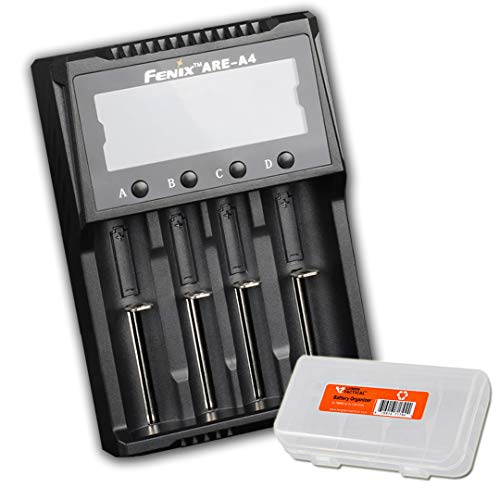
FENIX ARE-A4 Smart Battery Charger with LumenTac Organizer

EdisonBright Fenix ARE-A2 Charger with BBX5 Carry Case Bundle

JJC Shockproof Water-resistant 18650 Battery Case (6 Slots)

EdisonBright Fenix ARE-D1 USB Charger with BBX5 Carry Case

SureFire M640DF-BK-PRO Weaponlight 1,500 Lumens 16,000 Candela
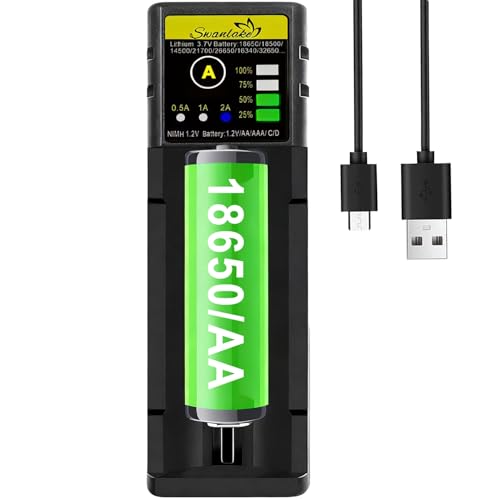
Swanlake 18650 Multi-Size Universal Fast Charger

LampVPath 18650 Battery Protective Sleeves 3-Pack

Keenstone 18650 Universal Smart Charger LCD Display

SUNLYTOUR 4-Bay Multi-Size Charger with PCB Protection

IMREN 4-Bay USB-C 18650 and 21700 Charger
The Strengths Of Each Pick
The Fenix ARE-A4 treats mixed battery drawers like a small utility closet: orderly, labeled, and ready. Four independent bays (each slot charges separately rather than forcing pairs) accept a broad range of lithium-ion and Ni-MH/Ni-Cd cells, with the unit adjusting the charging current to match the chemistry. For torch users juggling 18650s for a handheld and AAAs for a backup headlamp, that flexibility cuts down on charger clutter.
The high-definition LCD gives a clear read on charging status, while overcharge protection is built into the chipset. The bundled LumenTac organizer adds a soft place to keep spare 18650s sorted, which matters more than people think when cells start rolling around in a drawer. Compared with the EdisonBright Fenix ARE-A2 covered next, this one stays home rather than heading into a vehicle.
Well-Handled Touches
- Four independent bays let you charge any combination of cells without pairing constraints
- Adaptive current matching extends cell longevity across chemistries
- LCD readout removes guesswork from charging progress
- Included LumenTac organizer keeps spares from getting lost in drawers or bags
Things To Consider
- AC-powered only, so road trips and campsites without mains need a different option
- Larger footprint than single-bay chargers, which matters on cramped desks
Key Specs
Who It Suits Best
Anyone running a household with several torches, headlamps, and AA-powered remotes who wants one desktop station that handles everything without juggling multiple wall warts.
Consider Something Else When
Overlanders and frequent campers get more value from the EdisonBright Fenix ARE-A2 bundle, since its 12V in-car cable turns a vehicle outlet into a charging bay.
The Fenix ARE-A2 inside this EdisonBright bundle is the smaller sibling to the ARE-A4 reviewed above, dropping from four bays to two while keeping the same multi-chemistry support and intelligent current adjustment. The real story is what EdisonBright layers in: a 12V in-car cable and a BBX5 hard-shell battery carry case, turning a home charger into a complete travel kit for 18650-powered torches.
For weekend campers, long-haul drivers, and emergency-preparedness types, the ability to top off cells from a vehicle socket during a layover or a blackout is genuinely useful. The BBX5 case keeps cells from shorting against keys and coins in a backpack. Batteries are not included, so plan on pairing this with quality 18650 cells.
Real-World Strengths
- Two-bay design is plenty for most torch users who rotate a primary and spare
- 12V car cable turns dead cells into useful ones during long drives
- BBX5 case protects cells from contact with conductive objects like keys and coins
- Compatibility spans 18650, 21700, 16340, 14500, 10440, and household AA/AAA/C sizes
Trade Offs
- Only two slots means larger households still need a secondary charger
- 12V cable length can be tight in larger vehicles with rear cargo areas
Made For
Overlanders, truck campers, and emergency-preparedness folks who want one charger that works at home and on the road without adapters or inverters.
Look Elsewhere When
Photographers and videographers juggling four or more cells per session should consider the SUNLYTOUR 4-Bay Multi-Size Charger for higher throughput.
Spare 18650s bouncing loose in a backpack or glove box are a small disaster waiting to happen, both for the cells and for anything they short against. The JJC storage case tackles that problem with a rigid PC shell, an internal sponge cushion, and a water-resistant design that holds six cells in dedicated slots.
The cushioning helps absorb drop impact, while the slot layout keeps positive and negative terminals separated. For torch users carrying multiple spares on camping trips or long shifts, this case extends runtime in the field without weighing much. Compared with the Fenix charger bundle above, this one solves a different problem: storage, not charging.
Positive Takeaways
- Six dedicated slots keep cells separated to prevent terminal shorts
- Internal sponge cushion absorbs minor drops and bumps
- Water-resistant shell handles rain, splashes, and humid conditions
- Compact footprint fits standard backpack organizer pockets and glove boxes
Worth Noting
- Stores cells only, no charging function, so it pairs with a separate charger
- Holds six 18650s exactly, no room for 21700 cells or mixed sizes
Quick Facts
Best Suited To
Outdoor torch users, overnight campers, and emergency kit builders who rotate several 18650s and want organized, protected storage between uses.
A Better Fit Elsewhere
Anyone needing charging on the go should look at the EdisonBright Fenix ARE-D1 bundle, which adds USB power input to the carry case formula.
The Fenix ARE-D1 inside this EdisonBright bundle shifts the charging paradigm away from wall outlets and toward any USB power source. A laptop, a power bank, a car charger, or a solar panel can all feed it, which makes the single bay genuinely portable for working torch users who travel light.
The EdisonBright BBX5 carry case bundles the same hard-shell storage that pairs with the ARE-A2 reviewed earlier. Compatibility runs across 18650, 21700, 26650, 16340, 14500, 10440, plus household AA and AAA cells. Batteries are not included, so you’ll need to source those separately, but the broad format coverage is a real asset.
Where It Delivers
- USB power input works with any standard 5V source for true portability
- Single-bay simplicity keeps the unit small enough for a jacket pocket
- Multi-chemistry support covers Li-ion and Ni-MH cells in one device
- BBX5 case protects up to five spare cells from contact damage
Points To Keep In Mind
- Charging one cell at a time slows down users juggling multiple torches
- Slower than AC-powered multi-bay chargers for topping off depleted cells
Feature Snapshot
Who Will Love This
Minimalist packers, van lifers, and remote workers who run a single primary torch and value USB power over multi-cell throughput.
Reach For A Different Pick When
Households running several torches and headlamps will get more value from the Fenix ARE-A4, which charges four cells at once from a wall outlet.
The SureFire M640DF-BK-PRO Scout Light is the high end of what an 18650-powered torch can do when a manufacturer optimizes every component for output. It runs on either two CR123A primaries or a single SF18650B rechargeable cell, and it produces up to 1,500 lumens with 16,000 candela, which is genuinely bright beam intensity.
An M-LOK mount is included for rail attachment, and the tail cap gives reliable on/off control under stress. This sits in a different category from the chargers and storage cases elsewhere in the lineup, but for someone evaluating what a quality 18650 actually powers, it shows the upper bound of performance.
Where It Excels
- 1,500-lumen output and 16,000-candela intensity deliver real long-throw beam performance
- Dual-fuel design accepts 18650 rechargeables or CR123A primaries for field flexibility
- M-LOK mounting hardware included for direct rail attachment out of the box
- Tail-cap switching offers positive engagement under gloves or stress
Points To Note
- Premium pricing reflects the SureFire build quality and brand positioning
- Specialized weaponlight format may be overkill for casual home torch users
Perfect Match For
Tactical torch enthusiasts and professional users who value proven durability and dual-fuel flexibility over casual home use.
Swap It Out When
Everyday household torch users looking for general illumination will find the JJC battery case or the Keenstone universal charger more directly useful for daily routines.
The Swanlake universal charger is built for households that have accumulated a drawer full of mismatched cells over the years. It accepts 3.7V Li-ion sizes (18650, 18500, 18350, 17650, 17670, 17500, 20700, 21700, 26650) alongside 1.2V Ni-MH and Ni-Cd A through C cells, all in one unit.
The standout feature is switchable current: 500mA, 1000mA, and 2000mA modes let you prioritize slower, gentler charging for cell longevity or faster top-offs when time matters. An LCD indicator tracks capacity at 25, 50, 75, and 100 percent increments, and the unit auto-shuts off when cells reach full charge. Batteries are not included.
Strong Points
- Three current modes (500mA, 1A, 2A) balance charging speed with cell health
- LCD capacity display shows progress at clear 25-percent intervals
- Auto shut-off at full charge prevents overcharging damage
- LiFePO4 support covers safer lithium chemistry for low-voltage applications
Room For Improvement
- 2A mode generates noticeable heat during extended high-current sessions
- Button-based mode cycling takes some practice compared to dial interfaces
Quick Facts
Built With In Mind
Budget-conscious shoppers running a mix of Li-ion and Ni-MH cells across torches, headlamps, and household electronics who want one charger instead of three.
Not Your Match When
Tactical and professional users handling expensive protected cells should consider the Fenix ARE-A4 instead, since brand-name chargers tend to offer tighter voltage cutoff control.
Some flashlights are designed around a triple-AAA carrier and a single 18650 interchangeably, and the result is often a rattling single 18650 inside a tube meant for a thicker battery pack. The LampVPath protective sleeves fix that gap by adding a thin insulating layer around an 18650 to bring its diameter up to a snug fit.
The pack of three means you can sleeve one cell, sleeve a spare, and keep a third ready for a backup light. It’s a low-cost accessory that solves one specific problem, but for users with hybrid-format flashlights it’s the difference between a sloppy fit and a reliable connection. Batteries are not included.
Useful Highlights
- Adds diameter to single 18650s to match triple-AAA flashlight tubes
- Three-pack covers primary torch plus two spares without reordering
- Insulating material reduces rattle and improves contact reliability
- Tiny footprint fits in any organizer pocket or EDC pouch
Small Caveats
- Only useful for hybrid-format flashlights, not dedicated 18650 lights
- Plastic sleeves add bulk that may not fit the tightest flashlight tubes
Right Fit For
Owners of older or hybrid flashlights designed around AAA carriers who want to use modern 18650 cells without buying new torches.
Where A Sibling Pick Shines
Users committed entirely to 18650-native flashlights will find the JJC battery case more useful for protecting spares between trips.
The Keenstone universal charger stretches compatibility further than most competitors, accepting Li-ion, LiFePO4, IMR, INR, and ICR cells in sizes from 10440 through 26650, plus Ni-MH and Ni-Cd A through SC. For hobbyists with bins of mixed cells, that breadth removes the need for separate chargers per chemistry.
The LCD display shows charging status per bay, and the built-in intelligent protection circuit guards against common failure modes. Compliant with multiple safety standards, the unit feels designed for users who take battery safety seriously. The price-to-feature ratio is genuinely competitive for the chemistry range it covers.
A Strong Showing
- Chemistry range covers nearly every rechargeable format available
- Per-bay LCD readout removes ambiguity about charging progress
- Built-in protection circuit guards against overcharge and short-circuit damage
- Independent channels allow mixed chemistries in the same charging session
A Few Limitations
- LCD visibility drops in bright sunlight, which matters for outdoor use
- Charging speed modest compared to single-chemistry fast chargers
Feature Card
Whose Shelf It Belongs On
Hobbyists, flashlight collectors, and ham radio operators who rotate between several chemistries and want one charger that handles all of them competently.
Skip It When
Minimalist owners with one or two torches will find the Swanlake charger’s switchable current modes more practical than the Keenstone’s broad compatibility.
Four bays with PCB protection place the SUNLYTOUR in a different category than the dual-bay chargers reviewed earlier. The PCB protection board adds a layer of circuit-level safety on top of whatever protection the cells themselves carry, which matters for users charging older cells or cells of mixed provenance. Size coverage spans 21700, 18650, 20700, 22700, 22650, 26650, 26700, 16340 (RCR123), and 17670.
The manufacturer is explicit about chemistry limits: Ni-MH cells older than two to three years should be retired, and CR123, CR123A, and 1.5V Li-ion cells are not supported. For torch owners running flashlights, weaponlights, and headlamps simultaneously, the four-bay throughput is genuinely useful. Compared with the IMREN charger below, this one favors capacity over modern port selection.
What Helps Most
- Four independent bays handle mixed cells simultaneously
- PCB protection adds circuit-level safety beyond cell-level protection
- Broad Li-ion size coverage suits torch and headlamp combinations
- Ni-MH AA support covers household cells alongside specialty formats
Factors To Consider
- Larger footprint demands more desk or workbench space
- Older Ni-MH cells require manual retirement to avoid charging damage
Who Should Grab It
Workshop users, search-and-rescue volunteers, and shift workers running multiple torches and headlamps who cycle through cells faster than smaller chargers can handle.
Another Choice May Suit
Modern laptop-first users who prefer USB-C connectivity will appreciate the IMREN charger more, since it pairs four bays with a current-generation port.
The IMREN 4-Bay charger takes the four-slot throughput that heavy users need and pairs it with a USB-C input, the same reversible connector already on most laptops, phones, and tablets. Compatibility spans 3.7V Li-ion sizes from 10440 through 26650 alongside 1.2V Ni-MH and Ni-Cd cells.
The single-cell charging capability is the quiet highlight: you can top off any one cell without charging in pairs, which extends overall cell life by avoiding unnecessary cycle stress. Intelligent input detection adjusts to whatever USB-C power source you plug in, so a 65W laptop brick or a small power bank both work. Compared with the SUNLYTOUR 4-Bay charger reviewed above, the trade-off is connector modernity versus explicit PCB protection.
A Few Highlights
- USB-C input matches modern laptops, tablets, and power banks without adapters
- Four bays with single-cell charging flexibility reduces unnecessary cell wear
- Intelligent input detection adjusts to available USB-C power levels
- Broad Li-ion size range covers torch, headlamp, and household needs
Possible Compromises
- Charging speed depends on the USB-C power source you plug into
- LCD indicators are functional but minimalist compared to premium chargers
Best Suited To
Tech-forward torch users who already carry USB-C cables for laptops and phones and want a charger that fits into that same cable ecosystem.
Where Another Pick Suits Better
Users running older or unprotected cells benefit more from the SUNLYTOUR 4-Bay charger, since its PCB protection adds a layer of circuit-level safety.
Matching Chargers And Storage To Your Torch Setup
Choosing the right 18650 battery for torch use extends beyond picking a cell, since the charger, storage, and accessories around the cell matter as much as the battery itself. Start with the batteries your torch actually requires, then build outward toward charging speed, format flexibility, and field durability. Skip the cell first, then let the charger and case follow.
Match the charger to your rotation. A single primary torch paired with one spare calls for a USB-powered single bay like the Fenix ARE-D1 bundle, since portability beats throughput. Households running several torches, headlamps, and AA-powered devices benefit from multi-bay units like the Fenix ARE-A4 or the SUNLYTOUR 4-Bay, which handle different chemistries simultaneously without forcing paired charging.
Storage matters more than most shoppers expect. Loose 18650s rolling in a drawer or backpack can short against keys, coins, or other conductive objects, damaging the cell and potentially the surrounding gear. A rigid case like the JJC 6-slot holder keeps terminals separated and adds water resistance for outdoor use.
Pay attention to chemistry and size support. Some chargers accept only Li-ion, while broader units like the Keenstone also handle LiFePO4, IMR, INR, and ICR variants. Older Ni-MH cells deteriorate after a few years and should be retired rather than recharged, as the SUNLYTOUR documentation explicitly warns.
Define your use case before you buy. Tactical torch users with protected cells and professional gear will prioritize brand-name chargers with documented safety circuitry. Casual users with a household flashlight drawer will get more value from universal chargers with switchable current modes that balance speed and cell longevity.
Key Considerations Across These Picks
Where Shoppers Go Wrong
The most common mistake in this category is buying a charger that only accepts one chemistry, then discovering that the household actually mixes 18650 Li-ion, AA Ni-MH, and occasional LiFePO4 cells. Universal chargers solve this, but only some of them actually deliver on the “universal” label, so compatibility lists deserve a close read before you commit.
Another frequent trap is overestimating the value of fast charging. High-current 2A modes are useful when cells are nearly depleted and time is tight, but routine fast charging shortens Li-ion cycle life. For owners who want their 18650s to last years rather than months, the 500mA mode on chargers like the Swanlake unit is the gentler default.
What Separates Premium From Basic
Higher-tier chargers in this category earn their position through tighter voltage cutoff control, more robust protection circuitry, and clearer per-bay status displays. The Fenix ARE-A4 exemplifies that gap: it adjusts current per bay based on what each cell needs, rather than applying a fixed profile.
The upgrade makes sense for users handling expensive protected cells, professional gear, or high-drain applications like the SureFire M640DF-BK-PRO. Casual users with one or two torches and household AA cells will find mid-tier universal chargers like the Swanlake or Keenstone perfectly adequate.
Frequently Asked Questions
What 18650 battery for torch use should I buy first?
A quality protected 18650 cell from a recognized brand pairs with any of the chargers in this lineup. Focus on known chemistry, protected circuit design, and matching the cell’s continuous discharge rating to your torch’s draw.
Can I use 21700 cells in an 18650 charger?
Only if the slot physically accepts the longer 21700 format. Chargers like the Fenix ARE-A4, SUNLYTOUR 4-Bay, and IMREN list 21700 support explicitly, while dedicated 18650-only bays will not seat the longer cell.
How do I know when to retire an 18650 cell?
Reduced runtime, visible casing damage, or cells older than two to three years are common signals. Ni-MH AA cells in particular should be retired after that window, as the SUNLYTOUR documentation warns, since internal chemistry changes can make recharging unsafe.
Are USB-C chargers as fast as AC-powered models?
Generally no, since USB-C input is constrained by the power source. A 65W laptop brick will charge faster than a small power bank, but AC-powered multi-bay units like the Fenix ARE-A4 still lead on raw throughput for heavy users.
Do I need a battery case for spare 18650s?
Yes, since loose cells can short against conductive objects in bags and pockets. A rigid case like the JJC 6-slot holder keeps terminals separated and adds water resistance for field use.
Bottom Line
A reliable 18650 setup starts with the right cell and ends with the right accessories around it. Charger choice depends on whether you value portability, throughput, or chemistry breadth, and storage cases matter more than they seem once cells start moving between bags, drawers, and vehicles. Pick the combination that matches your actual rotation, and your torches will keep working when you need them most.