Rechargeable 18650 cells power everything in your kit, from high-output flashlights to vape mods and portable project gear. A mismatched charger shortens cell life, runs hot, or charges at a crawl. You need a unit that recognizes your battery chemistry, picks the right current, and stops on its own when full.
This roundup covers ten 18650 battery chargers across budgets and bay counts, from pocketable single-cell units to four-bay workhorses. Each pick is evaluated on compatibility, charging speed, safety circuitry, and how it fits real daily use.
The Leading Options At A Glance
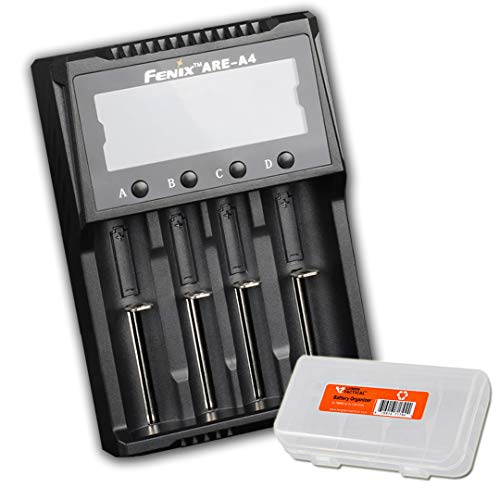
FENIX ARE-A4 Smart Battery Charger with LumenTac Organizer

EdisonBright Fenix ARE-A2 Home and Car Charger Bundle

IMREN Single-Slot 18650 USB-C Charger (2A)

XTAR MC1 Plus 1A Single-Bay Charger
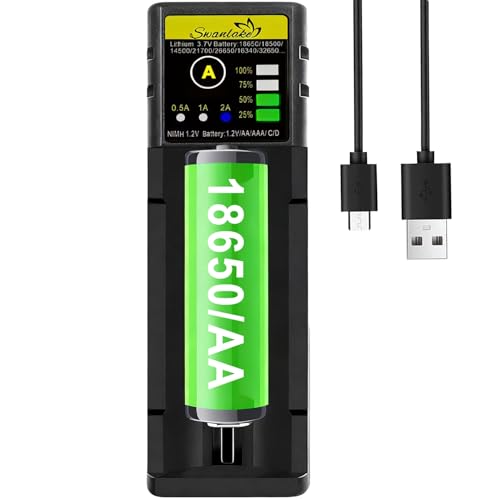
Swanlake Universal Li-ion and Ni-MH Charger

SUNLYTOUR 4-Slot 21700 Charger with PCB Protection

IMREN 2-Bay 26650 USB-C Charger

EdisonBright Fenix ARE-A2 Charger with BBX5 Case

IMREN 4-Bay 18650 USB-C Smart Charger

MiBOXER C4 4-Bay Universal Smart Charger
The Fenix ARE-A4 sits at the top of this list because it handles nearly every rechargeable cell a typical household owns. Its four independent bays recognize common lithium-ion sizes (10440, 14500, 16340, 18650, 21700, 26650) and Ni-MH/Ni-Cd AA, AAA, and C cells, then adjust the current to match.
Owners juggling a flashlight, a camera, and a couple of game controllers can park everything on one dock. The high-definition LCD shows voltage, current, and charging status per bay, so you can confirm a cell hit full charge at a glance instead of guessing from a tiny LED.
The Helpful Details
- Four bays running independent channels let you charge a mix of chemistries at once.
- Auto current selection protects smaller cells from receiving too much amperage.
- HD LCD readout per bay removes guesswork about charge level and progress.
- Wide chemistry support means one charger replaces several single-purpose units.
- Bundle includes a LumenTac battery organizer for transport and storage.
Things To Consider
- Larger footprint than single-bay travel units, so it stays put on a desk.
- Power adapter is bulkier than USB-C-based alternatives.
Who It Suits Best
Multi-device households that rotate between 18650 flashlights, vape cells, and household rechargeables benefit most from a four-bay hub with per-channel readouts.
Where Another Pick Suits Better
Travelers who want pocket-friendly charging should reach for the IMREN Single-Slot 18650 USB-C Charger instead.
This bundle pairs the Fenix ARE-A2 with a 12V in-car cable and an EdisonBright BBX5 carry case. The charger itself is a two-bay unit that handles 10440, 14500, 16340, 18650, 21700, and 26650 lithium-ion cells plus AA, AAA, and C Ni-MH and Ni-Cd batteries.
Where the previous pick is a stay-at-home hub, this one targets people whose flashlights go on camping trips and jobsite visits. The car cable lets you top off depleted 18650s on a long drive without hunting for an outlet.
Notable Upsides
- Dual power input (AC plus 12V DC) covers home and vehicle charging.
- Independent bay control means a full cell doesn’t block an empty one.
- BBX5 carry case keeps spares and the charger together in a pack.
- Recognizes lithium-ion and Ni-MH/Ni-Cd without manual switching.
Points To Note
- Only two bays, so larger fleets need overnight rotation.
- The BBX5 case is compact but won’t hold a charger plus many cells.
Who Will Love This
Field workers, campers, and overlanders needing both household and vehicle charging will appreciate the dual-input design and bundled storage.
Skip It When
Homebodies running more than two cells at once should pick the FENIX ARE-A4 instead.
The IMREN Single-Slot cuts size and bay count down to the essentials. One slot accommodates 18650, 18500, 18350, 20700, 21700, and 26650 cells, plus 1.2V Ni-MH and Ni-Cd batteries, and pulls power from any USB-C source.
Compared to the larger EdisonBright bundle, this unit slips into a jacket pocket or EDC pouch. The 75mm slot length swallows protected 18650s without forcing you to remove the button top, and a current selector switches between 0.5A, 1A, and 2A depending on how fast you need the cell back.
Everyday Advantages
- USB-C input works with power banks, car adapters, and laptop ports.
- Three current settings let you prioritize speed or battery longevity.
- LCD indicator confirms remaining capacity at a glance.
- Compact body fits in pockets and small organizer pouches.
Room For Improvement
- Single bay only; no simultaneous charging for multi-cell devices.
- USB-C cable and power brick sold separately in most setups.
Made For
Solo users carrying one or two cells at a time, especially those who top up from a phone charger or laptop, will find this the most portable option.
Look Elsewhere When
Anyone running a four-cell flashlight fleet should consider the IMREN 4-Bay 18650 USB-C Smart Charger instead.
The XTAR MC1 Plus has earned a long following because it does one job thoroughly. The single bay accepts 10440, 14500, 18350, 18650, 20700, 26650, and 25500 lithium-ion cells, with auto-switching between 0.5A and 1A output.
A modest LCD reports charging current and status so you can confirm the cell is taking the expected rate. The 0V activation function revives deeply discharged cells that other chargers refuse to start on, which matters when an old flashlight battery has sat for months.
Real Benefits
- 0V activation recovers over-discharged cells that trip other chargers.
- Auto current selection prevents small cells from receiving excess amperage.
- LCD shows real-time current, useful for diagnosing weak cells.
- Tiny footprint makes it easy to leave on a nightstand or shelf.
Less Ideal Details
- Micro-USB input feels dated next to USB-C designs like the IMREN units.
- Only one bay, so multi-cell fleets require rotation.
Best Suited To
Single-cell nightly top-up routines where simplicity and reliability outweigh charging speed will suit users who like to set it and forget it.
A Better Fit Elsewhere
Households cycling multiple cells at once should consider the Swanlake Universal Li-ion and Ni-MH Charger.
The Swanlake charger accepts a broad list of cell sizes, from 18650 and 21700 down to AAAA Ni-MH and C cells, so it doubles as a household charger rather than a specialty unit. Three current options (0.5A, 1A, 2A) are switched via a front-panel button.
Compared to the FENIX ARE-A4, this one lacks an HD LCD but still offers a four-stage capacity indicator (25%, 50%, 75%, 100%). Auto shutoff kicks in once a cell hits full, which protects longevity without you having to babysit the dock.
What Makes Sense
- One charger handles lithium-ion, Ni-MH, and Ni-Cd across common sizes.
- Selectable current modes adapt to small or large cells.
- Auto shutoff prevents overcharge damage on overnight sessions.
- LCD percentage indicator helps plan swaps when time is short.
Worth Bearing In Mind
- Indicator uses percentage steps rather than precise voltage readouts.
- Button cycling between current modes takes a moment to learn.
The Right Fit
Families who already own a drawer of mixed rechargeables for remotes, toys, and flashlights will consolidate charging into one outlet-friendly dock.
Where A Sibling Pick Shines
Vapers wanting tighter per-bay voltage readouts should reach for the FENIX ARE-A4 instead.
SUNLYTOUR targets owners running 21700 cells, which are wider than 18650s and tend to need bays with extra clearance. The unit covers 20700, 21700, 22700, 22650, 26650, 26700, and 16340 (RCR123) cells along with Ni-MH AAs in its four slots.
An integrated PCB protection board adds a layer of defense against reverse polarity and short circuits. The four independent channels mean you can mix sizes without pairing restrictions.
Bright Spots
- Slots accommodate wider 21700 and 26700 cells without adapters.
- PCB protection board defends against reversed cells and voltage spikes.
- Independent bay control handles mixed sizes in one session.
- Handles Ni-MH AAs alongside lithium-ion cells.
Honest Caveats
- Cannot charge CR123, CR123A, or 1.5V Li-ion cells, so check your stash first.
- Discontinue Ni-MH cells older than two to three years per the manufacturer’s note.
- Bulky four-slot footprint takes up bench space.
Who Should Grab It
High-drain hobby setups running vape mods, power-tool conversions, or bicycle lights with 21700 cells benefit from the wider bays and protective circuitry.
Swap It Out When
Users charging mostly 18650s without protection boards may prefer the simpler FENIX ARE-A4.
The middle slots on this IMREN unit are 25mm wide, deliberately built so two 26650 cells can sit side by side. The same bay accommodates 18650, 10440, 14500, 14650, 18500, 18350, and 18700 cells, plus 1.2V Ni-MH and Ni-Cd batteries.
Switching between 1A and 2A happens via a center button, with the unit defaulting to 1A for safer overnight charging. Compared to the SUNLYTOUR, this is a smaller two-slot workhorse for tighter bench space.
Practical Pluses
- 25mm slot width accepts two 26650 cells without adapters.
- Two current modes balance speed and cell longevity.
- USB-C input pairs with widely available cables and bricks.
- Broad size support replaces multiple single-chemistry units.
A Few Limitations
- Two bays only, so 26650-heavy users will rotate cells.
- LCD readouts are minimal compared to the FENIX ARE-A4.
Perfect Match For
Workshop owners and flashlight hobbyists rotating 26650 cells alongside 18650s benefit from the wider slot design.
Another Choice May Suit
Those needing four simultaneous bays should pick the SUNLYTOUR 4-Slot 21700 Charger.
The EdisonBright bundle centers on the Fenix ARE-A2, a two-bay charger for 10440, 14500, 16340, 18650, 21700, and 26650 lithium-ion cells plus AA, AAA, and C Ni-MH/Ni-Cd batteries. It charges one or two batteries at a time and includes a BBX5 carry case.
Short-circuit, over-current, over-voltage, and reverse polarity protection cover the basics newcomers care about. Compared to the full EdisonBright travel bundle with the 12V cable, this version keeps the cost down while keeping the safety circuitry intact.
Real-World Strengths
- Layered protection circuitry guards against common user errors.
- BBX5 case provides a tidy way to store spares on the move.
- LCD screen displays status clearly for first-time operators.
- Recognizes lithium-ion and Ni-MH/Ni-Cd without manual switching.
Things To Weigh
- Two bays limit simultaneous charging for larger fleets.
- No 12V cable included in this bundle, unlike the travel version.
Built With In Mind
First-time 18650 owners who want a forgiving charger and a storage case in one purchase get a low-friction starting kit.
Not Your Match When
Heavy users needing four bays plus per-cell voltage readouts should consider the FENIX ARE-A4.
The IMREN 4-Bay charger handles 1.2V Ni-MH and Ni-Cd cells (A, AA, AAA, AAAA) along with 14500, 10400, 18500, 18350, 18650, 18700, 20700, 21700, 22650, and 25500 lithium-ion batteries across four USB-C-powered bays.
The standout feature is independent single-battery charging. You can drop one cell into any bay without filling pairs, which simplifies rotation and reduces wear on cells waiting for partners.
Everyday Perks
- Independent bays accept one to four cells in any combination.
- Smart identification of input power prevents overload on weaker sources.
- USB-C input pairs with existing laptop and phone cables.
- Wide chemistry support covers household AA through 21700 cells.
Soft Spots
- LCD readouts are functional but less detailed than the FENIX ARE-A4.
- Power brick and cable sold separately in most setups.
Whose Shelf It Belongs On
Mixed-fleet owners rotating several chemistries and sizes will appreciate the flexibility of single-cell bay operation.
Reach For A Different Pick When
Users wanting precise voltage and current readouts per bay should consider the MiBOXER C4 4-Bay Universal Smart Charger.
The MiBOXER C4 closes the list with broad chemistry support, including Li-ion, LiFePO4 (lithium iron phosphate), Ni-MH, and Ni-Cd cells from AA and AAA up through 18350, 18500, 20700, 21700, 26650, and RCR123 sizes. The PC fire-retardant shell adds peace of mind during overnight sessions.
An automatic LCD display shows charging status per bay, and the unit stops once a cell hits full. If a battery goes in reversed or short-circuits, the charger surfaces an error symbol rather than continuing to push current.
What Earns Its Place
- LiFePO4 support alongside Li-ion and Ni-MH widens use cases.
- Fire-retardant shell reduces risk during unattended overnight runs.
- Error symbols catch reversed cells and short circuits automatically.
- Auto shutoff once a cell reaches full charge.
Practical Considerations
- Larger and heavier than simpler two-bay designs.
- LiFePO4 cells charge at lower currents, so expect longer sessions.
Right Fit For
Multi-chemistry heavy users juggling LiFePO4 solar storage cells, Ni-MH household rechargeables, and 18650 flashlights benefit from the broadest size support here.
Where Another Pick Suits Better
Anyone who only charges 18650 cells can save space with the IMREN Single-Slot 18650 USB-C Charger.
## What Matters Most Before Choosing 18650 Battery Chargers### Match the Bay Count to Your Daily ThroughputA single-bay charger like the XTAR MC1 Plus or the IMREN Single-Slot 18650 USB-C Charger works fine when you only need one or two cells in rotation. Run a four-cell flashlight or a vape rotation and you will spend too much time waiting for slots to free up, which is where four-bay units like the FENIX ARE-A4 or the MiBOXER C4 earn their keep. Each bay running its own independent channel is the detail that separates a useful hub from a bottleneck.### Confirm the Chemistry Coverage and Voltage RangeLithium-ion cells typically top out at 4.2V, while Ni-MH/Ni-Cd cells charge around 1.2 to 1.5V. Chargers like the Swanlake Universal Li-ion and Ni-MH Charger handle both, which suits households with mixed devices. If you own LiFePO4 (lithium iron phosphate) cells for solar or backup projects, look for that label, since a standard Li-ion profile can overcharge them.### Check the Current Modes and Cell Longevity Trade-OffFaster charging at 2A tops off a depleted 18650 quicker, but generates more heat and stress on the cell over many cycles. Slower 0.5A modes extend battery life and run cooler, which matters for overnight top-ups. Pick a charger with selectable current modes if you intend to charge both small cells (which prefer lower amperage) and larger 26650 cells (which can take more).### Pay Attention to Safety Circuitry and Power InputShort-circuit, over-current, over-voltage, and reverse polarity protection are the four protections that prevent ruined cells and damaged chargers. USB-C input has become the standard for newer units like the IMREN chargers, while Micro-USB on the XTAR MC1 Plus still works but feels dated. If you travel by vehicle, dual AC and 12V DC input (like the EdisonBright Fenix ARE-A2 travel bundle) is a real convenience.## Key Considerations Across These Picks### Pitfalls Shoppers HitBuying a charger that only handles one cell size is the most common mistake. A household running 18650s today may add 21700 cells for a new flashlight or vape mod tomorrow, so single-size chargers get swapped out quickly. Another trap is ignoring current modes: charging small cells at 2A shortens their life. Always match the current setting to the cell size, and confirm the charger recognizes the chemistry before you commit.### Where The Extra Money GoesPremium four-bay units like the FENIX ARE-A4 and MiBOXER C4 cost more because they pack per-bay LCD readouts, broader chemistry detection, and stronger safety circuitry. The fire-retardant shell on the MiBOXER is one example of a feature that adds material cost but real risk reduction. For most users with a small rotation, a simpler two-bay unit handles the workload, but heavy users and LiFePO4 owners benefit enough from the upgrade to justify the spend.## Frequently Asked Questions### Can one 18650 battery charger handle multiple cell sizes?Yes, most modern chargers accept a range of lithium-ion sizes (10440, 14500, 16340, 18650, 21700, 26650) and often Ni-MH and Ni-Cd cells too. Always check the supported list before buying, since some chargers exclude specific sizes like 21700 or LiFePO4.### How do I know what charging current to use?Smaller cells typically charge safely at 0.5A, while 18650 and 21700 cells can handle 1A to 2A. Most smart chargers auto-detect, but manual switches (like the MODE button on IMREN units) let you pick a slower current to extend cell longevity.### Is it safe to leave cells in the charger overnight?Quality chargers stop pushing current once a cell reaches full, so overnight charging is generally fine. Look for over-charge protection and auto shutoff features, plus a fire-retardant housing on heavier units like the MiBOXER C4.### Can I charge Ni-MH and Li-ion cells at the same time?Some multi-chemistry chargers like the FENIX ARE-A4 and Swanlake Universal handle both chemistries in different bays simultaneously. Confirm the charger identifies each cell’s chemistry automatically rather than assuming based on slot position.### Do I need a special charger for protected 18650 cells?Protected 18650 cells have a small PCB at the positive end that prevents over-discharge. Most chargers accommodate them, though extra-long protected cells may not fit in shorter bays; check the slot length if you use protected cells regularly.## Closing RemarksA reliable 18650 battery charger pays for itself by extending cell life, preventing over-charge damage, and cutting down on outlet juggling. Match the bay count and chemistry coverage to your rotation, look for solid safety circuitry, and lean toward USB-C input for cable convenience. The right pick here depends on how many cells you cycle and whether you travel with them, but any of these ten will outperform a generic plug-in charger that ships with cheap batteries.