Spending long days on the water or living off the grid means you need energy that keeps up without weighing you down. Traditional lead-acid batteries eat up space, demand constant upkeep, and lose capacity fast. Lithium iron phosphate (LiFePO4) cells, the chemistry used in every pick below, last years longer, weigh a fraction of the alternatives, and deliver steady voltage even as the charge drops. This list covers compact trolling motor batteries, mid-size house banks, and high-capacity banks for serious RV and solar setups.
The Shortlist At A Glance

Redodo 12V 200Ah Marine LiFePO4 Battery

Redodo 12V 300Ah Deep Cycle LiFePO4 Battery

VATRER POWER 12.8V 300Ah Self-Heating LiFePO4 Battery

Redodo 12V 100Ah LiFePO4 Battery, Group 31

Redodo 2 Pack 12V 100Ah RV LiFePO4 Battery, Bluetooth

Redodo 12V 100Ah Lithium Battery, Group 31
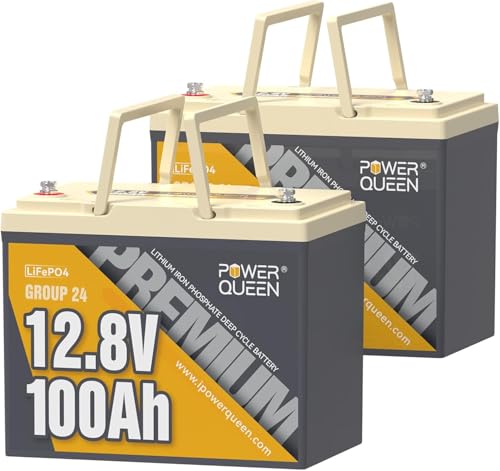
Power Queen 2PACK 12V 100Ah LiFePO4 Battery Group 24

Redodo 12V 165Ah LiFePO4 Battery, Bluetooth, Group 31

Redodo 2 Pack 12V 100Ah RV Lithium Battery, Group 31
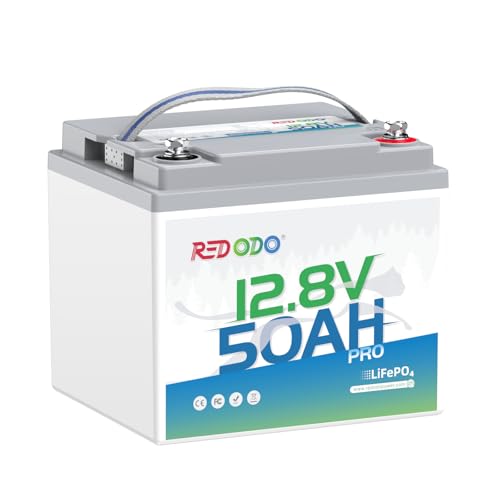
Redodo 12V 50Ah Trolling Motor LiFePO4 Battery
The Strengths Of Each Pick
The Redodo 12V 200Ah Marine LiFePO4 Battery is the unit to beat when high-output loads show up, from induction cooktops on a camper to a microwave running off a marine inverter. A 200A BMS (battery management system, the protective circuitry that guards each cell) handles sustained draw, and owners commonly pair this size with mid-sized solar arrays for weekend cabin use. Compared to the smaller 100Ah picks below, this one trades portability for capacity, so plan your battery box dimensions accordingly.
At roughly 45.59 lbs, it lands noticeably lighter than a pair of 200Ah AGM units doing the same job, freeing up real pounds in a bass boat or travel trailer. You also get the standard LiFePO4 advantages: flat voltage curve under load, very low self-discharge between trips, and thousands of full charge cycles before noticeable degradation. For most full-time RVers and serious off-gridders, this is the sweet spot before stepping up to the 300Ah bank.
What Stands Out
- 200A BMS supports heavy inverter loads like microwaves and small AC units without tripping
- Replaces two 200Ah AGM batteries in roughly half the footprint
- Significant weight savings over lead-acid, helpful in smaller craft and trailers
- Low self-discharge means seasonal storage is forgiving
- Long cycle life reduces replacement cost over a decade of regular use
Things To Consider
- Heavier than 100Ah options, so make sure your battery tray is rated for the load
- Charging below freezing requires a low-temp cutoff or self-heating model to protect the cells
Made For
RVers and off-grid solar households running higher-draw appliances who want one bank instead of two AGMs.
Skip It When
You only need to power a trolling motor or basic electronics, where the Redodo 12V 100Ah LiFePO4 Battery, Group 31 is a better fit.
Stepping up from the 200Ah model, the Redodo 12V 300Ah Deep Cycle LiFePO4 Battery is built for full-time house-bank duty. With around 3.84kWh of usable energy, it can keep a typical 12V compressor fridge running for multiple days between charges. For liveaboard RVers or extended cruising sailboats, that capacity removes most range anxiety around anchoring out for a week.
The BMS still supports sustained loads high enough to run a coffee maker, kettle, and fridge at the same time, which covers most morning routines on a boat. Compared to the 200Ah pick, you trade more weight and a larger footprint for hours of extra runtime. If your battery compartment has room, the upgrade often pays for itself in convenience alone.
The Helpful Details
- Around 3.84kWh capacity extends fridge and lighting runtime far beyond mid-size banks
- Continuous output supports multiple kitchen appliances running together
- Replaces a stack of lead-acid batteries while saving meaningful weight
- Flat discharge curve keeps inverter efficiency high as the battery drains
Worth Noting
- Large physical size requires careful compartment measuring before ordering
- Cold-weather charging below freezing still needs a heating solution or warm storage
- Higher total cost than the 200Ah model, so value depends on whether you actually use the extra capacity
Key Product Details
Right Fit For
Liveaboard cruisers and full-time RVers who depend on a single house bank for days of off-grid power.
Where Another Pick Suits Better
Weekend campers with smaller loads should consider the lighter Redodo 12V 200Ah Marine LiFePO4 Battery to save weight and cost.
The VATRER POWER 12.8V 300Ah Self-Heating LiFePO4 Battery solves the one problem that bites most lithium owners in northern climates: charging below freezing damages LiFePO4 cells. Built-in heating pads warm the pack above the safe threshold before charging begins, so you can leave it in an unheated shed or a cold boat cabin without babysitting the temperature.
Beyond heating, you get the same 300Ah class capacity as the Redodo above and an APP monitoring interface to check state of charge and cell health from your phone. Anglers fishing shoulder seasons and winter campers will appreciate the peace of mind. For summer-only use in mild climates, the heating function adds cost you won’t benefit from.
Well-Handled Touches
- Self-heating system protects cells when charging in sub-freezing temps
- 300Ah class capacity rivals the larger Redodo for heavy house-bank duty
- Mobile app delivers state-of-charge and cell voltage readouts
- LiFePO4 chemistry provides long cycle life even with frequent deep discharges
Points To Keep In Mind
- Heating function draws some energy during cold-weather charging
- App connectivity depends on Bluetooth range and supported phone hardware
Best Suited To
Boaters and campers in cold climates who need reliable winter charging without manually warming the battery.
Consider Something Else When
You operate year-round in warm climates where the self-heating Redodo 12V 300Ah Deep Cycle LiFePO4 Battery delivers the same capacity without the extra heating hardware.
The Redodo 12V 100Ah LiFePO4 Battery in the Group 31 footprint is the practical middle ground most shoppers end up choosing. Group 31 is a standardized battery case size used across many boats, RVs, and solar builds, so the swap from a tired AGM often takes minutes. The size also fits comfortably in standard trays and boxes without custom mounting.
You give up the headline capacity of the 200Ah and 300Ah picks, but you gain flexibility, easier handling, and a lower entry cost. For weekend boaters, modest solar setups, and anyone running lights, a fridge, and electronics without a microwave or induction cooktop, one or two of these covers daily needs. Pair two in parallel (wired positive-to-positive and negative-to-negative) and you’ve doubled usable capacity.
The Practical Payoff
- Standard Group 31 case drops into most existing battery trays and boxes
- Manageable weight simplifies installation and repositioning
- Lower upfront cost than the higher-capacity Redodo models
- Easy to scale by adding a second unit in parallel later
Trade Offs
- Single 100Ah unit limits runtime for high-draw appliances
- Charging below freezing still requires a low-temperature cutoff or heater
Feature Snapshot
Who It Suits Best
Weekend boaters and casual RVers replacing a worn AGM who want a hassle-free drop-in upgrade.
Look Elsewhere When
You regularly run an inverter for kitchen appliances, where the Redodo 12V 200Ah Marine LiFePO4 Battery offers more headroom.
The Redodo 2 Pack 12V 100Ah RV LiFePO4 Battery arrives as a matched pair with Bluetooth monitoring and a low-temperature charging cutoff baked in. Running both in parallel gives you roughly 2.56kWh of usable capacity, enough for a multi-day weekend of fridge, lights, and device charging without firing up the engine. Bluetooth monitoring adds a layer of convenience for tech-comfortable owners who like checking cell voltages from a phone.
The low-temp cutoff is the practical win in this bundle: it prevents charging damage when the pack is cold, which matters in shoulder seasons or unheated storage. Compared to buying two single 100Ah units separately, the bundled pair often arrives with matched production batches, which can help with long-term cell balancing. You also save the hassle of sourcing two identical units yourself.
What Helps Most
- Bluetooth monitoring shows state of charge and cell health on your phone
- Low-temperature cutoff protects cells during accidental cold-weather charging
- Matched pair simplifies parallel wiring and long-term balancing
- Group 31 sizing suits most RV battery compartments
Small Caveats
- Higher upfront cost than buying a single 100Ah unit and adding one later
- Two units take more compartment space than a single higher-capacity battery
Perfect Match For
RVers building a multi-bank system who value Bluetooth visibility and cold-weather safety.
A Better Fit Elsewhere
If Bluetooth isn’t a priority, the Redodo 12V 100Ah Lithium Battery, Group 31 (without the app) keeps the same capacity at lower cost.
The Redodo 12V 100Ah Lithium Battery, Group 31 is a sibling to the previous 100Ah model but leans hard on weight reduction. At roughly 22 lbs, it weighs about a third of a comparable AGM, which is meaningful in small craft where every pound affects performance. For jon boats, skiffs, and lightweight campers, that savings adds up.
Capacity is identical to the standard 100Ah Group 31 unit, so the trade is really about installation ergonomics rather than runtime. The energy density figure is also notably higher than lead-acid, packing more usable watt-hours into a smaller, lighter box. Owners commonly report easier solo installation when wrestling with battery boxes in tight bilge areas.
Real-World Strengths
- Substantial weight reduction over AGM replacements improves small-craft handling
- Higher energy density packs more capacity into the same footprint
- Group 31 sizing fits common trays and boxes
- Standard LiFePO4 longevity applies to this model
Honest Caveats
- Same 100Ah runtime ceiling as heavier siblings
- Charging below freezing still requires a heating solution or low-temp cutoff
Who Should Grab It
Small-boat owners and weight-conscious RVers where shaving pounds matters as much as capacity.
Swap It Out When
You want Bluetooth monitoring out of the box; the Redodo 2 Pack 12V 100Ah RV LiFePO4 Battery, Bluetooth ships with app connectivity built in.
The Power Queen 2PACK 12V 100Ah LiFePO4 Battery Group 24 solves a specific frustration: many travel trailers and compact RVs use Group 24 battery boxes, and not every lithium upgrade fits cleanly. Group 24 is a smaller standardized case than Group 31, so this pair slides into tighter bays where the larger Redodo units might not. Two packs in parallel deliver roughly 2.56kWh of usable energy.
The true drop-in promise is the appeal: owners can swap out old lead-acids without rewiring trays or fabricating brackets. The LiFePO4 cells support deep discharges well, so the 100Ah rating delivers far more usable energy than an AGM rated the same. For trailer owners with limited compartment space, this is often the only practical path to lithium.
A Strong Showing
- Group 24 case fits trailers and compact RVs that won’t accept larger lithium banks
- Drop-in design avoids custom mounting work
- Two-pack provides meaningful capacity for weekend trips
- Standard LiFePO4 cycle life applies
Some Limits To Know
- Group 24 footprint caps individual capacity compared to Group 31 alternatives
- Two-unit parallel setup needs correct fusing and cable sizing for safety
Core Details
Built With In Mind
Trailer owners with Group 24 battery boxes who need a true drop-in lithium upgrade.
Reach For A Different Pick When
Your compartment accepts Group 31 sizing, where the Redodo 12V 100Ah LiFePO4 Battery, Group 31 gives you more flexibility and a wider ecosystem of accessories.
The Redodo 12V 165Ah LiFePO4 Battery sits in a useful middle ground that doesn’t quite exist elsewhere on this list. You get noticeably more capacity than a 100Ah unit while staying within the same Group 31 footprint that fits standard trays. For boaters running an inverter for a coffee maker or small microwave, that extra capacity covers morning routines without dropping to 50% state of charge.
The 165A BMS handles sustained draws typical of marine inverters, and Bluetooth monitoring lets you watch state of charge from your phone without climbing into a compartment. Compared to stepping up to a 200Ah unit, you save a few pounds and a bit of cost while still gaining meaningful runtime. It’s a thoughtful middle tier that often gets overlooked.
Everyday Advantages
- 165Ah in Group 31 case adds capacity without a bigger battery box
- Bluetooth monitoring for state-of-charge visibility
- Sustained output supports inverter loads for kitchen appliances
- Standard LiFePO4 longevity and low self-discharge
Possible Compromises
- Higher cost than a 100Ah unit without doubling capacity
- Charging below freezing still requires cold-weather precautions
Whose Shelf It Belongs On
Boaters and RVers who want more than entry capacity but don’t need the full 200Ah or 300Ah jump.
Not Your Match When
Your loads are modest enough for a single 100Ah, in which case the Redodo 12V 100Ah LiFePO4 Battery, Group 31 is the simpler choice.
The Redodo 2 Pack 12V 100Ah RV Lithium Battery in Group 31 is aimed at builders planning ahead. Two parallel units give you about 2.56kWh to start, but the line supports larger configurations up to 4P4S (four parallel strings of four in series), letting you grow to 51.2V 400Ah for serious off-grid solar arrays. Starting with a matched pair and expanding later is a clean upgrade path.
Unlike the Bluetooth-equipped sibling, this pair ships without an app, which keeps the cost lower for budget-conscious builders. If you’re comfortable with voltmeters and shunt monitors, you don’t lose much. Owners commonly use these for trolling motors, mid-size solar banks, and camper vans where modular growth matters more than app integration.
Practical Pluses
- Modular design supports future expansion to large off-grid banks
- Group 31 case fits standard trays and compartments
- Lower upfront cost than Bluetooth-equipped siblings
- Standard LiFePO4 cycle life across both units
Details To Watch
- Lacks the Bluetooth monitoring found on the related 2-pack with app
- Large configurations require proper fusing, bus bars, and BMS coordination
Right Fit For
Off-grid builders and van-lifers planning a system they can grow over time without replacing everything.
Another Choice May Suit
You want app-based monitoring included; the Redodo 2 Pack 12V 100Ah RV LiFePO4 Battery, Bluetooth ships with that out of the box.
The Redodo 12V 50Ah Trolling Motor LiFePO4 Battery is the smallest unit here, and that’s the point. At roughly 11.6 lbs, it slips into kayak storage hatches, jon boat compartments, and small RV cubbies where heavier banks simply won’t fit. It is purpose-built for low-amperage trolling motors, fish finders, and lighting, where capacity matters less than weight and footprint.
You trade runtime for portability in a big way: this is a day-trip battery, not a multi-day house bank. Run a small trolling motor at modest speeds and you’ll get hours of use; run a 50W fridge continuously and the pack will be empty well before nightfall. Match it to its intended job and it delivers far better than a heavy AGM in the same role.
The Upside
- Sub-12 lb weight makes it easy to carry and mount in small craft
- LiFePO4 cycle life far exceeds typical trolling motor batteries
- Compact footprint fits kayaks and small jon boats
- 100% usable capacity outperforms lead-acid rated the same
Things To Weigh
- 50Ah is too small for any meaningful house-bank duty
- Charging below freezing still needs a low-temp cutoff or heater
Who Will Love This
Kayak anglers and small-boat owners needing a lightweight dedicated trolling or electronics battery.
Swap It Out When
You need to run a fridge overnight or power an inverter, where the Redodo 12V 100Ah LiFePO4 Battery, Group 31 triples the runtime in a still-manageable package.
Picking The Right 12v Lithium Marine Battery For Your Setup
Match Capacity To Your Daily Loads
The single biggest decision is how many amp-hours you actually need. A weekend warrior running lights, a phone charger, and a fish finder can get by on the Redodo 12V 50Ah Trolling Motor LiFePO4 Battery, but anyone running a 12V compressor fridge, water pump, and cabin lights overnight should look at 100Ah or larger. Full-time RVers with inverters for kitchen appliances usually want 200Ah or 300Ah banks. Oversizing costs money and weight, but undersizing means a dead battery before the trip ends.
Check Physical Fit And Form Factor
Battery case size matters more than people expect. Group 24 fits many compact trailers; Group 31 fits most larger marine and RV bays. Measure your tray before ordering, and remember that some lithium cases are slightly taller or wider than the lead-acid they replace. Forcing a battery into a tight compartment creates vibration damage and heat issues over time.
Cold Weather Charging Demands Planning
LiFePO4 cells (a lithium chemistry known for stability and long cycle life) cannot be safely charged below freezing without protection. Two paths exist: choose a self-heating model like the VATRER POWER 12.8V 300Ah Self-Heating LiFePO4 Battery, or pick a pack with a low-temperature charging cutoff that blocks current until cells warm up. For warm-climate users this is a non-issue, but northern anglers and winter campers should plan for it explicitly.
Look At BMS Output Ratings
The BMS rating determines what kind of inverter loads the battery can handle. A 100A BMS supports most small inverters; high-output models with 165A or 200A BMS handle microwaves, induction cooktops, and small AC units. Match the BMS rating to your largest expected draw, with some headroom for inverter surge currents at startup.
Key Considerations Across These Picks
Common Shopping Slip Ups
The most common mistake is buying based on advertised amp-hours without checking usable capacity. A 100Ah lead-acid battery only delivers about 50Ah before voltage drops; a 100Ah LiFePO4 delivers nearly all of it. Shoppers also routinely underestimate physical size, order a Group 31 battery, and discover their tray holds Group 24 only. Measure twice, including terminal height and any hold-down brackets. Finally, mixing old and new batteries in a bank creates imbalance, so replace the whole bank or stick to isolated systems.
What The Higher Tier Buys
Stepping up from a 100Ah unit to a 200Ah or 300Ah bank costs more but buys meaningful runtime for inverter-driven appliances, more days between charges, and fewer battery cycles per trip, which extends overall pack life. Higher-tier models also tend to ship with more robust BMS ratings, opening the door to microwaves, coffee makers, and small AC units. For weekend use, the lower tiers handle the job; for liveaboard duty or full-time RVing, the upgrade pays off quickly in convenience.
Frequently Asked Questions
How Long Does A 12V Lithium Marine Battery Typically Last?
Most LiFePO4 marine batteries are rated for thousands of full charge cycles, often translating to many years of regular use before noticeable capacity loss.
Can I Replace My Lead-Acid Battery With Lithium Directly?
In most cases, yes, especially with Group 24 or Group 31 form factors, though you should confirm your charger supports the lithium charging profile.
Is It Safe To Charge A Lithium Marine Battery Below Freezing?
Charging below freezing can damage LiFePO4 cells unless the battery includes a low-temperature cutoff or built-in heating, both of which block current until cells warm up safely.
Do Lithium Marine Batteries Need A Special Charger?
A charger with a lithium or LiFePO4 profile is strongly recommended, since lead-acid charging modes can push voltages that stress lithium cells over time.
Can I Connect Multiple Lithium Batteries In Parallel Or Series?
Yes, but use matched batteries from the same production batch, proper fusing, and correctly sized cables, since imbalance between packs can shorten overall life.
Wrap Up
The right 12v lithium marine battery depends on your daily loads, available compartment space, and climate. Weekend boaters and anglers often do well with a single 100Ah Group 31 unit, while full-time RVers and off-gridders usually step up to 200Ah or 300Ah banks. Cold-climate users should prioritize low-temp protection. Match the battery to your real-world routine, and the rest of the system tends to fall into place.