A dead battery never picks a convenient moment. From a snowmobile sitting through a cold snap to a fishing boat on a lift for the winter, vehicles with traditional lead-acid batteries lose charge in ways that a basic jumper can’t always solve. The right charger restores capacity, prevents sulfation, and keeps stored equipment ready to fire on the first try.
These ten 12V lead acid battery chargers span compact trickle units for motorcycles, heavy-duty benchtop models for deep-cycle banks, and specialty options for unique vehicles. Each one solves a different ownership problem, so match the amperage and chemistry support to your actual fleet rather than grabbing the first listing.
The Main Contenders
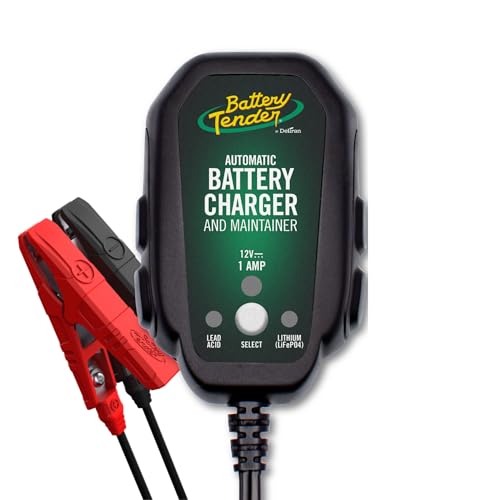
Battery Tender Junior 12V Lead Acid and Lithium Charger

ECO-Worthy 12V/24V 20A Smart Battery Charger

JMR 12V Battery Charger for McLaren, Cig Port

NOCO GENIUS1 1A 6/12V Smart Battery Charger

NOCO GENIUS10 10A 6/12V Smart Battery Charger

OptiMate3 0.8A Smart Battery Saving Charger

NOCO GENIUS5 5A 6/12V Smart Battery Charger

NOCO GENPRO10X1 12V 10A OnBoard Marine Charger

ECO-WORTHY 12V 5A Smart Maintainer with LCD
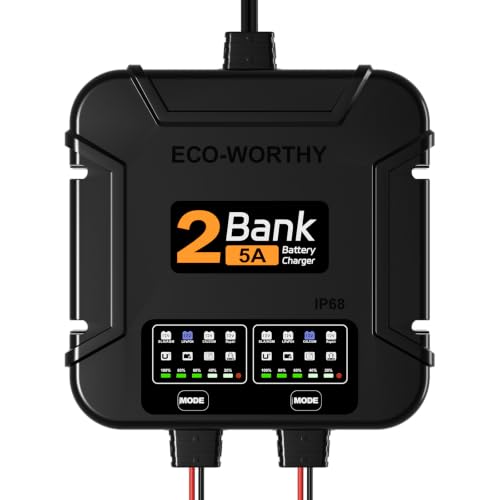
ECO-Worthy 2 Bank Marine Charger 5×2, 12V 10A
Small enough to leave tucked behind a snowmobile seat, the Battery Tender Junior delivers 800mA of steady, controlled current, the gentle pace that powersports batteries prefer during long storage. A push-button selector switches between lead-acid (AGM, flooded, or gel) and lithium (LiFePO4) chemistries, which removes the guesswork for households running mixed battery types in a small fleet.
The unit includes an ISM microcontroller that walks the battery through bulk, absorption, and float stages without overcooking it. In most seasonal-storage scenarios, owners simply connect the included ring terminals, walk away, and return weeks later to a topped-off battery. Compared with the NOCO GENIUS1 that follows, this one trades amperage for a simpler chemistry-switching experience.
Useful Strengths
- Switchable lead-acid and lithium modes in a single compact unit
- Four-stage charging logic that prevents overcharging during multi-month storage
- Includes ring-terminal and alligator-clip harnesses for different vehicle hookups
- LED status indicators tell you charging state at a glance, even in a dim garage
Things To Consider
- 800mA output is too gentle for reviving a fully dead deep-cycle bank in a reasonable timeframe
- No dedicated repair mode for heavily sulfated batteries, unlike the NOCO GENIUS10 covered later
Who It Suits Best
Casual riders and weekend powersport owners who store motorcycles, ATVs, or lawn tractors for months at a stretch and want a true set-and-forget maintainer.
Consider Something Else When
Drivers working with deeply discharged car or marine batteries should reach for the NOCO GENIUS10 instead, which pairs higher amperage with a dedicated force mode for tougher recovery jobs.
Where most home chargers top out around 10 amps, the ECO-Worthy 20A unit pushes into workshop territory, the kind of output that matters when reviving a deep-cycle bank on a travel trailer or jump-starting a diesel pickup’s accessory battery. It senses 12V or 24V systems automatically and offers four current tiers in 12V mode (5A, 10A, 15A, 20A) plus two in 24V mode.
The dial-in current selection is the headline feature: matching amperage to battery capacity (a rule of thumb is roughly 10–20% of amp-hour rating) keeps cells from overheating. Owners commonly rely on this unit as a benchtop charger for everything from LiFePO4 setups to flooded workbench batteries, and the carry handle helps when you shuttle it between vehicles.
Strong Points
- 20A peak output handles large deep-cycle banks that smaller units struggle to fill
- Automatic 12V/24V detection simplifies switching between cars, trucks, and 24V systems
- Manual current selection lets you dial down for smaller batteries
- Specific LiFePO4 charging profile aimed at extending cycle life
Worth Noting
- Bulkier and heavier than the smaller maintainers on this list, so it’s not a glovebox item
- More involved setup means casual users may prefer the plug-and-play nature of the Battery Tender Junior
Made For
Workshop owners, RV enthusiasts, and fleet managers running mixed 12V and 24V battery banks who want amperage they can actually dial in.
A Better Fit Elsewhere
Storage-only motorcycle owners will find the OptiMate3 more focused, since its lower amperage is calibrated for long-term maintenance rather than fast recovery.
Most owners of a 720S, 750S, GT, or 600LT reach for the cigarette lighter port when trickle-charging, because popping the frunk just to clip leads is fiddly. The JMR charger ships with a plug-and-play adapter built for that exact scenario, designed to seat properly in the McLaren charging port without forcing you to access the battery itself.
The unit covers lithium (LiFePO4), AGM, wet, gel, EFB, MF, and calcium chemistries, which matters as McLaren moved into lithium batteries on later models. Compared with the universal picks elsewhere on this list, this one’s value comes from the precise fit and the lack of reach needed for the engine bay.
Benefits That Matter
- Cigarette-lighter adapter removes the need to open the frunk on most supported McLarens
- Lithium mode added for newer models that ship with LiFePO4 chemistry
- Wide chemistry support covers older and current McLaren battery types
Trade Offs
- Niche application means this charger isn’t useful beyond the McLaren garage
- Compatibility depends on the specific model and port location, so verification is required before purchase
Best Suited To
McLaren owners storing 12V lead-acid or lithium batteries for weeks at a time who want a tidy, no-tools charging routine.
Look Elsewhere When
Anyone running a normal commuter car or truck should grab the NOCO GENIUS5 for broader compatibility at a more flexible amperage.
The GENIUS1 is the smallest NOCO in the family, a 1-amp unit that handles 6V and 12V batteries up to about 30 amp-hours. It’s the kind of charger you toss in a kitchen drawer between uses, ready for a classic car, a riding mower, or a small motorcycle during the off-season.
Despite the modest size, it includes a repair mode that pulses current into sulfated batteries to coax capacity back. Compared with the Battery Tender Junior earlier on this list, the GENIUS1 trades user-selectable chemistry buttons for automatic detection and adds that desulfation capability, a useful feature for batteries that sat neglected for a season.
What Earns Its Place
- Handles both 6V and 12V batteries, covering everything from a tractor to a vintage car
- Repair mode can recover batteries that other maintainers won’t touch
- Tiny footprint makes storage easy in crowded shop drawers
- Compatible with AGM, gel, flooded, deep-cycle, and lithium-ion batteries
Points To Note
- 1-amp output means very slow charging on anything larger than a small lawn-tractor battery
Who Will Love This
Collectors and homeowners with small batteries that need gentle maintenance rather than fast charging.
Swap It Out When
Owners running full-size car batteries should step up to the NOCO GENIUS5 for a more practical 5-amp output.
The flagship of the GENIUS line, the 10A model, brings serious recovery power to the garage, supporting batteries up to 230 amp-hours. Force mode is the headline feature: it lets the charger push current into a battery that has dropped below its normal operating range, a situation where most smart chargers simply refuse to start.
Beyond force mode, the GENIUS10 includes desulfation, temperature compensation, and overcharge protection, the trio that handles everything from a neglected daily driver to a freshly rebuilt classic. In our view, this is the right pick when a battery has sat for a long winter and you need actual recovery, not just topping off.
A Few Highlights
- Force mode revives deeply discharged batteries that other smart chargers won’t touch
- 10A output handles full-size car, SUV, and light-truck batteries in reasonable time
- Temperature compensation adjusts voltage for hot engine compartments or cold garages
- Compatible with wet, gel, AGM, and lithium chemistries across 6V and 12V systems
Honest Caveats
- Priced above entry-level options like the GENIUS1, which is overkill for small batteries
- No onboard mounting hardware, unlike the GENPRO10X1 covered later
The Right Fit
Home mechanics and serious hobbyists managing a varied fleet of vehicles with batteries that sometimes drop below usable voltage.
Reach For A Different Pick When
Boat owners should pivot to the NOCO GENPRO10X1 for a sealed, waterproof housing built for marine mounting.
The OptiMate3 has earned a long track record in motorcycle and powersport circles, the slow 0.8A output is deliberate, not a limitation. That gentle pace is paired with a multi-stage recovery sequence aimed at saving batteries other chargers have given up on, including deeply discharged and lightly sulfated units.
The unit covers AGM, GEL, STD, starter, and deep-cycle 12V batteries, which covers virtually every powersport application. For owners of bikes, ATVs, or personal watercraft that sit for months, the connect-and-forget cycle is a stress-free ownership experience.
The Helpful Details
- Multi-stage recovery sequence aimed at batteries that won’t take a normal charge
- 0.8A output matches the small battery capacity of most powersport vehicles
- Wide chemistry coverage for AGM, gel, standard, and deep-cycle batteries
Room For Improvement
- Too slow for any battery larger than a motorcycle or small ATV
- No lithium (LiFePO4) support, unlike the Battery Tender Junior covered earlier
Perfect Match For
Stored motorcycle and ATV owners who want a charger that actively saves neglected batteries rather than just maintaining healthy ones.
Another Choice May Suit
Riders running lithium battery upgrades will prefer the Battery Tender Junior for its LiFePO4-compatible switch.
The GENIUS5 lands in the middle of the NOCO lineup, sized for everyday vehicles and small marine setups. It supports batteries up to 120 amp-hours, which covers most cars, SUVs, and modest boat banks, and includes the same repair-mode capability found in the larger GENIUS10.
For most commuters, the 5-amp output strikes the right balance between speed and battery-friendly charging. Owners commonly leave it connected overnight without worrying about overcharging, thanks to the integrated float-stage monitoring.
Everyday Wins
- 5A output suits full-size car and SUV batteries without overstressing smaller cells
- Repair mode helps recover batteries that have lost capacity from infrequent use
- Works with 6V and 12V systems, expanding versatility beyond automotive use
Small Caveats
- Slower than the 10A GENIUS10 for large batteries that genuinely need fast recovery
- Lacks the fully sealed waterproof construction of the marine-focused GENPRO10X1
Built With In Mind
Daily drivers and family-vehicle households wanting one charger that handles cars, lawn tractors, and the occasional marine battery.
Where A Sibling Pick Shines
Drivers with truly neglected batteries will find the GENIUS10’s force mode more capable of bringing dead cells back to life.
Built specifically for marine environments, the GENPRO10X1 ships fully sealed and waterproof, ready to live inside an engine compartment or under a console. The 10A output feeds a single 12V bank, and the compact housing fits where traditional chargers won’t.
The unit supports flooded, AGM, gel, and LiFePO4 chemistries, with charging profiles tuned for the deep-cycle batteries common in trolling motors and house banks. Saltwater and freshwater anglers alike rely on the waterproof construction to keep charging electronics alive in the splash zone.
Everyday Perks
- Fully sealed waterproof housing rated for harsh marine environments
- 10A output supports a single deep-cycle house bank at a healthy rate
- Multi-chemistry support includes lithium (LiFePO4) for newer marine batteries
- Onboard mounting hardware included for permanent installation
Areas To Watch
- Single-bank design means dual-battery boats need the ECO-Worthy 5×2 covered later
- Installation requires basic wiring comfort, unlike plug-in maintainers
Whose Shelf It Belongs On
Boat owners with a single house battery who want a permanently mounted, weatherproof charger that handles the marine charging profile properly.
Skip It When
Anyone with two-battery setups should grab the ECO-Worthy 5×2 for independent charging on each bank.
Where most budget chargers hide their status behind blinking LEDs, this ECO-WORTHY unit puts the details on an LCD screen, showing voltage, charging current, and stage in plain numbers. For workshop owners who like to see what’s actually happening to their battery, that display is the reason to pick this model.
The charger handles 12V lead-acid (AGM, gel, flooded) and 12V lithium (LiFePO4) batteries, with input voltage of 100-240V AC for use anywhere on standard household current. Desulfation support is included for batteries that have sat unused long enough to develop surface sulfate, a common issue with seasonal equipment.
Notable Upsides
- LCD readout displays voltage and charging stage in real time
- 5A output suits cars, small marine batteries, and powersport equipment
- Multi-chemistry support covers lead-acid and lithium (LiFePO4) packs
- Desulfation mode helps recover lightly neglected batteries
Where It Is Less Suited
- No 6V support, unlike the NOCO GENIUS5 covered earlier
- Not waterproof, so outdoor or marine mounting is not advised
Who Should Grab It
DIYers and home mechanics who want visible charging data rather than just indicator lights, and who charge batteries indoors.
Where Another Pick Suits Better
Boat owners need the GENPRO10X1’s sealed waterproof construction to survive real marine conditions.
Boats, RVs, and dual-battery setups need a charger that talks to two banks at once, and the ECO-Worthy 5×2 delivers 5A per bank simultaneously. The IP68-rated waterproof housing means installation in a bilge or under an RV bench is fair game.
Three selectable charging modes (SLA/AGM, Lithium, Calcium) cover the chemistry mix common in marine and RV applications. The independent charging channels let one depleted starting battery and one full house battery each receive the appropriate current without cross-talk.
Reasons It Performs
- Dual-bank design charges two 12V batteries independently at 5A each
- IP68 waterproof rating handles bilge, splash, and outdoor installations
- Three charging profiles cover SLA/AGM, Lithium, and Calcium batteries
Things To Weigh
- 5A per bank is moderate, so very large house banks will charge slowly
- Wiring complexity during install compared to a single-bank plug-in unit
The Right Fit
Boat and RV owners with two-battery systems who want independent charging profiles and a sealed, weatherproof housing.
Where Another Pick Suits Better
Single-battery setups are over-served by this unit; the GENPRO10X1 is a simpler fit when only one bank needs attention.
## Picking The Right Charger For Your Battery TypeChemistry drives most of the decision. Lead-acid batteries come in three common variants: flooded (the cheapest, with removable caps for water top-off), AGM (absorbed glass mat, sealed, more vibration-resistant), and gel (a thicker electrolyte gel). Lithium (LiFePO4) batteries charge at different voltages than lead-acid, so using a charger without a lithium mode on a LiFePO4 pack risks undercharging or, worse, damaging cells.Amperage matters as much as chemistry. A general guideline is roughly 10–20% of the battery’s amp-hour rating; a 100Ah deep-cycle battery wants somewhere in the 10–20A range for a reasonable refill. Small powersport batteries charge happily on 0.8A to 1A trickle current, the gentle approach that prevents overheating in smaller cells.Use case shapes the build requirements. Marine and outdoor setups demand sealed waterproof housings like those on the GENPRO10X1 and the ECO-Worthy 5×2. Garage-only maintainers, by contrast, can use lighter units that prioritize chemistry flexibility and status displays over weatherproofing.Recovery features vary widely. Basic maintainers only fill healthy batteries; advanced units add repair or force modes that pulse current into sulfated or deeply discharged cells. If your battery sits unused for months at a time, those recovery modes are often the difference between a saved battery and a replacement.## Common Shopping Slip UpsMatching a lead-acid-only charger to a lithium battery is one of the easiest ways to shorten pack life. Lithium chemistries need a specific voltage cutoff that lead-acid profiles don’t deliver, and overcharging cells beyond their spec can permanently reduce capacity. Always confirm lithium compatibility before plugging in.Underestimating amperage is the other classic trap. A 1A trickle charger is the right call for a motorcycle but a poor fit for a 100Ah deep-cycle bank, where full refill can stretch into days. Match the charger’s output to roughly 10–20% of the battery’s amp-hour rating to avoid waiting forever for a charge.## Where The Extra Money GoesHigher-tier chargers earn their keep through features that entry-level units skip. Force mode handles deeply discharged batteries that would otherwise be declared dead. Temperature compensation adjusts voltage for hot engine bays and cold garages, a small detail that extends battery life. Desulfation pulsing actively breaks down the lead sulfate crystals that build up during long storage, the kind of recovery work that basic chargers never attempt.For most casual users, a mid-tier unit like the GENIUS5 covers the bases. Hardcore enthusiasts with neglected batteries or mixed fleets benefit more from the GENIUS10’s force mode and the GENPRO10X1’s marine-grade sealing.## Frequently Asked Questions### How long does it take a 12V lead acid battery charger to fully charge a dead battery? Charging time depends on battery capacity and charger amperage; a 50Ah battery takes roughly 5–10 hours on a 5–10A charger from a deeply discharged state. Smaller trickle units extend that timeline considerably.### Can I leave a 12V lead acid battery charger connected indefinitely? Most modern smart chargers switch to float mode once the battery is full, allowing long-term connection without damage. Confirm your specific unit has float or maintenance mode before leaving it plugged in for months.### Is a 12V lead acid battery charger safe for LiFePO4 lithium batteries? Only chargers with a dedicated lithium (LiFePO4) mode or selectable chemistry are safe for lithium packs. Lead-acid-only profiles deliver incorrect voltage that can damage lithium cells over time.### What’s the difference between a charger and a maintainer? A charger delivers higher amperage to refill a depleted battery, while a maintainer provides low current to keep a topped-off battery from self-discharging during storage. Many smart units combine both functions.### Do marine battery chargers work on car batteries? Yes, marine chargers are functionally similar to automotive chargers but typically include sealed waterproof housings for harsher environments. The chemistry profiles cover the same lead-acid and lithium types used in cars.## The TakeawayThe right 12V lead acid battery charger depends on the batteries you own and how you use them. Match chemistry first, then amperage, then build quality, and you’ll avoid the two most common traps. From gentle trickle units for stored motorcycles to dual-bank waterproof chargers for boats, this list covers the full range, so pick the one that fits your garage and let it earn its keep over the years.