Picking the right 12 volt lithium battery and chargers setup shapes how your off-grid cabin, trolling motor, or backup system actually performs day to day. Lithium iron phosphate (LiFePO4) chemistry has quietly become the default for anyone tired of heavy lead-acid banks that lose capacity by year three. The harder question is matching capacity, charging speed, and cold-weather behavior to the way you actually use the gear. These ten options cover the common scenarios: deep-cycle house banks, marine runs, trolling motors, fish finders, and small maintenance jobs.
A Fast Comparison Of The Options

Redodo 12V 100Ah LiFePO4 Battery with 14.6V 20A Lithium Charger
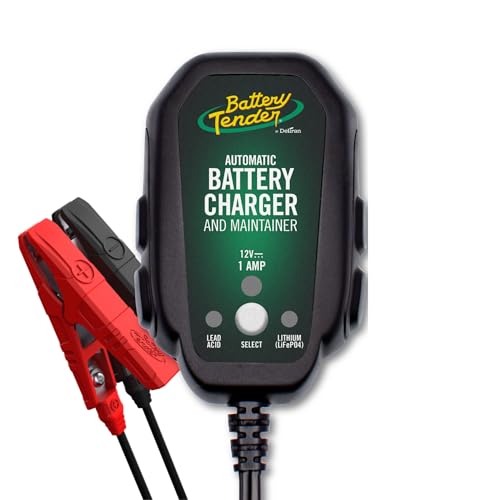
Battery Tender Junior 12V 800mA Charger and Maintainer

NOCO GENIUS1 1A 6/12V Smart Battery Charger
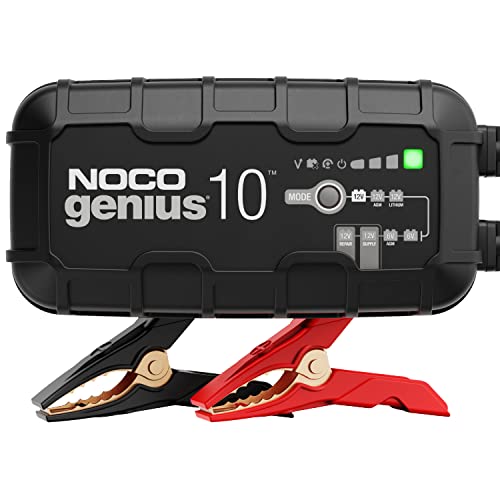
NOCO GENIUS10 10A 6/12V Smart Battery Charger

NOCO GENIUS5 5A 6/12V Smart Battery Charger

NOCO GENPRO10X1 12V 10A 1-Bank Onboard Marine Charger

Redodo 12.8V 100Ah LiFePO4 Battery with 14.6V 10A Charger

Redodo 12V 165Ah LiFePO4 Battery with 14.6V 20A Charger

Redodo 36V 50Ah Trolling Motor Lithium Battery with 43.8V 25A Charger

Redodo 16V 30Ah LiFePO4 Battery with 18.25V 10A Charger
Meet The Standout Selections
Redodo pairs a 100Ah LiFePO4 cell with a 14.6V 20A charger in one bundle, which is the kind of matched pair most shoppers end up assembling piece by piece. You skip the worry of mismatched charge profiles and get back to a full tank in roughly five hours, depending on depth of discharge. The battery’s built-in Bluetooth module streams voltage, current, and remaining capacity to your phone, so checking on a shed full of gear stops meaning a flashlight and a walk outside.
Compared to the older Redodo 12.8V 100Ah option later in this list, the smarter version adds app control and a faster 20A charger, so weekend solar top-ups finish before dinner. Cold-climate owners benefit from a low-temperature cutoff that pauses charging below 32°F and shuts discharge off below -4°F, protecting cells in unheated spaces.
Advantages To Know
- 20A charger cuts typical recharge times noticeably versus the 10A bundles
- Bluetooth 5.0 app gives you state of charge without opening the compartment
- Low-temp charging cutoff guards the cells in winter sheds and garages
- 100Ah capacity covers a weekend of lights, a fridge, and a small inverter
Things To Consider
- Bundle items may ship separately, so the charger might arrive a day or two after the battery
- Bluetooth drains a small amount of standby power over long idle stretches
Key Specs
Who It Suits Best
Off-grid cabin owners, van builders, and solar hobbyists who want one bundle that monitors itself.
Where Another Pick Suits Better
For a single small motorcycle or lawn tractor battery, the Battery Tender Junior 12V 800mA Charger and Maintainer is a better fit.
The Battery Tender Junior is a maintenance tool first, a charger second, and that ordering matters. Its 800mA output is too gentle to wake a deeply discharged 100Ah pack, but it’s exactly right for the motorcycle, ATV, or classic car that sits between weekend rides. A push-button chemistry selector flips between lead-acid (AGM, flooded, gel) and lithium (LiFePO4), so the same unit covers two different battery worlds without adapter cables.
Where the NOCO GENIUS1 below leans on its all-in-one diagnostic feature set, this unit keeps things simple: a four-step charging sequence, an LED status light, and a compact housing that mounts on a pegboard. Owners commonly report leaving it connected for months at a time without fuss, which is the real test for any maintainer.
Positive Takeaways
- Switchable lead-acid and lithium modes in one box
- Float-maintenance mode keeps batteries topped off indefinitely
- Small footprint fits in a tight garage corner or a saddlebag
Worth Noting
- 800mA is far too slow for any meaningful recharge of large house banks
- Alligator clips and ring terminals both ship in the box, but cable length is modest for truck installations
Best Suited To
Garage tinkerers with multiple powersports vehicles and seasonal storage habits.
Consider Something Else When
For a real house bank recovery job, the NOCO GENIUS10 10A Smart Charger is a stronger match.
The GENIUS1 is the smallest member of the NOCO trickle line, and it earns its keep on batteries up to about 30Ah. That covers motorcycles, ride-on mowers, and small jet ski packs without overcooking them. Like its bigger GENIUS5 and GENIUS10 siblings, it handles both 6V and 12V chemistries including LiFePO4, so swapping between a vintage tractor and a modern lithium pack means flipping a switch rather than swapping hardware.
Set-and-forget is the main pitch. The unit monitors voltage continuously and cycles between charging and maintenance modes on its own, so leaving it on a shelf battery all winter is the intended use case. The compact body also makes it easy to throw in a trailer or boat storage compartment for emergency top-ups at the ramp.
Features That Help
- Dual-voltage support (6V and 12V) covers more of the garage fleet
- Works with lead-acid and lithium chemistries without adapters
- Continuous monitoring mode handles months-long storage sessions
Trade Offs
- 1A output cannot recover deeply discharged 50Ah-plus packs in any reasonable time
Perfect Match For
Shed owners maintaining small engines and powersports batteries through off-seasons.
Not Your Match When
If you need to bring a 100Ah lithium house bank back from empty, the Redodo 12V 100Ah LiFePO4 Battery with 20A Charger handles that workload.
The GENIUS10 is the workhorse of the NOCO trickle family, rated for batteries up to about 230Ah. That covers most automotive, marine house, and RV applications, plus recovery work on neglected batteries. Its 10A output means a typical 50Ah pack refills in a few hours rather than overnight, and a desulfation mode aims to break down the lead sulfate crystals that build up when batteries sit discharged for months.
Temperature compensation adjusts the charge profile to ambient conditions, which matters for outdoor enclosures and unheated shops. Force Mode is the wildcard: it can attempt recovery on a battery that has dropped below the typical operating voltage, which can be the difference between a replacement and a save. Compared to the GENIUS5 below, the 10 doubles down on speed and the ability to push larger banks back to full.
Everyday Wins
- 10A output brings large house banks back to full in a reasonable window
- Desulfation mode attempts to restore neglected lead-acid batteries
- Temperature compensation tunes voltage to garage or shed conditions
- Force Mode can revive deeply discharged cells other chargers refuse
Room For Improvement
- Premium pricing over the smaller GENIUS1 and GENIUS5 siblings
- Larger and heavier than trickle units, so it’s less grab-and-go
Feature Snapshot
Whose Shelf It Belongs On
Garages with multiple vehicles, neglected batteries, and people who want one tool to handle the whole fleet.
Skip It When
If your work is small seasonal storage only, the Battery Tender Junior 12V 800mA Charger is plenty.
The GENIUS5 sits in the middle of the NOCO range with a 5A output and a 120Ah ceiling, which suits most cars, small boats, and modest RV banks. It borrows the same feature set as the larger GENIUS10, including desulfation and temperature compensation, but in a body that doesn’t dominate the workbench. For mixed fleets where the GENIUS1 is too small and the GENIUS10 feels like overkill, this is the comfortable middle ground.
Run it on a lithium house bank as a maintenance charger during storage, and it tops up to absorption without overcharging. The trade-off is straightforward: slower recovery on big packs than the 10A sibling, faster recovery than the 1A trickle model.
Notable Upsides
- 5A output hits a practical balance between speed and heat
- Desulfation extends the life of older lead-acid batteries
- Supports both 6V and 12V systems without manual reconfiguration
Honest Caveats
- Won’t replace a dedicated 20A charger for fast deep-cycle recovery
- 5A is a slow refill for packs over 80Ah, depending on depth of discharge
Made For
Households running a few vehicles and a small boat, where one mid-power charger covers everything.
Look Elsewhere When
Trolling motor owners running a dedicated 36V rig should look at the Redodo 36V 50Ah Trolling Motor Lithium Battery with 43.8V 25A Charger instead.
The GENPRO10X1 is built for permanent installation in a boat, not for the workbench. Its fully sealed, waterproof housing handles bilge splash and salt spray that would kill a consumer-grade trickle charger in a season. The single-bank design charges one 12V battery at up to 10A, which suits a center-console fishing boat with a single house bank and a separate starting battery on a different system.
Compare that to the GENIUS10, which is portable and great for the trailer but isn’t designed for permanent wet-location mounting. Where this unit wins is ruggedness: vibration, moisture, and the constant cycling of marine use don’t shorten its life the way they would a standard plastic-cased charger.
What Works In Its Favor
- Sealed waterproof housing tolerates bilge and splash exposure
- 10A output is plenty for a single marine house bank
- Compatible with flooded, AGM, gel, and LiFePO4 chemistries
Points To Note
- Single-bank design means dual-battery setups need a different model
- Installation requires basic marine electrical work or a shop visit
The Right Fit
Boat owners who want a permanently mounted charger that survives saltwater conditions.
A Better Fit Elsewhere
For off-grid solar without marine exposure, the Redodo 12V 165Ah LiFePO4 Battery with 14.6V 20A Charger is the more capable home system.
This is the Redodo bundle that built the brand’s reputation before the Bluetooth version arrived. The 100Ah LiFePO4 cell pairs with a gentler 14.6V 10A charger, which trades speed for less heat during long charging sessions. Owners using the pack as a drop-in replacement for a 100Ah lead-acid in an RV or camper tend to appreciate the slow-and-steady approach, since the battery usually lives behind a wall and isn’t watched closely.
Compared to the newer Redodo bundle at the top of this list, the trade-off is mostly app convenience and charge speed. If Bluetooth monitoring isn’t part of your workflow and your charging window is overnight anyway, the 10A charger is a perfectly reasonable match for the same capacity cell.
Bright Spots
- 10A dedicated charger avoids the compatibility guesswork of third-party units
- LiFePO4 chemistry is rated for thousands of cycles with proper care
- Drop-in form factor replaces a 100Ah lead-acid in common RV bays
Possible Compromises
- 10A charger means a full refill takes longer than the 20A bundle
- No app monitoring, so capacity checks require a multimeter at the terminals
Who Will Love This
RVers and off-grid cabin owners who set up a system once and let it run for years without fuss.
Another Choice May Suit
If you want app monitoring and faster turnaround, the Redodo 12V 100Ah LiFePO4 Battery with 20A Charger is the modernized version of the same idea.
The 165Ah Redodo pushes into Group 31 territory while staying within a footprint that drops into common battery boxes. That’s a meaningful upgrade for solar sheds, larger RVs, and backup systems that need to run a fridge, lights, and a small inverter for a couple of days between charges. The matching 14.6V 20A charger is sized to refill the larger cell in roughly eight hours, which fits an overnight charging window comfortably.
Bluetooth comes along for the ride, so capacity checks happen from a phone rather than a climb into the compartment. Compared to the 100Ah Redodo bundle, the added capacity is most useful when your loads outgrow what a single 100Ah pack can sustain through cloudy days or heavy appliance use.
Points In Its Favor
- 165Ah capacity in a Group 31 size for drop-in solar and RV use
- 20A charger finishes a refill overnight under most loads
- Bluetooth app confirms state of charge without opening the bay
Some Limits To Know
- Heavier than a 100Ah pack, so plan for two-person installation in tight bays
- Higher upfront cost than smaller bundles, though per-amp-hour value improves
Quick Facts
Built With In Mind
Solar hobbyists and off-grid property owners running sustained loads through a single battery bay.
Reach For A Different Pick When
Trolling motor users on 36V systems should jump to the Redodo 36V 50Ah Trolling Motor Lithium Battery with 43.8V 25A Charger.
Trolling motors in the 100 to 120 pound thrust range run on 36V, which means three 12V batteries in series for anyone sticking with lead-acid. Redodo’s 36V 50Ah pack collapses that setup into a single unit, which is a real space and weight win at the transom. The matching 43.8V 25A charger refills the pack in around two hours, fast enough to top up during a lunch stop on multi-day trips.
Drop-in replacement is the right framing here: existing wiring, motor lead, and receptacle typically work without modification. Compared to wiring three 12V batteries in series, the single-pack setup also removes the imbalance problem that creeps in when matched cells drift apart over time.
Practical Advantages
- One 36V pack replaces three 12V batteries in series at the transom
- 25A charger fills the pack in roughly two hours
- Single-pack design avoids the cell imbalance that plagues series strings
Factors To Consider
- Specialty voltage, so it won’t drop into a 12V system as a backup
- Higher cost than three budget 12V lead-acid batteries, though the weight and lifespan story is different
Who Should Grab It
Anglers running 100 to 120 pound thrust trolling motors who want cleaner rigging and faster turnaround.
Where A Sibling Pick Shines
For a 12V house bank on the same boat, the NOCO GENPRO10X1 Onboard Marine Charger handles the maintenance side.
Modern fish finders and 360 sonar systems pull more current than a small 12V pack was designed to deliver, and a dedicated 16V battery solves that without a voltage booster inline. The Redodo 30Ah pack targets kayak and ice fishing setups where every pound and every inch of hull space matters, while the 10A charger refills it in around three hours between sessions.
Compared to running a 12V battery with a step-up converter, the dedicated 16V chemistry delivers cleaner power to the transducer and reduces the heat load on the boost circuit. For anglers who already have a head unit and just need a quieter power source, this is the missing piece.
Everyday Advantages
- 16V native output matches modern fish finder voltage requirements
- 10A charger refills the pack in around three hours
- Compact form factor fits kayak hatch and sled battery trays
Less Ideal Details
- Specialty voltage, so it isn’t useful as a general 12V source
- Lower capacity than the 100Ah house bank options, so it suits sonar duty rather than trolling
Right Fit For
Kayak anglers, ice fishing regulars, and bass boat owners running high-draw sonar units.
Swap It Out When
For a main cranking or house battery, the Redodo 12V 100Ah LiFePO4 Battery with 20A Charger is the right tool.
Picking The Right Setup For Your Power Goals
A 12V lithium battery and charger pair only performs as well as the math behind it. Capacity in amp-hours, continuous discharge rating, and charger output all have to line up with the loads you actually plan to run. Spending a few minutes on the spec sheet before ordering saves the headache of returning a pack that physically fits but electrically falls short.
Match Capacity To Daily Watt-Hours
Start with the realistic daily consumption: a small fridge might pull 60Ah over 24 hours, while LED lighting and phone charging add a handful more. A 100Ah LiFePO4 battery delivers roughly 80 to 90Ah of usable energy before the built-in battery management system (BMS) cuts discharge, which covers a weekend of modest loads. If you routinely see cloudy days or heavy inverter use, stepping up to the 165Ah Redodo extends runtime without doubling the battery count.
Charging Speed And Chemistry Compatibility
A 10A charger refills a 100Ah pack in roughly ten hours, while a 20A unit cuts that to about five. The faster option matters if solar input is limited to a few peak hours or you recharge between back-to-back trips. Match the charger voltage to the battery chemistry: LiFePO4 wants 14.4 to 14.6V, not the 14.8V some lead-acid profiles push. The bundled Redodo and NOCO units handle this by design, so pairing a third-party charger introduces risk.
Cold Weather And Mounting Realities
Lithium cells dislike charging below freezing, which is why low-temperature cutoff protection is worth the small premium for outdoor installations. Owners in cold climates commonly report the BMS pausing input on frosty mornings, which is the intended behavior rather than a fault. Mounting matters too: a marine-rated onboard charger like the NOCO GENPRO10X1 survives bilge splash, while a standard household unit in the same spot won’t last a season.
Key Considerations Across These Picks
Common Shopping Slip Ups
Picking a charger based on price alone usually ends in a mismatched profile that undercharges or shortens battery life. Buy the battery first, then choose a charger specifically rated for its chemistry and capacity. Cold-climate buyers sometimes skip the low-temp cutoff option to save a bit, then find their pack refuses to charge on the first cold morning.
Where The Extra Money Goes
The jump from a basic 1A trickle unit to a 10A smart charger buys faster recovery, desulfation, and temperature compensation. For a single lawn tractor battery, the smaller unit is fine. For a fleet, an RV house bank, or a neglected battery that needs recovery, the extra cost usually pays for itself the first time you avoid a replacement.
Frequently Asked Questions
How long does a 12V 100Ah lithium battery last on a single charge?
Runtime depends on the draw, but a 100Ah LiFePO4 pack running a 5A load will deliver roughly 18 to 20 hours before the BMS cuts discharge, since usable capacity is around 90 to 95 percent of the rated number.
Can I use a lead-acid charger on a lithium battery?
Standard lead-acid chargers often push higher absorption voltages than LiFePO4 cells want, which shortens lifespan over months of cycles. A charger with a dedicated lithium mode, like the NOCO GENIUS series or the bundled Redodo units, is the safer match.
What is low-temperature cutoff protection?
It’s a BMS feature that pauses charging when the cell temperature drops below a set threshold, typically around 32°F, to prevent permanent damage to the cells. Discharge usually continues to a lower limit.
Do lithium batteries need a special charger for trolling motors?
Trolling motor setups on 36V benefit from a single matched 36V pack and charger, like the Redodo 36V 50Ah bundle, rather than wiring multiple 12V batteries in series with mismatched chargers.
How do I know when a 12V lithium battery needs replacing?
Capacity loss over years of heavy use shows up as shorter runtimes between charges. Many smart packs, including the Bluetooth-enabled Redodo models, report state of health through the companion app, so you can spot the decline without guesswork.
Closing Remarks
A 12V lithium battery and charger setup is a long-term purchase, so the right pick is the one that matches the loads, charging window, and environment you’ll actually use it in. Match capacity to your real daily draw, choose a charger that speaks the same chemistry, and don’t skip cold-weather protection if your gear lives outdoors. With those basics in place, any of these ten options should serve you well for the long haul.