A reliable 12 volt deep cycle battery quietly runs the show on boats, RVs, solar sheds, and weekend projects far from an outlet. Pick the wrong one and you spend the season nursing a dead fridge or a trolling motor that quits halfway across the lake. This shortlist covers nine solid options across lithium LiFePO4 (lithium iron phosphate, a stable, long-lived lithium chemistry) and sealed lead-acid formats, so you can match capacity, weight, and budget to how you actually use it.
How The Shortlist Stacks Up

GOKWH 12V 100Ah Group24 LiFePO4 Lithium Battery with Smart APP, Bluetooth 5.0, 100A BMS

GOKWH 12V 320Ah LiFePO4 Lithium Battery with Smart APP, Bluetooth 5.0, 200A BMS

GOKWH 12V 320Ah LiFePO4 Lithium Battery Smart APP for Trolling Motor
LiTime 12V 230Ah Deep Cycle LiFePO4 Battery for RV, Camper, Travel Trailer

HeyFuture 12V 15Ah LiFePO4 Battery for Peg Perego John Deere Tractors

Mighty Max 12V 22AH SLA Replacement Battery for SEL CB19-12
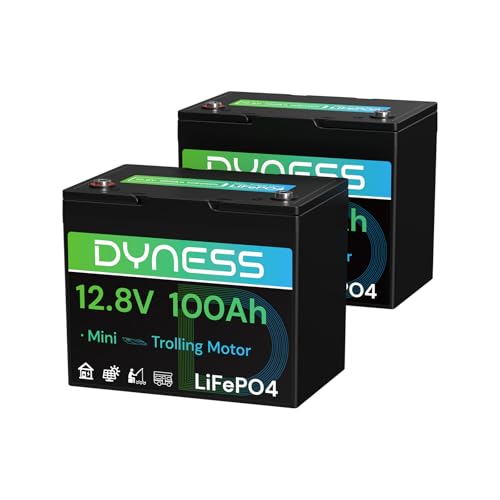
Dyness 12V 100Ah Mini LiFePO4 Battery 2 Pack Group 24, 100A BMS, Low-Temp Protection

GOKWH 12V 100Ah LiFePO4 Lithium Battery for Trolling Motor (2 Pack)

Mighty Max ML18-12 12V 18AH Rechargeable SLA AGM Battery, Nut and Bolt Terminal
Why These Options Stand Out
GOKWH steps into the lineup first with a Group 24 (a standardized battery box size roughly 10.25 × 6.8 × 8.9 inches) lithium that reads more like a smart device than a battery. Bluetooth 5.0 and a companion app surface state of charge, voltage, and temperature, so you can check the bank from inside the cab or the cabin. The 100A BMS (battery management system, the onboard circuitry that prevents overcharge, over-discharge, and shorts) covers the usual failure modes and adds low-temperature safeguards that matter in shoulder-season camping.
For most RV owners, that 1280Wh of usable capacity (amp-hours × volts = watt-hours, so 100Ah × 12V ≈ 1280Wh) is plenty for an LED lighting run, a fridge cycle, and phone charging across a long weekend. It slides into a stock Group 24 tray, and depending on your existing charger, you may find the existing lead-acid profile is too gentle for the lithium’s appetite for higher charge current.
What Works In Its Favor
- Bluetooth monitoring takes the guesswork out of state of charge and lets you spot a failing cell before it strands you.
- Group 24 footprint means retrofit installs in most RV and camper battery trays without custom brackets.
- 100A BMS headroom handles inverter surges better than the 50A BMS units common in budget lithium.
- Up to roughly 4000 deep cycles at sensible depth-of-discharge settings, which translates to a decade of weekend use for most households.
Things To Consider
- You will likely want a lithium-profile charger to actually fill it past about 80 percent.
- Some owners report the app pairing takes a couple of attempts the first time you power the unit.
Quick Facts
Made For
Weekend RVers and cabin owners who want app visibility and a drop-in Group 24 lithium.
Look Elsewhere When
You run a serious off-grid solar bank; the GOKWH 12V 320Ah model offers the headroom that station needs.
This is the big sibling to the 100Ah above, and the jump from 1280Wh to 4096Wh changes how you plan a power system. Solar cabins, van builds, and modest home-backup setups are the natural fit, and the 200A BMS gives a 2000W inverter room to surge without tripping protection. Like its smaller sibling, it ships with Bluetooth and a phone app for real-time SOC (state of charge), voltage, and cell temperature.
Up to 8000 deep cycles puts this battery in long-haul territory, and owners commonly report the higher cycle count translating to a near-decade service life in residential solar. The honest read is that it is overkill for a small trailer and shines in stationary or semi-stationary installations where weight is not the deciding factor.
What Makes Sense
- 4096Wh capacity covers overnight fridge, lighting, and small inverter loads without generator backup.
- 200A BMS supports mid-size inverters for coffee makers, microwaves, and tool charging.
- App monitoring exposes individual cell health so you spot imbalance early.
Points To Note
- It is heavy and bulky, so plan mounting and transport before ordering.
- Older lead-acid chargers will need swapping for a lithium-profile unit to hit full capacity.
- Cold-weather charging below freezing still requires the BMS cutoff or a heated solution.
Feature Snapshot
Best Suited To
Off-grid households and serious solar hobbyists building a high-capacity 12V bank.
Consider Something Else When
You only need to power a single trolling motor; the GOKWH 12V 100Ah 2 Pack is the lighter, nimbler choice.
Same 4096Wh capacity as the previous pick, but tuned and bundled with an angler mindset. The app surfaces the voltage, capacity, temperature, and cycle info you actually want while drifting in a cove, and you can pair it with a Group 31 box on most bass boats. Compared to the smaller GOKWH 100Ah above, this one trades compactness for whole-day trolling range on mid-thrust motors.
For boaters running a 24V trolling setup, owners commonly pair two of these in series to push a 36V or 80lb-thrust rig without anxiety about the cut-off point. The honest read: it’s the same dependable cell stack, just repackaged for fishing duty.
Reasons It Performs
- 320Ah of capacity covers 6 to 10 hours of mid-thrust trolling depending on motor draw.
- App monitoring lets you check remaining capacity from the deck between spots.
- Group 31-ish footprint fits most marine battery trays with room for a charger onboard.
- Built-in safeguards reduce the risk of an accidental deep discharge frying the cells.
A Few Limitations
- Weight is significant, so plan a slide-out tray or lifting handles if you swap seasonally.
- Saltwater anglers should rinse terminals and inspect the case after every trip.
Whose Shelf It Belongs On
Serious freshwater and inshore anglers who need long trolling days without swapping banks.
Swap It Out When
Your boat only needs a single Group 24 box for a kayak motor; the GOKWH 12V 100Ah Group 24 is the right scale.
LiTime lands a 230Ah LiFePO4 cell stack in a Group 4D footprint (a large battery box roughly 20.75 × 8.75 × 9.8 inches), trimming roughly two-thirds the weight of an equivalent lead-acid bank. That matters when you are loading batteries into a camper pass-through or lifting them onto a tongue box. Owners commonly report the lower weight showing up immediately when hitching up.
The 200A BMS includes the low-temperature cut-off you need if you camp into shoulder-season frosts. With over 4000 cycles on tap, this is a long-haul pick, and depending on your existing converter, you may need to confirm it has a lithium charging profile before swapping in.
Benefits That Matter
- 230Ah hits a sweet spot between capacity and weight for most travel trailers.
- 200A BMS handles a 2000W inverter for microwave or induction cooking sessions.
- Low-temperature charge protection prevents cell damage on cold mornings.
- Group 4D sizing means fewer custom brackets than some “universal” lithium shapes.
Practical Considerations
- Heavier than Group 24 lithium, so verify your trailer’s tongue rating.
- Lead-acid converters under around 14.4V absorption will leave capacity on the table.
Spec Overview
Right Fit For
Travel trailer owners replacing a heavy Group 4D lead-acid bank.
Reach For A Different Pick When
You need the highest single-bank capacity on this list; the GOKWH 12V 320Ah covers more kilowatt-hours per box.
HeyFuture lands the only true toy-category pick on the list, a 12V 15Ah LiFePO4 sized for the kids’ Peg Perego John Deere ride-on tractors. It is maintenance-free, ships with an integrated BMS, and is dramatically lighter than the original SLA it replaces. For households running a small herd of these, the lighter weight also matters when lifting the battery out for charging.
The 2000+ cycle rating means it survives years of afternoon joyrides, though this is not the right battery for a trolling setup or RV. The honest read: it is purpose-built, so do not expect it to double as a trolling battery. Owners commonly note the OEM charger is the safe pairing to preserve the BMS warranty.
What Helps Most
- Lighter than the SLA it replaces, easier on tired adult backs.
- LiFePO4 chemistry resists sulfation (crystal buildup that permanently degrades lead-acid batteries left sitting at partial charge), so weekend storage is forgiving.
- Maintenance-free operation suits busy parents.
Where It Is Less Suited
- Capacity is too small for any trolling, RV, or solar use case.
- Not designed as a starter battery for motorcycles or cars.
Who Should Grab It
Parents refreshing a tired Peg Perego battery whose kid has outpaced the original SLA.
Skip It When
You need power for a kayak trolling motor; the GOKWH 100Ah trolling pair is the proper scale.
Mighty Max returns with a sealed lead-acid workhorse, the ML22-12, a 12V 22Ah SLA (sealed lead-acid) with nut-and-bolt terminals. It is a drop-in replacement for the SEL CB19-12 in mobility scooters, UPS (uninterruptible power supply) backups, and small medical-device battery bays. AGM (absorbent glass mat, a fiberglass mat that holds the electrolyte against the plates for spill-proof operation) construction means it tolerates enclosed environments without venting.
For shoppers replacing an existing SLA rather than upgrading to lithium, this is a familiar format at a friendly entry cost. Owners commonly report the high discharge rate coming in handy for short, heavy inverter loads that would over-promise a smaller lithium.
Why It Works Well
- Spill-proof AGM construction works in any orientation inside a cabinet or scooter bay.
- Wide operating temperature range for garages, sheds, and unheated spaces.
- Nut-and-bolt terminals make a solid mechanical connection for heavier gauge wire.
- Direct fitment into SEL CB19-12 battery trays.
Trade Offs
- Heavier than a lithium equivalent at the same capacity.
- Cycle life is lower than the lithium picks on this list, so plan replacement every few years.
Key Product Details
Perfect Match For
Shops replacing a worn SLA in UPS, scooter, or small backup equipment.
A Better Fit Elsewhere
You want weekend RV power for under $300; the Mighty Max ML18-12 is the slightly smaller AGM option.
Dyness squeezes a 100Ah LiFePO4 cell into a “mini” Group 24 box, claiming a roughly 35 percent smaller footprint than traditional builds. The 2-pack format doubles total capacity to 200Ah at 12V, which is enough to run a fridge and lighting on most weekend trailers, and you can wire the two units in series or parallel depending on your system.
The 100A BMS includes low-temperature protection for cold snaps, and Grade A+ LiFePO4 cells are widely promoted for longevity. The trade-off shows up in maximum continuous draw, which is fine for typical RV loads but tight for a large inverter. You may find the smaller footprint a real blessing in a tight battery compartment.
A Few Highlights
- Mini Group 24 footprint frees up space in cramped RV and boat compartments.
- 2-pack bundles let you start with parallel capacity and add a series unit later.
- Low-temp cut-off protects cells during shoulder-season camping.
Honest Caveats
- Continuous draw is limited compared to the larger BMS picks on the list.
- Confirm your existing charger is lithium-profile before plugging in.
Who It Suits Best
Boat and RV owners with tight battery compartments who need a flexible 2-pack lithium.
Where Another Pick Suits Better
You want the largest single-box capacity; the GOKWH 12V 320Ah LiFePO4 covers that ground.
This 2-pack mirrors the 100Ah lithium chemistry from earlier GOKWH picks but ships as a matched pair, ideal for 24V trolling rigs that want two fresh batteries out of the box. For a single-battery kayak or jon boat, you can run one as a 12V bank and keep the second as a spare. The Bluetooth 5.0 app that worked on the 100Ah Group 24 above carries over, so you still get voltage, temperature, and state of charge from your phone.
Wiring the pair in series for a 24V motor is straightforward, and depending on your trolling motor’s amp draw, you should get a full day of mid-thrust use. Owners commonly report the lithium weight saving showing up immediately compared to the equivalent pair of lead-acid group 27s.
Well-Handled Touches
- Matched pair ensures balanced capacity across a 24V trolling system.
- Bluetooth monitoring shared across both units via the app.
- LiFePO4 chemistry handles daily fishing seasons for years of service.
Things To Weigh Up
- Two-pack pricing assumes you actually need the pair, so single-battery shoppers should look at the 1-pack Group 24 above.
- Cold-climate anglers will still want a low-temp cutoff or heated battery box.
Built With In Mind
Anglers running 24V trolling motors who want a matched, app-monitored battery pair.
Not Your Match When
You only need one battery; the GOKWH 12V 100Ah Group 24 single unit is the right call.
The Mighty Max ML18-12 closes the list the same way it has closed workshops for years: a compact, affordable 12V 18Ah SLA with a calcium-alloy grid that holds up under cyclic use. AGM construction keeps it safe in enclosed cabinets, and the nut-and-bolt terminal gives a more secure connection than F1 spades on a scooter or UPS bay.
Compared to the lithium picks above, the ML18-12 trades cycle count for a much lower upfront cost and a universally compatible form factor. For a garage-shop backup battery or a kid’s scooter, the cost-per-year of service still makes sense.
Real Benefits
- Calcium-alloy grid supports cyclic use better than generic SLAs.
- Valve-regulated design means no topping off distilled water.
- Nut-and-bolt terminal fits heavy-gauge wire without adapters.
- Wide operating temperature range for unheated garages.
Where It May Fall Short
- Heavier than a lithium equivalent, and far fewer deep cycles.
- Not the right battery for an RV or solar bank at this capacity.
The Right Fit
DIYers and mobility-gear users replacing an aging SLA on a budget.
Where A Sibling Pick Shines
You need a higher-capacity SLA replacement; the Mighty Max ML22-12 above delivers another 4Ah in a similar form factor.
What Matters Most Before Choosing a 12 Volt Deep Cycle Battery
Match Chemistry To Your Use Pattern
Lithium LiFePO4 packs run roughly two to four times the cycle life of sealed lead-acid, shed about two-thirds the weight, and deliver close to 100 percent of rated capacity. They do require a lithium-profile charger and a battery management system to stay healthy. Sealed lead-acid (AGM) is heavier and shallower in cycle life, but it costs less up front and pairs with older converters and chargers. For full-time RV or off-grid solar, lithium pays for itself; for backup, mobility, or replacement duty, AGM often makes more sense.
Capacity, Inverter, And BMS Headroom
Capacity in amp-hours drives runtime; a 100Ah battery at 12V holds roughly 1280Wh. Match the BMS rating to your inverter surge, so a 2000W inverter needs a BMS that can pass roughly 170A continuous draw. Low-temperature charge protection matters for shoulder-season campers, while high-cycle LiFePO4 cells (4000 to 8000) suit daily solar cycling.
Fitment And Service Conditions
Group 24, 27, 31, and 4D footprints determine whether a battery drops into an existing tray. Confirm dimensions and terminal type before ordering, and plan ventilation for AGM in enclosed cabinets. In tight compartments, a “mini” Group 24 like the Dyness above saves real space.
Key Considerations Across These Picks
Common Shopping Slip Ups
Under-buying capacity is the most common trap; shoppers estimate amp-hour needs from the appliance label rather than the actual draw over a full cycle. Always add 20 percent headroom. The second pitfall is pairing a lithium battery with an old lead-acid charger that never reaches the absorption voltage LiFePO4 needs to top off.
Why Top Tier Costs More
Higher-capacity LiFePO4 picks cost more because they use Grade A+ cells, larger BMS hardware, and Bluetooth telemetry that budget builders skip. For off-grid systems that cycle daily, the upgrade pays back through years of service, while for occasional weekend use the mid-capacity picks above often hit the right balance.
Frequently Asked Questions
How long does a 12V deep cycle battery last?
A LiFePO4 battery typically delivers 4000 to 8000 cycles, which works out to roughly 8 to 12 years of regular use. A sealed lead-acid battery usually reaches 300 to 500 cycles, or about 2 to 4 years under similar conditions.
Can a deep cycle battery run a trolling motor?
Yes, a 100Ah LiFePO4 battery can run a mid-thrust trolling motor for 6 to 10 hours on a typical day. For a 24V trolling setup, run two batteries in series rather than stretching a single 12V battery.
Do I need a special charger for lithium deep cycle batteries?
Lithium LiFePO4 batteries charge best with a charger that delivers roughly 14.4 to 14.6V absorption. A standard lead-acid charger may stop early and leave the battery at 80 percent or less, so a lithium-profile charger is the safe pairing.
Is a deep cycle battery safe indoors?
Sealed lead-acid (AGM) batteries are safe in enclosed, indoor environments as long as the cabinet has some airflow. Lithium LiFePO4 batteries are safe indoors, though you should always confirm the BMS includes low-temperature and short-circuit protection.
What is the difference between a deep cycle battery and a starter battery?
A deep cycle battery is built to discharge down to roughly 80 percent repeatedly, while a starter battery delivers short, high-current bursts to crank an engine. Using a starter battery as a deep cycle will damage it quickly.
Bottom Line
Pick the chemistry that matches how often you cycle the bank, then size capacity to your actual load with a comfortable margin. Lithium pays off for daily RV, solar, and trolling use, while sealed lead-acid still earns its keep in mobility, backup, and budget replacement roles. Whichever format you choose, verify your charger, BMS safeguards, and compartment fitment before clicking through.